Report
No Data Yet

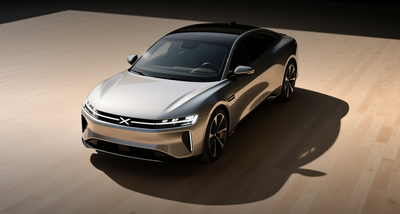
**XPeng's L03 launch in Munich marks the first step in exporting its Physical AI platform — from autonomous driving to humanoid robots — to global markets.** XPeng's L03 coupe-SUV, powered by triple Turing AI chips delivering 2,250 TOPS of computing power, threatens to reshape the premium EV segment across 64 markets with Level 4-capable autonomy at a starting price of 143,800 yuan ($21,200) in China. "The L03 is only the first product to bring this strategy overseas," Jefferies analysts said in a research note, maintaining a Buy rating with an H-share target price of HKD98.3 and a US-share target of USD25.2. The L03 offers a claimed 625 kilometers of CLTC range for the pure EV variant and 1,330 kilometers for the Power X range-extender version, with a 10% to 80% charge in 19.1 minutes. Designed by former Ferrari exterior chief JuanMa Lopez, the vehicle achieves a 0.228 drag coefficient and integrates Google Maps Auto SDK — a first for an Asia-Pacific automaker. The 15.6-inch central display and 37 storage areas round out the interior, while frameless doors and a sloping roofline give the crossover a sportier profile than typical family EVs. XPeng shares fell 8.7% on July 17 with $324 million in short selling, a 24% short ratio, suggesting the market is pricing in execution risk despite the product milestone. Jefferies' Buy rating implies roughly 100% upside from current levels, contingent on the company delivering VLA 2.0 to European customers by 2027. **Physical AI Goes Global** The L03 is the first vehicle built on XPeng's new AI mobility platform, designed for simultaneous deployment in China and Europe. Its VLA 2.0 system — a physical-world foundation model — enables navigation of complex urban environments and adapts to local driving behaviors, a capability XPeng plans to roll out progressively in Europe beginning in 2027. The system remains a driver-assistance feature, meaning motorists remain responsible for vehicle control. XPeng claims the triple Turing AI chip configuration delivers 2,250 TOPS, compared with Tesla's HW4 system at roughly 720 TOPS based on published estimates, though direct comparisons are difficult without standardized benchmarks. The company's ambitions extend beyond cars. XPeng outlined a roadmap that includes overseas expansion of Robotaxi services and exports of humanoid robots starting in 2027, positioning the company against Tesla's similar push into autonomous mobility and robotics. Tesla's Full Self-Driving system and Optimus humanoid robot represent the benchmark XPeng is targeting, though neither has achieved mass commercial deployment. XPeng's strategy mirrors Tesla's vertical integration of AI hardware and software but with a more aggressive international rollout timeline — Tesla has not announced a specific date for Optimus exports to Europe. The Google Maps integration, using the Auto SDK, removes the need for phone mirroring and supports both the NGP driver-assistance system and the more conventional XPILOT Assist. This partnership gives XPeng a navigation advantage in Western markets where Google Maps dominates, while Tesla relies on its own mapping data. Rivian has implemented a similar integration, making this a growing trend among EV makers targeting global audiences. XPeng said the L03 will launch in all 64 markets where it currently sells, including all European markets and the UK. **Investment Implications** For investors, the question is whether XPeng can execute on its global timeline. The company trades at a fraction of Tesla's valuation multiple but faces the same capital-intensive path from driver-assistance systems to full autonomy. Jefferies' price target of HKD98.3 implies the market has not fully priced in the Physical AI expansion, though the heavy short selling on launch day — $324 million representing 24% of turnover — suggests skepticism remains high. XPeng's stock has declined 8.7% in a single session, erasing gains from earlier in the week. XPeng's simultaneous China-Europe launch strategy also carries currency and regulatory risks. European tariffs on Chinese EVs, which have affected BYD and SAIC, could pressure pricing in XPeng's target markets. The company's decision to manufacture the L03 as a global vehicle platform, rather than adapting a China-specific model, may help mitigate some of these trade barriers. UK sales are planned to commence in 2027, aligning with the VLA 2.0 rollout timeline. The L03's Chinese preorder price of 143,800 yuan offers little guidance for European pricing, which XPeng has not yet disclosed. This article is for informational purposes only and does not constitute investment advice.

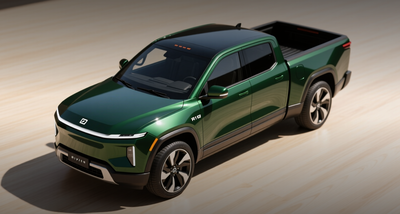
**California's $270 million EV rebate program gives Lucid and Rivian a pricing edge while excluding Tesla from a key exemption.** California on Monday signed a $270 million rebate program offering first-time buyers $3,500 off new EVs priced at $50,000 or less, filling the gap left by the eliminated federal tax credit. "Donald Trump is doing everything in his power to pollute our air and surrender the clean car industry to China on a silver platter," Governor Gavin Newsom said in a statement. "As California leads the world toward a clean future, our message is clear: no one can stop Californians from choosing vehicles that are better for their wallets and better for the air they breathe." The program, funded from a $600 million allocation in California's latest budget, provides $1,750 for used EVs priced up to $25,000. Automakers headquartered in California — including Lucid Group Inc. and Rivian Automotive Inc. — are exempt from the $50,000 price cap, a provision that gives their higher-priced models access to the full rebate. Tesla Inc., which relocated its headquarters to Texas, does not qualify for the exemption. The rebate arrives as US EV sales recover from a 2025 slump triggered by the end of federal tax credits. Rising gasoline prices amid escalating US-Iran tensions have pushed some consumers back toward electric vehicles. Tesla accounted for almost 50% of California's new vehicle sales last year, according to Reuters, but the exemption clause could shift market share toward in-state manufacturers. **Who Wins, Who Loses** The price-cap exemption creates a clear competitive divide. Lucid's upcoming Gravity SUV and Rivian's R2 crossover, both expected to start above $50,000, would still qualify for the full $3,500 rebate when purchased by first-time EV buyers. Tesla's Model Y, which starts at about $44,990 and would otherwise be a natural fit for the program, faces a relative disadvantage because the company's Texas headquarters disqualifies it from the exemption. The California Air Resources Board, which will administer the program, has not yet disclosed which automakers have signed participation agreements. The board is expected to release that information in the coming weeks. **Market Context and Investor Impact** The program's $270 million allocation represents about 77,000 rebates at the maximum $3,500 level, though the mix of new and used vehicle purchases will determine the actual count. Several other states, including Colorado, New York, and Vermont, operate their own EV rebate programs, but California's is the largest by total funding. For investors, the key question is whether the exemption tilts California's EV market — the largest in the US — toward Lucid and Rivian at Tesla's expense. Lucid shares have gained 12% this year on optimism around the Gravity launch, while Rivian has risen 8% as it scales R2 production. Tesla trades at 65 times forward earnings, a premium that reflects its dominant market position but also leaves it exposed to any shift in California's competitive dynamics. This article is for informational purposes only and does not constitute investment advice.

**Jim Cramer warned that a $28 billion SK Hynix listing and a wave of debt issuance risk overwhelming investor demand, threatening the bull market.** Jim Cramer warned that a growing wave of stock offerings and debt issuance poses the next major threat to the bull market, with SK Hynix's roughly $28 billion Nasdaq listing as the immediate trigger. "A bull can also be killed by excess supply," Cramer said on CNBC's Mad Money in April, cautioning that too much capital pulled into a handful of mega deals at once could overwhelm investor demand. The South Korean memory-chip maker's American depositary receipts listing, expected as soon as this week, would rank as the second-largest equity share sale globally behind only SpaceX. SK Hynix is the lead high-bandwidth memory supplier to Nvidia Corp. and the largest industry peer to Micron Technology Inc., which has already felt the pressure. Micron shares closed at $938.38 on July 7, down 10.82% in a single week, despite reporting fiscal third-quarter revenue of $41.456 billion — up 345.72% year over year — with non-GAAP earnings per share of $25.11 and a GAAP gross margin of 84.6%. If institutional investors sell existing holdings to fund SK Hynix allocations, the stocks most levered to the same AI theme could face compressed multiples. The risk extends beyond memory chips to any capital-consumptive stock requiring future funding. **The Direct Read-Through to Micron and Nvidia** Micron Technology Inc. (Nasdaq: MU) is the cleanest U.S.-listed proxy for the HBM cycle, and shares are already reacting to the crowded field. The stock fell 10.82% in the week through July 7 despite record results. Chief Executive Officer Sanjay Mehrotra called the quarter a reflection of "the strategic value of memory in the AI era," with fourth-quarter guidance calling for revenue of $50 billion and non-GAAP EPS of $31, disclosed in a June 24 filing. Nvidia Corp. (Nasdaq: NVDA) sits on the other side of the HBM equation as SK Hynix's largest memory partner, per Chief Executive Officer Jensen Huang. First-quarter fiscal 2027 revenue reached $81.61 billion, up 85.2% year over year, with data center revenue of $75.25 billion. Huang framed the moment as "the largest infrastructure expansion in human history." The stock has been range-bound, up 6.4% year to date and trading near $202.97. A capital event that ties up institutional balance sheets in the memory-chip supplier Nvidia depends on could compress multiples on the customer as well. **Rivian as a Cautionary Tale** Cramer's warning extends past the semiconductor complex. Rivian Automotive Inc. (Nasdaq: RIVN) priced its initial public offering at a valuation the market could not sustain, and the stock has never recovered. Shares trade at $16.09, down 83.63% from the November 2021 debut price of $100.73. First-quarter fiscal 2026 results showed $1.38 billion in revenue, a $416 million GAAP net loss, and an operating margin of negative 63.8%. The last time a single equity offering of this magnitude hit the U.S. market was the 2024 Arm Holdings IPO, which raised $4.87 billion and was followed by a 12% decline in the tech-heavy Nasdaq 100 over the subsequent month as institutional investors rebalanced. The SK Hynix deal is nearly six times that size, raising the question of whether the market's absorption capacity has grown proportionally. The SK Hynix ADR pricing window, greenshoe size, and first-week float behavior will signal the immediate impact. If institutional investors sell Micron to fund allocations, the peer read-through will be measurable in days. If Nvidia holds while the memory complex churns, the customer trade stays intact. The broader question — whether the bull market can absorb $28 billion in new supply without broader damage — will be answered in the weeks following the listing. This article is for informational purposes only and does not constitute investment advice.

**The Iran war and sustained high US gasoline prices are driving a surge in used electric vehicle prices, with Cox Automotive's Manheim Used Vehicle Value Index for EVs jumping 12% in June from a year earlier — the biggest monthly increase since the index launched.** "The conflict in the Middle East has fundamentally altered the calculus for car buyers," said Jonathan Smoke, chief economist at Cox Automotive. "Every dollar at the pump pushes more consumers toward EVs, and that demand is now showing up in wholesale auction prices." The Manheim index, which tracks prices of used vehicles sold at US wholesale auctions, recorded the 12% year-over-year gain in June 2026. The increase marks a sharp reversal from the depreciation trend that dominated the used EV market through much of 2024 and early 2025, when prices fell as Tesla and other manufacturers cut new-vehicle prices. Gasoline prices in the US have climbed more than 25% since the start of the Iran conflict, according to AAA data, pushing the national average above $4.50 a gallon. The energy shock has prompted 113 countries to adopt at least one energy policy response, the International Energy Agency reported, with 55 nations adjusting fuel taxes and 32 adding or expanding fuel subsidies. **Why Used EVs Are Gaining Value** The price dynamics reflect a structural shift rather than a temporary spike. Used EVs typically depreciate faster than internal combustion vehicles because of battery degradation concerns and rapid improvements in new EV technology. But the Iran war has inverted that pattern: higher fuel costs make gasoline vehicles more expensive to operate, while the limited supply of new EVs — constrained by battery material shortages and production bottlenecks — pushes buyers into the used market. Tesla's Model 3 and Model Y, which account for roughly half of all used EV transactions in the US, have seen the largest price increases, according to auction data. Ford's Mustang Mach-E and Chevrolet's Bolt EV have also gained, though at a slower pace. The trend benefits automakers with strong EV lineups while creating headwinds for legacy manufacturers still reliant on internal combustion sales. Tesla shares have gained 18% since the start of the conflict, outperforming the S&P 500's 3% decline over the same period. Rivian and Lucid have also seen their stock prices rise as investors bet on accelerated EV adoption. **Risks on the Horizon** The rally in used EV prices carries risks. If the Iran conflict de-escalates and gasoline prices fall, used EV values could reverse sharply, leaving recent buyers with negative equity. Auto loan delinquencies have already ticked higher in recent months, and a correction in used EV prices could amplify those losses. Cox Automotive expects used EV prices to remain elevated as long as gasoline stays above $4 a gallon. "The floor has moved up," Smoke said. "But this is a demand shock driven by geopolitics, not a structural improvement in EV economics. When the shock fades, prices will normalize." This article is for informational purposes only and does not constitute investment advice.

The Dow Jones Industrial Average set a new all-time high for the third consecutive session before reversing to close 0.3% lower at 52,834. "The intraday record shows the market's underlying strength, but profit-taking in high-flying chip names pulled the broader market back," said Sarah Lin, equity market analyst at Edgen. The S&P 500 fell 0.5% and the Nasdaq Composite dropped 1.2%. The Dow had risen as much as 0.5% in morning trading, crossing the 53,100 level for the first time, before giving up gains. Leading the Dow's advance were 3M, Amgen, Procter & Gamble, Google parent Alphabet, and Apple. The chip selloff was the day's dominant drag. Samsung Electronics dropped 7% in Seoul trading despite reporting second-quarter revenue of roughly 171 trillion Korean won ($112.7 billion) and operating profit of about 89.4 trillion won ($59 billion), both above consensus. The weakness spilled into US-listed peers: Intel fell 6.5%, Advanced Micro Devices dropped more than 3%, and Marvell Technology declined 6.5%. The VanEck Semiconductor ETF lost 3%. Energy was the S&P 500's best-performing sector, gaining more than 3%, as oil prices surged after the Treasury Department revoked a waiver allowing Iran to sell its crude. West Texas Intermediate futures jumped 4.9% to $71.90 a barrel, while Brent crude rose 5.1% to $75.70. Occidental Petroleum, Devon Energy, and APA each gained between 5% and 6%. The 10-year Treasury yield rose about seven basis points to 4.54%, while the US Dollar Index edged up 0.2% to 101.08. Gold futures fell 1.2% to $4,115 an ounce. Bitcoin traded near $63,700, little changed over the past 24 hours. In other single-stock moves, SpaceX shares fell about 7% on their first day as a member of the Nasdaq 100 index. Caterpillar dropped nearly 5% after announcing the acquisition of Skycatch, a mining data analytics firm, though the stock remains up more than 60% year to date. Walmart rose more than 1% after announcing thousands of price cuts across categories. Rivian sank 11% after the electric-vehicle maker announced a public offering of about 75 million shares. The reversal from intraday highs leaves the Dow up about 14% year to date, while the S&P 500 has gained roughly 18%. Investors now turn to the start of second-quarter earnings season next week, with big banks including JPMorgan Chase and Wells Fargo scheduled to report. This article is for informational purposes only and does not constitute investment advice.

Rivian Automotive priced a 75 million share secondary offering, sending the stock down 14% to about $17 in Tuesday trading. "It was the right time for Rivian to secure additional funding," a company spokesperson told Reuters, as the automaker prepares to draw on a revised $4.5 billion US Department of Energy loan for its Georgia manufacturing facility. The base deal could raise roughly $1.5 billion based on Monday's close of $20.14, or as much as $1.7 billion if underwriters exercise their 30-day option for an additional 11.25 million shares. Proceeds will fund equity contributions tied to the DOE loan agreement and general corporate purposes, according to a regulatory filing. The offering adds to 1.34 billion shares already outstanding, diluting existing holders. The decline wipes out most of Rivian's 23% one-month gain heading into the announcement. The company preannounced second-quarter revenue of $1.55 billion to $1.65 billion, above the $1.45 billion consensus, and raised its full-year delivery forecast to 65,000 to 70,000 vehicles. Rivian reports full Q2 results on July 30. The selloff spread across the EV sector, with Lucid Group falling 9% to $6 and Tesla down 3% to $408, reversing Monday's sector-wide rally. Rivian estimated its cash and equivalents at about $5.3 billion at the end of June, up from $4.8 billion at the close of the first quarter. The company plans to begin drawing on the DOE loan early next year to finance construction of its Georgia plant, which will become the primary production hub for the R2 SUV — a smaller, more affordable model viewed as critical to Rivian's path to broader market reach and sustained growth. The offering signals Rivian is prioritizing balance sheet strength over near-term stock price, betting that the R2 platform can justify the dilution. Investors will watch the July 30 earnings report for updates on R2 development timelines and gross margin trajectory. This article is for informational purposes only and does not constitute investment advice.

The Bloomberg Electric Vehicle Price Return Index slid 3.02% to 3,475.02 points on Tuesday, dragged by Rivian Automotive Inc.'s 18% plunge — its worst session since February 2024 — after the electric-truck maker announced a planned share sale. The share sale, reported by MarketWatch, triggered the steepest single-day decline for Rivian shares in more than two years, Bloomberg data show. The company has not disclosed the size or pricing terms of the proposed offering, though the stock's 18.12% decline erased roughly $3 billion in market value based on its prior closing price. Other EV makers followed Rivian lower. Lucid Group Inc. dropped 9.98%, while STMicroelectronics NV's Paris-listed shares fell 7.99% and Hesai Group declined 7.56%. The index gapped lower after the US market open, extending losses that began during Asia-Pacific trading, and has now fallen in three of the past four sessions. The selloff was concentrated in US and European pure-play EV names, while Chinese EV makers rallied. NIO Inc. rose 1.71%, Yadea Group Holdings gained 3.09% and Geely Automobile Holdings advanced 3.11%. BMW AG's European shares also rose 1.03%, suggesting the weakness was specific to EV-dedicated manufacturers rather than the broader auto sector. **Rivian's Capital Challenge** Rivian's planned equity offering comes as the company navigates a capital-intensive transition to its next-generation R2 platform, a midsize SUV expected to start production in early 2027. The Illinois-based manufacturer has relied on a combination of equity raises and strategic partnerships — including a joint venture with Volkswagen AG announced in June 2025 — to fund operations while pursuing its path to gross profitability. The company ended the first quarter with roughly $6 billion in cash and equivalents, according to its most recent filing, but has burned through more than $15 billion since going public in November 2021. The stock, which listed at $78, now trades at a fraction of that level, reflecting persistent investor concerns about cash burn and production scalability in a market where Tesla Inc. and BYD Co. dominate. **Regional Divergence Widens** The contrasting performance between US and Chinese EV stocks on Tuesday highlights a broader trend that has been building for more than a year. Chinese EV makers have benefited from aggressive pricing strategies, government subsidies and a more favorable regulatory environment, while US and European peers face margin pressure from price wars and slowing demand growth. NIO's 1.71% gain and Yadea's 3.09% advance suggest Chinese investors remain relatively optimistic about domestic EV adoption, even as global sentiment toward the sector sours. Geely's 3.11% rise was its best single-day gain in three weeks, supported by strong June delivery data from the broader Chinese auto market. For investors, Tuesday's selloff reinforces the risks of concentrated exposure to US EV makers facing capital constraints. Rivian trades at roughly 1.5 times forward sales, a discount to Tesla's 6 times but a premium to legacy automakers, and the planned dilution from the share sale could pressure the stock further in the near term. The divergent performance of Chinese EV names, meanwhile, suggests regional allocation may matter more than sector positioning in the current environment, as the global EV market grows at an uneven pace across geographies. This article is for informational purposes only and does not constitute investment advice.

Rivian insiders filed $2.1M in May disposals, but 90% were pre-scheduled 10b5-1 plans or tax-withholding events. The selling follows a mechanical pattern typical of Rule 10b5-1 plans adopted in September 2025, according to the Form 4 filings. Chief Financial Officer Claire McDonough executed sales at $13.43, $14.00, $16.00 and $18.00 — a price-agnostic staircase inconsistent with discretionary bearish conviction. Chief Executive R.J. Scaringe sold 34,818 shares at $15.00 on May 28 and 21,446 at $16.17 on April 14, both under his 10b5-1 plan. He still directly holds about 922,000 shares, plus additional holdings through trusts and LLCs. A May 15 cluster at $14.52 involving five officers — including 44,034 shares from Scaringe and 38,640 from McDonough — was tax withholding on RSU vesting, not open-market selling. The strongest insider signal came from Volkswagen, which acquired 62.9 million shares at $15.90 via private placement on April 30, raising its stake to roughly 16%. Director Aidan Gomez also bought 18,000 shares at $13.97 on May 15 in the open market, near the stock's 52-week low of $11.57. The insider activity coincides with Rivian's strongest operational quarter. The EV maker delivered 12,194 vehicles in Q2, up 14.4% year over year and above its own forecast of 9,000 to 11,000. It raised full-year delivery guidance to 65,000 to 70,000 vehicles from 62,000 to 67,000. Shares jumped 8.4% to $18.63 on July 2, the biggest single-day gain in months. The R2 platform, Rivian's first mass-market vehicle at a $45,000 price point, began initial deliveries in the quarter and received positive reviews. Rivian has capacity to build up to 155,000 R2s annually at its Normal, Illinois plant, with a second Georgia facility expected to add further capacity. The R2 will also be Rivian's first vehicle sold in Europe, broadening its addressable market beyond North America. The May insider filings triggered bearish chatter on social media, with Reddit sentiment turning negative on eight of 10 recent readings. But the data shows the selling was overwhelmingly mechanical. Officers also bought shares through the employee stock purchase plan at $11.67, priced at 85% of the closing price. June 22 grants of 17,445 shares each at $0.00 to six directors reflected annual equity compensation, not conviction signals. The disposals do not signal management pessimism. Rivian holds about $5.8 billion in cash and has shown three consecutive quarters of delivery beats. The next catalyst is the Q2 earnings call, where management is expected to update on R2 production ramp, Amazon EDV deliveries and progress toward variable profit positivity on the R1 line. This article is for informational purposes only and does not constitute investment advice.

Rivian Automotive Inc. surged 78.4% to its highest close since Jan. 13, extending a rally fueled by optimism over its R2 SUV launch. The R2, launched June 9 in the U.S., starts at $57,990 for the launch edition, with a cheaper version around $45,000 planned by the end of 2027. Rivian expects annual deliveries of 62,000 to 67,000 vehicles this year, up from 42,284 in 2025. The company's production had fallen from 57,232 vehicles in 2023 as supply chain constraints limited output of its higher-priced R1T pickup and R1S SUV, which started at $75,000 and $77,500, respectively. The stock, which trades at about three times this year's sales, could see further re-rating if the R2 drives the revenue growth analysts project — more than tripling from 2025 to 2028. Rivian went public in 2021 at $78 per share and had traded nearly 80% below that level before this week's rally. The surge also puts pressure on Tesla, which Rivian has long been positioned against as a rival in the electric-vehicle market. This article is for informational purposes only and does not constitute investment advice.

Rivian Automotive Inc. delivered 12,194 vehicles in the second quarter, beating its own forecast of 9,000 to 11,000, and raised its full-year delivery target to as many as 70,000 units on surging demand for its R1, EDV and newly launched R2 models. "The strong Q2 performance reflects robust growth across our product lineup, particularly as R2 deliveries began in June," the company said in a statement Thursday. Rivian produced 12,613 vehicles at its Normal, Illinois, plant during the period. The delivery total exceeded the high end of Rivian's prior outlook by nearly 11 percent, driven by quarter-over-quarter gains in its R1 consumer trucks and EDV commercial vans alongside the initial R2 rollout. The company now expects to deliver between 65,000 and 70,000 vehicles for the full year, up from its previous range of 62,000 to 67,000. The raised guidance signals that Rivian is navigating production ramp challenges better than some EV peers, even as the broader industry faces demand uncertainty. Rivian shares rose 5.3 percent in pre-market trading on the news. The company will report second-quarter financial results on July 30 after market close. **R2 Launch Adds a Growth Engine** The R2, Rivian's midsize SUV aimed at a lower price point than the flagship R1S and R1T, started customer deliveries on June 9. The vehicle represents Rivian's bet on expanding beyond the premium EV segment to compete with Tesla's Model Y and Ford's Mustang Mach-E. Rivian has said the first R2 units ship with a launch package that includes an exclusive color, tow package and a lifetime subscription to its Autonomy+ driver-assist software, with LiDAR sensors expected to arrive in late 2026. The R2's early contribution to deliveries is a positive signal for Rivian's volume ambitions. The company has positioned the vehicle as its path to higher production scale, targeting a manufacturing rate that could eventually rival Tesla's output at its Fremont and Austin plants. Rivian's total 2026 delivery guidance of 65,000 to 70,000 units, while still a fraction of Tesla's roughly 1.8 million annual deliveries, represents a roughly 40 percent increase from the 47,000 vehicles it delivered in 2024. **What the Guidance Raise Means for Investors** The raised outlook suggests Rivian is gaining traction on cost reduction and production efficiency, two factors that have weighed on its stock since its 2021 IPO. Rivian has been working to narrow per-vehicle losses through design simplification and supply chain optimization, a strategy that could accelerate as R2 volumes scale. The company ended the first quarter with roughly $9 billion in cash and equivalents, giving it runway to fund the R2 ramp without near-term capital raises. Rivian's pre-market gain of 5.3 percent pushed its market capitalization above $14 billion, though the stock remains well below its 2021 highs. Analysts will be watching the July 30 earnings call for updates on gross margin trajectory and R2 production targets for the second half of the year. This article is for informational purposes only and does not constitute investment advice.

**Rivian scored the lowest among all automakers in the 2026 JD Power Initial Quality Study, the latest sign that the EV startup's rapid production ramp has come at the expense of vehicle consistency.** The study, released Monday, surveyed more than 100,000 buyers of 2026 model-year vehicles and ranked 32 automotive brands on reported problems per 100 vehicles. Rivian placed at the bottom of the list, according to the report, while Ford Motor Co. topped the mainstream brand category — a sharp reversal from the Detroit automaker's recall-heavy reputation in prior years. "Rivian's scores reflect the challenges of scaling production while maintaining quality control," Frank Hanley, senior director of auto benchmarking at JD Power, said in the report. "The issues span both software and hardware, which is unusual for a company that markets itself as a technology-first automaker." Owners of Rivian's R1T pickup and R1S SUV reported problems ranging from infotainment system glitches to fit-and-finish inconsistencies and charging system errors, according to people familiar with the study's findings. The industry average improved from the prior year, driven largely by gains from established automakers including Ford, Toyota Motor Corp. and General Motors Co. Ford's rise to the top of the mainstream rankings marks a notable turnaround: the company was among the most-recalled automakers as recently as 2023, before a multiyear quality push led by CEO Jim Farley. The quality gap carries direct financial implications for Rivian. The company delivered about 50,000 vehicles in 2025 and has targeted 80,000 deliveries in 2026, a growth rate that assumes sustained consumer demand. Rivian reported a gross loss per vehicle in the first quarter and has said it expects to achieve positive gross margins by late 2026 as production scales. A quality perception problem could slow order conversion rates and increase customer acquisition costs at a time when the broader EV market is cooling from its pandemic-era growth peak. Rivian's struggles mirror those of other EV startups that rushed to volume production. Lucid Group Inc. also ranked near the bottom of the study, highlighting the difficulty of matching the manufacturing precision of legacy automakers that have refined quality systems over decades. Tesla Inc., which JD Power does not formally rank because it does not meet the study's survey methodology requirements, has faced similar criticism over fit and finish even as it dominates EV sales with more than 1.8 million vehicles delivered globally in 2025. The stakes are especially high for Rivian's upcoming R2 platform, a lower-priced SUV expected to start at about $45,000. Production is scheduled to begin in 2027 at the company's Normal, Illinois, factory. The R2 represents Rivian's best chance to reach volume production and spread fixed costs across a larger vehicle base, but the JD Power ranking suggests the company must first resolve quality issues on its existing models before it can convince mainstream buyers to trust a cheaper, higher-volume vehicle. Rivian shares have fallen this year as the company navigates slowing EV demand growth, federal policy uncertainty and rising competition from Chinese automakers such as BYD Co., which is exploring U.S. market entry. The quality ranking adds a new headwind to that list, potentially weighing on the company's path to profitability. For investors, the question is whether Rivian can replicate Ford's quality turnaround — or whether the startup's manufacturing challenges are structural rather than solvable. *This article is for informational purposes only and does not constitute investment advice.*

**Rivian faces a class-action lawsuit alleging it falsely promised Level 3 autonomous driving for its first-generation R1T and R1S vehicles.** Rivian was sued by owners who allege the EV maker falsely marketed Level 3 autonomous driving for its first-generation R1T and R1S vehicles, hardware the company knew could never support the feature. The complaint, filed Wednesday in the U.S. District Court for the Central District of California, focuses on a five-year marketing campaign that promised hands-free, eyes-off driving capability. "No software update — no matter how sophisticated — will enable its Gen 1 Vehicles to perform as advertised," the complaint reads. The lawsuit, brought by three named plaintiffs represented by Coleman Law and Tycko & Zavareei, makes claims for fraud, negligent misrepresentation, and unjust enrichment. Rivian CEO RJ Scaringe's appearance at TechCrunch Disrupt 2022 is cited among the instances where the company made representations about its autonomous driving ambitions. The lawsuit alleges Rivian knew its Gen 1 sensor stack and computing hardware could never achieve Level 3 autonomy — a Society of Automobile Engineers designation where the vehicle handles steering, acceleration, and braking without driver intervention under certain conditions. The legal challenge comes as Rivian pushes toward its first profit, targeting 2027 after accumulating roughly $30 billion in losses. The company's second-generation R1 vehicles, overhauled in 2024 with the Rivian Autonomy Platform featuring 11 cameras, five radar sensors, and a computer 10 times more powerful than the previous system, do offer hands-free driving. Rivian rolled out "Universal Hands-Free" to Gen 2 vehicles last year, covering more than 3.5 million miles of roads in the U.S. and Canada. Rivian isn't the only automaker to face legal challenges over self-driving promises. Tesla and its CEO Elon Musk have spent a decade claiming its vehicles would achieve full autonomy through its Full Self-Driving software, leading to lawsuits from owners and regulatory action from the California Department of Motor Vehicles. A judge ruled in the DMV's favor, though the agency opted not to suspend Tesla's licenses after the company stopped using the term "Autopilot" in its California marketing. The lawsuit adds to mounting pressure on Rivian as it navigates a critical transition. The company laid off hundreds of workers — less than 2% of its workforce — shortly after beginning deliveries of its more affordable R2 SUV, marking at least the fourth round of job cuts since early 2024. Rivian delayed its profitability target in March, citing substantial spending on autonomous vehicle development. A bright spot came from a partnership with Uber, which plans to invest as much as $1.25 billion in Rivian and purchase up to 50,000 R2 SUVs for use as robotaxis. The deal provides capital and validates Rivian's technology at a time when the company is balancing production scaling with cost control. Rivian shares face renewed uncertainty as the lawsuit threatens to compound existing concerns about cash burn and execution risk. The company has already settled one class action — a shareholder lawsuit over a sudden 2022 price hike cost $250 million. With a profitability target still more than a year away and autonomous driving development consuming significant resources, the legal overhang could weigh on investor sentiment. Rivian declined to comment on the lawsuit, citing pending litigation. This article is for informational purposes only and does not constitute investment advice.