Edgen AI operates independently of, and is not controlled by Aspen Digital Financial Limited.
Jim Cramer warns $28B SK Hynix IPO could overwhelm bull market demand
 Edgen Stock·Jul 08 2026, 22:30
Share to
Share to
Copy link



[1] Jim Cramer sees a big risk to the bull market resurfacing — and it's not the Iran war (https://www.cnbc.com/2026/07/08/jim-cramer-ri ...)[2] Wall Street Insider Says SK Hynix IPO Could Overwhelm the Market. Here’s the Risk Beyond Memory Stocks. (https://247wallst.com/investing/2026/07/08/wa ...)[3] Best Jim Cramer investment advice for people in their 60s (https://www.msn.com/en-us/money/markets/best- ...)[4] Personal Finance (https://finance.yahoo.com/personal-finance/ ...)
Related News

Jul 17 2026, 12:27
U.S. demands profit sharing from SK Hynix and Samsung in chip trade push
**Washington is pushing South Korea's chip giants to share their windfall profits, extending semiconductor tensions from factory localization into the distribution of earnings.** The U.S. has told South Korea it is entitled to a share of the excess profits generated by SK Hynix and Samsung Electronics, arguing that American procurement is the primary driver of their record earnings, according to people familiar with the discussions. "The U.S. logic is that if Korean partners who contributed to profits are entitled to a share, then American companies deserve the same right," a person familiar with the talks said. Rick Switzer, deputy U.S. trade representative, raised the claim in a June meeting with South Korean Trade Minister Yoo Han-kyo, the people said. The U.S. Trade Representative's office did not respond to requests for comment. South Korea's semiconductor exports hit a record $192.4 billion in the first half of 2026, up 162.5% from a year earlier, government data show. Exports to the U.S. surged 91.3% to $26.4 billion over the period. In June alone, shipments to America jumped 377.2% to $6.49 billion. The explosive growth, fueled by AI demand for high-bandwidth memory chips, has made SK Hynix and Samsung two of the biggest beneficiaries of the global AI infrastructure buildout. The profit-sharing demand introduces a new front in U.S.-Korea semiconductor tensions that have until now focused on manufacturing localization. U.S. Commerce Secretary Howard Lutnick last week publicly called on Samsung and SK Hynix to build advanced memory fabrication plants in America. Both companies have announced major U.S. investment plans but have no concrete projects for advanced DRAM or NAND wafer fabs. If Washington formally pursues profit-sharing, it would directly erode net income at the two memory leaders, which together control more than 70% of the global DRAM market and virtually all of the high-bandwidth memory supply critical for Nvidia's AI accelerators. ## The domestic debate that preceded Washington's claim The U.S. demand arrives amid an existing controversy inside South Korea over how the chipmakers' windfall should be distributed. Lawmakers and supplier groups have argued that Samsung and SK Hynix should redirect a portion of their excess profits to subcontractors and parts suppliers who contributed to their success. Some have even suggested that taxpayers deserve a share, given that public funds supported the infrastructure underpinning the industry. The U.S. intervention transforms what was a domestic allocation dispute into an international trade issue, complicating the response for both the Korean government and the companies. South Korea's Ministry of Trade, Industry and Energy said it was unaware of the specific claim and reiterated its position that "industry matters should proceed based on commercial rationality." ## What's at stake for the chipmakers SK Hynix, which just completed a $26.5 billion U.S. share sale and began trading on Nasdaq on July 10, is the world's dominant producer of high-bandwidth memory chips essential for AI data centers. Its shares have surged 650% over the past 12 months, though they remain down a quarter from their record high hit in late June. The company trades at about 6.8 times forward earnings, roughly half the multiple of U.S. rival Micron Technology at 13 times, according to LSEG data. Samsung Electronics, the world's largest memory chipmaker by revenue, has also posted record semiconductor profits this year. Any profit-sharing mechanism would set a precedent that could reshape how the global semiconductor industry allocates returns between producers and customers — a shift with implications far beyond the two Korean companies. The last time the U.S. intervened directly in the profit structure of a foreign semiconductor industry was in the 1980s, when Washington forced Japanese chipmakers to accept minimum pricing and market share limits under the U.S.-Japan Semiconductor Agreement. That deal reshaped the global memory market for a decade. The current demand, while less formalized, signals a similar willingness to use procurement leverage to extract concessions from dominant foreign suppliers. This article is for informational purposes only and does not constitute investment advice.
Jul 17 2026, 12:12
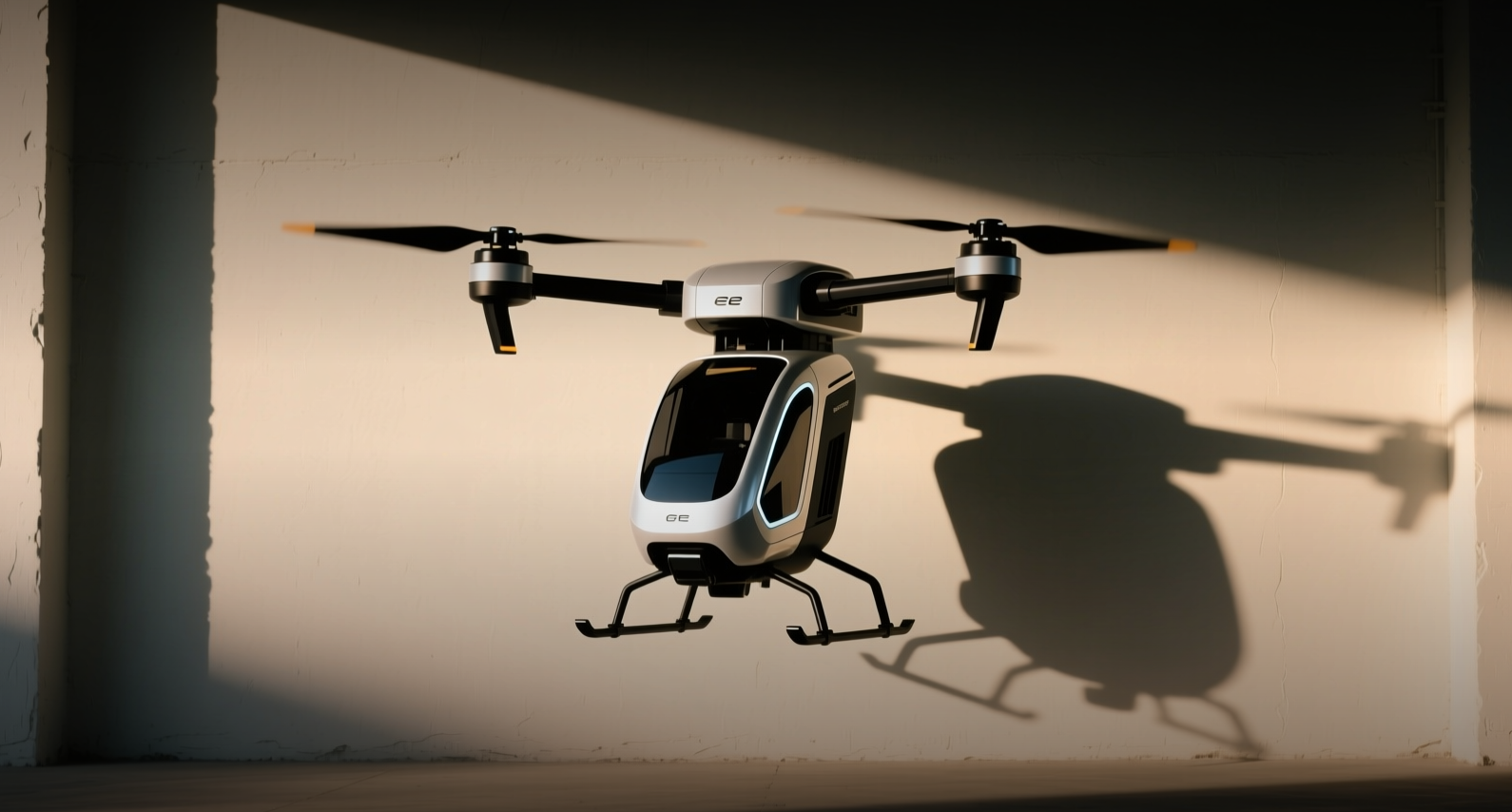
Vertical Aerospace to fly first eVTOL demo with 1,500 pre-orders
**Vertical Aerospace will conduct the first public eVTOL demonstration flights at the Farnborough International Airshow, a milestone that brings the company closer to certification with about 1,500 pre-orders in hand.** Vertical Aerospace plans to fly the first public electric vertical take-off and landing demonstration at the Farnborough International Airshow next week, advancing toward certification with about 1,500 conditional pre-orders from airlines across four continents. "We've proven the technology. Our focus now is executing the roadmap to certification, industrialization and commercial service," Stuart Simpson, chief executive of Vertical Aerospace, said. The UK Civil Aviation Authority recently expanded Vertical's Permit to Fly, authorizing public demonstrations away from its Flight Test Centre at Cotswold Airport. The company's full-scale prototype has completed piloted transition flights and flown into multiple airports including RAF Brize Norton and Farnborough Airport. Vertical will also display its full-scale commercial model, Valo, in Hall 4. The demonstration comes as eVTOL developers race to commercialize urban air mobility, a market that requires regulatory certification, infrastructure and public acceptance. Vertical expects to complete its Critical Design Review by the end of 2026, bringing its early production aircraft assembly facility online in the third quarter and expanding its Vertical Energy Centre in the fourth quarter. **Defense Ambitions Drive Autonomous Tech Push** Vertical this week partnered with Near Earth Autonomy to integrate autonomous flight capability into Valo, supporting future defense and commercial applications. Near Earth, founded in 2012, has developed autonomous flight systems for the US Marine Corps, US Army and Honeywell Aerospace. The technology will work with Honeywell's Anthem avionics system already slated for Valo. Rivals including Joby Aviation and Archer Aviation have also emphasized defense or dual-use programs as they look beyond urban air taxis, where lengthy certification processes, infrastructure gaps and funding constraints have slowed commercialization. **Certification Roadmap Takes Shape** Vertical is developing Valo in both all-electric tiltrotor and hybrid-electric variants. The company expects to select a long-term turbogenerator supplier during 2026 ahead of hybrid-electric flight testing in the first half of 2027. The hybrid variant offers increased range and mission flexibility for defense and commercial operators. The company's technology ecosystem includes partnerships with Honeywell Aerospace, Aciturri, Evolito, Hyundai WIA, Syensqo, Sonaca and Isoclima. Customers include American Airlines, Avolon, Bristow, GOL and Japan Airlines. Vertical shares, listed on the NYSE under EVTL, have been a speculative play on the eVTOL certification timeline. The Farnborough demonstration provides a tangible proof point that could narrow the gap between promise and commercial reality, though the path to certification remains measured in years, not months. Joby Aviation trades at a market capitalization of about $4.5 billion, while Archer Aviation is valued at roughly $3 billion, providing a valuation benchmark for Vertical as it progresses toward commercial service. This article is for informational purposes only and does not constitute investment advice.

Jul 17 2026, 12:10
RiskDex options gauge hits 93rd percentile in Mag 7 earnings signal
**A volatility metric tracking options positioning shows the Magnificent Seven face their most significant earnings-driven move in a year.** The S&P 500's path to a new record may hinge on Magnificent Seven earnings, with an options skew metric flashing its most concentrated bullish reading in a year. Nations Indexes' RiskDex gauge, which tracks the relative cost of one-standard-deviation out-of-the-money calls versus equivalent puts, ranked Meta Platforms Inc. and Microsoft Corp. as the most skewed among the most-actively traded S&P 500 stocks. "When you get this many names that have this much call skew, I think it's a contrary indicator," said Scott Nations, president of Nations Indexes. "The bullishness is so extended that they're priced for perfection." Meta's RiskDex score of 0.75 — meaning calls were 25% more expensive than puts — placed it in the 91st percentile of call-heavy readings over the past year. Microsoft's 0.79 ratio sat in the 93rd percentile. Amazon.com Inc. scored 0.98, in the 92nd percentile by its own historical standard, while Tesla Inc. and Advanced Micro Devices Inc. ranked in the 80th percentile with ratios near 0.9. The analysis screened stocks where call demand was not just elevated but unusually high by each stock's own trailing 12-month history, creating a narrow set of names with uniquely concentrated bullish positioning. The concentrated bullish positioning means the six stocks — which together represent roughly 30% of the S&P 500's market capitalization — must deliver near-perfect results to justify current options prices. Nations pointed to Nvidia Corp.'s recent experience as a cautionary tale: the chipmaker "gave great numbers and just kind of melted." Meta and Microsoft have not made record highs in almost a year, while Amazon has trailed the Nasdaq 100 year-to-date, raising the bar for a breakout. **Earnings Season as Inflection Point** The Magnificent Seven's earnings reports, beginning in the coming weeks, will test whether the options market is correctly pricing a breakout or setting up for disappointment. If the stocks reward the bullish positioning, it could trigger a rotation in market leadership and push the S&P 500 past its current record. A miss, however, would expose the index to significant downside given the group's outsized weighting. The S&P 500 has struggled to sustain momentum in 2026, with the benchmark index oscillating below its all-time high as investors debate whether AI-driven earnings growth can justify stretched valuations. The Cboe Volatility Index has remained elevated relative to pre-2025 averages, reflecting persistent uncertainty about the growth trajectory of mega-cap technology stocks. Meanwhile, the U.S. 10-year Treasury yield has traded in a range that keeps equity risk premiums compressed, leaving stocks sensitive to earnings surprises in either direction. The options skew data suggests traders are betting on a positive resolution — but at a price that leaves little room for error. If the Mag 7 deliver, the S&P 500 could break to new highs. If they disappoint, the unwinding of concentrated call positions could amplify any downside, creating the kind of reversal that Nations' contrary indicator warns about. This article is for informational purposes only and does not constitute investment advice.