Edgen AI operates independently of, and is not controlled by Aspen Digital Financial Limited.
Vertical Aerospace to fly first eVTOL demo with 1,500 pre-orders
 Edgen Stock·Jul 17 2026, 12:12
Share to
Share to
Copy link

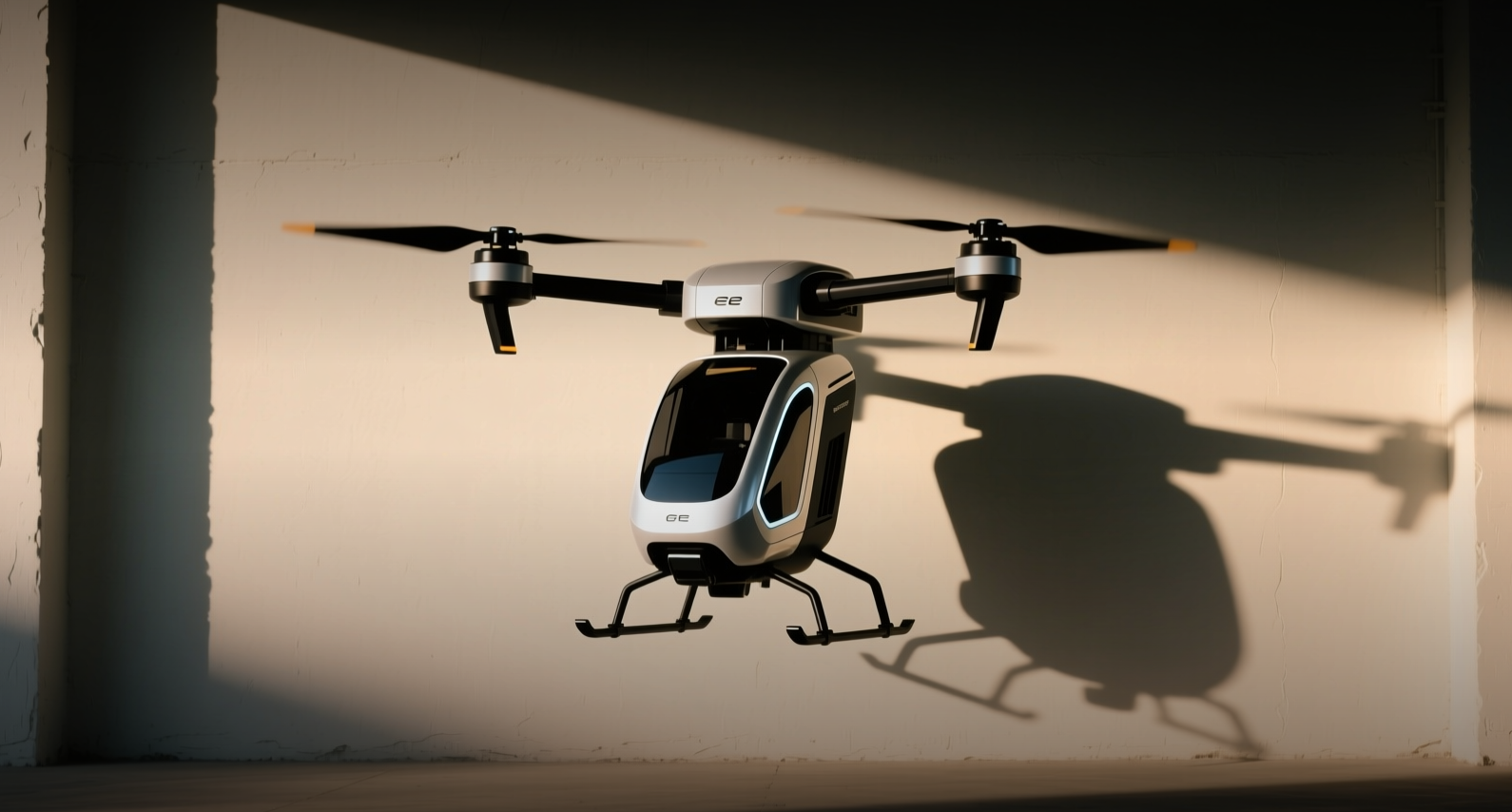
[1] Vertical Aerospace to Fly First eVTOL Public Demonstration Flights at Farnborough International Airshow (https://www.businesswire.com/news/home/202607 ...)[2] Vertical Aerospace and Near Earth Autonomy Partner to Equip Valo Aircraft for Uncrewed Defense and Commercial Operations (https://www.businesswire.com/news/home/202607 ...)[3] Farnborough Airshow 2026: Ghost Bat debut, dual eVTOL first, record demand (https://www.msn.com/en-us/money/companies/far ...)[4] Vertical Aerospace taps Near Earth for autonomous aircraft tech (https://www.reuters.com/business/autos-transp ...)
Related News
Jul 17 2026, 13:38
Ives says AI revolution in third inning as chip rout deepens
**The artificial-intelligence investment cycle remains in its early stages, with the recent semiconductor sell-off reflecting position unwinding rather than a structural demand slowdown, according to Dan Ives.** The artificial-intelligence revolution remains in its "third inning" despite a rout that has wiped nearly 19% from the Philadelphia Stock Exchange Semiconductor Index, with the sell-off driven by crowded-trade unwinding rather than deteriorating fundamentals, Dan Ives said. "We're in the third inning of this AI revolution, not the ninth," Ives, partner and senior managing director at Yorkville Ives & Co., said on Bloomberg Surveillance. "The sell-off is about crowded trades unwinding, not about AI demand slowing." The Philadelphia semiconductor index has fallen 18.9% from its peak less than a month ago, approaching the 20% threshold that would mark a technical bear market. TSMC, the world's largest contract chipmaker, posted a 77% jump in quarterly profit — its fifth consecutive record — yet its shares dropped 5.3% in Asia trading after the company flagged higher-than-expected capital expenditure. Japan's Nikkei 225 slumped nearly 5%, with chipmaker Kioxia plunging 16%. Memory and storage makers Sandisk, Western Digital and Seagate each fell more than 9% in US trading. The disconnect between record earnings and falling stock prices reflects valuations that had run ahead of fundamentals, according to Swissquote. Jefferies' positioning indices show semiconductor positioning dropped from +6.5 in mid-June to +1.3 as of Wednesday's close, suggesting the unwind still has room to run. Ives' "third inning" framing implies the structural AI investment cycle — spanning data center buildout, enterprise adoption and inference deployment — has years of growth ahead. **TSMC's Record Quarter Fails to Calm Nerves** TSMC reported net profit of $12.1 billion for the quarter ended June 30, beating consensus estimates of $11.4 billion, according to data compiled by Bloomberg. Revenue rose 45% from a year earlier to $23.5 billion, driven by demand for Nvidia and Advanced Micro Devices AI accelerators fabricated on the company's 3-nanometer and 5-nanometer nodes. Yet the stock fell as investors focused on management's view that 2026 capital expenditure would exceed the previously forecast $36 billion to $40 billion range, raising concerns about returns on investment. "The inability of such impressive results to trigger a positive market reaction shows one thing: valuations across chipmakers have run ahead of themselves," Swissquote said in a note. **Chinese AI Models Add Competitive Pressure** The sell-off coincides with China's push to close the AI gap through open-source models. President Xi Jinping endorsed open-source AI development at a Shanghai conference on Friday, touting an approach that has helped Chinese companies such as Alibaba's Qwen team and DeepSeek narrow the performance gap with US rivals. Xi cast China as a champion of openness, implicitly criticizing US export controls on AI semiconductors. Ives said the emergence of competitive Chinese AI models does not diminish the US investment opportunity. "China is catching up, but the US ecosystem — from Nvidia's CUDA software moat to the hyperscaler CapEx cycle — remains years ahead," he said. "The third inning means there's still six innings of investment to go." Nvidia shares, which have fallen 12% from their June peak, trade at 35 times forward earnings, below their five-year average of 42 times, according to data compiled by Bloomberg. The broader VanEck Semiconductor ETF has shed about $840 billion in market value since its June high. Ives' thesis suggests the sell-off has created entry points for long-term investors, though near-term volatility may persist as positioning continues to normalize. *This article is for informational purposes only and does not constitute investment advice.*

Jul 17 2026, 13:27
China orders 3 safety reforms for automakers in regulatory crackdown
**China's MIIT summoned top automakers on July 17 to halt price-driven competition and tighten autonomous-vehicle safety protocols.** China's Ministry of Industry and Information Technology on July 17 ordered automakers to halt irrational competition and strengthen safety assessments for driver-assistance and autonomous-driving features, the latest regulatory intervention in the world's largest auto market. The ministry's Equipment Industry Division told manufacturers they must "firmly resist irrational competition" and "strengthen product testing, verification and safety assessment," according to a statement published after the meeting. The directive contains three specific requirements: a system-wide safety risk inspection covering both automakers and key component suppliers, enhanced testing for new technologies before deployment, and a dedicated safety assessment for combined driver-assistance and autonomous-driving functions covering functional safety, cybersecurity, data security and software updates. The crackdown threatens to slow the rollout of advanced driver-assistance features by Chinese EV makers including BYD Co., Nio Inc. and XPeng Inc., which have been racing to deploy semi-autonomous systems as a key differentiator in a price war that has compressed margins across the industry. The MIIT said it would launch a "production consistency and quality improvement campaign" in the next phase, targeting vehicle manufacturers and inspection agencies that fail to meet standards. Companies found in violation face "serious punishment according to law and regulations," the ministry said. **Parallel US Effort** The move mirrors a parallel effort in the US, where the National Highway Traffic Safety Administration is developing new safety requirements governing autonomous-vehicle behavior. NHTSA chief Jonathan Morrison said the agency aims to finalize the rules before the end of President Donald Trump's current term, with an initial public comment period seeking to identify "behavioral competencies" for self-driving cars. The US framework will include performance tests to measure how autonomous vehicles handle specific driving scenarios, Morrison said. **Price War Fallout** China's auto price war has intensified since early 2024, when BYD launched a series of aggressive price cuts that forced rivals including Nio, XPeng and Li Auto Inc. to follow suit. The resulting margin compression has weighed on profitability across the sector, with several startups burning through cash to maintain market share. Nio reported a gross margin of 9.7 percent in the first quarter of 2026, while XPeng posted 12.5 percent — both well below the 20 percent threshold many investors consider healthy for EV makers. The MIIT's intervention suggests Beijing is concerned that cost-cutting may be compromising vehicle safety and quality. The last major regulatory action targeting auto quality was in 2022, when China recalled 5.6 million vehicles for safety defects, according to the State Administration for Market Regulation. For autonomous driving, the stakes are particularly high. Chinese EV makers have been rolling out increasingly sophisticated driver-assistance systems — from highway navigation to city-level autonomous driving — as a way to differentiate their vehicles in a crowded market. XPeng's XNGP system now covers more than 300 Chinese cities, while BYD has been integrating advanced driving features across its mass-market lineup. The new safety assessment requirements could delay the deployment of these features as manufacturers work to meet the ministry's standards. The MIIT's campaign also targets the supply chain, requiring automakers to audit key component suppliers for production consistency, reliability and durability. This could expose vulnerabilities in China's EV supply chain, where rapid growth has sometimes outpaced quality control. Companies such as Contemporary Amperex Technology Co. Ltd., the world's largest battery maker, and Huawei Technologies Co., which supplies autonomous-driving components to multiple automakers, could face increased scrutiny from their automotive customers. The financial impact of the new requirements is not yet disclosed, though compliance costs are expected to rise for manufacturers that must retrofit testing and validation processes. The MIIT did not specify a timeline for the upcoming quality improvement campaign, leaving automakers to prepare for heightened scrutiny without a clear deadline. This article is for informational purposes only and does not constitute investment advice.
Jul 17 2026, 13:26
Moonshot's Kimi K3 tops coding leaderboard at 1679, triggering global tech rout
**Moonshot AI's Kimi K3 has done what no Chinese open-weight model has done before: beat Anthropic's Claude Fable 5 and OpenAI's GPT-5.6 Sol on a developer preference benchmark, then watched global tech stocks lose hundreds of billions in market value.** Moonshot AI, the Beijing-based startup behind the Kimi assistant, released Kimi K3 on July 16, a 2.8 trillion-parameter model with native visual understanding and a 1 million-token context window. The model scored 1679 on Arena.ai's Frontend Code leaderboard, placing first ahead of Claude Fable 5 and GPT-5.6 Sol. The benchmark measures developer preference across real web development tasks — component structure, CSS behavior, layout reasoning, accessibility and iterative debugging — making it a proxy for how well AI handles the messy work of production coding. "The entire game has changed," said Kim Isenberg, an AI analyst who tracks model performance benchmarks. "This will trigger red alerts at every major US lab." The market reaction was immediate and severe. Nasdaq 100 futures fell more than 1.8% in pre-market trading, with Nvidia leading the Magnificent Seven lower. The Philadelphia Semiconductor Index has now dropped more than 18% from its recent high, approaching a technical bear market. Japan's Nikkei 225 fell more than 4% on Friday, and the MSCI Asia Pacific index posted its steepest single-day decline in three weeks. Goldman Sachs partner and head of equity trading Rich Privorotsky classified the sell-off as a "deleveraging event" and warned that the "era of compute expansion" may be ending. The core question, he said, is how a Chinese lab without access to the largest Western pre-training clusters managed to close the gap through architecture innovation, synthetic data, reinforcement learning and post-training techniques. "This does not prove scaling laws are dead," Privorotsky said. "It proves scaling is no longer the only path to victory." JPMorgan global markets intelligence head Andrew Tyler told clients the Kimi K3 release was "adding fuel to the fire" and that fears of a "DeepSeek 2.0" moment were weighing on both Asian and US technology stocks. ## Pricing and Open-Weight Strategy Reshape the Competitive Math Kimi K3's API pricing is set at approximately $12 per million tokens, roughly 40% below comparable US frontier models. Moonshot plans to release full model weights on July 27 under an open-weight license, allowing enterprises and governments to deploy the model on their own infrastructure. The pricing and openness strategy mirrors the playbook DeepSeek used earlier in 2025 to force a market-wide repricing of AI inference costs. DeepSeek's implied $52 billion valuation showed how quickly investors are revaluing Chinese AI champions. Kimi K3 gives that repricing a technical foundation: not just cheaper models, but models that win developer preference tests in the workflows that matter most for AI coding agents. The competitive threat is not hypothetical. Front-end coding is one of the most demanding tests for AI because the model must combine code generation, design judgment, user interface structure and iterative debugging. A model that passes abstract coding benchmarks can still fail when asked to build a polished, responsive interface from a messy prompt. Kimi K3's top ranking suggests Chinese open-weight models are now competitive where developers actually work, not just on static test questions. ## The Investment Fallout: Compute Capex Under Scrutiny The sell-off was compounded by unrelated but concurrent pressures. TSMC reported a 77% year-over-year increase in quarterly net profit but announced 2026 capital expenditure plans of $64 billion, above analyst expectations. The higher capex forecast, rather than reassuring investors about demand, intensified concerns about whether AI infrastructure spending can generate adequate returns. Alphabet's reported delay of its Gemini 3.5 Pro model added to the negative sentiment. The rotation out of tech was not a market-wide collapse. The S&P 500 equal-weight index closed at an all-time high on Thursday, with nearly three-quarters of S&P 500 components rising even as the headline index fell 0.51%. Citigroup's Beata Manthey described the rotation as necessary for a broadening rally, while Santander Asset Management's Francisco Simon said the key confidence driver remains earnings season. For investors, the Kimi K3 launch raises a structural question that no single earnings report can answer. If a Chinese startup can match frontier coding performance at 40% lower cost using open-weight distribution, the $64 billion in annual capex that TSMC and its customers are committing may face a different return calculus than the market has assumed. Nvidia shares, which have driven the bulk of the S&P 500's gains over the past two years, are now the most exposed to a repricing of that thesis. The full weights release on July 27 will be the next catalyst. If enterprise adoption scales quickly, the pressure on US AI pricing power will only intensify. *This article is for informational purposes only and does not constitute investment advice.*