Edgen AI operates independently of, and is not controlled by Aspen Digital Financial Limited.
US equity financing tops $300B as AI giants tap capital markets
 Edgen Stock·Jul 22 2026, 21:27
Share to
Share to
Copy link


[1] AI狂热与巨头“吸血”:美股年内股权融资破3000亿美元,超级周期还是流动性大考? (https://wallstreetcn.com/articles/3777715 ...)[2] Why Strategy Isn’t Keeping up With Bitcoin (BTC) — and Where MSTR Is Really Headed Next (https://www.msn.com/en-us/money/economy/why-s ...)[3] Elon Musk SpaceX IPO valuation: Can $1.75 trillion be justified despite losses, limited revenue and reliance on future vision? Details here (https://www.msn.com/en-in/money/economy/elon- ...)[4] How the math works on a $1.75 trillion SpaceX valuation (https://www.msn.com/en-in/money/markets/how-t ...)[5] SpaceX's $1.75 trillion valuation target: 'Moonshot' or reality? Analyst points to two keys to success (https://www.msn.com/en-us/money/news/spacex-s ...)
Related News
Jul 22 2026, 23:37
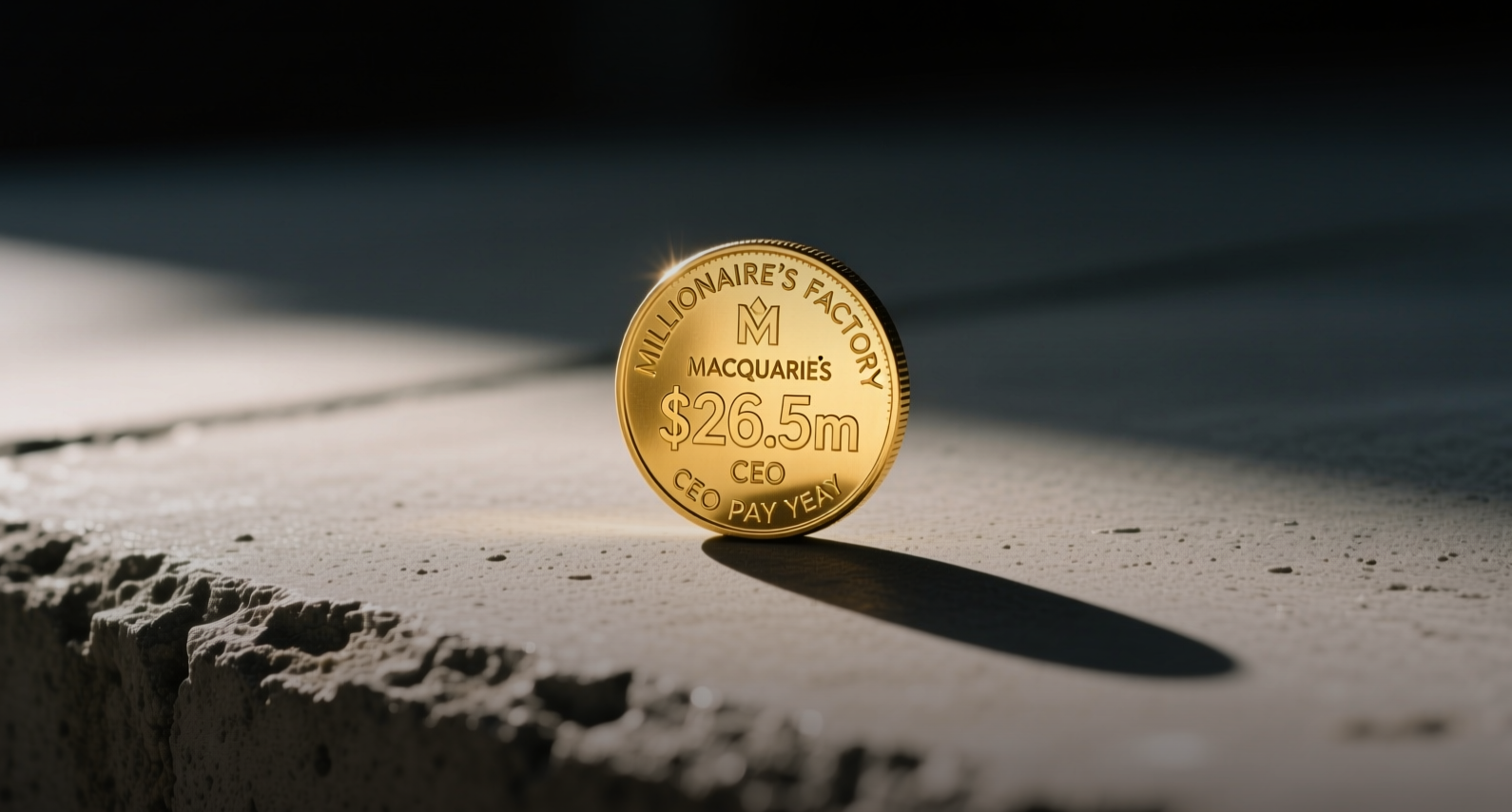
Macquarie CEO Wikramanayake to retire after A$26.5m year
Shemara Wikramanayake, one of Australia's highest-paid executives and the face of Macquarie Group's transformation into a global infrastructure and asset management powerhouse, will retire on Nov. 6 after nearly eight years as chief executive officer. "Over her last eight years as CEO, and for almost four decades with the company, Shemara has steered Macquarie through expansion into new markets, the dislocation of the COVID pandemic, and significantly enhanced recognition of our brand," Chair Glenn Stevens said. Macquarie, known in Australia as the "Millionaire's Factory" for its performance-linked pay structure, said its Commodities and Global Markets division posted a substantial increase in net profit contribution, driven by higher income from commodities trading. The gain was partly offset by a drop in Macquarie Asset Management's contribution following the divestment of its North American and European public investments business. The bank does not disclose quarterly profit figures. The leadership transition comes at a pivotal moment for the A$98 billion lender. Wikramanayake, 64, reshaped Macquarie to focus on asset management and infrastructure investment, reducing reliance on volatile investment banking fees. Under her watch, Macquarie's shares more than doubled to A$254.93 from A$124.93 in mid-2018, outpacing the S&P/ASX 200 Index's roughly 40% gain over the same period. Greg Ward, a 30-year Macquarie veteran who served as chief financial officer during the global financial crisis, will take over as CEO. Ward most recently led Macquarie's Banking and Financial Services division, which has pushed into Australia's retail mortgage market. Macquarie is now the nation's fifth-largest home lender, and analysts have forecast it could break into the top four within the next few years. The succession plan carries both continuity and risk. Ward's deep institutional knowledge — he navigated the bank through the 2008 crisis as CFO — provides stability. But his background is in retail banking and finance, not the asset management and commodities trading businesses that now drive the bulk of Macquarie's earnings. The CGM unit's profit surge, fueled by volatile commodity markets, may prove cyclical, while the asset management division faces headwinds from portfolio restructuring. Wikramanayake was paid A$26.5 million in 2025, reinforcing Macquarie's philosophy of tying executive compensation to performance. The bank has not disclosed details of Ward's pay package. Macquarie held its annual general meeting in Sydney on Thursday. The bank's next full-year results are due in May 2027. This article is for informational purposes only and does not constitute investment advice.

Jul 22 2026, 23:12
WTI hits $88 as Trump threatens Tehran strikes, Cushing nears floor
**WTI crude surged to $88 a barrel, a six-week high, as President Trump threatened to bomb facilities in or near Tehran if Iran attacks ships in the Strait of Hormuz, while Cushing crude inventories fell 674,000 barrels to near operational minimums, compounding supply risks that Goldman Sachs warned could push Brent above $120.** President Trump said Wednesday on Truth Social that any Iranian attack on vessels in the Strait of Hormuz would trigger US strikes on "a bridge or power plant, including facilities located in or near Tehran." The threat marked a geographic escalation from previous warnings focused on coastal military targets. Secretary of State Marco Rubio confirmed the US would continue attacks "as long as Iran tries to control shipping traffic," while Defense Secretary Pete Hegseth signaled potential expansion to include Yemen's Houthi rebels, who on Monday announced a maritime blockade against Saudi Arabia in the Bab el-Mandeb strait. "This is a dangerous precedent — if a nation state can control an international waterway, charge a toll and blow up ships that don't pay, it will repeat in other regions," Rubio said at an ASEAN meeting in Manila, warning the principle could extend to Asian waterways. The geopolitical escalation converged with tightening physical supply. Cushing, Oklahoma — the delivery point for WTI futures — saw inventories drop 674,000 barrels last week, pushing storage levels toward the operational minimum that typically triggers price spikes in the front-month contract. US crude production also slipped from its record high, even as the rig count continued rising, while the Strategic Petroleum Reserve accelerated releases. Overall commercial crude inventories rose 2.01 million barrels, above the 500,000-barrel draw the market expected, but traders focused on the Cushing bottleneck rather than the headline number. **The $4 Gasoline Threshold** US retail gasoline prices returned to an average of $4 a gallon, a level that historically pressures consumer spending and erodes approval ratings. The national average stood at $3.14 a year ago. Brent crude rose 3.2% to $90.95 a barrel Monday, while benchmark US crude climbed 2.8% to $84.04, before extending gains through midweek. Goldman Sachs warned that if the Strait of Hormuz crisis persists, Brent could break above $120, a scenario that would push gasoline prices well beyond the current threshold. **Two Chokepoints Under Threat** The Strait of Hormuz — through which one-fifth of the world's oil and liquefied natural gas once passed — remains effectively closed after Iran blockaded the waterway and attacked tankers using a southern route hugging Oman's coast. Iran's Revolutionary Guard said Tuesday it stopped two "non-compliant oil tankers" attempting to transit the strait. At least five vessels, including crude tankers carrying Saudi oil, made u-turns before reaching the Bab el-Mandeb strait after the Houthis threatened to block Saudi-linked ships. The Saudi military has vowed to keep the Bab el-Mandeb open, but the simultaneous threat to both chokepoints leaves global energy supply chains exposed to disruption on two fronts. The US completed an 11th consecutive night of strikes on Iran on Tuesday, targeting aircraft hangars, drone storage and operations centers. Trump also threatened to strike the Pickaxe Mountain nuclear facility "pretty soon, and very heavily," though he acknowledged some Iranian ballistic missiles have survived US bombing campaigns because they are buried underground. The war has cost about $37.5 billion so far, Hegseth told lawmakers, with sources saying the actual figure could be far higher once military construction and base repairs are included. This article is for informational purposes only and does not constitute investment advice.

Jul 22 2026, 23:10
CN and Union Pacific rail pact creates 3-nation freight corridor
**A binding agreement between CN and Union Pacific will expand Chicago rail access and open a new freight corridor connecting Canada to Mexico.** Canadian National Railway and Union Pacific signed a binding agreement granting each other operating rights across key US corridors, creating a direct rail link between Canada, the US and Mexico. "We are thrilled to have an agreement with Union Pacific to expand CN's access to Mexico," said Tracy Robinson, President and CEO of CN. "This is a natural extension of our north-south franchise and will open new routes for customers." The pact gives Union Pacific expanded rights over CN's Elgin, Joliet & Eastern Railway corridor around Chicago — the busiest US rail hub — while granting CN access to Union Pacific's network between Memphis, Tennessee, and Eagle Pass, Texas, a key border crossing for Mexico-bound freight. The agreement positions both railroads to capture growing cross-border trade flows as North American supply chains shift toward nearshoring. Canada-Mexico bilateral trade reached C$48.6 billion in 2025, up 18 percent from 2020, according to Statistics Canada, with rail carrying a significant share of industrial goods and energy products. The MOU builds on CN's broader push to expand its north-south franchise. The railroad is also advancing the Alberta Corridor Export Rail Terminal Project with Keyera Corp. and AltaGas Ltd., a C$240 million investment designed to move 45,000 barrels per day of propane and butane from Alberta's Industrial Heartland to West Coast export facilities by mid-2028. CN's propane export volumes are already accelerating. Shipments from South Beamer, Alberta, to Watson Island, British Columbia, hit an all-time monthly record in May, with carloads rising 40 percent from a year earlier, the railroad said. **Chicago rail congestion and the EJ&E bet** For Union Pacific, the deal provides access to the EJ&E route — a 198-mile bypass around Chicago that CN acquired in 2008 for US$300 million to ease congestion through the city's crowded rail network. "I've seen the benefits first-hand of what the EJ&E route around Chicago can do for a railroad," said Jim Vena, CEO of Union Pacific. Chicago handles roughly one-third of all US rail freight, and delays there ripple across the entire North American network. The Illinois Tollway is simultaneously advancing the US$26.5 billion I-490 project west of O'Hare International Airport, which includes bridges spanning Union Pacific tracks — a sign of the infrastructure demands created by rising freight volumes. **Cross-border growth trajectory** The Canada-Mexico rail corridor has become a strategic priority for both countries as companies diversify supply chains away from Asia. Mexico surpassed China as the top US trade partner in 2023, and Canadian rail shipments to Mexico have grown at an average annual rate of 8 percent over the past five years, according to Association of American Railroads data. The agreement does not require regulatory approval from the US Surface Transportation Board, the companies said, as it involves operating rights rather than a change in control. The binding MOU sets the stage for final implementation agreements in the coming months. For CN, the Memphis-to-Eagle Pass route fills a critical gap in its network. The railroad already serves the Canadian and US Midwest markets but lacked direct access to the Mexican border through its own rights. Union Pacific, which operates the largest US rail network west of the Mississippi, gains a faster path through Chicago — a bottleneck that has historically added 24 to 48 hours of transit time for trains routed through the city's congested railyards. The deal also carries implications for the broader North American logistics sector. Rail accounts for roughly 40 percent of US freight ton-miles, and any improvement in cross-border rail efficiency reduces costs for shippers of automotive parts, agricultural products, chemicals and energy commodities. Canadian crude-by-rail volumes to the US Gulf Coast, which averaged 95,000 barrels per day in the first quarter of 2026, could benefit from improved network fluidity, according to data from the Canada Energy Regulator. *This article is for informational purposes only and does not constitute investment advice.*