Edgen AI operates independently of, and is not controlled by Aspen Digital Financial Limited.
Macquarie CEO Wikramanayake to retire after A$26.5m year
 Edgen Stock·Jul 22 2026, 23:37
Share to
Share to
Copy link

[1] Macquarie CEO Wikramanayake to retire; profit from CGM unit rises (https://www.reuters.com/business/macquarie-ce ...)[2] 'Millionaires' factory' to face shareholder scrutiny (https://www.msn.com/en-au/money/news/milliona ...)[3] Transurban Group (https://www.afr.com/company/asx/tcl ...)
Related News
Jul 23 2026, 01:07
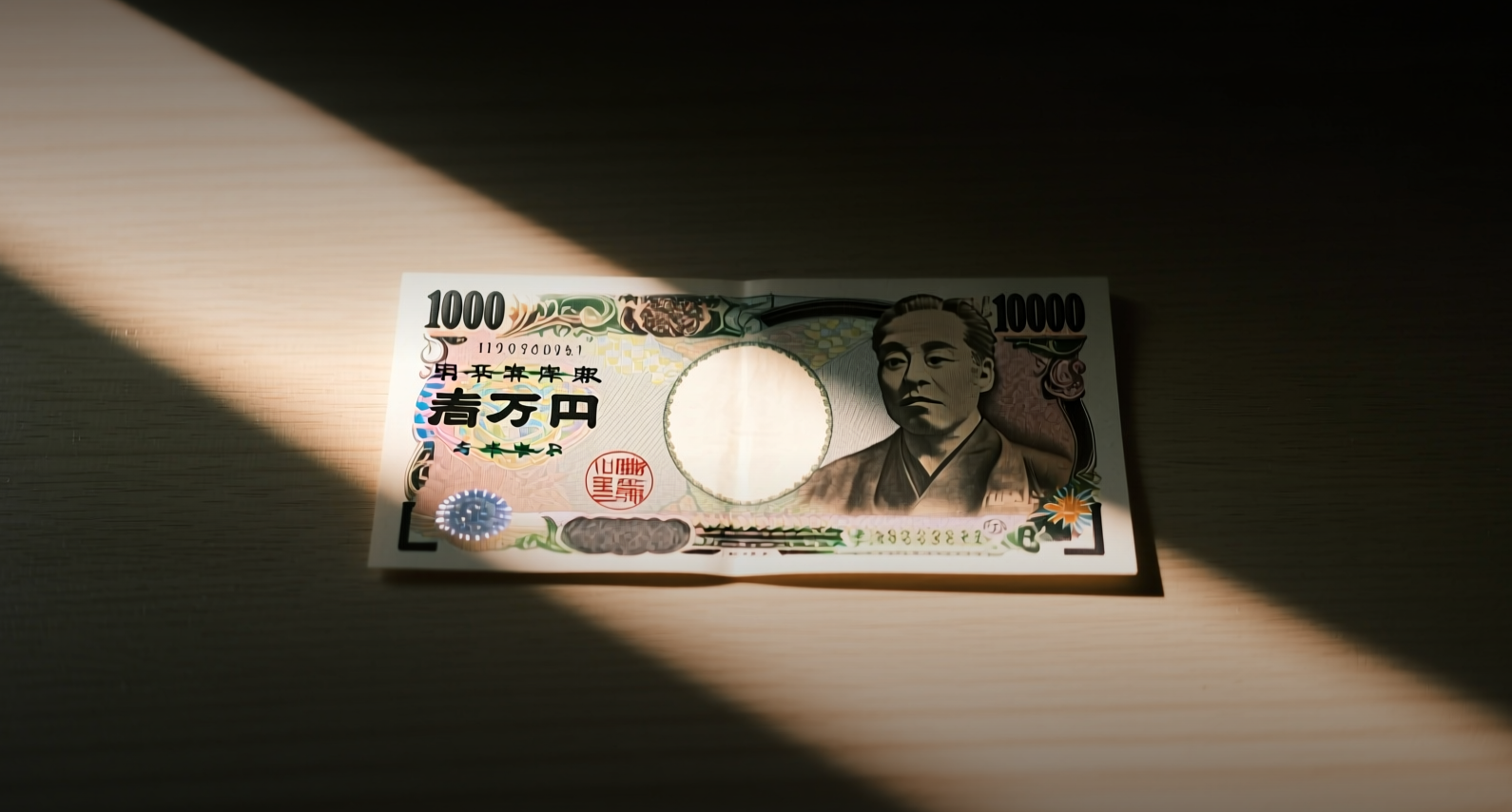
BOJ open to faster rate-hike pace, yen consolidates near 162
The Bank of Japan is open to a faster pace of rate increases, a media report showed Tuesday, offering rare support for a yen pinned near 162 per dollar as a 250-basis-point rate gap with the Federal Reserve overwhelms the central bank's historic tightening. "The report introduces a hawkish tail risk that currency markets have been under-pricing," analysts at MUFG said. "A faster pace of BOJ tightening would compress the rate differential more quickly than markets currently expect." The yen traded at 162.13 per dollar Tuesday, consolidating after touching 163.24 last week — its weakest since 1986. The BOJ has raised its policy rate to 1.00% from minus 0.1% since March 2024, yet the yen remains near four-decade lows as the Fed holds at 3.50%-3.75% and leans toward further hikes to combat energy-driven inflation. The rate differential has narrowed to roughly 250-275 basis points from about 325 basis points in early 2026, but remains wide enough to sustain the carry trade that keeps the yen under pressure. A faster pace of BOJ hikes would narrow the differential more rapidly, potentially triggering an unwind of leveraged carry positions that have pushed the yen to multi-decade lows. Japan spent a record 11.7 trillion yen supporting the currency after USD/JPY crossed 160 in April and May 2024, and officials have said they are prepared to act again. The BOJ's next policy decision is scheduled for July 31, two days after the Fed's July 29 meeting. The media report comes as the BOJ faces a credibility challenge. Despite delivering the most aggressive tightening in its modern history — ending yield curve control in March 2024 and raising rates from minus 0.1% to 1.00% — the market remains skeptical of its commitment to sustained normalization. Each hike has narrowed the rate gap with the Fed, but the yen has failed to rally meaningfully as the carry trade and Japan's deteriorating trade balance offset the tightening. Japan's trade position has worsened as the Iran conflict pushed Brent crude toward 91 dollars a barrel, increasing the cost of energy imports for a country that relies on foreign suppliers for nearly all its oil and gas. The same oil shock that weakens the yen through the trade channel also supports the dollar by reinforcing the Fed's hawkish bias. **Rate Differentials and the Carry Trade** The 250-to-275-basis-point gap between the BOJ's 1.00% and the Fed's 3.50%-3.75% remains the dominant driver of USD/JPY. Hedge funds borrow yen at 1.00% to buy dollar-denominated assets yielding around 4.00%, pocketing the difference as long as the yen stays flat or weakens. That structural short-yen positioning has overwhelmed the BOJ's tightening and kept the currency pinned near its lows. The last time the BOJ surprised markets with a hawkish move was in July 2024, when it raised rates to 0.25% and announced a reduction in bond purchases. USD/JPY fell more than 5% in the following weeks as carry trades unwound, before resuming its uptrend as the Fed held rates high. A similar pattern could unfold if the BOJ delivers on a faster pace, though the magnitude of any yen rally would depend on whether the Fed also shifts its stance. **Intervention Risk at 162** The 162 level marks a soft ceiling for USD/JPY, with Japan's Ministry of Finance having demonstrated its willingness to intervene at multi-decade lows. The authorities spent a record 11.7 trillion yen in April and May 2024 after the pair crossed 160, and verbal warnings have intensified as the yen approaches fresh lows. The speed and disorderliness of any further yen decline may matter more than a specific exchange-rate level in determining whether intervention occurs, analysts at MUFG said. The BOJ's July 31 meeting and the Fed's July 29 decision will be the next trigger points. If the BOJ signals a faster tightening path while the Fed holds steady, the rate differential could compress more quickly, reducing the profitability of carry trades and potentially triggering the unwind that yen bulls have been anticipating. This article is for informational purposes only and does not constitute investment advice.

Jul 23 2026, 00:47
Chinese funds push electronics allocation to record 43.4% before tech crash
Chinese active equity funds allocated a record 43.4% of holdings to the electronics sector by end-June, an extreme concentration that left the market vulnerable to the 30% to 40% technology stock rout that followed in July. "The extreme concentration in electronics reflects an unprecedented shift in A-share fund allocation patterns," analysts at Chenming Strategy Research wrote in a quarterly review, noting the previous record was banks at 30% of fund holdings in 2009. Electronics' weighting exceeded the sector's 23.6% share of A-share free-float market capitalization by about 20 percentage points, the largest single-sector overweight in Chinese fund history. The iShares Semiconductor ETF entered a bear market, falling more than 20% from its peak, while Marvell Technology lost 40% of its value. UBS set a $340 price target on Marvell, implying 64% upside, citing the company's Compute Express Link business with a total addressable market estimated at $4.5 billion by year-end and $10 billion by 2030. The concentration poses a dilemma for fund managers heading into the second half: technology remains the medium-term structural theme driven by AI capital expenditure, but the July correction has erased months of gains and forced redemptions. Non-AI sectors that were starved of capital in the second quarter — including new energy, pharmaceuticals and metals — may attract rotation flows if the tech selloff deepens. **Fund flows show dramatic rotation into AI, out of everything else** Active equity funds saw net redemptions of about 170 billion yuan ($23.4 billion) in the second quarter, even as total fund inflows — including private placements and fixed-income products — reached 200 billion yuan, down from 720 billion yuan in the first quarter. The divergence highlights a two-tier market: 352 funds that delivered year-to-date returns above 100% attracted net subscriptions, with 74.4% of them seeing inflows, while mediocre performers bore the brunt of redemptions. The rotation out of non-AI assets was stark. Fund allocations to Hong Kong stocks fell 5.3 percentage points quarter-on-quarter. New energy dropped 5.5 points, pharmaceuticals declined 3 points, metals fell 3.3 points and food and beverage slid 2.7 points. Only three sectors — electronics, communications and building materials — saw net overweight increases relative to their free-float market weights. **Custom silicon and CXL emerge as next catalysts** Despite the broad selloff, pockets of the semiconductor supply chain continue to attract analyst attention. The custom silicon trend — where hyperscalers design their own chips to avoid Nvidia's gross margins, which have exceeded 70% — remains a structural tailwind that could support select semiconductor names as the broader sector corrects. Marvell's capital-light model and exposure to AI inference workloads position it to benefit, according to the UBS note. **What comes next** The July selloff has brought technology valuations closer to historical averages, but the fund flow data suggests the unwind may not be complete. The CSI 300 Information Technology index has fallen roughly 25% from its June peak, and the Shanghai Composite has retreated about 8% over the same period. The next catalyst for the sector will be the U.S. mega-cap earnings season, where capital expenditure guidance from Microsoft, Amazon and Alphabet will set the tone for AI-related semiconductor demand. For fund managers, the second half presents a critical decision point. Technology remains the structural bet, but the extreme concentration of Q2 has created fragility. Sectors that were starved of capital — brokerages, copper producers, energy storage and innovative drugs — may offer better risk-reward if the tech correction extends, based on their second-quarter earnings momentum and low institutional ownership. This article is for informational purposes only and does not constitute investment advice.

Jul 23 2026, 00:43
Amazon pays $1.5 billion in FTC settlement over Prime enrollment practices
**Amazon must pay $1.5 billion in refunds to customers and a $1 billion civil penalty to resolve Federal Trade Commission allegations that it enrolled tens of millions of consumers in Prime subscriptions without their knowledge and made cancellation intentionally difficult.** The FTC's complaint, filed in June 2023, alleged that Amazon used deceptive interface designs — known as "dark patterns" — to steer customers into Prime memberships through multiple enrollment flows including the universal Prime decision page, shipping selection page, single-page checkout and Prime Video enrollment. Customers who tried to cancel faced a multi-step process the agency described as designed to thwart their exit, dubbed "Iliad Flow" internally at the company. "This settlement holds Amazon accountable for tricking millions of consumers into a recurring subscription they never agreed to," said Samuel Levine, director of the FTC's Bureau of Consumer Protection. "The $2.5 billion total judgment — including $1.5 billion in consumer refunds — sends a clear message that deceptive subscription practices carry significant consequences." Amazon began issuing automatic refunds to eligible customers in November and December 2025, according to the settlement administrator. Starting in January 2026, the company began sending claim notices by mail or email to customers who did not receive automatic payments. Eligible Prime members may receive refunds of up to $51, representing a portion of the annual membership fee, with total payouts capped at the $1.5 billion fund. **Who qualifies and how to claim** Customers qualify for compensation if they were enrolled in Prime through a challenged enrollment flow or attempted to cancel through the online cancellation process but were unable to do so between June 23, 2019, and June 23, 2025. Additionally, eligible customers must have used no more than three Prime benefits — such as Prime Music or Prime Video — in any 12-month period following enrollment. Amazon is responsible for determining which customers enrolled through challenged flows, relieving individuals of that burden. Customers who did not receive an automatic refund have until July 27, 2026, to submit a claim through the settlement website at www.SubscriptionMembershipSettlement.com or by contacting the administrator at admin@SubscriptionMembershipSettlement.com. Payments can be received by check, PayPal or Venmo, with disbursements expected in late 2026. **Regulatory implications for Big Tech** The settlement represents one of the largest consumer protection judgments against a technology company in U.S. history. The $1 billion civil penalty alone exceeds the FTC's total annual budget of approximately $430 million for fiscal 2025. The case signals heightened regulatory scrutiny of subscription-based business models across the technology sector, where recurring revenue now accounts for a growing share of revenue for companies including Apple, Google and Microsoft. The FTC's action against Amazon follows a broader push by the agency under Chair Lina Khan to police what it views as anticompetitive and deceptive practices among dominant platforms. The agency has pursued similar cases involving subscription practices at other companies, though none have resulted in penalties of this magnitude. Amazon, as part of the settlement, agreed to cease the enrollment and cancellation practices identified in the complaint and to implement compliance measures subject to FTC oversight. This article is for informational purposes only and does not constitute investment advice.