Edgen AI operates independently of, and is not controlled by Aspen Digital Financial Limited.
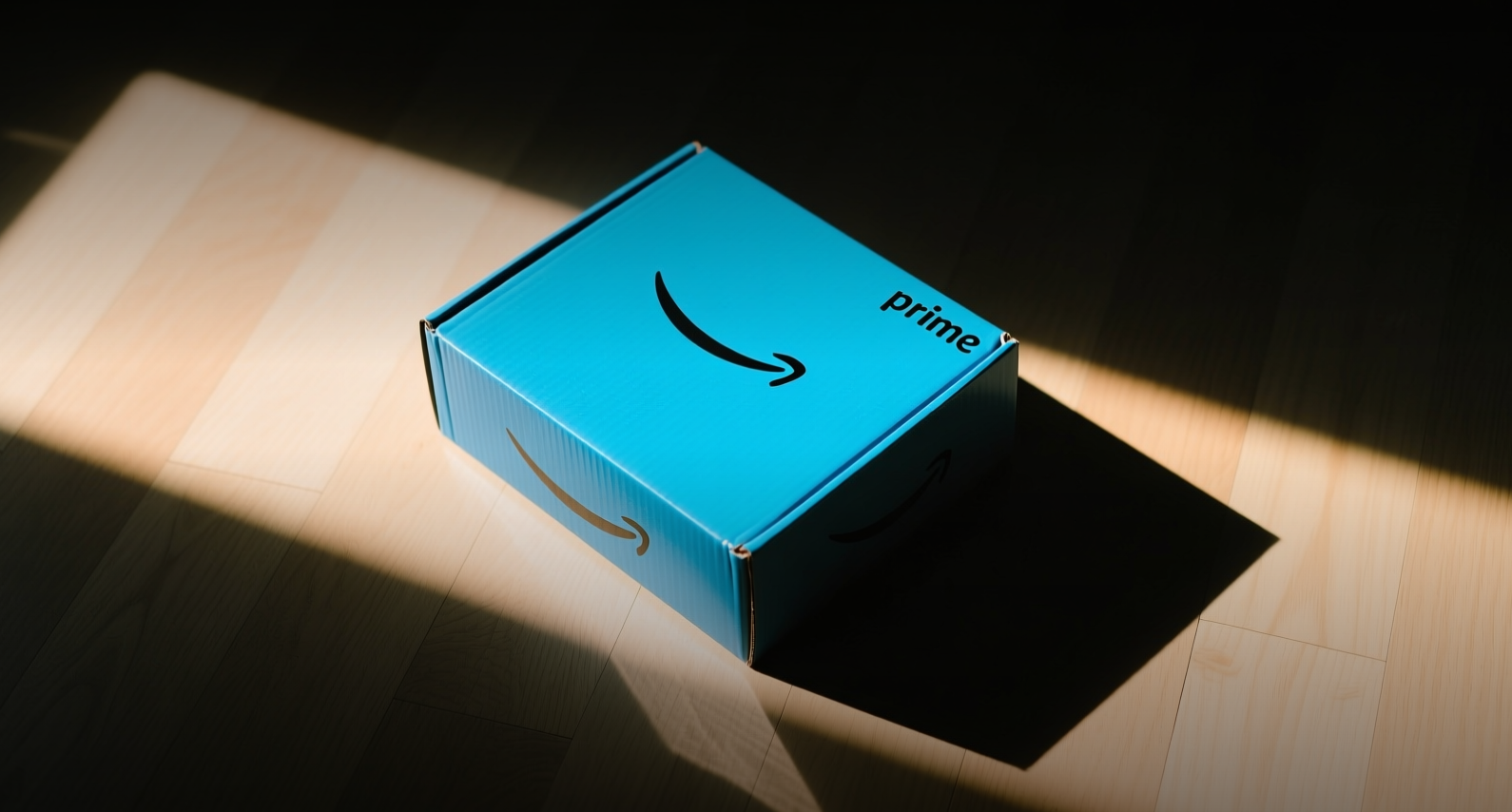
Amazon pays $1.5 billion in FTC settlement over Prime enrollment practices
 Edgen Stock·Jul 23 2026, 00:43
Share to
Share to
Copy link

[1] Here's how to claim the Amazon Prime FTC lawsuit payout before the deadline (https://www.businessinsider.com/amazon-prime- ...)[2] Amazon Prime settlement: How to claim your refund from $2.5 billion FTC deal (https://www.news4jax.com/news/2026/07/22/amaz ...)[3] Claim deadline nears for Amazon Prime settlement refunds (https://www.msn.com/en-us/money/companies/cla ...)[4] How to file claims in Amazon Prime's $2.5B settlement (https://www.msn.com/en-us/money/companies/how ...)
Related News
Jul 23 2026, 01:43
Geely to take over Ford Spain line, sidestep 18.8% EU tariff
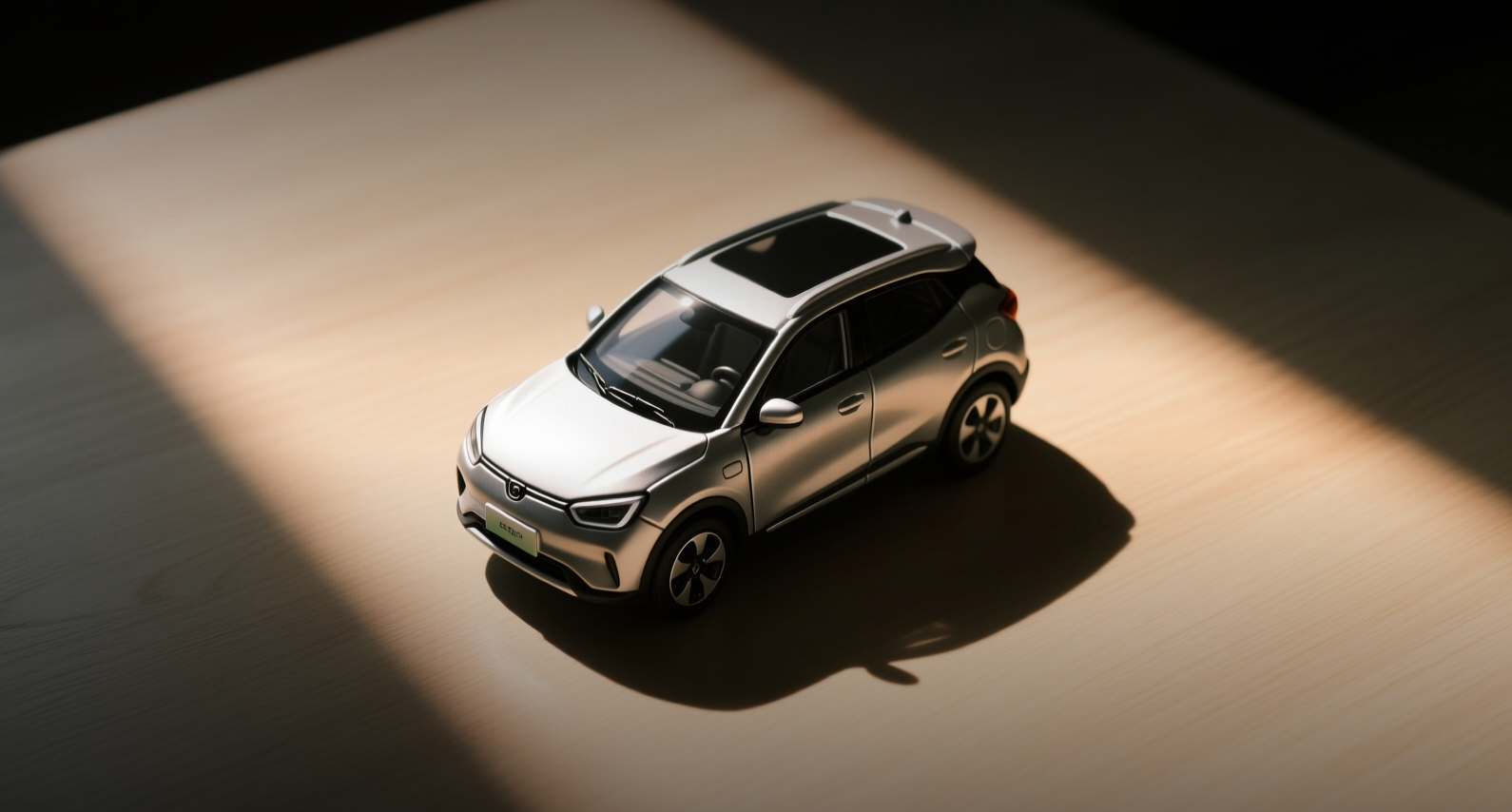
**Geely Auto will take over an idle Ford Spain assembly line to build EVs, bypassing the EU's 18.8 percent tariff on China-made cars.** Geely Auto will take over an idle assembly line at Ford's plant near Valencia, Spain, to build its EX2 electric city car, bypassing the EU's 18.8 percent tariff on China-made EVs. Spanish Prime Minister Pedro Sanchez is expected to announce the deal Thursday at the Almussafes facility, ABC newspaper reported, citing people familiar with the transaction. "The agreement would give Geely a manufacturing base inside the European Union, helping it to avoid EU tariffs on electric vehicles imported from China while providing direct access to the European market," ABC reported, citing its sources. Ford Europe President Jim Baumbick will attend the announcement alongside Sanchez. The compact electric crossover measures about 4.13 meters and carries an 85-kilowatt motor with a 40-kilowatt-hour lithium iron phosphate battery, delivering a WLTP range of up to 325 kilometers. In China, the model sells as the Xingyuan under Geely's Galaxy sub-brand starting at about 65,800 yuan and ranks among the country's best-selling passenger cars. Body 3, the newest hall at Almussafes, has been idle since 2023 after Ford ended production of the Mondeo, Galaxy and S-Max. The line requires about 100 workers per shift due to high automation. The deal gives Geely a production base inside the EU at a time when Chinese automakers are racing to establish European manufacturing to avoid tariffs. For Ford, offloading the underused hall cuts fixed costs at a site running well below capacity — annual output has fallen below 100,000 units from more than 300,000 before the pandemic — while preserving jobs and securing the next Bronco production for Valencia from 2028. ## Spain Draws Chinese EV Investment The Valencia deal adds to a growing list of Chinese automakers setting up production in Spain, which has drawn more such investments than any other European country. MG, owned by SAIC, confirmed in June it will build its first European plant at Ferrol in Galicia with an initial investment of 200 million euros and eventual capacity of 120,000 vehicles. SAIC faces combined anti-subsidy duties of 45.3 percent on top of the standard 10 percent import tariff, among the highest applied to any Chinese manufacturer. Chery and Ebro Motors have restarted the former Nissan plant in Barcelona, assembling the Ebro S400 and S700 on Chinese platforms. Stellantis is moving through Leapmotor International, which it controls at 51 percent, adding an electric Opel crossover in 2028 at Figueruelas in Zaragoza sharing a line with the Leapmotor B10. Chinese brands now account for more than 11 percent of car sales in Spain, up from 6.6 percent in 2024. Across Europe, Chinese brands reached 5 percent of the market in 2025 on 628,374 registrations, led by SAIC with 305,717 units and BYD with 187,657 registrations — the latter tripling its share from 0.4 percent to 1.4 percent. ## Ford's Partnership Strategy Deepens The sale marks the latest step in Ford's European restructuring as the automaker shifts toward partnerships rather than standalone production. The electric Explorer and Capri already use Volkswagen's MEB platform, and two further electric models built on Renault architecture are due before the end of the decade. Ford sold Volvo Cars to Geely in 2010 for $1.8 billion, having paid about $6.45 billion for the Swedish marque in 1999. Volvo has since become the anchor of a European portfolio that also includes Polestar and Lynk & Co. Geely Auto shares, which trade in Hong Kong, may see positive momentum as the deal reduces tariff exposure and expands the company's European production footprint. Ford's strategy of offloading idle capacity while partnering on platforms allows it to focus capital on higher-margin models like the Bronco. This article is for informational purposes only and does not constitute investment advice.
Jul 23 2026, 01:40
PBOC nudges yuan fixing to 6.7906 as economic headwinds deepen
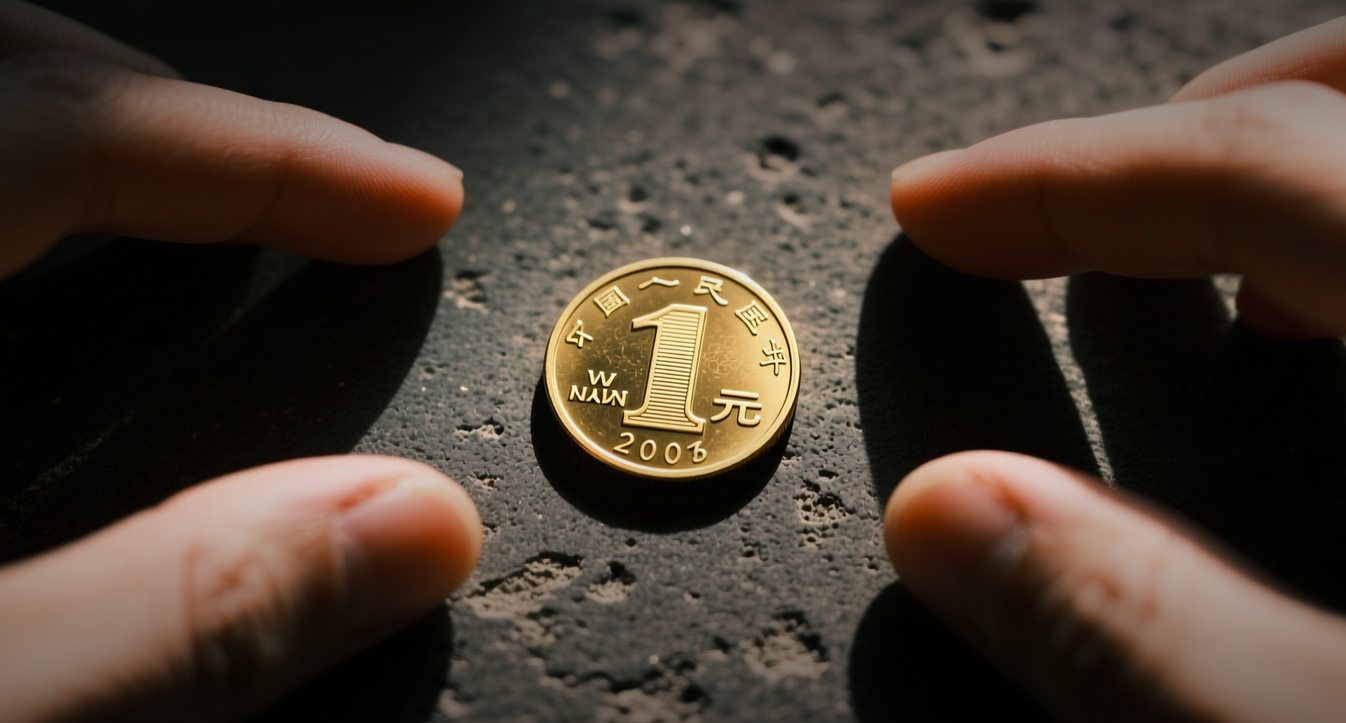
**The People's Bank of China guided the yuan marginally stronger for the second straight session, setting the daily reference rate at 6.7906 per dollar on Wednesday.** The People's Bank of China set the yuan reference rate at 6.7906 per dollar on Wednesday, a 0.04% strengthening from the previous day's 6.7933, as officials manage currency depreciation pressures against a backdrop of deepening economic headwinds. The onshore yuan traded within a narrow band around the fix, with the spot rate remaining inside the 2% daily trading limit. "Local government infrastructure investment plus daily expenditures averaged 41 percent of GDP annually over the past 20 years, and the contraction of this spending is now the primary blockage in the economy," Li Daokiu, director of the Center for China in the World Economy at Tsinghua University, said in a speech to a forum hosted by Renmin University. Li, a longtime advisor to PBOC and CCP leaders, estimated China's broad unemployment rate at 10.2%, more than double the official 5% figure. China's economic data for the first half of 2026 showed deepening stress. Fixed asset investment declined 5.7% year-over-year in the January-June period, accelerating from a 4.1% drop in the first five months, according to the National Bureau of Statistics. Gross domestic product expanded 4.3% in the second quarter, the weakest reading outside the Zero-Covid lockdown era. The CSI 300 index has fallen 8% year-to-date, while the offshore yuan has weakened 2.3% against the dollar in 2026. The PBOC's gradual approach to yuan guidance reflects competing priorities. A weaker yuan boosts export competitiveness — exports remain one of the few growth drivers, though half of this year's export growth is tied to the global AI bubble, Li said. However, excessive depreciation risks accelerating capital outflows. The central bank has used its daily fixing to manage gradual yuan weakness while avoiding sharp moves that would spook foreign investors. The broader economic context complicates the PBOC's task. Local government debt has reached crisis proportions, with Beijing deploying 12 trillion yuan in special bonds to swap out existing obligations. Li argued the bailout may need to double to 24 trillion yuan to address what he called a "black hole" draining energy from the economy. China's corporate debt-to-GDP ratio is among the highest globally and continues to increase, according to the International Monetary Fund. The last time China experienced a cumulative contraction in fixed-asset investment was during the Great Leap Forward in 1961 and the Cultural Revolution in 1967, Li said. The current decline, now in its second year, erased 3.8% of investment in 2025 and accelerated to 5.7% in the first half of 2026. This matters because China's state-capitalist model depends more heavily on investment than other major economies — the investment-to-GDP ratio has historically exceeded 40%, far above the global average. For global investors, the PBOC's fixing trajectory offers a window into official thinking on currency policy. The marginal strengthening of Wednesday's fix suggests the central bank is not yet ready to allow a rapid depreciation despite mounting economic pressures. The next PBOC daily fixing is scheduled for Thursday, with markets watching for any shift in the pace of yuan guidance as China's July economic data releases approach. This article is for informational purposes only and does not constitute investment advice.

Jul 23 2026, 01:23
China targets 3,500 GW renewable capacity by 2030 in new plan
**China's new five-year plan sets binding 2030 targets that would more than double the country's renewable capacity from current levels.** China's 15th Five-Year Plan for Renewable Energy targets 3,500 GW of total renewable installed capacity by 2030, with wind and solar alone reaching 2,800 GW and generating 4 trillion kWh annually, according to the plan jointly issued by the National Development and Reform Commission and the National Energy Administration. "The plan provides a binding framework for China's energy transition through the end of the decade, with specific targets for consumption, generation, and capacity mix," the NEA said in a statement accompanying the document. Total renewable energy consumption is set to reach 1.8 billion tonnes of standard coal equivalent by 2030. The targets represent a significant acceleration from current levels. China's total renewable capacity stood at approximately 2,340 GW at the end of 2025, according to the National Energy Administration, meaning the country needs to add roughly 1,160 GW over five years. Wind and solar combined reached about 1,850 GW by early 2026, implying roughly 950 GW of additions to hit the 2,800 GW target. Wind and solar will account for more than 50 percent of total installed capacity by 2030, up from about 45 percent currently, and generate 30 percent of the country's electricity. That compares with roughly 22 percent in 2025, according to data from Ember Climate, underscoring the scale of the shift required. **Grid and Storage Constraints Loom Large** China's renewable buildout has consistently outpaced grid infrastructure, leading to rising curtailment rates. In 2025, solar curtailment in northwestern provinces such as Gansu, Xinjiang, and Inner Mongolia exceeded 10 percent during peak generation hours, according to industry data. Six provinces in the northwest host 42 percent of China's wind and solar capacity, intensifying pressure on long-distance transmission corridors. The government is responding with an ambitious grid expansion program. China invested over $80 billion in grid infrastructure in 2024, including ultra-high-voltage transmission lines designed to move electricity from renewable-rich western regions to coastal demand centers. A unified national electricity spot market is also under development to allow provinces to trade surplus renewable generation more efficiently. Battery storage is emerging as a critical complement. China's cumulative installed energy storage capacity reached 213 GW by the end of 2025, a 54 percent increase year on year, according to the China Energy Storage Alliance. Lithium-ion batteries accounted for 144.7 GW of that total, with sodium-ion and flow batteries entering commercial deployment. The country now accounts for well over half of global energy storage installations. **Implications for Global Clean Energy Supply Chain** The plan is a clear bullish signal for Chinese solar and wind manufacturers, which already dominate global supply chains. China produces more than 80 percent of the world's solar modules and roughly 60 percent of wind turbine components. Sustained domestic demand at the scale implied by the 3,500 GW target will keep factory utilization rates high and continue driving down costs through manufacturing scale. Chinese solar module prices have already fallen more than 90 percent over the past decade, and utility-scale solar in China is now cheaper per megawatt-hour than new coal even without subsidies. The new plan reinforces that cost advantage, with implications for global clean energy markets. Chinese manufacturers including Tongwei Co., Longi Green Energy Technology Co., and Goldwind Science & Technology Co. are positioned to benefit from sustained domestic procurement. For global investors, the plan reinforces China's structural advantage in low-cost clean energy production. Abundant, cheap electricity is becoming a competitive moat for Chinese industry, particularly for energy-intensive sectors such as data centers and green hydrogen production. The country's AI sector, for example, benefits from industrial electricity costs that are increasingly decoupled from volatile global fossil fuel prices. The plan also sets a 110 GW nuclear capacity target by 2030, up from 62 GW at the end of 2025, providing a carbon-free baseload complement to variable wind and solar output. China approved 10 new reactors across five projects in April 2025 and 11 reactors across five projects in August 2024, predominantly using the domestically developed Hualong One design. This article is for informational purposes only and does not constitute investment advice.