Edgen AI operates independently of, and is not controlled by Aspen Digital Financial Limited.
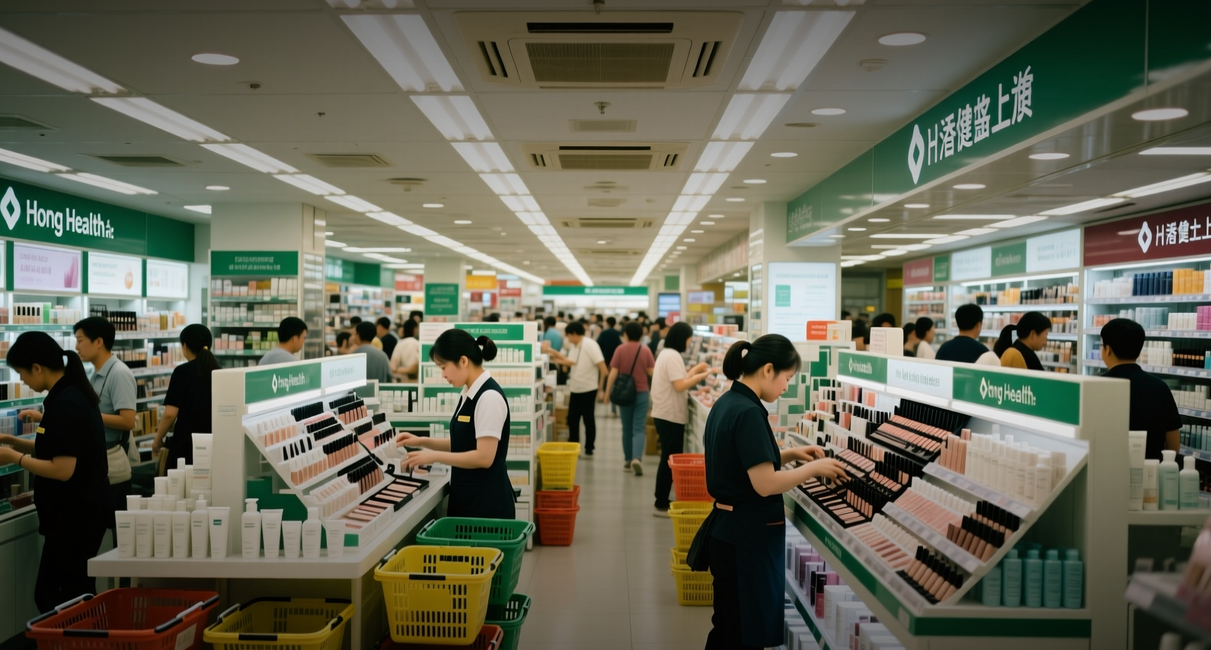
Sa Sa guides interim profit above HK$150 million as Macau sales rebound
 Edgen Stock·Sep 21 2026, 11:03
Share to
Share to
Copy link

[1] <Alert> SA SA INT'L (00178.HK) Expects Interim Net Profit to Rise to Over HKD150 million (https://www.aastocks.com/en/stocks/news/aafn- ...)[2] Sa Sa Issues Profit Alert, First-Half Net Profit Expected to Exceed HK$150 Million - finance.biggo.com (https://finance.biggo.com/news/a6a87bf4-37dd- ...)[3] Rate Cuts Stimulate Market Activity and Help Stabilize Hong Kong Home Prices | CN - Cushman & Wakefield (https://www.cushmanwakefield.com/en/greater-c ...)[4] Sasa International's Annual Profit Doubles, Driven by Hong Kong-Macau Consumption Recovery and Online Efficiency - finance.biggo.com (https://finance.biggo.com/news/N62_j50ByH9TLH ...)[5] DFI Retail Group Holdings Limited 2025 Preliminary Announcement Of Results - Media OutReach Newswire (https://www.media-outreach.com/news/hong-kong ...)
Related News
Sep 22 2026, 12:08
Alibaba launches enterprise AI agents with 90% task success rate
Alibaba Group Holding Ltd. unveiled a suite of enterprise AI Agent products at its Apsara Conference in Hangzhou on Sept. 22, claiming industry-first status for a system that gives software agents organizational identities, delegated authority and auditable execution records. The company's Qwen Office unit said its Mobile-Use Agent completes 90% of end-to-end tasks in testing, cutting average completion time to 59.5 seconds from 83.6 seconds. "Qwen Office is the industry's first enterprise-grade Agent product," Chen Yusong, vice president of Alibaba Group and chief executive of Qwen Office, said at the conference. He said agents must understand business context, collaborate inside an organization like a person, and leave every task execution bounded and traceable. The centerpiece is Enterprise Context, a data-management layer that compresses and structures corporate data through a dedicated model at low token cost, then refreshes it as business conditions change. Alibaba's pitch is that agents fail in enterprises not because models are weak but because they are fed either too much or too little relevant information. Digital employees built on that layer carry a name, department, manager and job description, plus an authorization scope and lifecycle that administrators can revoke. A collaboration space lets staff and agents work in one thread, and a security center sandboxes execution, routes high-risk actions through approval and keeps operation logs for recovery. Alibaba paired the software with hardware. The QwenNote A2, a 67-gram AI assistant with a six-microphone array, runs independently of a phone and defaults to not recording: speech is transcribed once in the cloud and the original audio is permanently deleted. Chen said the predecessor DingTalk A1 sold several hundred thousand units in China and set a target of tens of millions for the new device. ## Honor deal puts Qwen inside the handset The same conference produced Qwen Intelligence, a full-stack AI-phone solution that Alibaba is building with Honor and its Magic OS. Alibaba reported 91.8% composite task accuracy for the joint system, with complex long-horizon tasks executing more than 100 steps and a 90% end-to-end service closure rate. Three components do the work: a Mobile Planner Agent that decomposes requests, a Mobile-Use Agent that operates the device, and a Mobile Creative Agent for image and video generation. The launch lands against a crowded field. Microsoft bundles Copilot into Microsoft 365, Salesforce sells Agentforce, and Google pushes Gemini through Workspace, while in China ByteDance, Tencent and Baidu are all shipping agent tooling. Alibaba did not disclose pricing, seat counts or revenue targets for the new products, and it did not publish the test conditions behind the 90% and 91.8% figures, leaving the accuracy claims unverified against rival benchmarks. The enterprise push sits inside a much larger spending program. Alibaba has committed more than $53 billion over three years to AI, raised about $10.2 billion in a Hong Kong follow-on share offering in August, and is targeting 20 gigawatts of Alibaba Cloud data center capacity by 2032. On the same day, CEO Eddie Wu outlined a Zhenwu V900 accelerator from the T-Head chip division that he said triples the performance of its predecessor and can be clustered up to 500,000 units, alongside plans for a model of 5 trillion to 10 trillion parameters. For investors, the question is whether agents convert Alibaba's model investment into recurring enterprise revenue. The company's cloud and AI franchise is the asset that carries the story, and the agent suite is the first attempt to charge enterprises for execution rather than for tokens. Rivals with entrenched productivity suites — Microsoft, Salesforce and Google — already own the corporate workflow layer Alibaba is now targeting, and Chinese peers can match the model quality. Without disclosed pricing or adoption numbers, the announcement supports sentiment toward BABA more than it changes near-term earnings estimates. This article is for informational purposes only and does not constitute investment advice.

Sep 22 2026, 12:04
BOSS ZHIPIN founder sells $110M stake to pay China trust tax
BOSS ZHIPIN-W (看准科技, 2076.HK) founder Zhao Peng sold 15.2 million shares for HKD863 million ($110 million) to settle personal income tax owed under China's new offshore trust rules, the first founder-level liquidation tied to the levy at a Hong Kong-listed Chinese tech company. The shares changed hands at HKD56.9 apiece through block trades in Hong Kong on Monday, according to filings with the U.S. Securities and Exchange Commission reported by Bloomberg. The stock closed at HKD56.35 on Tuesday, down 3.59%, on turnover of HKD1.772 billion across 31.1183 million shares — roughly double the 15.2 million shares Zhao sold. "Some of the tax liability can be quite high, and it's unrealistic to expect people have that amount of cash to immediately pay the tax," Winni Wu, China equity strategist at BofA Securities, said at a media briefing in Hong Kong. Wu said the collection drive is more likely to hit offshore-listed private companies than state-owned issuers, and that owners retain room to negotiate with local tax bureaus. Chinese authorities said in July they would impose individual income tax on assets held in offshore trusts and on the income those trusts generate, with unpaid amounts due within 90 days. That window closes Oct. 22, leaving roughly a month for the market to absorb the enforcement. The sale price of HKD56.9 sat 0.98% above Tuesday's close, meaning buyers absorbed the block at a modest premium to where the stock settled the following session. Short selling in the name totaled just $159,400, or 0.009% of turnover, so the decline was driven by outright selling rather than hedging activity. BOSS ZHIPIN is not the first offshore-trust structure to produce a forced sale. Hotpot chain Haidilao's major shareholder sold 259 million shares this month for HK$2.75 billion ($350.59 million), and the stock has fallen 17% since, according to BofA. The two transactions share a common trigger: founders who hold listed equity through offshore vehicles and face a cash tax bill they cannot fund from other liquid assets. The pattern matters beyond the two names. Offshore trusts are a standard holding structure for shareholders of Hong Kong and U.S.-listed Chinese companies, which puts a broad set of private-sector issuers with concentrated founder ownership in the same position as the Oct. 22 deadline approaches. Wu said the tax collection could produce event risk in individual shares but is unlikely to become a dominant driver for the wider Hong Kong market. For BOSS ZHIPIN holders, the immediate question is whether Zhao's 15.2 million shares represent the full extent of his tax-driven selling or the first tranche of a larger program. The company has not disclosed any further planned disposals. The next signal comes on or before Oct. 22, when the 90-day settlement window closes and any additional founder-level sales tied to the levy would need to be executed. This article is for informational purposes only and does not constitute investment advice.
Sep 22 2026, 12:02
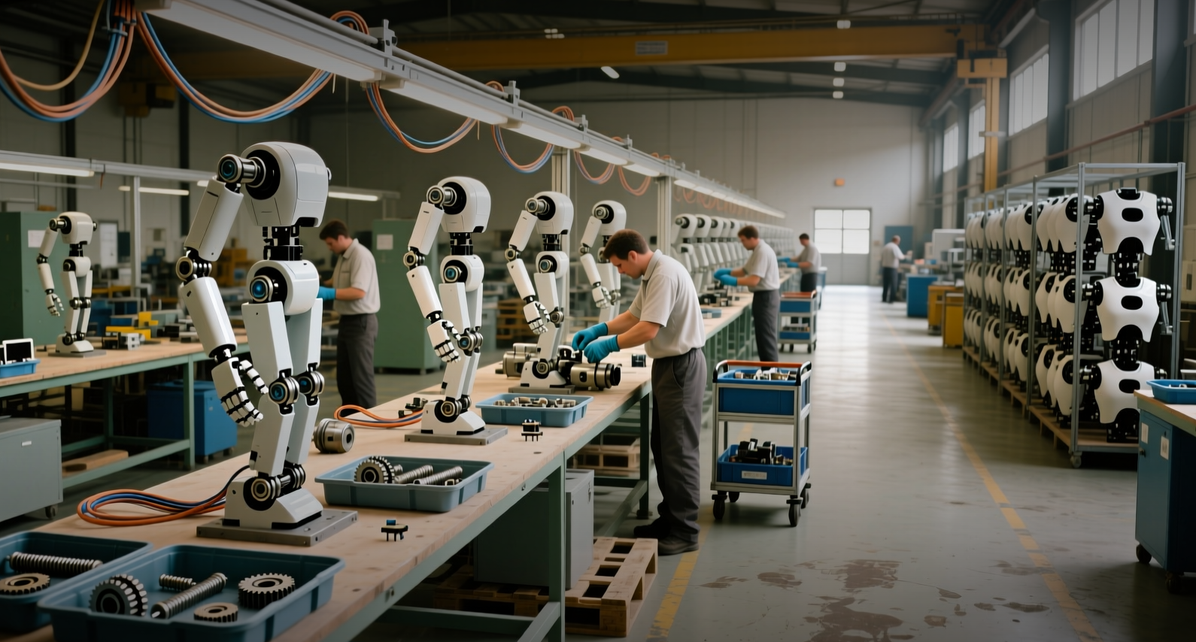
XPeng locks robot suppliers as Tesla audits same China vendors
XPeng has cleared the qualification stage of its humanoid robot buildout, locking in a defined vendor chain for actuators, dexterous hands, sensors and AI chips. The Guangzhou-based automaker convened its first robot supply chain partner conference on Sept. 22, drawing suppliers across those four component categories, The Paper reported, citing people familiar with the arrangements. The designations matter because they convert a research program into a procurement schedule. In humanoid robots, actuators and dexterous hands account for the majority of bill-of-materials cost, and a supplier that passes a factory audit typically holds its slot through the first production run. XPeng did not disclose the names of the designated vendors, the number of suppliers per component category, or the volume commitments attached to the designations. "Supplier designation is the point where a robot program stops being a demo and starts being a manufacturing plan," said Lian Jie, a senior analyst covering China's automation supply chain at a Shenzhen-based brokerage. "The audit is the gate. Once you pass it, you are tooling up." The overlap with Tesla is the part investors are trading. Tesla's robot team has separately visited Chinese supply chain companies for factory audits, and sources indicated the two programs share a relatively high degree of overlap at the core supplier level, according to the same report. Tesla has begun auditing suppliers across the Yangtze River Delta as it pushes its third-generation Optimus toward volume manufacturing, The Paper reported on Sept. 21, naming Tuopu Group (601689), Sanhua Intelligent Controls (002050) and Joyson Electronics (600699) as companies under review. Those three make joint modules, actuators and precision structural components, and each had already received Optimus orders of varying volumes before the audits began, per the report. That overlap cuts both ways. A component maker qualified for both programs spreads its tooling and engineering costs across two customers, which compresses unit economics for everyone. It also means XPeng and Tesla are competing for the same constrained capacity in harmonic reducers, planetary roller screws and force-torque sensors — the parts where Chinese suppliers currently hold the deepest cost advantage. ## Why the vendor conference is the real signal A first-ever partner conference is an operational milestone, not a marketing one. Automakers hold supplier days when they need vendors to commit capital to capacity ahead of orders. XPeng's decision to gather actuator, dexterous hand, sensor and AI chip suppliers in one room implies the company is preparing to place volume purchase orders rather than sample requests. The component list itself is a roadmap. Actuators determine joint torque and payload; dexterous hands set manipulation capability and are the single hardest subsystem to manufacture at cost; sensors cover force feedback and vision; AI chips handle on-robot inference. Each category has a different supplier base and a different qualification timeline, which is why designations are announced as a group rather than sequentially. For scale calibration, Tesla has said it plans to build several thousand Optimus units this year, with the third-generation model described as its first designed for volume manufacturing. The Paper put Tesla's long-term per-unit cost target at $20,000 to $30,000 and reported that the company converted its former Model S/X production line into a dedicated Optimus line planned for 1 million units per year, with a second line at the Texas Gigafactory prepared for a long-term designed 10 million units annually. Tesla has not confirmed the audits, the order volumes or the capacity figures. XPeng has not published a comparable unit target or cost curve for its robot program. That gap is the central unknown: without a disclosed volume plan, the designated suppliers cannot be valued on robot revenue, only on optionality. ## The short sellers are not convinced Positioning around the story is contested. Short selling in XPENG-W (09868.HK) totaled US$44.93 million as of 12:25 on Sept. 22, equal to 38.104% of turnover in the stock, according to AASTOCKS data. The shares traded at HK$40.72, up HK$0.24 or 0.593%, on a session where the short ratio sat well above the levels typically seen in large-cap Hong Kong industrials. A 38% short ratio on a single session is not a verdict on the robot program — it reflects hedging, index activity and directional bets mixed together. But it does show that the market is not paying a uniform robotics premium for XPeng. The bull case rests on the supplier designations converting into disclosed orders; the bear case rests on the absence of any volume, cost or revenue guidance attached to them. The next checkpoints are concrete. Investors should watch whether XPeng names its designated suppliers and attaches order volumes, whether Tesla confirms its own audit program or announces the formal start of Optimus mass production, and whether the shared vendors disclose robot-related revenue in their next quarterly filings. Until at least one of those lands, the humanoid supply chain trade in Hong Kong and Shenzhen is being priced on conference invitations and audit visits rather than on purchase orders. This article is for informational purposes only and does not constitute investment advice.