Edgen AI operates independently of, and is not controlled by Aspen Digital Financial Limited.
Alibaba launches enterprise AI agents with 90% task success rate
 Edgen Stock·Sep 22 2026, 12:08
Share to
Share to
Copy link

[1] Industry's first enterprise-grade Agent product! Qwen Office launches "Enterprise Context" and simultaneously unveils AI hardware QwenNote A2 (https://wallstreetcn.com/articles/3782295 ...)[2] Alibaba Unveils AI Chip to Drive 20GW of Data Centers by 2032 (https://finance.yahoo.com/technology/ai/artic ...)[3] Alibaba plans AI model with 5 trillion to 10 trillion parameters, unveils new chip (https://www.msn.com/en-gb/news/other/alibaba- ...)
Related News

Sep 23 2026, 14:11
Gold holds near $4,000 as TD Securities targets $5,000
TD Securities published a call for the next leg higher in gold toward $5,000 an ounce, a target that implies roughly 25% upside from the metal's recent trading range and pushes the sell-side's bull case into territory no major bank had formally staked out. "Gold's next leg higher takes it toward $5,000 an ounce as the debasement trade broadens beyond currency hedging into a structural allocation," TD Securities said in the note published Sept. 23. The call lands with COMEX gold already elevated after a multi-quarter advance, and it reframes the debate from whether the metal can hold its gains to how far the repricing can run. TD's number sits above the highest published targets from most of its peers, which have clustered in the $3,500 to $4,200 range through 2026. The gap matters because sell-side targets function as magnets for momentum flows: when one bank moves first, others face pressure to revise or explain why they haven't. ## Central banks and ETFs are the two legs of the trade The structural case rests on official-sector demand. Central banks have bought more than 1,000 tonnes of gold annually for three consecutive years, according to World Gold Council data, led by purchases from China, Poland, Turkey and India. That pace is roughly double the 2010-2021 average and represents a deliberate shift of reserve assets away from dollar-denominated holdings. ETF flows have turned the other way for much of the period, with holdings in SPDR Gold Shares (GLD) and iShares Gold Trust (IAU) only recently recovering toward prior peaks. TD's target effectively assumes that retail and institutional ETF demand re-engages alongside official buying — the combination that drove gold's 2011 and 2020 peaks. Gold miner equities carry the highest beta to that scenario. Newmont (NEM), Barrick Gold (GOLD) and Agnico Eagle (AEM) have historically delivered two to three times the percentage move of spot bullion during sustained rallies, because a fixed cost base magnifies margin expansion as the realized price rises. A move from current levels to $5,000 would expand industry all-in sustaining costs margins by a multiple that most producers have not modeled. ## What would confirm or break the call The near-term test is whether spot gold can establish a base above its prior high on a weekly close, with the $4,200 area acting as the first resistance that would validate TD's sequencing. A failure to hold that level would leave the $5,000 target as an outlier rather than a consensus anchor. The next scheduled catalysts are the Federal Reserve's policy meeting and the monthly US inflation print, both of which feed directly into real yields — the variable most tightly correlated with gold's direction. A dovish repricing would support the debasement-hedge bid; a hawkish surprise would pressure the metal and force TD's peers to either defend or distance themselves from the target. Silver and platinum typically follow gold with a lag during sustained precious-metals advances, and the gold-to-silver ratio remains above its long-run average, leaving room for a catch-up move if the broader complex confirms. This article is for informational purposes only and does not constitute investment advice.
Sep 23 2026, 14:00
XTEND wins SOCOM Phase III as 60,000-drone buy looms
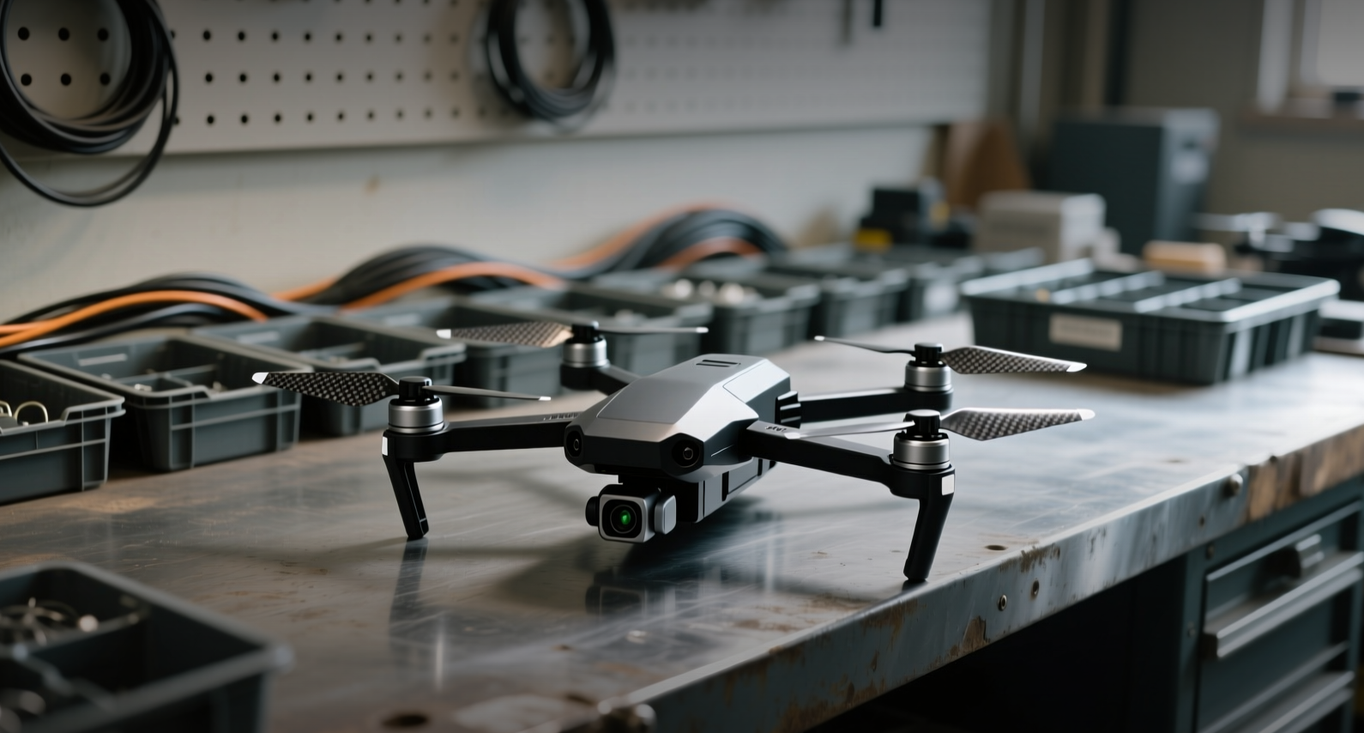
XTEND AI Robotics advanced to Phase III of U.S. Special Operations Command's Modular Kinetic Lethal Drone program, a development milestone that lands days after the company placed third in the close-quarters battle segment of the Pentagon's $1 billion Drone Dominance Program. The award, announced Sept. 23, 2026, covers a modular, recoverable and reusable precision-strike capability built around three XTEND airframes — Striker, Scorpio 500 and Scorpio 1000 — tied together by a common Ground Control Station and the company's XOS operating system. USSOCOM has not disclosed the dollar value of the Phase III tranche. "Phase III is an important milestone in our continued work with the U.S. Special Operations community," Aviv Shapira, chief executive and co-founder of XTEND, said. "Our focus is on giving Warfighters adaptable robotic capabilities that extend their reach and effectiveness while shifting risk from the operator to unmanned systems." The two programs measure different things. MKLD is a development track: Phase III matures a capability that has already absorbed prior USSOCOM investment, testing and operational feedback, with no guarantee of a production order. Drone Dominance is a procurement funnel. XTEND delivered and demonstrated 120 STRIKER systems at Fort Carson, Colorado, on Sept. 16, scoring 80.2 in the close-quarters battle category and finishing behind Neros and Orqa US on a leaderboard that also included Vector and ModalAI. That placement matters more than the podium. The Department of War selected 10 companies as Gauntlet II finalists for prototype contracts and plans to buy roughly 60,000 drones from the resulting vendor pool. XTEND is one of a handful of vendors positioned in both a special-operations development program and the conventional-force buying pipeline — a combination that gives it two independent routes to revenue rather than a single award to defend. XOS is the connective tissue. The operating system is designed for confined, complex and GNSS-denied environments where GPS is jammed or unavailable, a requirement set that has moved from niche to baseline as electronic warfare has spread across the battlefield in Ukraine. The same software stack now spans the STRIKER drone family and XTEND's AtlasROVER ground robots, which means each new platform win amortizes development spending across a wider installed base. The competitive field is crowded and mostly private. Neros, Orqa US, Vector and ModalAI all finished in the top five at Gauntlet II, and each is chasing the same prototype contracts. XTEND's differentiator is the listed-company structure: it trades on the New York Stock Exchange under the ticker XTND, giving public-market investors direct exposure to a segment where most rivals remain venture-backed and opaque. That structure cuts both ways. XTEND AI Robotics operates two distinct businesses — the defense robotics unit through subsidiary XTEND Reality Expansion Ltd., and a commercial and residential construction arm through JFB Construction Holdings. The company has said it intends to apply its drone technology to jobsite security, land surveying and building inspections on JFB projects, and to use JFB's construction expertise to lower the cost of its U.S. manufacturing expansion. Investors buying XTND for the defense thesis are also holding a homebuilder. The forward catalysts are concrete. Gauntlet II finalists are competing for prototype awards that are not guaranteed, and the 60,000-drone procurement will be allocated across the vendor pool rather than to a single supplier. MKLD Phase III must still convert into production orders for the special-operations work to register in revenue. XTEND's next disclosure on program revenue and backlog will show whether the two selections are translating into contracted dollars or remain, for now, positioning. This article is for informational purposes only and does not constitute investment advice.
Sep 23 2026, 13:58
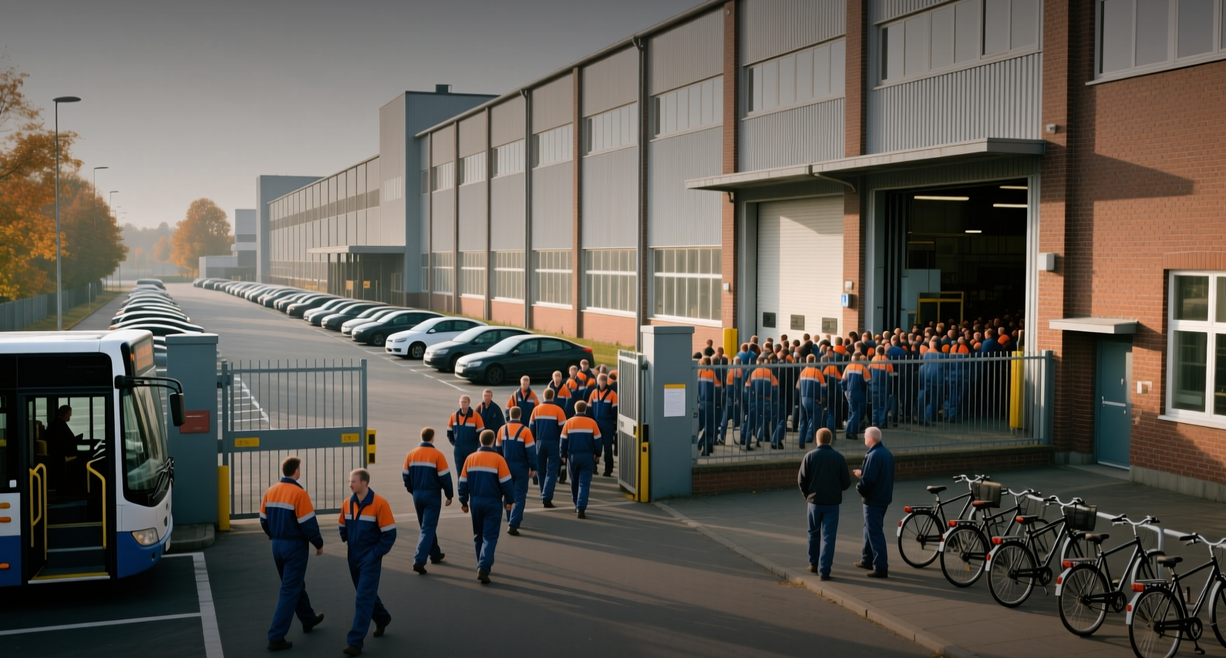
IG Metall seeks 5% raise as ECB weighs December hike
Germany's largest industrial union will sit down with employers on Oct. 7 asking for 5% more money across 3.7 million metal and electrical jobs, a claim that runs straight into the European Central Bank's December decision on whether to lift its deposit rate to 2.75%. "We are heading into the negotiations with combative realism," IG Metall Chair Christiane Benner said in Frankfurt. "Instead of crisis rhetoric, attacks on social standards and doom-mongering, employees expect secure jobs, compensation for higher prices and a fair share of company profits." The claim covers a 12-month term and adds profit-sharing for staff at "boom companies," protections for jobs and sites, and a demand that employers commit to Germany as a production base. Existing collective agreements expire Oct. 31, and because this round carries no post-expiry peace obligation, warning strikes are possible from Nov. 1. IG Metall mobilized about 175,000 workers in a nationwide day of action on Sept. 21 to protest planned cuts. The stakes run through Frankfurt, not just Stuttgart. Euro-area negotiated wage growth ran at 3.3% in the second quarter, a pace the ECB reads as broadly consistent with its 2% inflation target. A German settlement at or near 5% would push that measure back up and strengthen the case for a third tightening of 2026, after two hikes already delivered this year to stop the energy shock from the Iran war from becoming embedded in prices. Economists currently expect the December move to lift the deposit rate to 2.75%. ## Employers say survival, not distribution, is the issue Gesamtmetall, the employers' association, rejected the demand outright. "For too many of our companies, their very survival is at stake," its president, Udo Dinglreiter, said, adding that cutting costs is the priority. He accused the union of ignoring the scale and depth of the industry's crisis. The numbers behind that argument are stark. Volkswagen is cutting about 100,000 jobs globally and has warned on profit; BMW is removing roughly 8,000 positions; Robert Bosch and ZF Friedrichshafen are both shrinking. Mercedes-Benz has said German production is not competitive and has threatened to close two plants if costs do not fall. Supervisory board member Martin Brudermüller drew worker anger by suggesting a return to a 40-hour week at unchanged pay — a direct challenge to the 35-hour standard that Benner called unacceptable. The sector is not uniformly weak, which is why the union believes it has room. Automotive and mechanical engineering are under pressure, but the electrical industry, medical technology, aerospace and other vehicle manufacturing — the last lifted by state defense spending — are performing well. "Metal and electrical is more than the automotive industry," Benner said. ## Why the ECB cannot look away Bundesbank President Joachim Nagel said Wednesday that preventing energy costs from spreading into broader inflation is essential, while noting that today's environment differs from the post-2022 period, when years of wage restraint had created room for large catch-up increases. The implication is that a 5% claim now carries less justification than the 2024 round, when IG Metall demanded 7% and won 5.1% in two steps — a deal struck when conditions across the sector were better. The last time euro-area negotiated wages accelerated above 4%, in 2023, the ECB was still raising rates and the German 10-year Bund yield climbed toward 3%. Bund yields now sit near 3.50%, and the euro traded at about $1.139 against the dollar on Wednesday, leaving little cushion if wage data surprise higher. The transmission is straightforward: a large German settlement lifts euro-area wage growth, keeps services inflation sticky, and locks in market pricing for a December hike. A modest outcome — or a long strike that damages output and weakens the growth outlook — would cut the other way. Either path lands on the same date. The ECB's December meeting is the decision point, and the first regional bargaining sessions on Oct. 7 are where the answer starts to form. This article is for informational purposes only and does not constitute investment advice.