Edgen AI operates independently of, and is not controlled by Aspen Digital Financial Limited.
Micron up 222% vs Nvidia 11% as chip crash tests investors
 Edgen Stock·Aug 01 2026, 04:23
Share to
Share to
Copy link


[1] Should You Buy Micron Stock Instead of Nvidia Stock? (https://www.fool.com/investing/2026/07/31/sho ...)[2] Why KOSPI And The Semiconductor Sector Is Crashing (https://seekingalpha.com/article/4926945-why- ...)[3] Michael Burry Doubles Down on Bearish Bets Against Palantir and Chip Stocks (https://coincentral.com/michael-burry-doubles ...)[4] AMD, Intel and Micron extend losses as chip stocks get clobbered (https://www.msn.com/en-us/money/markets/amd-i ...)[5] AMD and Micron surge, Lam Research climbs 17% as chip stocks rip higher (https://www.msn.com/en-us/money/markets/amd-a ...)
Related News

Aug 01 2026, 04:32
NIO delivers 35,934 vehicles in July, up 71% on Firefly surge
NIO's multi-brand push is paying off. The company delivered 35,934 vehicles in July, up 71.0% year over year, with its Firefly sub-brand more than doubling to 5,771 units. The company said the All-New ES8 reached 130,000 cumulative deliveries just 305 days after its late-September launch, and began shipping the five-seat version on July 10, expanding the flagship lineup to five-, six- and seven-seat configurations. NIO brand delivered 20,008 units, up 57.9% from a year earlier, while Onvo added 10,155, up 69.9%, and Firefly 5,771, up 143.9%. Year-to-date deliveries reached 227,057, up 68.0%, with cumulative volume at 1,224,649 as of July 31. The pace outpaced rival Li Auto, which delivered 30,468 vehicles in July. The acceleration supports NIO's three-brand strategy as it pushes into premium and mass-market segments. With cumulative deliveries past 1.2 million, the company is betting Firefly and Onvo can lift volume without eroding the flagship brand's premium positioning, a test of whether it can sustain growth as China's EV price war intensifies. The Firefly brand, aimed at small high-end electric cars, posted the steepest growth, more than doubling year over year. Onvo, NIO's family-oriented premium brand, grew nearly 70 percent. The mix gives NIO exposure across price points as it competes with BYD and Li Auto in China's crowded new-energy vehicle market. The All-New ES8's 130,000-unit run in 305 days shows demand for NIO's flagship large SUV, which now spans five-, six- and seven-seat versions. The five-seat variant began deliveries on July 10, widening NIO's reach in the premium three-row segment. China's new-energy vehicle market has been marked by aggressive price cuts, with BYD and others discounting models to defend share. NIO has largely held its premium pricing while pushing volume through Onvo and Firefly, a strategy that depends on the newer brands reaching scale without heavy discounting. For investors, the monthly delivery figure is the key operating metric ahead of NIO's quarterly results. The company, listed on the NYSE, HKEX and SGX, has leaned on battery-swapping and its BaaS subscription model to differentiate. Sustained triple-digit growth in Firefly, the newest brand, suggests the strategy is gaining traction, though NIO has not yet disclosed July average selling prices or margins. NIO's July pace of 35,934 units compares with Li Auto's 30,468, keeping the two premium EV makers close as they jostle for share. Cumulative deliveries of 1,224,649 trail Li Auto's 1,764,155, reflecting the latter's earlier start in extended-range vehicles. The gap highlights the scale challenge NIO faces as it funds three brands and a nationwide battery-swap network. This article is for informational purposes only and does not constitute investment advice.

Aug 01 2026, 04:18
TELUS cuts dividend 55% as Q2 miss, impairment hit profit
TELUS Corp. cut its quarterly dividend 55% to $0.1875 after Q2 earnings missed estimates, sending shares down 12.63% to a 52-week low. "The macro environment has shifted and we are responding with clarity and discipline," Victor Dodig, president and chief executive officer, said. Adjusted EPS of $0.16 fell 27% from a year earlier, while adjusted net income dropped 26% to $254 million. Consolidated operating revenue slipped 2% to $4.92 billion. A $2.1 billion non-cash impairment of the TELUS Digital unit drove a net loss of $1.83 billion. The reset lowers the annual payout to $0.75 per share from $1.6736, generating about $2.7 billion in cumulative cash savings through 2028 to cut net debt to Adjusted EBITDA to 3.0 times or lower by year-end 2028, a year later than planned. The dividend, payable Oct. 1 to holders of record Sept. 10, was cut after adjusted EPS of $0.16 missed the $0.17 consensus by nearly 30 percent, and revenue of $3.561 billion fell short of the $3.760 billion estimate. TELUS also removed the discount on its dividend reinvestment plan effective Oct. 1, reducing shareholder dilution. Consolidated service revenue declined 1 percent to $4.4 billion, and adjusted EBITDA fell 2 percent to $1.8 billion. Mobile network revenue rose 1 percent to $1.7 billion on subscriber growth, but average revenue per user slipped 0.4 percent to $56.36 and churn edged up to 1.08 percent from 1.06 percent on promotional price competition. TTech subscriber connections grew 6 percent to 17.9 million. TELUS Health revenue rose 4 percent, with healthcare lives covered reaching 158.9 million, up 1.8 million over 12 months. TELUS Digital revenue dropped 10 percent on client ramp-downs in trust and safety and AI data solutions, triggering the impairment as the recoverable amount of the cash-generating unit fell below its carrying value. The company is running a strategic portfolio review, including monetizing non-core TELUS Health assets and real estate. Full-year guidance was cut sharply. Consolidated service revenue growth is now seen flat to down 2 percent, from 2 to 4 percent, and adjusted EBITDA is expected to contract 2 to 4 percent, from growth of 2 to 4 percent. Capital expenditures were raised to about $2.6 billion from $2.3 billion on inflation and supply chain costs, while free cash flow guidance was pulled to about $1.8 billion from $2.45 billion. The dividend cut and lowered outlook signal weaker near-term cash generation, pressuring income-focused holders as the company prioritizes deleveraging over shareholder yield. Investors will watch the third-quarter results in November for details on the capital returns framework and the outcome of the portfolio review. This article is for informational purposes only and does not constitute investment advice.
Aug 01 2026, 04:17
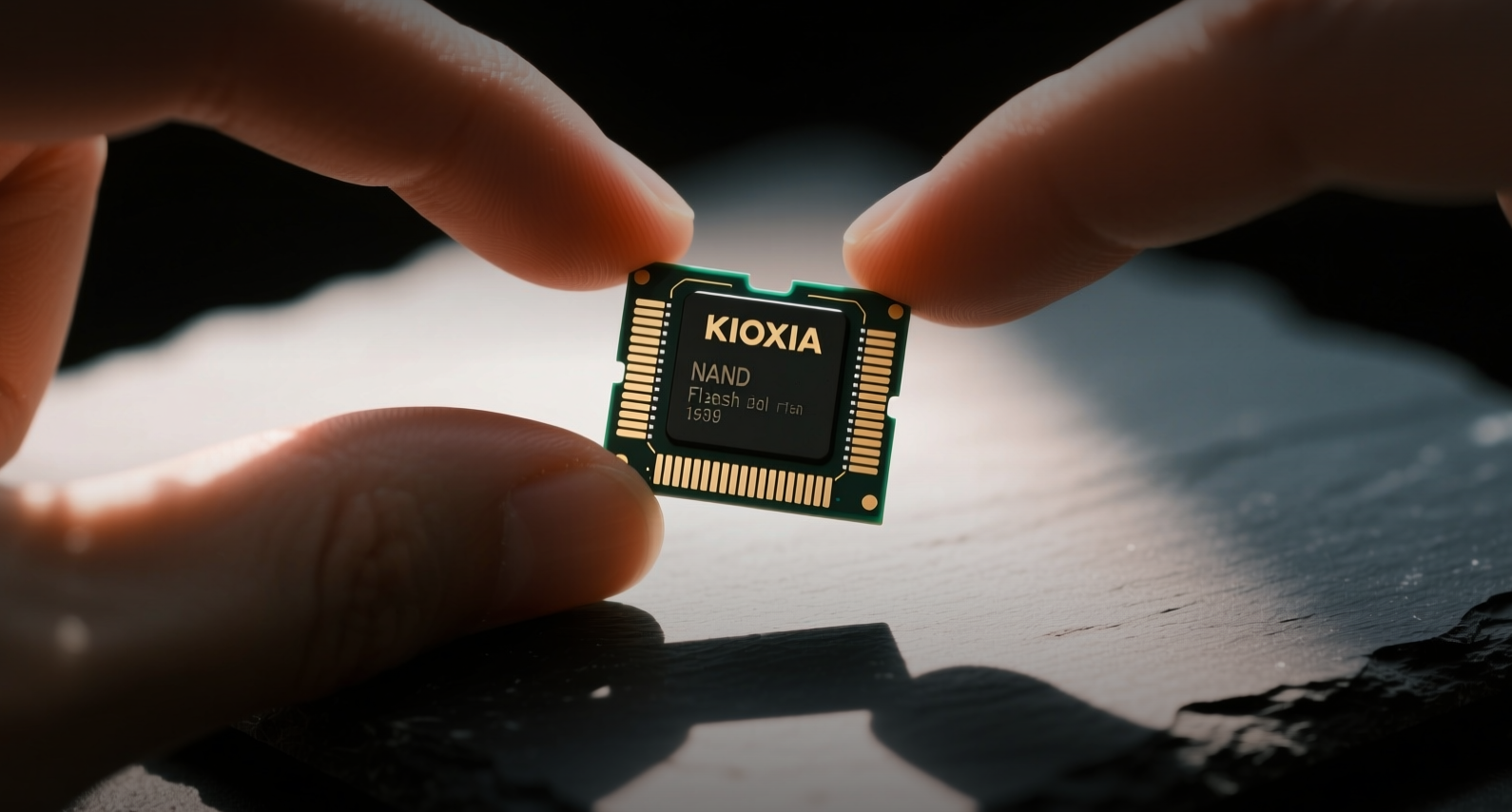
Kioxia launches ¥800B buyback as NAND profits surge 28-fold
Kioxia Holdings reported record first-quarter non-GAAP operating profit of ¥1.33 trillion, up 28-fold year-on-year, and unveiled an ¥800 billion share buyback, the first large-scale repurchase in the global NAND storage industry. UBS analysts said the buyback, tied to a roughly 50 percent total shareholder return target, could reduce outstanding shares by about 19 percent if half of projected FY2028 net profit of ¥9.42 trillion is deployed. The firm raised its price-to-book multiple for Kioxia to 5.23x from 4.63x and lifted average ROE forecasts to 48 percent from 42 percent. JPMorgan maintained an Overweight rating with a ¥155,000 price target, implying significant upside from the ¥46,500 close on July 31. Revenue for the April-June quarter climbed 415 percent year-on-year to ¥1.77 trillion, with SSD and storage products contributing ¥1.17 trillion, or 66 percent of total sales. Blended average selling prices for NAND products rose about 70 percent quarter-on-quarter, while bit shipments grew only in the low single digits, with some volumes deferred to the current quarter. Gross margin reached 78 percent, and the company's equity ratio jumped to 50.8 percent from 37.9 percent at the end of the prior fiscal year. The buyback marks a structural shift in how memory chipmakers return capital, and the trend is spreading. Nomura Securities projects Korean listed-company buybacks will reach a record ¥116 trillion in 2026, with about 90 percent coming from Samsung Electronics and SK Hynix, expanding to ¥274 trillion in 2027 and ¥328 trillion in 2028. The firm maintains its KOSPI target of 10,000 to 11,000 points, citing the AI earnings cycle and corporate buybacks as the next market driver. Kioxia shares surged as much as 17.7 percent following the earnings release. The company also announced a three-for-one stock split effective October 1 and expects to secure long-term contracts locking in 50 percent of production capacity through 2028. Management forecast industry-wide NAND bit demand growth in the high-teens percentage range for calendar 2026, with demand expected to outstrip supply in 2027 as agentic AI workloads expand. For the current quarter, Kioxia guided revenue of ¥2.39 trillion, up 35 percent sequentially, and non-GAAP operating profit of ¥1.90 trillion, implying an operating margin of about 79.5 percent. The guidance came in below some buy-side expectations of ¥2.0 to ¥2.5 trillion in revenue, though management cited continued data center demand strength. Apple demand is expected to increase in the current quarter, according to UBS. The record profitability and buyback program give Kioxia a valuation framework that could extend across the storage sector. Investors will watch the October 31 earnings call for further shareholder return policy details, while the November release of Korea's low-PBR company list will test whether the buyback-driven re-rating takes hold in Seoul. This article is for informational purposes only and does not constitute investment advice.