Edgen AI operates independently of, and is not controlled by Aspen Digital Financial Limited.
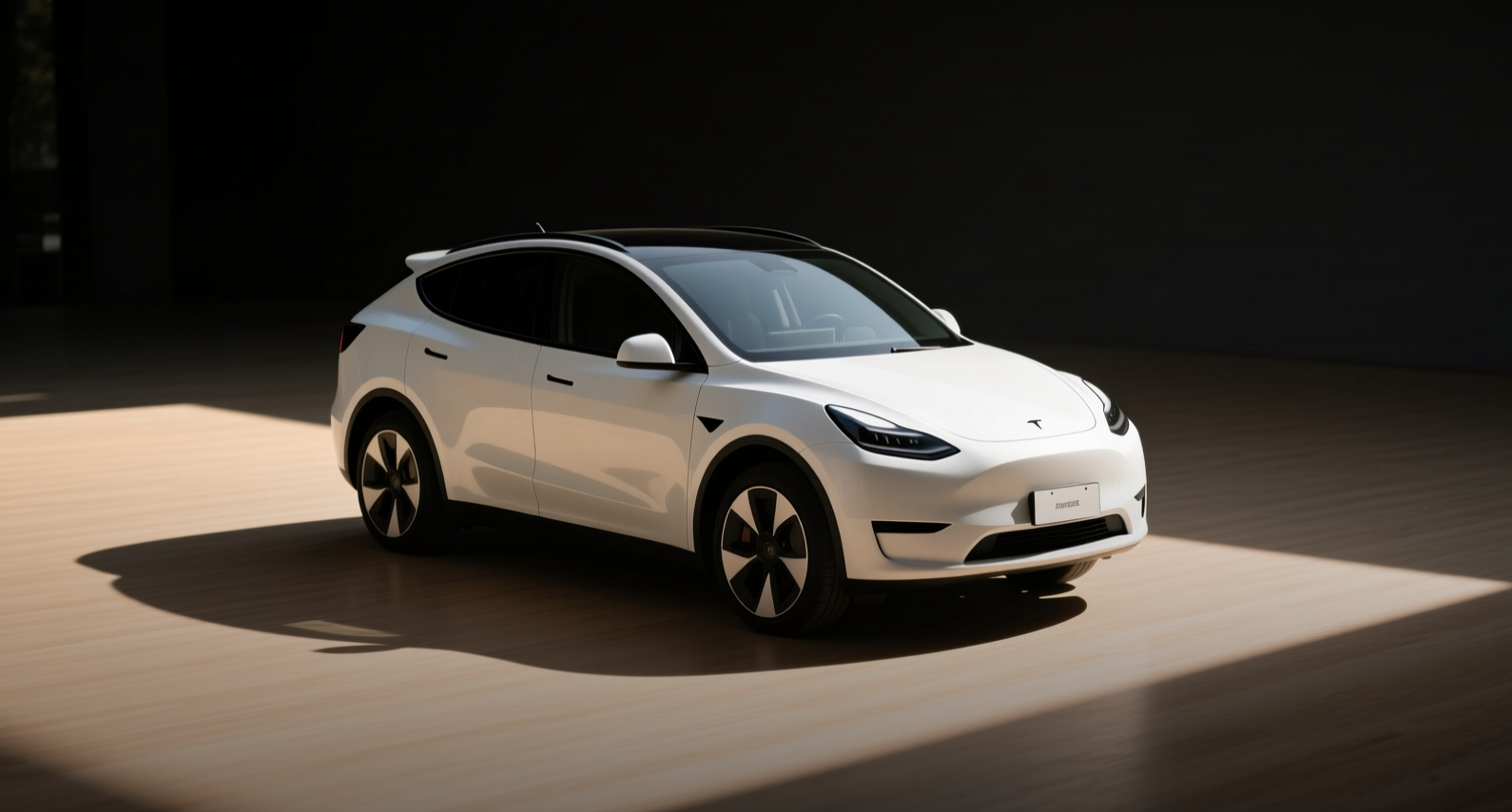
NIO delivers 35,934 vehicles in July, up 71% on Firefly surge
 Edgen Stock·Aug 01 2026, 04:32
Share to
Share to
Copy link


[1] NIO Company Delivers 35,934 Units in July, Up 71% Year-on-Year (https://wallstreetcn.com/livenews/3143558 ...)[2] Li Auto Inc. July 2026 Delivery Update (https://markets.businessinsider.com/news/stoc ...)[3] Innio forecasts $720M-$740M adjusted EBITDA for 2026 as capacity expansion supports backlog conversion (https://seekingalpha.com/news/4619635-innio-f ...)[4] INNIO Group Reports Second Quarter 2026 Financial Results (https://markets.businessinsider.com/news/stoc ...)[5] NIO Reports July 2026 Deliveries of 35,934 Vehicles, Up 71.0% Year Over Year - Quiver Quantitative (https://www.quiverquant.com/news/NIO+Reports+ ...)
Related News
Aug 01 2026, 05:20
Leapmotor tops 100,000 monthly deliveries, first EV startup to scale
Leapmotor delivered 101,267 vehicles in July, up 102 percent year-on-year, becoming the first Chinese EV startup to cross the 100,000-unit monthly mark — a scale once reserved for mainstream automakers. Six years ago, the company delivered just 879 units in a single month. The Stellantis-backed automaker (HKEX: 9863) has now posted four consecutive monthly delivery records, rising 8.45 percent from June's 93,376 units. "We will not adjust our full-year target for now," Xu Jun, senior vice president at Leapmotor, said on July 16. "We will work through products, marketing and channels to get as close to the goal as possible." The July volume came from a broadened product portfolio spanning 60,000 to 300,000 yuan ($8,840 to $44,190). The A10 compact EV contributed nearly 30,000 units, the B01 and B10 combined for more than 20,000, and the D19 crossover added over 10,000. The D99 MPV, launched in June, carries an average order price above 300,000 yuan, though converting those orders into deliveries remains a work in progress. The A and B series now anchor volume in the mass-market price band, while the D series is tasked with lifting average transaction values. The milestone arrives as Leapmotor's financial trajectory shows strain. In 2025, the company delivered 596,600 vehicles, up 103.1 percent, with revenue growing 101.3 percent and gross margin expanding from 8.4 percent to 14.5 percent, yielding a net profit of 540 million yuan. But in the first quarter of 2026, deliveries rose 25.8 percent to 110,200 units while revenue grew just 8 percent to 10.82 billion yuan. Gross margin fell to 9.4 percent, and the company posted a net loss of 390 million yuan with operating cash flow of negative 6.61 billion yuan. ## Scale vs. Profitability The divergence between delivery growth and revenue growth reflects a structural shift. The A and B series, priced in the mass-market band, now drive the bulk of volume but carry lower average selling prices than the C and D series they replaced. Management has said new models, including the A10, would account for 60 percent of total sales in 2026. The company attributed the Q1 margin compression to product mix changes, reduced strategic partnership revenue, and higher payables. Overseas expansion adds another layer of cost. Leapmotor exported 40,901 vehicles in the first quarter, about 37 percent of sales, using Stellantis's distribution network. The company formally entered Indonesia on July 31 through local KD (knocked-down) assembly with PT National Assemblers, a unit of the Indomobil group, complementing its Malaysian plant. Business now spans more than 40 countries with over 2,000 sales outlets — but certification, logistics, channel and after-sales costs will pressure near-term margins. The company needs to deliver 542,246 vehicles over the remaining five months of 2026, or about 108,449 per month, to hit its 1 million-unit target. That pace exceeds July's level, though the refreshed B01 and B10 (starting at 95,800 yuan and 99,800 yuan respectively) and the A05 compact EV, which opened pre-orders on July 27, are designed to close the gap. The A05 will compete head-on with the BYD Dolphin and Geely Xingyuan in the compact segment. Leapmotor's path diverges from the premium-first playbook that defined China's EV startup generation. BYD, which dominates the mass market with models like the Dolphin, and Geely's Xingyuan now face a direct challenger in the A05. The question is whether volume at this scale can translate into sustainable profitability — the first startup to cross 100,000 monthly deliveries must now prove it can operate at that size profitably. Higher factory utilization and procurement leverage could offset some margin pressure, but the company must also absorb rising costs from new model launches, channel expansion, and overseas operations. This article is for informational purposes only and does not constitute investment advice.

Aug 01 2026, 05:17
Valero posts record $3.7B profit as refining margins surge
Valero Energy reported record second-quarter net income of $3.7 billion, or $12.62 per share, up from $714 million, or $2.28 per share, a year earlier. "Our refineries, renewable diesel plants, and ethanol plants operated safely and reliably, helping to meet resilient demand for transportation fuels," Chairman and Chief Executive Officer Lane Riggs said. Revenues rose to $44.5 billion from $29.9 billion. Refining operating income reached $4.5 billion, up from $1.3 billion, on throughput of 3 million barrels per day and a margin of $23.62 per barrel, versus $12.35 a year earlier. Renewable Diesel swung to $717 million from a $79 million loss, while Ethanol earned $318 million, up from $54 million. The results reflect a tightening global refining market, with roughly 5 million barrels per day of capacity offline and product inventories below seasonal norms. Valero returned $2.6 billion to stockholders, a 59 percent payout, and declared a quarterly dividend of $1.20 per share on July 16. Management guided third-quarter Gulf Coast throughput of 1.78 million to 1.83 million barrels per day and cash operating expenses of $4.75 per barrel. Full-year capital investments are expected at about $2 billion, including $250 million to repair the Port Arthur distillate hydrotreater, largely covered by insurance. The $230 million FCC unit optimization at St. Charles remains on track to start in the third quarter. Goldman Sachs raised its price target on Valero to $357 from $286, maintaining a Buy rating, while TD Cowen holds at $338. The stock trades on the New York Stock Exchange under the ticker VLO. The record quarter positions Valero to accelerate shareholder returns once commodity volatility eases, with cash of $7.9 billion sitting above the long-term $4 billion to $5 billion target. Investors will watch third-quarter results for the St. Charles project start-up and the pace of global refining capacity restarts. This article is for informational purposes only and does not constitute investment advice.

Aug 01 2026, 04:57
South Korea July exports jump 62.8% to $98.9B on chip boom
**South Korea's July exports rose 62.8% to $98.89 billion, the second-highest monthly total on record, as AI-driven memory chip shipments surged 179%.** South Korea's exports rose 62.8% in July to $98.89 billion, the second-highest monthly total on record, as AI-driven memory chip shipments surged 179% and kept the trade surplus near historic highs. "Amid the strong performance of semiconductors, 19 of the country's 20 major export categories posted gains," Kim Jung-kwan, industry minister, said, pointing to a diversified export portfolio. Imports climbed 26.5% to $68.56 billion, producing a $30.32 billion surplus that eased from June's record $36.09 billion. Excluding chips, exports rose 26%. Shipments to China nearly doubled to $21.68 billion, while those to the U.S. jumped 68.7% to $17.4 billion on AI data-center investment, and ASEAN and EU destinations rose 73.7% and 55.7%, respectively. The data strengthens the case for further Bank of Korea tightening. The central bank raised its base rate 25 basis points to 2.75% last month, its first hike since early 2023, and Governor Shin Hyun Song has said more increases may be needed. July consumer prices rose 3.2% and the economy expanded 0.6% in the second quarter, supporting that path. ## Chip boom drives record export run Semiconductor exports reached $41 billion, topping $40 billion for a second straight month, as global prices for DRAM and NAND stayed elevated on demand from AI data centers. "The popularization of AI technology, with the industry entering the era of agentic AI, continued to drive demand for memory chips used in servers," the trade ministry said. Computer exports surged 404%, showing how broadly AI-related demand has spread. The strength follows blockbuster earnings from Samsung Electronics and SK Hynix. Samsung reported chip profits that increased more than 250-fold and warned that global semiconductor shortages could persist through 2028, while SK Hynix posted record net profit up 13-fold. The last time chip exports grew this fast was during the 2017-18 memory upcycle, when DRAM prices roughly doubled within a year. ## Rate path in focus The export momentum gives the BOK cover to keep tightening. Most economists expect another hike by October, with some seeing action as early as the Aug. 27 board meeting, according to Bloomberg. Governor Shin said the central bank's May growth forecast of 2.6% now looks too low and will be revised up "substantially" in August, citing stronger-than-expected exports, investment and consumption. Risks remain. Kim flagged growing protectionism in major economies and persistent Middle East geopolitical uncertainty as headwinds. Exports of home appliances fell 4.1% to $600 million, the only decline among the top 20 categories, on sluggish U.S. housing demand. This article is for informational purposes only and does not constitute investment advice.