Edgen AI operates independently of, and is not controlled by Aspen Digital Financial Limited.
Memory hits 54% of semiconductor revenue as AI demand reshapes market
 Edgen Stock·Aug 30 2026, 10:05
Share to
Share to
Copy link



[1] Memory costs soar, surpassing the price of a top-tier SoC (https://wallstreetcn.com/articles/3780653 ...)[2] Memory accounts for 50% of global semiconductor ... (https://cryptobriefing.com/memory-chips-50-pe ...)[3] Memory Now Accounts for 50% of Global Semiconductor Revenue - But There’s a Catch - 24/7 Wall St. (https://247wallst.com/investing/2026/08/29/me ...)[4] Global semiconductor revenue surges as AI reshapes the chip market (https://www.dqindia.com/semiconductors/global ...)[5] Micron Technology Consolidation: Soaring Memory Revenue Meets Fresh Policy Uncertainty (https://www.tradingview.com/news/benzinga:e22 ...)
Related News

Aug 30 2026, 13:19
Treasury Doubles Long-Bond Buybacks to $4B, Boosting Muni Duration Case
**Treasury's decision to at least double 10- to 30-year buybacks gives duration buyers their first clear green light in months — and the November midterms may add a second leg.** The US Treasury's decision to at least double its quarterly purchases of 10- to 30-year Treasuries to $4 billion per operation marks a policy pivot that strategists say could compress long-end yields and strengthen the case for extending duration in municipal bond portfolios. "The buyback expansion represents a meaningful reduction in net long-end supply and a strong signal of concern around market liquidity," said Erik Nelson, a strategist at Wells Fargo. "But it is unlikely to drive a sustained decline in long-end yields without another driver." The Treasury plans to conduct buybacks of 10- to 30-year securities worth at least $4 billion per operation during the coming quarter, up from up to $2 billion previously. The first larger operations for 10- and 20-year bonds begin September 10. The 10-year yield traded around 4.69 percent to 4.71 percent Monday, while the 30-year edged back to roughly 5.19 percent to 5.25 percent. The program comes as the US government's outstanding debt surpassed $40 trillion and the CBO projects a $1.9 trillion federal budget deficit for fiscal year 2026, with net interest costs exceeding $1 trillion. For muni investors, the buyback signal could drive inflows into long-duration funds, with the November midterms potentially adding further tailwinds. Wall Street strategists remain divided on whether the buybacks will meaningfully reset rate levels. Goldman Sachs strategists including George Cole and William Marshall wrote in an Aug. 21 research note that "the buybacks themselves are unlikely to meaningfully reset rate levels even if scaled up." They cited cyclical resilience, Fed policy reassessment, fiscal pressures, energy risks, and AI capital expenditures as the main drivers of the long-end selloff. Citi strategists led by Jason Williams see gains for 20-year Treasuries after the buyback announcement, arguing the long end "now has better asymmetric risk-reward with the new Treasury 'put' combined with attractive valuations, potential pension fund demand, and upcoming softer data." The 20-year "may benefit the most from future actions as Treasury is likely to reduce the size of its auctions, given how poor it trades relative to 10s and 30s." Deutsche Bank strategists led by Matthew Raskin said the announcement "highlights Treasury's more activist approach with a willingness to deploy tools more creatively and using communication tactically to keep long-end yields contained," though they still expect a steeper curve with long-end yields rising higher. Societe Generale's Subadra Rajappa and Shakeeb Hulikatti wrote that the buyback announcement is "unlikely to alter broader forces pushing yields higher," while Scotiabank's Boris Sender and Rachel Zheng said "despite Treasury Secretary Bessent's characterization, the move higher in long yields is justified by fundamentals." ### TGA Funding and the Cash Question The Treasury has yet to disclose precisely how it intends to fund the larger buybacks. One potential source is the Treasury General Account, the federal government's cash account at the Federal Reserve, which held roughly $940 billion as of last Wednesday. Using existing cash would allow the Treasury to conduct the purchases without issuing additional short-term debt, though it would reduce the government's available reserves. The TGA balance has been built up in part to accommodate about $166 billion in refunds owed to importers following a Supreme Court ruling that invalidated a significant portion of President Donald Trump's tariffs. If the Treasury opts to replenish cash used for buybacks through borrowing, the additional issuance would likely need to be concentrated in shorter maturities — preserving the objective of improving liquidity in the longer-dated market rather than increasing supply in the very sector the department is seeking to support. For municipal bond investors, the buyback expansion arrives at a moment when long-duration muni funds have been under pressure from elevated yields. The policy shift — combined with the potential for the November midterms to shift fiscal priorities — could provide the specific event needed to extend duration. The next key milestone is the Quarterly Refunding on November 4, when the Treasury may update how it balances buybacks, new debt issuance, and maintaining its cash balance. This article is for informational purposes only and does not constitute investment advice.

Aug 30 2026, 12:51
US-Canada trade talks stall as $28B in retaliatory tariffs loom
**US-Canada trade negotiations remain frozen as C$28 billion in Canadian counter-tariffs approach a Sept. 8 deadline, threatening a cross-border supply chain that moves billions in autos, steel and agricultural goods.** US-Canada trade negotiations remain stalled as Prime Minister Mark Carney holds a tougher line against President Donald Trump, with C$28 billion in Canadian retaliatory tariffs set to take effect Sept. 8. "We should not react in the moment," said Flavio Volpe, president of the Automotive Parts Manufacturers' Association, urging Canada to hold out for a deal that makes domestic manufacturing sustainable rather than rushing back to the table. Canada's counter-tariffs, matching Washington's duties dollar-for-dollar, cover roughly $28 billion in annual U.S. imports and come with $7.5 billion in federal support for workers and businesses. Trump has threatened to double auto tariffs to 50 percent on New Year's Day, extending duties to auto parts and steel, while Bloomberg News reported the administration is weighing additional penalties. The stakes are steep: University of Calgary economist Trevor Tombe estimates 87,000 Canadian jobs are at risk — 52,000 directly and 35,000 through supply chains — with Ontario, Quebec and B.C. hardest hit. Kansas City, home to Ford and General Motors plants employing 10,000 workers, exports about $4 billion in goods to Canada annually, according to a Canadian Chamber of Commerce study. ## Auto sector bears the brunt The automotive industry sits at the center of the dispute. Michigan, Canada's largest trading partner, imports roughly $70 billion in goods from the country annually, about 40 percent of its total. Trump's threatened 50 percent auto tariffs on New Year's Day would hit a sector already reeling from the collapse of consumer EV tax credits, which forced General Motors to temporarily lay off about 900 workers at its Kansas City plant. ## Economic fallout spreads The pain extends beyond autos. Quebec paperboard manufacturer RYAM said it will close its Temiscaming complex in September, putting more than 400 people out of work, blaming 50 percent tariffs on the Canadian forest industry. Manitoba has offered $100 million in tariff relief, while Saskatchewan imposed a 50 percent reciprocal tax on U.S. alcohol. Canadian ice cream maker Chapman's said it will convert 70 percent of its American ingredients by mid-2027 and hold prices until March 2028. Canada's economy entered the escalation on firmer footing, growing at an annualized 3.3 percent in the second quarter — the fastest pace in more than three years — before the latest tariffs were imposed. But business investment remains below pre-pandemic levels, and the Canadian Labour Congress warns the intensifying trade war will test that growth. The impasse coincides with White House departures as the administration heads toward midterm elections. Bloomberg News White House Correspondent Jeff Mason reported press secretary Karoline Leavitt has left the administration, adding to uncertainty over policy direction. California Gov. Gavin Newsom predicted Trump would reverse course on the tariffs "within days, if not weeks," citing mounting political pressure from Republican members of Congress. Former Canadian ambassador Derek Burney, who helped create the original NAFTA in 1989, said the relationship has deteriorated to an unprecedented low. "We didn't indulge in bombast and insults in the public media," he said. "Now the Americans are going wild with all kinds of nonsense." If the Sept. 8 deadline passes without a deal, policy experts say the Canada-US-Mexico Agreement could effectively be dead. "If those counter tariffs actually go into effect on Sept. 8, you can consider CUSMA dead," said Hannah Thibedeau of Global Public Affairs. The two-week window before Canada's tariffs take effect offers an off-ramp, but former Conservative deputy leader Lisa Raitt said she has "not much hope" negotiations resume soon without an external factor. This article is for informational purposes only and does not constitute investment advice.
Aug 30 2026, 12:21
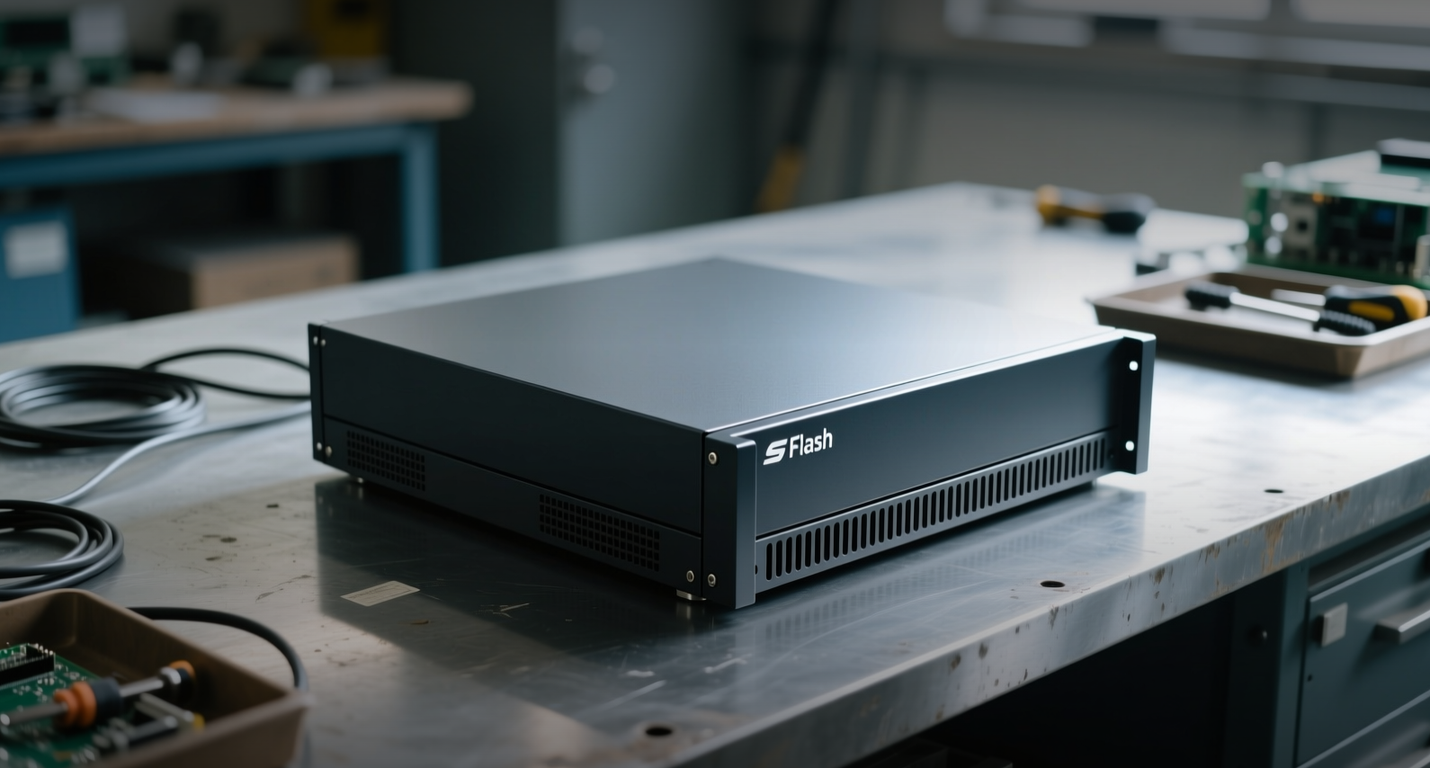
Everpure shares fall 10% as cash flow swing overshadows Q2 beat
Everpure reported fiscal Q2 revenue of $1.19 billion, beating consensus by 7.5 percent, yet shares fell 10 percent as free cash flow swung negative. "While these purchases created a temporary headwind to operating cash flow in the quarter, we expect operating cash flow to normalize over the next two quarters," CFO Tarek Robbiati said. Adjusted EPS came in at $0.70, above the $0.58 consensus, while EBIT jumped 76.7 percent year over year to $229.6 million. Product revenue rose 54 percent to $687 million and subscription services climbed 20 percent to $499 million. Free cash flow swung to negative $237.6 million against a consensus estimate of positive $226.6 million, a swing of more than $460 million, as the company front-loaded NAND purchases to lock in component supply. | Metric | Actual | Consensus | Beat/Miss | |--------|--------|-----------|-----------| | Revenue | $1.19B | $1.10B | +7.5% | | Adjusted EPS | $0.70 | $0.58 | +$0.12 | | Free cash flow | -$237.6M | +$226.6M | -$464.2M | The stock fell 10.35 percent to $97.63 in the session after the Aug. 26 release, extending a week-long decline of 14 percent. Everpure raised its full-year revenue target to $5.03 billion-$5.07 billion, implying 38 percent growth, and lifted operating income guidance to $940 million-$960 million. Product gross margin held at 66.2 percent, the low end of the company's 65-70 percent target range, a choice management framed as prioritizing share gains over near-term margin capture. Overall gross margin came in at 69.9 percent. Storage-as-a-service accelerated underneath the headline print. Evergreen//One's total contract value run rate crossed $1 billion after growing 121 percent year over year to $277 million in the quarter, remaining performance obligations rose 44 percent to more than $4 billion, and international revenue climbed 75 percent to $498 million. CEO Charles Giancarlo tied the guidance raise to two quarters of pricing data and a second design win with a top-five hyperscaler, announced Aug. 10, that will start contributing revenue in fiscal 2028. The guidance raise signals management expects AI-driven storage demand to accelerate, but the cash flow swing and a valuation above 148 times trailing earnings leave the stock exposed to further multiple compression. Investors will watch the next two quarters for operating cash flow to normalize as component pre-buys roll off, with analysts holding an average price target of $108.69. This article is for informational purposes only and does not constitute investment advice.