Edgen AI operates independently of, and is not controlled by Aspen Digital Financial Limited.
US-Canada trade talks stall as $28B in retaliatory tariffs loom
 Edgen Stock·Aug 30 2026, 12:51
Share to
Share to
Copy link

[1] Canada Pushes Back as US Trade Tensions Rise (https://www.youtube.com/watch?v=yAS-Lsd5RSM ...)[2] Kansas City auto industry faces a new threat from Canada. Here’s what is at stake (https://www.kansascity.com/news/politics-gove ...)[3] Alberta’s current, former premiers offer contradicting views on U.S. counter-tariffs (https://www.cp24.com/news/canada/2026/08/29/a ...)[4] Alberta’s current, former premiers offer contradicting views on U.S. counter-tariffs. Live updates here. (https://www.cp24.com/news/canada/2026/08/28/a ...)
Related News

Aug 30 2026, 13:19
Treasury Doubles Long-Bond Buybacks to $4B, Boosting Muni Duration Case
**Treasury's decision to at least double 10- to 30-year buybacks gives duration buyers their first clear green light in months — and the November midterms may add a second leg.** The US Treasury's decision to at least double its quarterly purchases of 10- to 30-year Treasuries to $4 billion per operation marks a policy pivot that strategists say could compress long-end yields and strengthen the case for extending duration in municipal bond portfolios. "The buyback expansion represents a meaningful reduction in net long-end supply and a strong signal of concern around market liquidity," said Erik Nelson, a strategist at Wells Fargo. "But it is unlikely to drive a sustained decline in long-end yields without another driver." The Treasury plans to conduct buybacks of 10- to 30-year securities worth at least $4 billion per operation during the coming quarter, up from up to $2 billion previously. The first larger operations for 10- and 20-year bonds begin September 10. The 10-year yield traded around 4.69 percent to 4.71 percent Monday, while the 30-year edged back to roughly 5.19 percent to 5.25 percent. The program comes as the US government's outstanding debt surpassed $40 trillion and the CBO projects a $1.9 trillion federal budget deficit for fiscal year 2026, with net interest costs exceeding $1 trillion. For muni investors, the buyback signal could drive inflows into long-duration funds, with the November midterms potentially adding further tailwinds. Wall Street strategists remain divided on whether the buybacks will meaningfully reset rate levels. Goldman Sachs strategists including George Cole and William Marshall wrote in an Aug. 21 research note that "the buybacks themselves are unlikely to meaningfully reset rate levels even if scaled up." They cited cyclical resilience, Fed policy reassessment, fiscal pressures, energy risks, and AI capital expenditures as the main drivers of the long-end selloff. Citi strategists led by Jason Williams see gains for 20-year Treasuries after the buyback announcement, arguing the long end "now has better asymmetric risk-reward with the new Treasury 'put' combined with attractive valuations, potential pension fund demand, and upcoming softer data." The 20-year "may benefit the most from future actions as Treasury is likely to reduce the size of its auctions, given how poor it trades relative to 10s and 30s." Deutsche Bank strategists led by Matthew Raskin said the announcement "highlights Treasury's more activist approach with a willingness to deploy tools more creatively and using communication tactically to keep long-end yields contained," though they still expect a steeper curve with long-end yields rising higher. Societe Generale's Subadra Rajappa and Shakeeb Hulikatti wrote that the buyback announcement is "unlikely to alter broader forces pushing yields higher," while Scotiabank's Boris Sender and Rachel Zheng said "despite Treasury Secretary Bessent's characterization, the move higher in long yields is justified by fundamentals." ### TGA Funding and the Cash Question The Treasury has yet to disclose precisely how it intends to fund the larger buybacks. One potential source is the Treasury General Account, the federal government's cash account at the Federal Reserve, which held roughly $940 billion as of last Wednesday. Using existing cash would allow the Treasury to conduct the purchases without issuing additional short-term debt, though it would reduce the government's available reserves. The TGA balance has been built up in part to accommodate about $166 billion in refunds owed to importers following a Supreme Court ruling that invalidated a significant portion of President Donald Trump's tariffs. If the Treasury opts to replenish cash used for buybacks through borrowing, the additional issuance would likely need to be concentrated in shorter maturities — preserving the objective of improving liquidity in the longer-dated market rather than increasing supply in the very sector the department is seeking to support. For municipal bond investors, the buyback expansion arrives at a moment when long-duration muni funds have been under pressure from elevated yields. The policy shift — combined with the potential for the November midterms to shift fiscal priorities — could provide the specific event needed to extend duration. The next key milestone is the Quarterly Refunding on November 4, when the Treasury may update how it balances buybacks, new debt issuance, and maintaining its cash balance. This article is for informational purposes only and does not constitute investment advice.
Aug 30 2026, 12:21
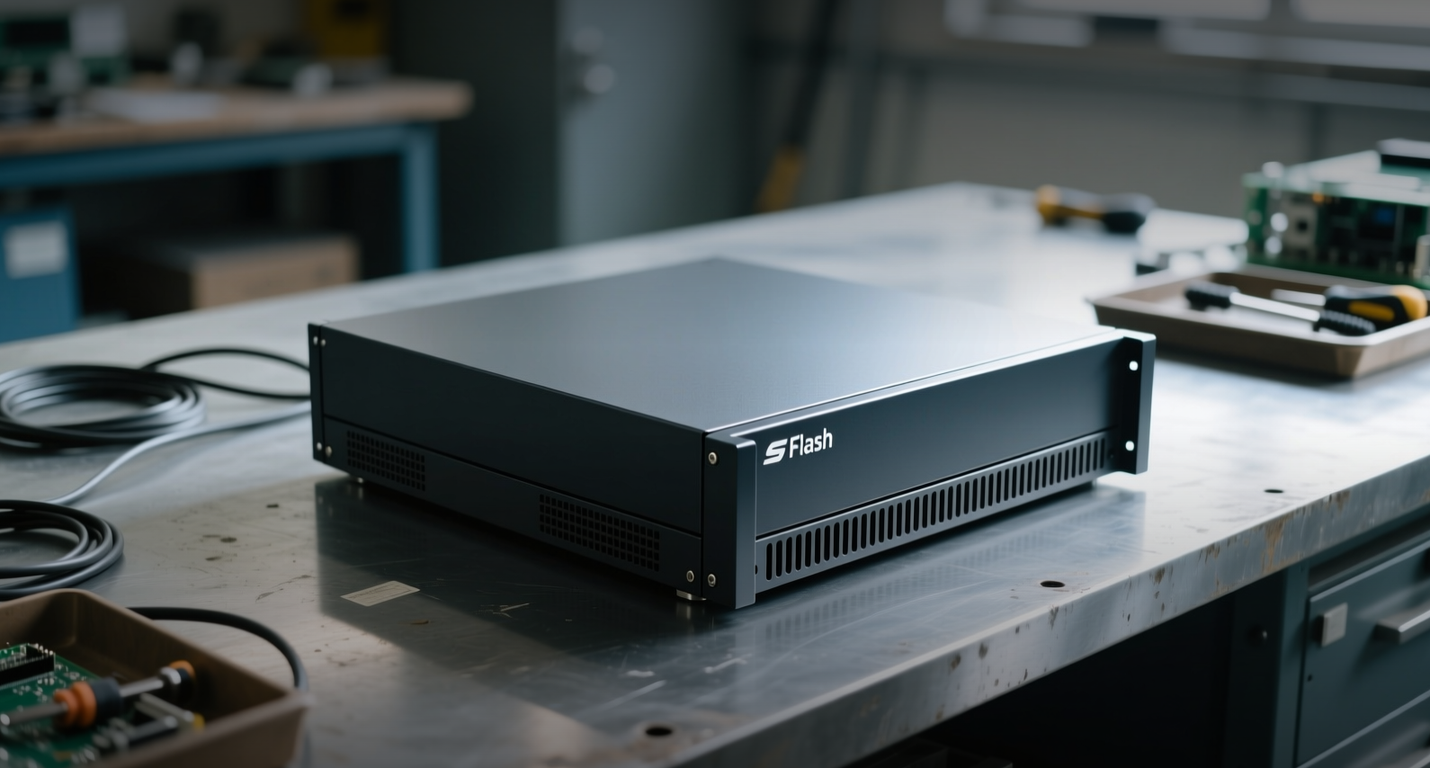
Everpure shares fall 10% as cash flow swing overshadows Q2 beat
Everpure reported fiscal Q2 revenue of $1.19 billion, beating consensus by 7.5 percent, yet shares fell 10 percent as free cash flow swung negative. "While these purchases created a temporary headwind to operating cash flow in the quarter, we expect operating cash flow to normalize over the next two quarters," CFO Tarek Robbiati said. Adjusted EPS came in at $0.70, above the $0.58 consensus, while EBIT jumped 76.7 percent year over year to $229.6 million. Product revenue rose 54 percent to $687 million and subscription services climbed 20 percent to $499 million. Free cash flow swung to negative $237.6 million against a consensus estimate of positive $226.6 million, a swing of more than $460 million, as the company front-loaded NAND purchases to lock in component supply. | Metric | Actual | Consensus | Beat/Miss | |--------|--------|-----------|-----------| | Revenue | $1.19B | $1.10B | +7.5% | | Adjusted EPS | $0.70 | $0.58 | +$0.12 | | Free cash flow | -$237.6M | +$226.6M | -$464.2M | The stock fell 10.35 percent to $97.63 in the session after the Aug. 26 release, extending a week-long decline of 14 percent. Everpure raised its full-year revenue target to $5.03 billion-$5.07 billion, implying 38 percent growth, and lifted operating income guidance to $940 million-$960 million. Product gross margin held at 66.2 percent, the low end of the company's 65-70 percent target range, a choice management framed as prioritizing share gains over near-term margin capture. Overall gross margin came in at 69.9 percent. Storage-as-a-service accelerated underneath the headline print. Evergreen//One's total contract value run rate crossed $1 billion after growing 121 percent year over year to $277 million in the quarter, remaining performance obligations rose 44 percent to more than $4 billion, and international revenue climbed 75 percent to $498 million. CEO Charles Giancarlo tied the guidance raise to two quarters of pricing data and a second design win with a top-five hyperscaler, announced Aug. 10, that will start contributing revenue in fiscal 2028. The guidance raise signals management expects AI-driven storage demand to accelerate, but the cash flow swing and a valuation above 148 times trailing earnings leave the stock exposed to further multiple compression. Investors will watch the next two quarters for operating cash flow to normalize as component pre-buys roll off, with analysts holding an average price target of $108.69. This article is for informational purposes only and does not constitute investment advice.
Aug 30 2026, 12:19
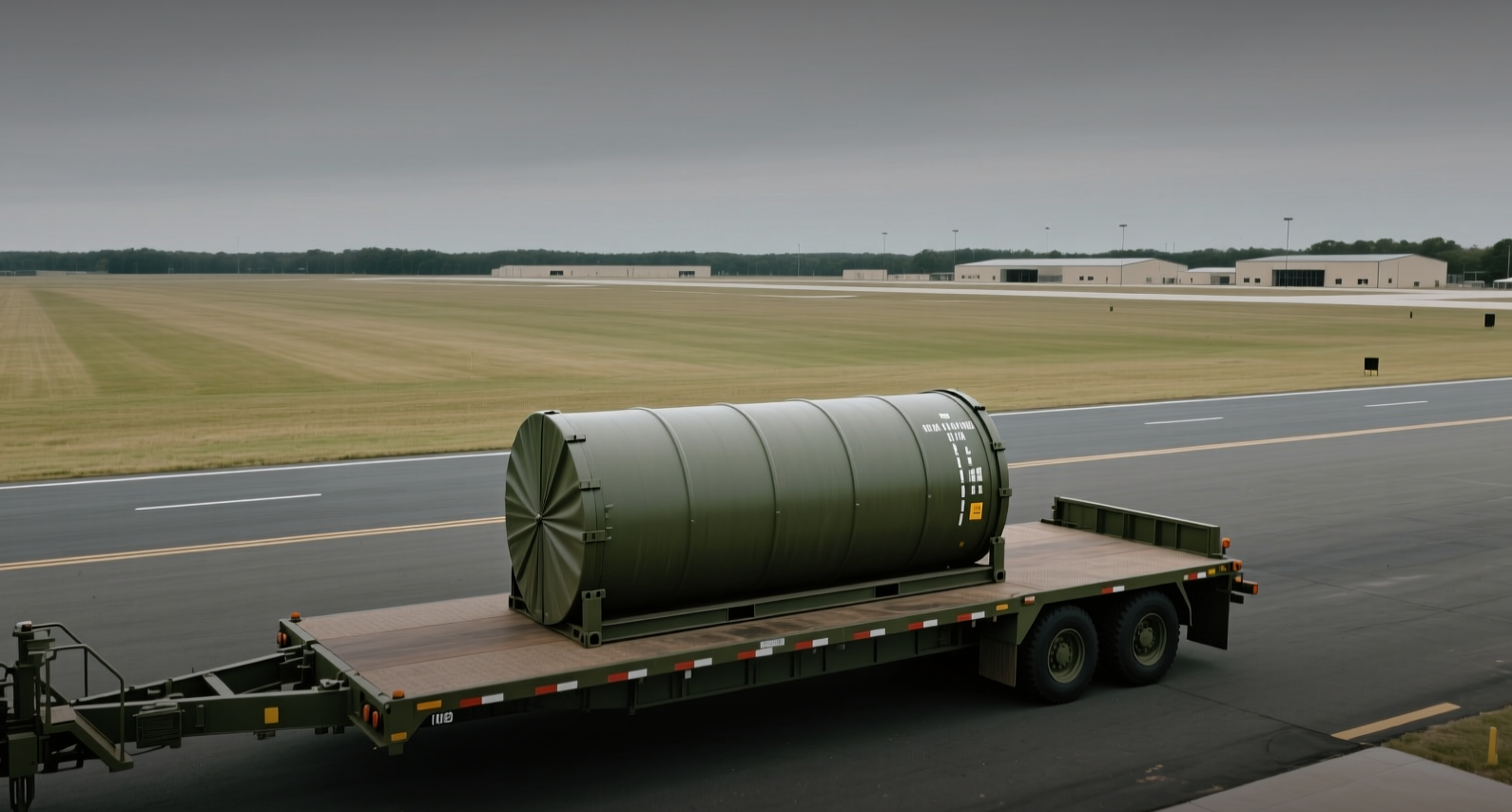
Radiant secures $750M Army contract for 15 portable nuclear microreactors
Radiant Industries secured a binding agreement worth up to $750 million to deploy 15 of its 1-MWe Kaleidos portable microreactors across U.S. Army installations, the largest award under the Pentagon's $2.2 billion Janus Program. The California-based startup was one of five companies selected to build, own, and operate commercial microreactors at domestic bases, with at least one unit targeted for operation by Sept. 30, 2028. "The U.S. Army is a savvy customer. They have the world's top nuclear experts and know what to look for in a partner," Tori Shivanandan, president and chief operating officer at Radiant, said. Radiant's first three-unit deployment is slated for Fort Benning, Georgia, with additional units going to other military installations. Each Kaleidos unit is factory-built and arrives as a sealed, fueled package transportable by land, sea, or air. The reactor requires no cooling water, operates up to five years between refuelings, and carries a 20-year design life. Radiant will handle fueling, refueling, and spent-fuel storage at its own 300,000-square-foot R-50 campus in Oak Ridge, Tennessee, allowing installations to return to greenfield condition within two years of reactor removal. The contract is one of the largest ever issued by the Defense Innovation Unit and follows Radiant's exclusive one-year access to the Idaho National Laboratory's DOME test facility, where the Kaleidos design is being prepared for full-power testing. The company also holds a parallel award under the Air Force's Advanced Nuclear Power for Installations initiative to deploy a unit at Buckley Space Force Base in Colorado. ## Janus Program Puts Five Vendors on the Grid The Army's Janus Program, initiated by executive order in 2025, will distribute up to $2.2 billion through fiscal year 2031 across five vendors using a milestone-based payment model — companies receive government funding only after hitting specific technical goals. The other selectees include BWXT Advanced Technologies at Fort Campbell, Kentucky, with its 20-MWe BANR reactor; General Atomics Electromagnetic Systems at Fort Hood, Texas, with the roughly 5-MWe GA-TES; Antares Nuclear at Fort Bragg, North Carolina, with its R1 heat-pipe reactor; and Westinghouse Government Services at Fort Drum, New York, with the eVinci microreactor. The competitive field spans a wide range of technical approaches. BWXT is the only vendor that self-supplies its TRISO fuel from its NRC-licensed Lynchburg, Virginia, facility, and it has authorized more than $25 million to double output there. General Atomics' GA-TES uses uranium-zirconium hydride fuel drawn from its TRIGA research reactor heritage, the only Janus design not using TRISO particle fuel. Antares, which achieved criticality with its Mark-0 test reactor at INL in June, has a combined federal contract book approaching $1 billion across the Army, Air Force, and Space Force programs. Radiant's fuel pathway separates enriched uranium supply from reactor-ready fuel fabrication. DOE-allocated HALEU (uranium enriched to 19.75 percent, versus 3 to 5 percent for conventional reactors) will support Kaleidos deployments, and Standard Nuclear will fabricate that material into TRISO particle fuel under a binding multi-metric-ton agreement extending through 2031. ## Military Anchor Deployments Could Unlock Commercial Scale The Army projects more than 20 total nuclear microreactors across Pentagon installations when private capital is included, with the government expecting the majority of funding to come from the private sector. For Radiant, the Janus award feeds directly into the same product it is building for commercial customers, including a signed agreement with Equinix for 20 Kaleidos units to power data centers. "Operating on military installations first gives us the reliability track record to unlock commercial deployments, and the resulting, much larger commercial volume drives down costs, letting the government buy at scale for less," Mike Starrett, chief commercial officer at Radiant, said. The Army does not expect all five vendors to deliver reactors by 2028. "We have a very practical pathway to delivering at least one of these reactors on or by September 30, 2028," Dr. Jeff Waksman, principal deputy assistant secretary of the Army for Installations, Energy and Environment, said. "If a company is not performing, we can pull future milestones." The broader advanced nuclear sector is drawing parallel interest from big tech. Data center operators facing multi-year grid interconnection queues are evaluating microreactors as a behind-the-meter power source, and Radiant's Equinix agreement points to commercial demand beyond defense. BWXT is also pursuing a Wyoming commercial TRISO facility and has a letter of intent from Tata Chemicals Soda Ash for up to eight BANR units. For investors, the Janus awards give advanced nuclear startups a government-backed revenue path that reduces technology risk, potentially accelerating the sector's move from pilot projects to commercial order books. This article is for informational purposes only and does not constitute investment advice.