Edgen AI operates independently of, and is not controlled by Aspen Digital Financial Limited.
Freeport-McMoRan beats Q2 estimates as copper prices offset volume declines
 Edgen Stock·Jul 23 2026, 19:46
Share to
Share to
Copy link


[1] FCX's Q2 Earnings and Revenues Top Estimates on Higher Metal Prices (https://www.zacks.com/stock/news/2959513/fcx- ...)[2] Freeport-McMoRan (FCX) Q2 Earnings and Revenues Top Estimates (https://finance.yahoo.com/markets/stocks/arti ...)[3] FCX to Report Q2 Earnings: What's in the Offing for the Stock? (https://finance.yahoo.com/markets/stocks/arti ...)[4] 4 Mining Stocks Likely to Outperform Earnings Estimates in Q2 (https://finance.yahoo.com/markets/commodities ...)
Related News
Jul 23 2026, 21:33
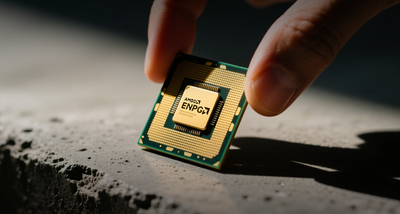
Supermicro launches H15 servers with 1.7x performance gain from AMD EPYC
Supermicro on July 23 introduced its H15 server portfolio built on AMD's 6th Gen EPYC 9006 Series CPUs, offering up to 256 cores per socket and a 1.7x generational performance gain that positions the company to capture rising enterprise spending on AI compute. "The latest AMD powered additions to our DCBBS family deliver the next generation of AI infrastructure, optimized for high performance, rapid scalability, and peak efficiency," Vik Malyala, chief business officer at Supermicro, said. Dan McNamara, senior vice president and general manager of Compute and Enterprise AI at AMD, said the combination of EPYC CPUs, Instinct GPUs and Pensando networking lets customers "deploy AI infrastructure faster while improving utilization, reducing energy consumption, and lowering total cost of ownership." The H15 line spans eight system families — Hyper, CloudDC, GrandTwin, FlexTwin, Petascale Storage and SuperBlade — in both air-cooled and liquid-cooled configurations. The EPYC 9006 chips, built on AMD's Venice "Zen 6" architecture, deliver 33% more cores, 2x PCIe Gen 6 bandwidth and 2.6x higher memory bandwidth versus the prior generation, according to AMD's published SPECInt Rate 2017 benchmarks. Supermicro also unveiled the AMD Helios Platform, a liquid-cooled rack-scale system with 72 AMD Instinct MI455X GPUs, and 5U PCIe GPU servers supporting up to 10 AMD Instinct MI350P GPUs with 144GB of HBM3e memory each. The densest configuration packs 96 EPYC 9006 CPUs into a single 42U rack using the FlexTwin system. The launch comes as enterprises shift AI workloads from experimentation to production, driving demand for high-density compute capable of running multiple AI agents concurrently. Supermicro's DCBBS (Data Center Building Block Solutions) approach lets customers mix and match components, potentially lowering total cost of ownership versus integrated systems from Dell or Hewlett Packard Enterprise. ## A Portfolio Built for the Agentic AI Era The H15 lineup targets specific workload segments with purpose-built designs. The Hyper platform, a dual-socket system, is engineered for enterprise applications and AI inference. The CloudDC server follows the Open Compute Project's DC-MHS specification for compatibility with open data center standards. The FlexTwin, a 1OU two-node system, maximizes compute density for cloud-native deployments using liquid cooling, while the GrandTwin offers a 2U four-node architecture for scale-out workloads including object storage and high-performance computing. For storage-intensive AI data lakes, the Petascale Storage platforms support up to 4.8 petabytes per system in all-flash configurations. The SuperBlade H15, an 8U 10-blade rack-scale architecture, supports both single-socket and dual-socket blades with air and liquid cooling options, targeting HPC and agentic AI workloads. ## AMD's Ecosystem Play vs. Nvidia's Dominance The launch deepens AMD's push into AI infrastructure, a market where Nvidia commands an estimated 80% to 90% of data center GPU revenue. AMD's Instinct MI350P GPUs, with 144GB of HBM3e memory and support for low-precision AI formats, compete directly with Nvidia's H100 and Blackwell B200 series. The AMD Pensando Pollara 400 AI NIC provides open Ethernet networking as an alternative to Nvidia's InfiniBand and Spectrum-X fabric. Supermicro's ability to deliver both AMD and Nvidia-based systems gives it flexibility in a market where customers increasingly seek alternatives to single-vendor lock-in. The company's U.S. supply chain and liquid cooling expertise, highlighted by the FlexTwin's 96-CPU-per-rack density, could help it win deals from hyperscale operators expanding AI capacity. Supermicro shares have gained more than 60% over the past 12 months as AI server demand has surged. The company trades at roughly 25x forward earnings, a discount to Nvidia's 35x-plus multiple, reflecting the lower margins in server assembly versus chip design. The H15 launch, combined with the AMD Helios Platform, could support margin stability by shifting the mix toward higher-value integrated rack-scale solutions. This article is for informational purposes only and does not constitute investment advice.

Jul 23 2026, 21:26
John Paulson says gold rally still early, touts NovaGold's 40 million oz
**John Paulson, who made billions shorting subprime mortgages, says gold's multi-year rally is only in its early stages.** Gold traded near $4,121 an ounce as John Paulson said the metal's bull market remains in its early stages and recommended early-stage mining stocks. "I do think we're in the beginnings or the early stages of a long-term bull market for gold," Paulson said on CNBC's "The Exchange" on July 22. "As people lose faith in paper currencies, gold as an alternative will continue to grow." Paulson pivoted from mortgage shorts to gold in 2009, arguing that post-crisis stimulus would erode the dollar. The SPDR Gold Shares ETF has returned 339.66% since Jan. 2, 2009. Spot gold touched a record $5,600 an ounce in late January before pulling back to roughly $4,121. Central banks logged 41 tonnes of purchases during one of the metal's weaker months this year, while private-sector demand is rising, Paulson said. Paulson singled out NovaGold Resources, pointing to its 40 million ounces of indicated and measured resources at the Donlin Gold project in Alaska against a post-deal market capitalization of $4.2 billion. The call carries the weight of one of Wall Street's most famous macro trades — and a freshly disclosed financial interest in the stock he is promoting. **NovaGold's 40 Million Ounce Bet** Paulson's firm agreed to sell its 40% stake in the Donlin project to NovaGold on the same day as his CNBC appearance. The deal, requiring shareholder, court, and regulatory approval, would give NovaGold 100% ownership and install Paulson as co-chairman. NovaGold already acquired Barrick Gold's 50% interest in Donlin in January for $1 billion, lifting its stake to 60%. NovaGold shares closed at $6.21 on July 22, down 33.37% year to date. The development-stage company posted a net loss of $25.5 million in Q2 FY2026 and held roughly $370.2 million in cash. Its Donlin project features ore grades of 2.22 grams per tonne, more than double the global industry average. **Barrick Rides the Rally on the Other Side** Barrick Gold, which exited Donlin last year, posted $6 billion in Q2 revenue, up 64.5% year over year, on a realized gold price of $4,177 an ounce. It raised its quarterly dividend 40% to $0.17 a share, and its stock has gained 76.41% over the past year. Not all gold bulls share Paulson's near-term conviction. JPMorgan recently cut its Q4 2026 gold price forecast after a volatile stretch, while maintaining a bullish long-term view. This article is for informational purposes only and does not constitute investment advice.
Jul 23 2026, 21:21
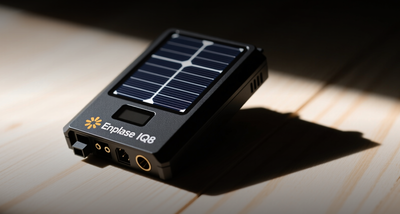
Enphase Energy falls 3.1% to $38.34 ahead of Q2 earnings
Enphase Energy Inc shares slid 3.1% to $38.34 on Thursday, hitting their lowest level since mid-May and extending a quarterly decline to 21%, as investors braced for the solar inverter maker's second-quarter earnings report. "The stock is pricing in a weak demand environment for residential solar, and the upcoming report will either confirm or challenge that narrative," Lucas Herrera, an energy transition analyst, said. The decline came despite a price-target increase from Citigroup to $43, suggesting analysts see limited upside from current levels. Enphase shares have now lost more than a fifth of their value in the second quarter alone, underperforming the broader renewable energy sector. Enphase faces headwinds from high interest rates that have dampened demand for residential solar installations in the US, its primary market. The company's Q2 results, expected in the coming weeks, will provide the clearest signal yet on whether the downturn is bottoming out or deepening further. A miss could accelerate selling pressure on a stock already trading near multi-month lows. This article is for informational purposes only and does not constitute investment advice.