Edgen AI operates independently of, and is not controlled by Aspen Digital Financial Limited.
Coinbase opens IPO access to retail with Oura as first deal
 Edgen Stock·Sep 21 2026, 19:28
Share to
Share to
Copy link


[1] Coinbase stock rises as exchange launches IPO access for retail traders (https://invezz.com/news/2026/09/21/coinbase-s ...)[2] Coinbase Launches IPO Access for U.S. Retail Investors (https://tokenpost.com/news/business/23188 ...)[3] Coinbase Launches Retail IPO Allocation Service With Oura (https://coinedition.com/crypto-live-news/coin ...)[4] Coinbase Empowers US Retail Investors by Offering IPO Access (https://coinfomania.com/coinbase-empowers-us- ...)[5] Coinbase now offers access to IPO allocations for US retail traders (https://fxnewsgroup.com/forex-news/cryptocurr ...)
Related News

Sep 21 2026, 20:01
Ramaco faces securities class action over 2-month class period
A court-appointed co-lead counsel is pursuing fraud claims against Ramaco Resources Inc. (NASDAQ: METC) on behalf of anyone who acquired the coal-and-critical-minerals developer's securities across a roughly 12-week window that closed in late October 2025, according to a Sept. 21 statement from Lowey Dannenberg P.C. "As lead counsel, we are actively pursuing this case on behalf of the class, and we are looking for investors who bought in Ramaco's Secondary Offering," Vincent R. Cappucci Jr., an attorney at Lowey Dannenberg, said. The White Plains, New York-based firm said it holds the co-lead counsel role in the matter. The case, In re Ramaco Resources, Inc. Securities Litigation, No. 1:26-cv-00846-ER, is pending in the U.S. District Court for the Southern District of New York. It centers on Ramaco's Brook Mine project in Sheridan, Wyoming, which the company described to investors as a commercially and technologically feasible source of rare earth elements and critical minerals, particularly scandium. Lowey is separately soliciting investors and entities that acquired Ramaco common stock in the company's Aug. 7, 2025 secondary public offering, a cohort the firm is treating as a distinct group within the class. The complaint's specific alleged misstatements, the damages sought and the number of shares covered have not yet been disclosed in the firm's notice. Ramaco has denied wrongdoing, and the allegations in the pending lawsuit have not been proven. The company did not immediately respond to a request for comment on the filing. Ramaco's Brook Mine has been the centerpiece of its effort to reposition itself beyond metallurgical coal. The company has told investors the Wyoming site holds rare earth and critical mineral deposits, with scandium as the flagship element — a claim that underpins the growth narrative attached to the stock. Any legal challenge to the feasibility or commercial characterization of that project goes directly to the valuation case management has presented. The litigation adds a legal-cost and disclosure overhang to a Nasdaq-listed small-cap issuer whose equity story rests on a single development asset. Securities class actions of this type typically carry defense costs that scale with the size of the certified class, and they can constrain management's flexibility on capital allocation and forward guidance while discovery runs. Insurance and director-liability exposure is a further consideration, though no figures have been disclosed. For holders, the immediate signal is negative until the scope of the allegations is quantified: the class period spans roughly 12 weeks, and the Aug. 7, 2025 secondary offering gives plaintiffs a defined set of purchasers with a documented offering price. Investors should watch for the amended complaint and any motion-to-dismiss schedule in the Southern District of New York docket, which will establish the specific statements at issue and the first real measure of the case's materiality. This article is for informational purposes only and does not constitute investment advice.
Sep 21 2026, 19:55
US proposes $5 billion Gulf energy fund to bypass Hormuz
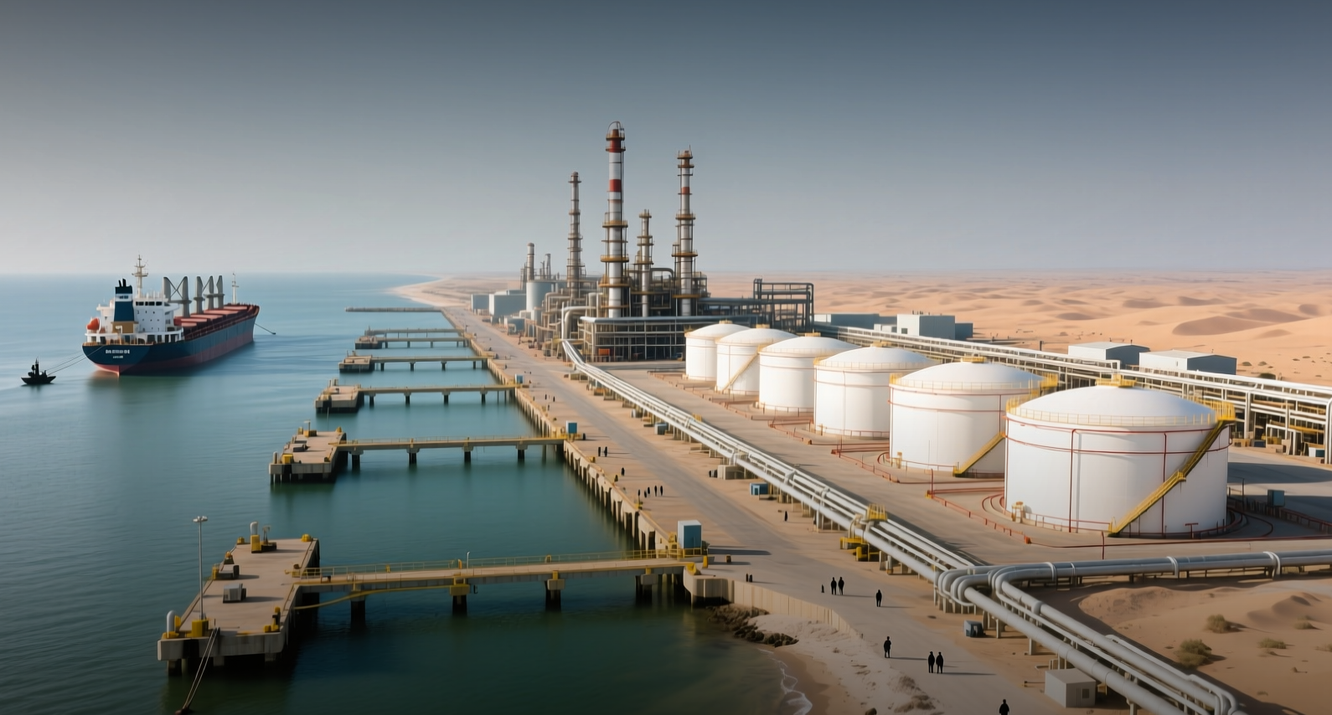
The Trump administration has proposed putting $5 billion into a new fund to rebuild Gulf energy infrastructure wrecked in the seven-month Iran war and to cut the region's reliance on the Strait of Hormuz for moving oil and gas, according to U.S. and Middle Eastern officials and documents reviewed by The Wall Street Journal. The plan remains under discussion with Saudi Arabia and the United Arab Emirates, with no financing structure, recipient list or timetable disclosed. "The administration needs to repair both Gulf infrastructure and confidence in the U.S. partnership," said Bilal Saab, a Middle East security specialist cited in the reporting, adding that Gulf leaders "can blame Iran for its aggression and simultaneously blame Washington for starting a war without an adequate plan to protect the region." The scale of the damage explains the urgency. Satellite imagery from Planet Labs PBC in July showed smoke rising from Saudi Aramco's Abqaiq oil-processing facility, one of the world's largest crude stabilization plants. Saudi Arabia has cancelled crude cargoes after a pipeline closure and projected it could restore only half of that pipeline's capacity within days. Brent crude traded near $110 a barrel when the conflict's first-quarter damage was assessed, and front-month crude futures were quoted at $95.50, down 4.79%, in the most recent session. The IMF's April 2026 World Economic Outlook cut global growth to 3.1% for 2026 from 3.4% in 2025, with emerging markets slowing to 3.9% from 4.4% and the euro area to 1.1% from 1.4%. Global headline inflation was revised up 52 basis points to 4.4%, and world trade volume growth is projected to fall to 2.8% in 2026 from 5.1% in 2025. The Strait of Hormuz carries roughly a fifth of global oil trade, and the war's near-closure of the waterway turned an energy story into a broader industrial one. West Asia supplies ammonia and nitrogen for synthetic fertilizers, Iran ranks among the largest methanol exporters, and Qatar produces about 35% of the world's helium, a critical input for semiconductor manufacturing. Rerouting those flows away from Hormuz is the fund's stated purpose, which would redirect tanker demand, insurance costs and pipeline investment across the Gulf. ## What $5 billion actually buys Five billion dollars is seed capital, not a reconstruction budget. Rebuilding refineries, processing trains and cross-country pipelines damaged across seven months of strikes would run into the tens of billions, and the proposal's own framing — "kickstart" — concedes that private and sovereign capital must follow. The open questions are who underwrites the fund, who controls disbursement, and what Washington asks in return. Gulf states that watched their own energy infrastructure become a battlefield have reason to be wary of putting the U.S. in charge of the rebuild, particularly when the war's expansion is partly attributed to Washington. For markets, the proposal does not yet remove the geopolitical risk premium embedded in crude. Traders will want to see which countries sign on, how the fund is capitalized and how quickly projects can be permitted and built. The last time a Gulf supply shock of comparable magnitude hit — Iraq's 1990 invasion of Kuwait — it took a multinational coalition and roughly nine months of military operations before crude prices normalized, and the infrastructure rebuild ran for years afterward. The near-term read-through is narrower than the headline suggests. Energy infrastructure and construction contractors with Gulf exposure, pipeline and tanker operators positioned on alternative routes, and helium and methanol supply chains stand to benefit if the fund converts into signed contracts. Oil's own reaction depends on whether the fund is read as a supply-restoration signal or as confirmation that the disruption is deep enough to require a U.S. Treasury backstop. The next data points are the participants list and any formal capitalization announcement, neither of which has been disclosed. This article is for informational purposes only and does not constitute investment advice.
Sep 21 2026, 19:26
Rocket Lab gains 7% as Cantor holds $122 target on Neutron
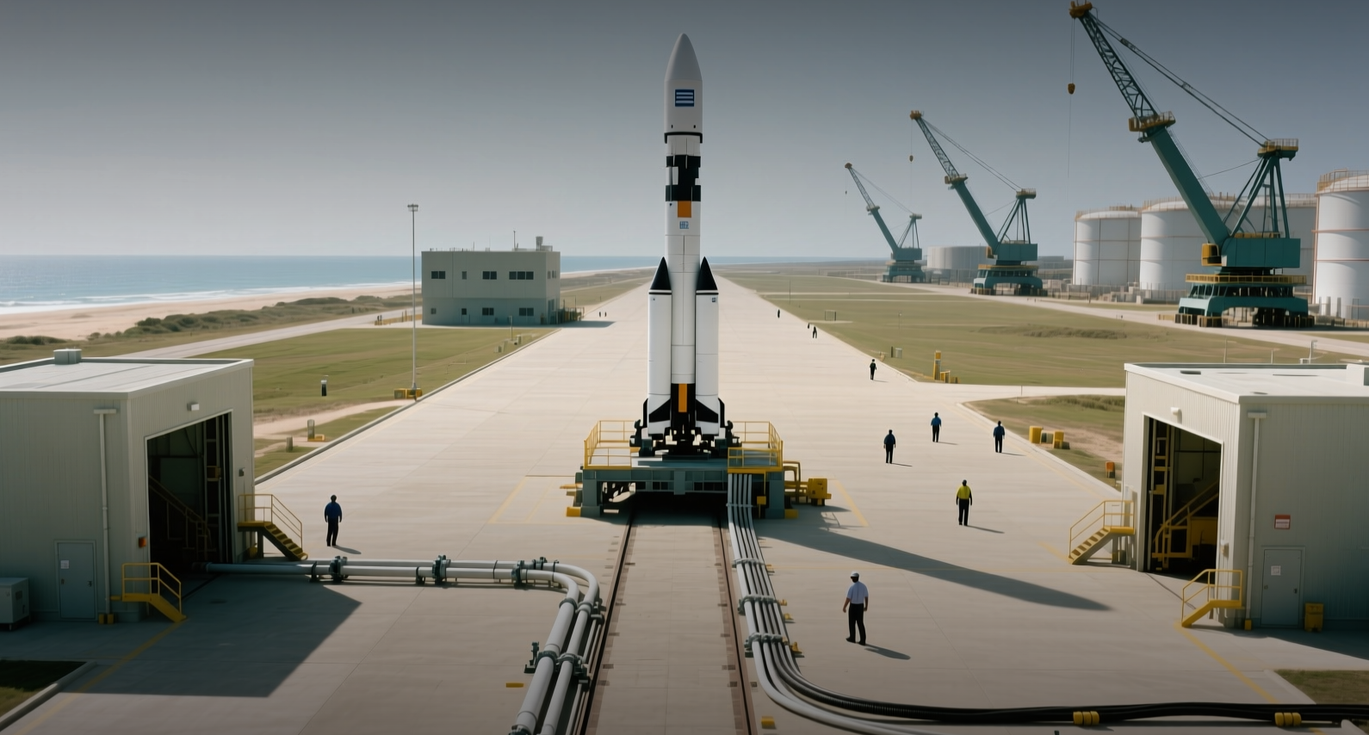
Rocket Lab (NASDAQ: RKLB) climbed 7% to $69.03 in Monday morning trading after Cantor Fitzgerald kept its Overweight call and $122 target on the stock, a level that implies about 89% upside. "Neutron is uniquely positioned to become the only viable alternative and most direct commercial competitor to SpaceX's Falcon 9 once operational," analyst Andres Sheppard wrote, calling the current price an attractive entry point ahead of the rocket's debut. The note restates a view Cantor already held rather than changing it. No prior rating or target was revised, and the firm attached no date to either of the two events it names as the reason to buy. | Field | Value | |---|---| | Analyst | Andres Sheppard | | Firm | Cantor Fitzgerald | | Previous Rating | Overweight | | New Rating | Overweight | | Previous PT | $122.00 | | New PT | $122.00 | | Current Price | $69.03 | | Implied Upside | ~89% | The first of those events is Neutron, Rocket Lab's medium-lift vehicle. It is designed to carry roughly 13,000 kilograms of payload, against about 300 kilograms for the Electron small-launch rocket that has carried the company to date. Management targets an average selling price of $50 million to $55 million per Neutron launch and as many as 20 flights per engine, with first flight still targeted for later this year. The second is Rocket Lab's pending acquisition of satellite operator Iridium Communications (NASDAQ: IRDM). Rocket Lab has raised $1.944 billion through an at-the-market share offering, removing the main financing hurdle, and the deal is expected to close in mid-2027 subject to regulatory approval. Sheppard models the combined company roughly doubling annual revenue, producing an end-to-end platform spanning launch, satellites and services. Cantor's confidence rests partly on Rocket Lab's existing execution. The company completed its 96th Electron mission on Sept. 19, its 17th launch of 2026, and has 15 more dedicated missions planned for Synspective through the end of the decade. Q2 FY26 revenue reached a record $234.07 million, up 62.0% year over year, with non-GAAP gross margin at 41.5% and backlog up 137% to $2.36 billion, including more than 90 launches. Chief Executive Peter Beck has flagged more than $1 billion in new contracts signed in Q3, including a $397 million Flatellite award for the U.S. Space Force's SB-AMTI program. Guidance calls for Q3 revenue of $250 million to $265 million. The note also leans on Rocket Lab's dedicated launchpads in New Zealand and the United States and a customer base split between commercial and government buyers, which Cantor frames as durable barriers against rivals chasing the same contracts. SpaceX currently accounts for somewhere between 80% and 90% of total Earth mass to orbit annually, leaving Rocket Lab as the only listed pure-play building a scaled second source. The U.S. Space Force named Rocket Lab an NSSL prime contractor in its FY2027 budget. The tape did not treat the note as a Rocket Lab-specific repricing. Intuitive Machines (NASDAQ: LUNR) rose 10% to $15.28 in Monday morning trading without any research note or announcement of its own, outpacing Rocket Lab's gain, while AST SpaceMobile (NASDAQ: ASTS) added 6% to $61.81. The Procure Space ETF (NASDAQ: UFO) was up 2% at $44.19 against a 1.13% gain for the SPDR S&P 500 ETF Trust (NYSE ARCA: SPY) at $770.32. Friday's session had run the other way for the same cluster, so part of Monday's move was a reversal inside a group that has traded in both directions. For holders, the reiteration leaves the investment case resting on execution rather than the Electron business alone. Investors should watch whether Neutron launches on schedule and reaches commercial reliability, and whether regulators clear the Iridium transaction, which carries integration and dilution risk after Rocket Lab issued roughly 29.3 million shares. Delays in either would compress the $122 case; both landing would strengthen it. This article is for informational purposes only and does not constitute investment advice.