Edgen AI operates independently of, and is not controlled by Aspen Digital Financial Limited.
Ramaco faces securities class action over 2-month class period
 Edgen Stock·Sep 21 2026, 20:01
Share to
Share to
Copy link


[1] Lowey Dannenberg P.C., Court-Appointed Co-Lead Counsel, Is Prosecuting Securities Class Action Against Ramaco Resources Inc. (NASDAQ: METC) (https://www.globenewswire.com/news-release/20 ...)
Related News

Sep 21 2026, 20:57
HIMS faces securities suit as 2 firms court investors by Nov 2
Investors who bought Hims & Hers Health Inc. (NYSE: HIMS) stock over a nearly 12-month window now have until Nov. 2, 2026 to seek lead-plaintiff status in a securities class action, Kaplan Fox & Kilsheimer LLP said. "Investors who suffered losses may move the court no later than November 2, 2026 to serve as lead plaintiff," Pamela A. Mayer, a partner at Kaplan Fox & Kilsheimer LLP, said in the notice. The New York-based firm, founded in 1956, states it has recovered more than $10 billion for clients and classes it has represented. The class period runs from Aug. 4, 2025 through July 29, 2026, the session in which Hims shares fell $4.32, or 14.7%, erasing more than $970 million of market capitalization in a single day. That decline followed a Federal Trade Commission complaint filed alongside the State of Utah and the County of Los Angeles. The FTC alleges Hims shared consumers' health information with third-party advertising platforms including Meta Platforms and Snap through embedded tracking pixels and customer list matching, and violated the Restore Online Shoppers' Confidence Act by enrolling consumers in recurring subscriptions without informed consent. The complaint also alleges consumers were billed for prescriptions almost immediately after submitting intake forms, before any consultation with a medical provider. The complaint targets Hims' repeated assurances that it "developed and maintain policies and procedures with respect to health information and personal information," including administrative, physical and technical safeguards. Hims has disputed the government's claims, calling them "an effort to generate headlines at our expense." Hagens Berman Sobol Shapiro LLP, which is running its own investigation, issued a parallel solicitation on Sept. 21 urging HIMS investors with substantial losses to submit claims before the same Nov. 2 deadline. Reed Kathrein, the Hagens Berman partner leading that inquiry, said the firm is examining "whether Hims may have intentionally misled investors about its business practices, including the adequacy of its internal controls, and financial ramifications of the alleged misconduct." The firm said it has secured more than $2.9 billion in investor and whistleblower recoveries and pointed investors toward the SEC Whistleblower program, which pays up to 30% of any successful recovery. The overlapping notices put the case on the standard securities-litigation path: competing firms file near-identical complaints, then the court consolidates them and appoints a lead plaintiff — typically the applicant with the largest financial interest — at or shortly after the deadline. That appointment determines which firm controls discovery, expert selection and any eventual settlement talks. Neither notice disclosed a claimed damages figure, and no settlement amount has been proposed. For holders, the immediate exposure is the cost and distraction of discovery rather than an imminent cash outflow, since securities class actions of this type typically resolve over two to four years. The Nov. 2 deadline is the next hard date: the volume and size of lead-plaintiff motions filed by then will give the first public read on how much aggregate investor loss the class is prepared to assert, and whether the case draws additional firms beyond the two already soliciting. Hims' next scheduled earnings report and any FTC procedural filings in the underlying enforcement action are the other near-term markers to watch. This article is for informational purposes only and does not constitute investment advice.
Sep 21 2026, 20:38
Coherent launches PhotonLink with 25 optics engagements as AI capex shifts
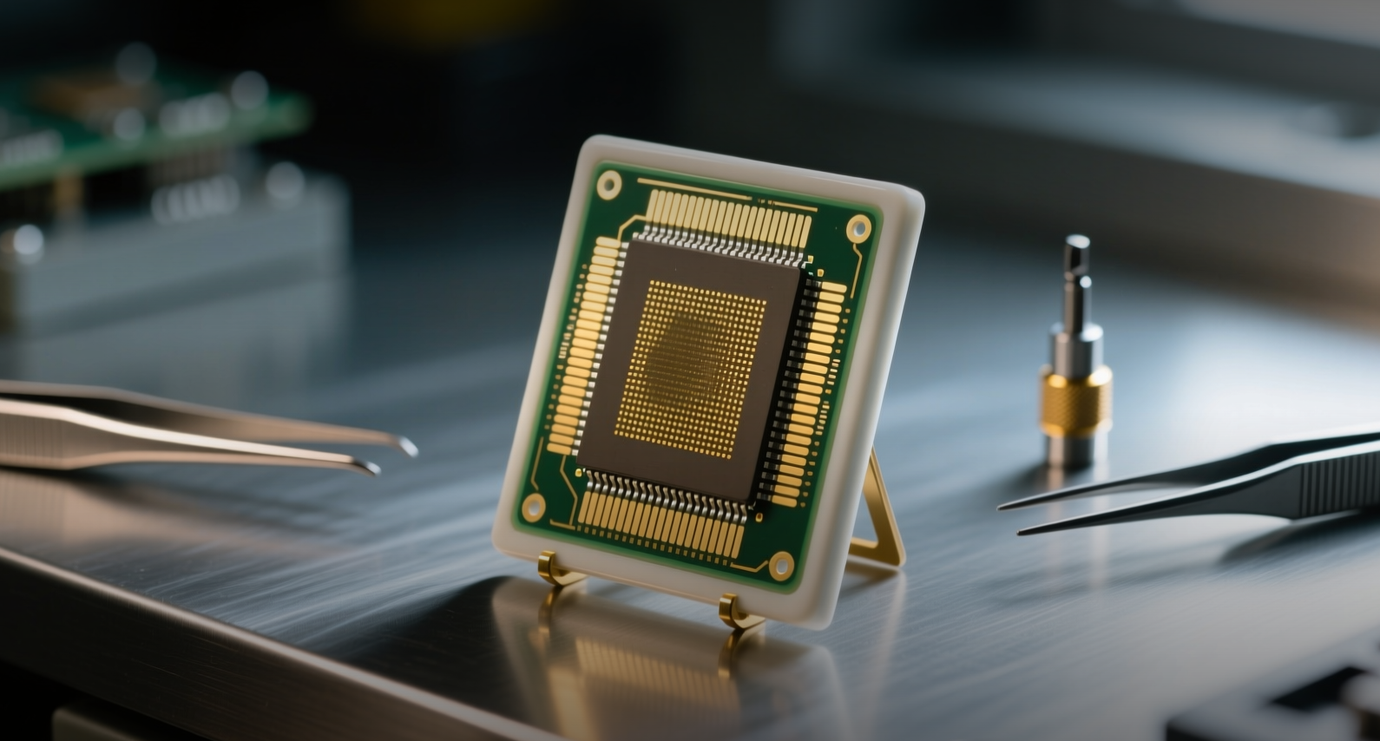
Coherent Corp. bundled its lasers, silicon photonics and specialty fiber into a single platform for AI datacenter interconnect, disclosing more than 25 customer engagements and a revenue ramp starting in the fourth quarter of calendar 2026 — but no customer names, order values or pricing. The Saxonburg, Pennsylvania-based photonics supplier said PhotonLink spans four functions of the optical path — Generate, Shape, Guide and Receive — and packages indium phosphide (InP) lasers, vertical-cavity surface-emitting laser (VCSEL) arrays, silicon photonics, isolators, specialty fibers, micro-optics and detectors into external laser sources, precision fiber assemblies and optical modules. "Customers need complete optical solutions, not just individual components," Jim Anderson, chief executive officer at Coherent, said. "Coherent is uniquely positioned to bring together the critical technologies, integrate and test the finished assemblies, and manufacture them at scale." The engagement count breaks down into more than 10 co-packaged optics (CPO) programs and more than 10 near-packaged optics (NPO) programs, with anchor customers and long-term agreements secured for both architectures, plus more than five engagements in chip-to-chip connectivity. Coherent did not disclose which customers, the size of the agreements, or the revenue those programs are expected to generate. The platform rests on an installed manufacturing base: Coherent said it has shipped more than 300 million InP lasers and more than one billion InP and gallium arsenide (GaAs) photodetectors into datacenter applications. It is expanding 6-inch InP and specialty fiber capacity to support the ramp. ## Why optics are moving inside the package The architectural shift driving PhotonLink is power. As AI clusters scale, electrical traces carrying data from switch silicon to a pluggable transceiver burn energy per bit that grows with distance and bandwidth. Co-packaged optics moves the optical engine onto the same substrate as the switch ASIC, shortening that electrical path. NPO is the intermediate step, placing optics adjacent to rather than on the package. That shift changes who supplies what. Pluggable transceivers — the OSFP and QSFP modules that dominate today's datacenter links — are assembled by a broad field including Coherent, Lumentum Holdings, Innolight and Eoptolink, with Fabrinet handling contract manufacturing for several vendors. CPO pulls the value toward whoever can supply the laser, the silicon photonics die, the fiber attach and the final assembly together, which favors vertically integrated suppliers and squeezes vendors that buy components on the open market. Broadcom is the most advanced competitor in the space, having shipped its Bailly CPO switch platform and Tomahawk 5 switch silicon with co-packaged optics. Marvell Technology has pursued silicon photonics and optical DSP content in the same architectures. Coherent's pitch is that it owns more of the bill of materials than either — the InP laser, the VCSEL array, the specialty fiber and the detector — and can therefore qualify a complete assembly rather than a component. The company also used the ECOC 2026 conference in Málaga, Spain, to show adjacent hardware: a 6.4T near-packaged optical engine combining silicon photonics, fiber attach, external laser sources and Coherent lasers; a 3.2T pluggable transceiver in an OSFP-size package with dual 1.6T optical paths and eight 425G PAM4 line-side lanes; and high-density 2D VCSEL and photodiode arrays for CPO and NPO architectures. Its LS200 full C-band pluggable optical line system supports up to 25.6Tbps across 32 DWDM wavelengths over distances of two to 200 kilometers. ## The gap between engagement and revenue Coherent's disclosure stops where investors need it to start. "More than 10" engagements is a range, not a backlog. Anchor customers are unnamed. Long-term agreements carry no stated duration, volume commitment or dollar value. The Q4 CY2026 revenue ramp is a direction, not a number. That matters because CPO adoption timelines have slipped before. The technology has been demonstrated at trade shows for several years while hyperscalers continued deploying pluggables, which are field-serviceable and benefit from a competitive supplier base. Co-packaged optics trades that serviceability for power savings, and a failed laser on a CPO switch can mean replacing an entire switch rather than a $2,000 module. Coherent's answer is the external laser source architecture, which keeps the laser outside the package and therefore replaceable — a design choice that also happens to preserve Coherent's laser content in the bill of materials. The competitive risk runs both ways. If CPO adoption accelerates, pluggable transceiver revenue at Coherent and its peers faces substitution pressure on the very links that generate today's datacenter optics sales. If adoption stalls, Coherent has spent capacity expansion capital on 6-inch InP lines ahead of demand. Coherent shares rose 4.82% to $332.66 on Sept. 21, the day of the announcement, recovering from an early decline to reach an intraday high, according to Blockonomi. StreetInsider showed the stock at $321.52, up 1.31%, with an overall analyst rating of SELL. The divergence between a single-session rally and a consensus sell rating captures the tension: the market is paying for AI optics exposure while analysts remain unconvinced the revenue arrives on schedule. The next hard datapoint is Coherent's fiscal second-quarter earnings call, where management will either quantify PhotonLink revenue or leave the platform in the engagement column for another quarter. Until a named customer, a dollar figure or a unit volume appears, PhotonLink is a capability statement rather than a revenue line. This article is for informational purposes only and does not constitute investment advice.

Sep 21 2026, 20:27
Nvidia and Citi join Xi dinner as $17B China chip market hangs
The Trump White House has put Nvidia, Tesla, Apple and Citigroup on the guest list for a dinner with Chinese President Xi Jinping this week, testing whether a diplomatic thaw can unlock the AI chip sales and brokerage licenses that Washington's export-control regime has frozen. "Corporate access to Xi is the currency this administration trades in, but access is not the same as a license," said Elena Fischer, a trade policy analyst covering sanctions and export controls, said. "The companies in that room are asking for specific regulatory relief, and Beijing will price that relief against what it gets on tariffs and technology." The stakes are concentrated in a handful of balance sheets. Nvidia's China data-center business has been effectively closed since US rules restricted sales of its advanced accelerators, a segment that generated roughly $17 billion in China revenue in the fiscal year before the controls tightened, according to the company's filings. Citigroup has waited years for a securities brokerage license in China, a permit that would let it underwrite domestic bonds and equities through its local entity. Tesla's Shanghai plant remains its largest single production site outside California, and Apple's China revenue has run near $67 billion annually, per its most recent 10-K. The policy backdrop is the root cause. Washington's export-control posture, not Beijing's licensing queue, determines whether Nvidia can ship anything above the performance thresholds set by the Bureau of Industry and Security. The last comparable de-escalation attempt, the 2023 San Francisco summit between Biden and Xi, produced a fentanyl cooperation agreement and military communication channels but no movement on semiconductor controls; the Philadelphia Semiconductor Index rose 3.1 percent in the two weeks after that meeting before giving back the gains by year-end. ## What a dinner can and cannot deliver A Xi meeting with US chief executives is a sentiment event first. It signals that both governments want a visible commercial channel open, which historically compresses the risk premium on China-exposed mega-caps. It does not, on its own, amend the export-control list, and it does not issue a brokerage license — those run through BIS rulemaking and the China Securities Regulatory Commission respectively, neither of which is settled over dinner. For Nvidia, the operative question is whether any carve-out emerges for China-specific SKUs that sit below the current compute-density thresholds. The company has designed compliant variants before, and each iteration has been met with a revised rule within months. That pattern is why the market treats chip relief as a headline trade rather than a structural re-rating. For Citigroup, the license is a smaller dollar item but a cleaner signal. A granted brokerage permit would be the first tangible Chinese regulatory concession to a US financial institution in this cycle, and it would be read across JPMorgan, Goldman Sachs and Morgan Stanley, all of which hold minority stakes in Chinese securities joint ventures and have sought expanded permissions. Tesla and Apple sit on the demand side of the same ledger. Tesla's Shanghai output serves both Chinese buyers and export markets, so any tariff relief flows directly into unit economics. Apple's exposure is consumer demand and assembly concentration, both of which improve if the two governments stop escalating. ## The binary that matters for positioning The trade is asymmetric. If the dinner produces a named deliverable — a license, a tariff pause, a scheduled follow-up negotiation with a date — China-exposed mega-caps and the Nasdaq-100 get a sentiment lift that can run for weeks. If it produces only a photograph and a communiqué, the existing risk premium stays in place and the export-control regime continues to bind. The next hard checkpoint is the BIS rulemaking calendar and any CSRC license approvals, both of which will be visible in filings rather than in readouts. Investors should watch for a formal notice in the Federal Register on chip thresholds and for Citigroup's China entity disclosures in its next quarterly filing. Until one of those lands, the dinner is a headline, not a catalyst. This article is for informational purposes only and does not constitute investment advice.