Edgen AI operates independently of, and is not controlled by Aspen Digital Financial Limited.
China's 18 fund managers seek approval for active stock ETFs
 Edgen Stock·Jul 18 2026, 02:27
Share to
Share to
Copy link

[1] 五年来基金业最大创新,“主动股票ETF”究竟给基民带来了什么? (https://wallstreetcn.com/articles/3777280 ...)[2] Tesla (TSLA) Stock Under Pressure from Merger Skepticism and Political Headwinds Before Q2 Report (https://blockonomi.com/tesla-tsla-stock-under ...)[3] China memory chipmaker CXMT aims to raise $8.6 billion in Asia's biggest IPO of 2026 so far (https://www.msn.com/en-us/money/other/china-m ...)[4] LATEST BASIC MATERIALS STOCK ANALYSIS (https://seekingalpha.com/stock-ideas/basic-ma ...)[5] Equity Outlook Q3 2026: Broadening Earnings Growth Meets Elevated Volatility (https://seekingalpha.com/article/4922117-equi ...)
Related News
Jul 18 2026, 02:27
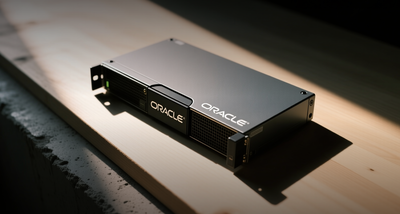
Oracle credit risk hits record as AI spending binge strains balance sheet
Oracle Corp.'s credit risk hit a record Friday, with CDS spreads climbing to 198.23 basis points, as the company's massive AI infrastructure spending binge strains its balance sheet and pushes free cash flow deep into negative territory. "Oracle's rapidly expanding AI infrastructure business is increasing its overall credit risk, reflecting our more cautious view of the AI infrastructure industry, including rising capital expenditure requirements, an uncertain path to profitability, rapidly evolving industry and competitive landscape, and high customer concentration," S&P Global Ratings said in a statement explaining its downgrade of Oracle to BBB-, one notch above junk. The company burned through more than $20 billion in free cash flow over the past four quarters, with S&P estimating the deficit could widen to $42 billion in the current fiscal year. Oracle's capital expenditure reached $55.7 billion on a trailing basis, and management expects roughly $70 billion more in fiscal 2027. The company plans to raise about $40 billion through debt and equity this year, including a previously announced $20 billion at-the-market stock sale. The deterioration matters beyond Oracle. The company holds about $117 billion in bonds in the Bloomberg US Investment Grade Corporate Bond Index, making it the largest non-financial issuer. A further downgrade to junk would force many institutional investors with investment-grade mandates to sell, potentially repricing risk across the entire $1.17 trillion index. **The OpenAI Concentration Problem** Roughly half of Oracle's $638 billion in remaining performance obligations — a measure of contracted future revenue — is tied to a single customer: OpenAI, according to S&P estimates. That concentration amplifies the risk of Oracle's timing mismatch: the company must spend billions on data centers upfront while recognizing revenue from those contracts over years. "It doesn't affect revenue today, so it's going to be hard for them to cash flow their way out of this," Andrew Wells, chief investment officer at SanJac Alpha, said. Oracle's 10-year bonds now yield about 6.4 percent, a meaningful premium to the 5.7 percent average for BBB-rated debt and closer to the 6.7 percent yield of BB-rated credits. The company sold $25 billion of investment-grade bonds in February and has been exploring novel ways to reduce cash burn, including asking some customers to pre-pay for costly computing components that go into data centers. **Hyperscaler Divergence** Oracle's predicament stands in sharp contrast to other AI hyperscalers. Alphabet Inc. posted free cash flow of about $73 billion last year, and Meta Platforms Inc. generates more than enough cash to fund its AI investments. That gives them "greater financial flexibility to outspend Oracle and weather industry downturns," according to S&P. Microsoft Corp. and Amazon.com Inc. also maintain strong cash generation relative to their AI spending plans. The divergence raises a fundamental question for investors: can Oracle's AI infrastructure bet generate returns before its credit standing deteriorates further? The company's cloud infrastructure revenue grew 93 percent in the June quarter, and cloud now represents 52 percent of total revenue. Management has reaffirmed a $90 billion revenue target for fiscal 2027 with non-GAAP EPS of $8.05. Oracle shares fell more than 4 percent to $126.91 on Friday, hitting a 52-week low of $125.93. The stock has lost 63 percent from its September record high of $345.72 and is down 35 percent year to date, underperforming the S&P 500 by more than 45 percentage points. The stock trades at 16 times forward earnings, a discount to its five-year average of 22 times. The company has vowed to maintain its investment-grade status. "Oracle remains strongly committed to maintaining an investment-grade credit rating as our top capital allocation priority," a spokesperson said. But with capex expected to rise through at least fiscal 2029, according to CreditSights, the path back to financial stability depends on whether the $638 billion backlog converts into cash before the credit markets lose patience. This article is for informational purposes only and does not constitute investment advice.

Jul 18 2026, 02:08
BitGo investors have until Aug 7 to lead securities class action
BitGo Holdings faces a securities class action alleging its January IPO documents misled investors about the risk of falling crypto prices. "The IPO documents understated the scope and severity of the risk that declining digital asset prices posed to BitGo's business," the complaint filed by Pomerantz LLP said. BitGo sold 11.8 million shares at $18 each in its Jan 22 IPO, raising $187.6 million. On March 26, the company reported a net loss of $14.8 million for 2025, reversing a $156.6 million profit in 2024. The stock fell 15.7 percent to $7.67. On May 13, BitGo posted a $60.7 million net loss for the first quarter, and shares dropped another 17.2 percent. The lawsuit covers investors who bought BitGo shares in the IPO or between Jan 22, 2025 and May 13, 2026. Investors have until Aug 7 to seek lead plaintiff status. The stock closed at $9.86 on May 14, 45 percent below the $18 IPO price. The complaint alleges violations of Sections 11 and 15 of the Securities Act of 1933 and Sections 10(b) and 20(a) of the Securities Exchange Act of 1934. BitGo operates as a digital asset infrastructure platform offering custody, trading and staking services, with revenue tied to crypto market conditions. The company reports revenue in two main segments: Digital Asset Sales, derived from trading volume, and Staking, which generates rewards from blockchain protocols. BitGo's March 26 earnings call revealed a quarterly margin of 0.21 percent in Digital Asset Sales, down from 0.47 percent a year earlier. The company attributed the decline to a challenging macroeconomic environment and declining digital asset prices. The lawsuit was filed in the United States District Court for the Eastern District of New York under docket 26-cv-03428. Rosen Law Firm also reminded investors of the Aug 7 lead plaintiff deadline in a separate notice. BitGo, which trades on the New York Stock Exchange under ticker BTGO, went public as one of the first crypto custody firms to list via a traditional IPO. The complaint specifically alleges that the registration statement and prospectus filed with the SEC contained untrue statements of material fact and failed to disclose information required by securities regulations. The Offering Documents were negligently prepared and not in accordance with governing rules, the lawsuit claims. BitGo's financial performance is closely tied to digital asset prices, which have experienced significant volatility since the company's IPO. The company's Bitcoin treasury and trading revenue both face direct exposure to market downturns, a risk the lawsuit says was not adequately disclosed to investors. The lawsuit adds legal overhang to a stock trading well below its IPO price. BitGo's next quarterly report, due in August, will test whether the company can stabilize revenue as digital asset markets remain volatile. This article is for informational purposes only and does not constitute investment advice.

Jul 18 2026, 02:07
WAICA launches with 20% acceptance rate as China builds rival AI platform
**China's first independently organized top-tier AI academic conference accepted 57 of 282 submissions in its inaugural edition, with Turing Award laureates chairing a review process designed to challenge Western-dominated publishing norms.** China opened its first independently organized top-tier AI academic conference in Shanghai on July 18, accepting 57 papers from 282 submissions at a 20% rate, with Turing Award winners Andrew Chi-Chih Yao and Richard Sutton chairing a review system built to address what organizers call systemic failures in existing venues. "Science knows no borders, and academia should return to its essence of openness, fairness, and freedom, free from interference by any external factors," the conference organizers said in a statement, framing WAICA as a response to what they described as biased review practices and barriers to entry for researchers outside elite institutions. The 57 accepted papers span authors from 12 countries including Princeton, Cambridge, Imperial College London, and Nanyang Technological University, alongside Tsinghua, Peking, and Shanghai Jiao Tong universities. One first author is from Wuhan Polytechnic University — a non-elite institution — which organizers cited as evidence of the "quality-only" review principle. All proceedings are published by Springer Nature and indexed by Scopus, EI Compendex, and Google Scholar. WAICA's launch comes as China seeks to establish independent academic infrastructure for AI research, reducing reliance on Western conferences where Chinese researchers have faced growing scrutiny. The conference's "AI-native" submission system — supporting video, audio, and interactive demonstrations — and its three-dimensional review mechanism combining AI screening with open Program Committee commentary represent structural innovations that existing top-tier venues have not adopted. **The Review Mechanism Targets Documented Flaws** WAICA's review process departs from the double-blind anonymous model used by conferences such as NeurIPS and ICML. In the preliminary screening stage, a locally deployed AI system checks submissions for format compliance, data reliability, and logical consistency — a response to what the China Computer Federation, which co-hosts WAICA, described as "inaccurate review, difficulty in reproduction, and a narrowing upward path for young scholars." After screening, all reviews are conducted by Program Committee members rather than the volunteer reviewer pools that top conferences increasingly rely on as submission volumes surge. During the rebuttal phase, every paper is opened to all PC members for commentary, allowing collective scrutiny beyond the original reviewer pair. The conference's dedicated submission system parses uploaded PDFs into a format that supports embedded video, audio, and interactive demonstrations at original image positions — a design tailored for multi-modal AI and embodied intelligence research that traditional PDF-only formats cannot accommodate. **Industry Recognition Bridges Academia and Commerce** A group of Chinese technology companies including Tencent, SenseTime, Xiaohongshu, Lightelligence, MiniMax, and Parallel Technology have agreed to treat WAICA-accepted papers as equivalent to CCF Class A publications for campus recruitment and internship hiring — giving student first authors the same bonus point recognition as top-tier Western conference publications. All student first authors presenting at the conference receive a Student Travel Grant. Tencent will issue research bonuses to winners of the Best Student Paper Award and its nomination. The conference is also linked with Shanghai's "Hundred Groups and Hundred Projects" scientific initiative, opening provincial and ministerial-level research project applications for authors of outstanding papers. Future plans include a unified algorithm verification platform that would run submitted code to reproduce results, and a "short paper plus runnable code" publication format designed to shift emphasis from paper length to verifiable contribution. **The Competitive Landscape** WAICA enters a field dominated by NeurIPS, ICML, and ICLR — conferences that together attracted more than 30,000 submissions in 2025 and whose acceptance rates have fallen below 25% as AI research output explodes. These venues have faced criticism for reviewer shortages, inconsistent quality, and bias against non-English-speaking researchers. China's alternative offers a structurally different model: AI-assisted screening, mandatory PC-level review, open commentary, and multimedia-native publication. The conference's 20% acceptance rate places it within the range of established top-tier venues. Its ability to attract submissions from Princeton, Cambridge, and Imperial College London in year one suggests sufficient credibility to compete for high-quality work. The participation of Sutton — whose temporal difference learning and Q-learning algorithms underpin modern reinforcement learning — as international co-chair provides a signal of legitimacy that no amount of Chinese institutional backing alone could achieve. For investors tracking the AI ecosystem, WAICA's emergence has indirect but material implications. Chinese AI companies including MiniMax, SenseTime, and Alibaba gain a domestic venue for publishing frontier research without navigating Western review processes. The conference's emphasis on verifiable code and reproducible results could pressure existing venues to adopt similar standards. And the alignment between WAICA and the broader WAIC conference — which opened July 17 with 300 product debuts and Xi Jinping's keynote address — positions Shanghai as a dual hub for both AI commerce and academic discourse. Tencent, SenseTime, and MiniMax — all of which exhibited at WAIC's main floor — now have a direct pipeline from academic publication to recruitment and product development. The question for Western AI companies is whether WAICA's model of AI-native review and open verification becomes a competitive standard that NeurIPS and ICML must match. This article is for informational purposes only and does not constitute investment advice.