Edgen AI operates independently of, and is not controlled by Aspen Digital Financial Limited.
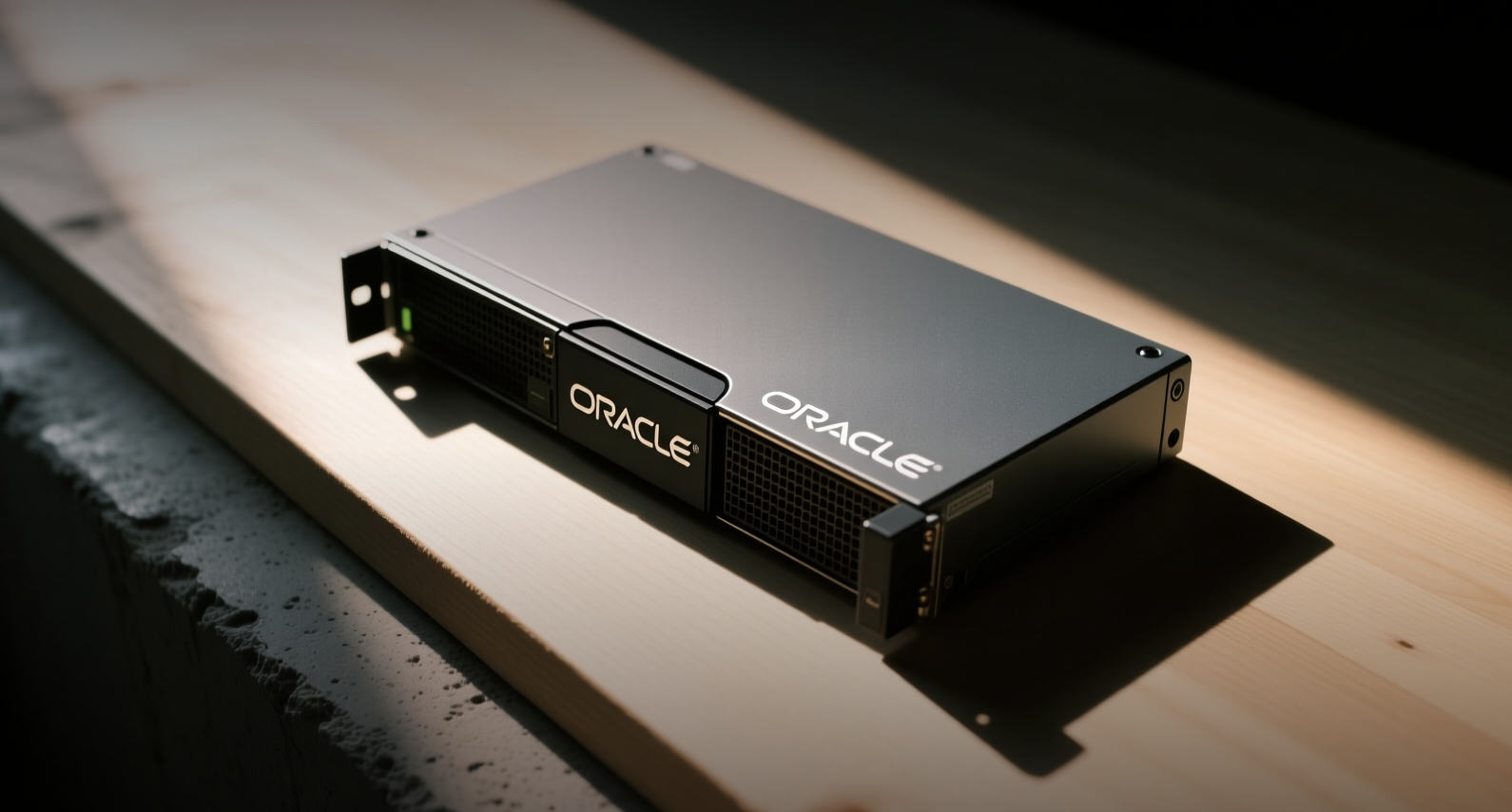
Oracle credit risk hits record as AI spending binge strains balance sheet
 Edgen Stock·Jul 18 2026, 02:27
Share to
Share to
Copy link

[1] AI Wind Vane! Oracle's Bond CDS Rises to All-Time High (https://wallstreetcn.com/articles/3777278 ...)[2] Oracle Stock Slides To 52-Week Low Amid AI Spending Fears - Investor's Business Daily (https://www.investors.com/news/technology/ora ...)[3] Oracle Risks Falling Behind in AI Race as Spending Binge Bites - Yahoo Finance (https://finance.yahoo.com/technology/ai/artic ...)[4] Why Oracle's recent credit downgrade could be a warning sign for stocks (https://www.msn.com/en-us/money/top-stocks/wh ...)[5] Oracle is Falling Fast. Here’s Why This Wall Street Firm Believes The Stock Will Triple in 12 Months (https://247wallst.com/investing/2026/07/17/or ...)
Related News
Jul 18 2026, 02:38
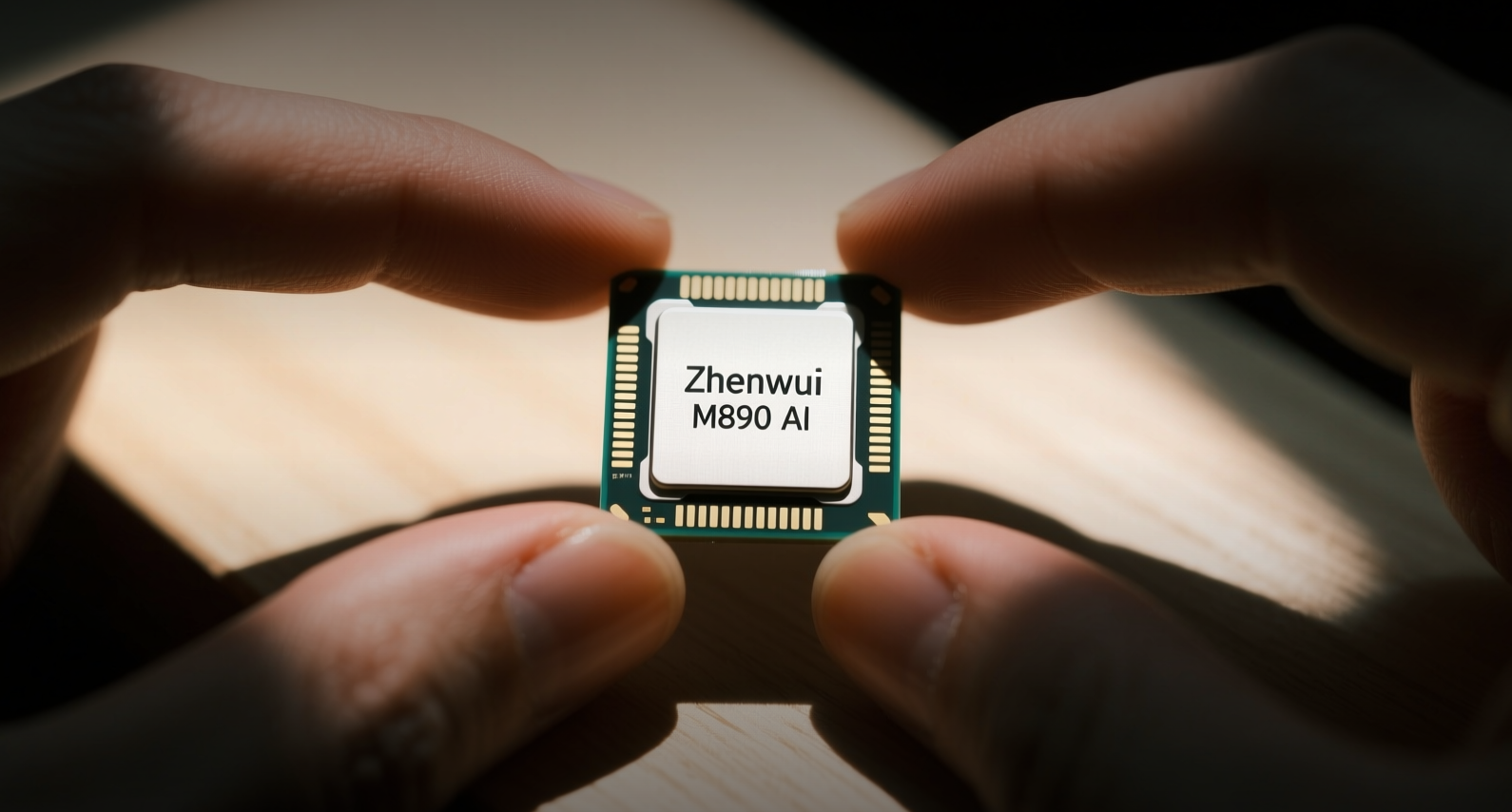
Alibaba Zhenwu chip, Panjiu server win WAIC 2026 top award
**Alibaba's homegrown AI chip and server rack are now among the most recognized infrastructure products in China's AI buildout.** Alibaba Group Holding Ltd.'s self-developed Zhenwu M890 AI chip and Panjiu AL128 supernode server won a top "Treasure of the Hall" award at the 2026 World Artificial Intelligence Conference, the company said July 17. "This recognition validates our approach of building vertically integrated AI infrastructure from chip to cluster," a T-Head spokesperson said. The Zhenwu M890 packs 144 gigabytes of HBM memory with 800 gigabytes-per-second chip-to-chip interconnect bandwidth, supporting data precision from FP32 down to FP4. The Panjiu AL128 server crams 128 chips into a single rack using an orthogonal cable-less architecture and Alibaba's proprietary ALink System interconnect, delivering petabyte-per-second bandwidth with sub-100 nanosecond latency — a 50% inference performance improvement over traditional eight-GPU server architectures, according to Alibaba. The win comes as Alibaba has deployed more than 56,000 Zhenwu chips across 400-plus customers in 20 industries including autonomous driving, finance and energy, making it the most widely deployed domestic AI chip in China by application scope. The company is betting its in-house silicon can reduce reliance on Nvidia Corp. GPUs, which remain constrained by US export controls. **Zhenwu M890 closes the gap with Nvidia's mainstream lineup** The Zhenwu M890's 144 GB HBM memory capacity matches Nvidia's H100 (80 GB HBM3) and approaches the H200's 141 GB, though Nvidia's upcoming Blackwell B200 is expected to double that. Alibaba's chip supports FP4 precision for low-power inference — a feature Nvidia introduced with the Blackwell architecture — suggesting T-Head has closed the feature gap by at least one generation. The Panjiu AL128's 128-GPU single-rack density far exceeds the standard eight-GPU server configuration used in most data centers today. By eliminating cables through orthogonal backplane design, Alibaba claims interconnect costs drop 80% compared with traditional architectures. The server uses liquid cooling to manage the thermal load of 128 densely packed chips. Alibaba's chip strategy mirrors those of Amazon.com Inc. (Trainium, Inferentia), Google LLC (TPU) and Microsoft Corp. (Maia), all of which have developed custom silicon to reduce dependence on Nvidia, which commands an estimated 80% of the AI accelerator market. Unlike US hyperscalers, however, Alibaba faces the additional constraint of US export controls that block shipments of Nvidia's H100 and Blackwell chips to China, forcing domestic alternatives. **56,000 chips deployed, but the real test lies ahead** The 56,000 Zhenwu chips deployed to date represent a fraction of the hundreds of thousands of accelerators that Chinese tech giants are racing to install. Huawei Technologies Co.'s Ascend 910B has emerged as the leading domestic alternative, while startups like Enflame and Cambricon are also competing for cloud and enterprise contracts. Alibaba's chip has an advantage in software ecosystem: the Zhenwu runs on the same programming framework as Alibaba Cloud's PAI platform, which already serves millions of developers. Nvidia's CUDA remains the industry standard, but Alibaba's ability to offer an integrated hardware-software stack — chip, server, cloud platform and model training service — gives it a moat that pure-play chip startups lack. The WAIC award, selected from more than 3,000 products exhibited at the conference, signals that China's AI infrastructure ecosystem is maturing beyond reliance on imported silicon. For Alibaba, whose cloud computing unit competes with Huawei Cloud and Tencent Cloud for enterprise AI workloads, the Zhenwu-Panjiu combination represents a potential differentiator in a market where hardware availability is increasingly a competitive bottleneck. Alibaba shares trade at about 10 times forward earnings. The company does not disclose Zhenwu chip revenue separately, but analysts at Jefferies estimated in June that Alibaba's in-house chip program could save the company $1.5 billion to $2 billion annually in GPU procurement costs by 2028 if deployment scales as planned. This article is for informational purposes only and does not constitute investment advice.

Jul 18 2026, 02:27
China's 18 fund managers seek approval for active stock ETFs
China's fund industry is on the cusp of its biggest product innovation in five years as 18 managers apply to launch actively managed stock ETFs. China's fund industry is set to blur the line between active and passive investing after 18 asset managers submitted applications July 17 for the first batch of actively managed stock ETFs, a product structure that combines daily portfolio transparency with zero subscription fees. "Active ETFs represent the most significant structural innovation in China's fund industry since the launch of index ETFs," said a fund industry executive familiar with the product design, speaking on condition of anonymity because the applications are under regulatory review. The 18 applications, evenly split between the Shanghai and Shenzhen stock exchanges, include filings from E Fund, China Asset Management, Fullgoal, Harvest, Southern, Penghua, ICBC Credit Suisse and 11 other managers. Nine products target value, balanced or dividend strategies, while two — Yongying's Jingqi Strategy and E Fund's Quality Future — lean toward growth. All received "material received" status from the China Securities Regulatory Commission on the same day. The product's success could redirect billions of yuan in retail fund flows from traditional over-the-counter mutual funds to exchange-listed products, reshaping a multi-trillion-yuan industry. Under the new framework, managers must disclose their full portfolio daily before market open and publish intraday net asset values, a transparency requirement that marks a sharp departure from the quarterly disclosure typical of conventional active funds. The innovation addresses two long-standing pain points for Chinese retail investors. First, top-performing active funds frequently close to new subscriptions after strong runs, locking out latecomers. Active ETFs, by trading on exchanges, remain accessible regardless of subscription status. Second, the exchange-traded structure eliminates subscription and redemption fees — which can reach 1.5% for traditional funds — replacing them with brokerage commissions typically around 0.06%. **A Test of Manager Discipline** The daily disclosure requirement introduces a new challenge for fund managers accustomed to operating behind opaque portfolio walls. High-turnover strategies, common among China's active managers, could generate elevated trading costs and create arbitrage opportunities for sophisticated market participants monitoring the published holdings. "The success of active ETFs will depend on whether managers can adapt their investment processes to a daily-disclosure environment," said the executive. "Those with low-to-moderate turnover and clear style discipline are best positioned." The CSRC's approval timeline remains undisclosed, but industry participants expect the first products to reach the market within three to six months, pending the standard inquiry-and-response review process. The launch would follow similar product expansions in the U.S., where active ETFs have captured more than $500 billion in assets under management, according to Morningstar data. For China's fund industry, the stakes are high. Total ETF assets under management have grown rapidly but the pace of inflows has decelerated in recent quarters. Active ETFs offer a potential driver to rekindle investor interest — provided the products deliver on their promise of manager skill combined with ETF efficiency. *This article is for informational purposes only and does not constitute investment advice.*

Jul 18 2026, 02:08
BitGo investors have until Aug 7 to lead securities class action
BitGo Holdings faces a securities class action alleging its January IPO documents misled investors about the risk of falling crypto prices. "The IPO documents understated the scope and severity of the risk that declining digital asset prices posed to BitGo's business," the complaint filed by Pomerantz LLP said. BitGo sold 11.8 million shares at $18 each in its Jan 22 IPO, raising $187.6 million. On March 26, the company reported a net loss of $14.8 million for 2025, reversing a $156.6 million profit in 2024. The stock fell 15.7 percent to $7.67. On May 13, BitGo posted a $60.7 million net loss for the first quarter, and shares dropped another 17.2 percent. The lawsuit covers investors who bought BitGo shares in the IPO or between Jan 22, 2025 and May 13, 2026. Investors have until Aug 7 to seek lead plaintiff status. The stock closed at $9.86 on May 14, 45 percent below the $18 IPO price. The complaint alleges violations of Sections 11 and 15 of the Securities Act of 1933 and Sections 10(b) and 20(a) of the Securities Exchange Act of 1934. BitGo operates as a digital asset infrastructure platform offering custody, trading and staking services, with revenue tied to crypto market conditions. The company reports revenue in two main segments: Digital Asset Sales, derived from trading volume, and Staking, which generates rewards from blockchain protocols. BitGo's March 26 earnings call revealed a quarterly margin of 0.21 percent in Digital Asset Sales, down from 0.47 percent a year earlier. The company attributed the decline to a challenging macroeconomic environment and declining digital asset prices. The lawsuit was filed in the United States District Court for the Eastern District of New York under docket 26-cv-03428. Rosen Law Firm also reminded investors of the Aug 7 lead plaintiff deadline in a separate notice. BitGo, which trades on the New York Stock Exchange under ticker BTGO, went public as one of the first crypto custody firms to list via a traditional IPO. The complaint specifically alleges that the registration statement and prospectus filed with the SEC contained untrue statements of material fact and failed to disclose information required by securities regulations. The Offering Documents were negligently prepared and not in accordance with governing rules, the lawsuit claims. BitGo's financial performance is closely tied to digital asset prices, which have experienced significant volatility since the company's IPO. The company's Bitcoin treasury and trading revenue both face direct exposure to market downturns, a risk the lawsuit says was not adequately disclosed to investors. The lawsuit adds legal overhang to a stock trading well below its IPO price. BitGo's next quarterly report, due in August, will test whether the company can stabilize revenue as digital asset markets remain volatile. This article is for informational purposes only and does not constitute investment advice.