Edgen AI operates independently of, and is not controlled by Aspen Digital Financial Limited.
Brent slips below $100 as bond markets keep inflation risk alive
 Edgen Stock·Sep 21 2026, 14:24
Share to
Share to
Copy link

[1] Brent crude oil futures fall below the psychological $100/barrel threshold for the first time since September 9 (https://wallstreetcn.com/livenews/3168369 ...)[2] Brent crude cools from recent highs, but $100 oil keeps bond markets on edge (https://investinglive.com/commodities/brent-c ...)[3] Globe Investor (https://www.theglobeandmail.com/investing/ ...)[4] Goldman Sachs: Market pricing in four rate hikes is overly pessimistic; a window for broad-based asset appreciation exists by year-end - Moomoo (https://www.moomoo.com/news/post/76489557/gol ...)[5] 09/21/2026 Trading Recap and Outlook - t.co (https://t.co/UHr8fB8BeD ...)
Related News
Sep 21 2026, 15:31
AMD briefly tops $1 trillion as AI chip stocks surge
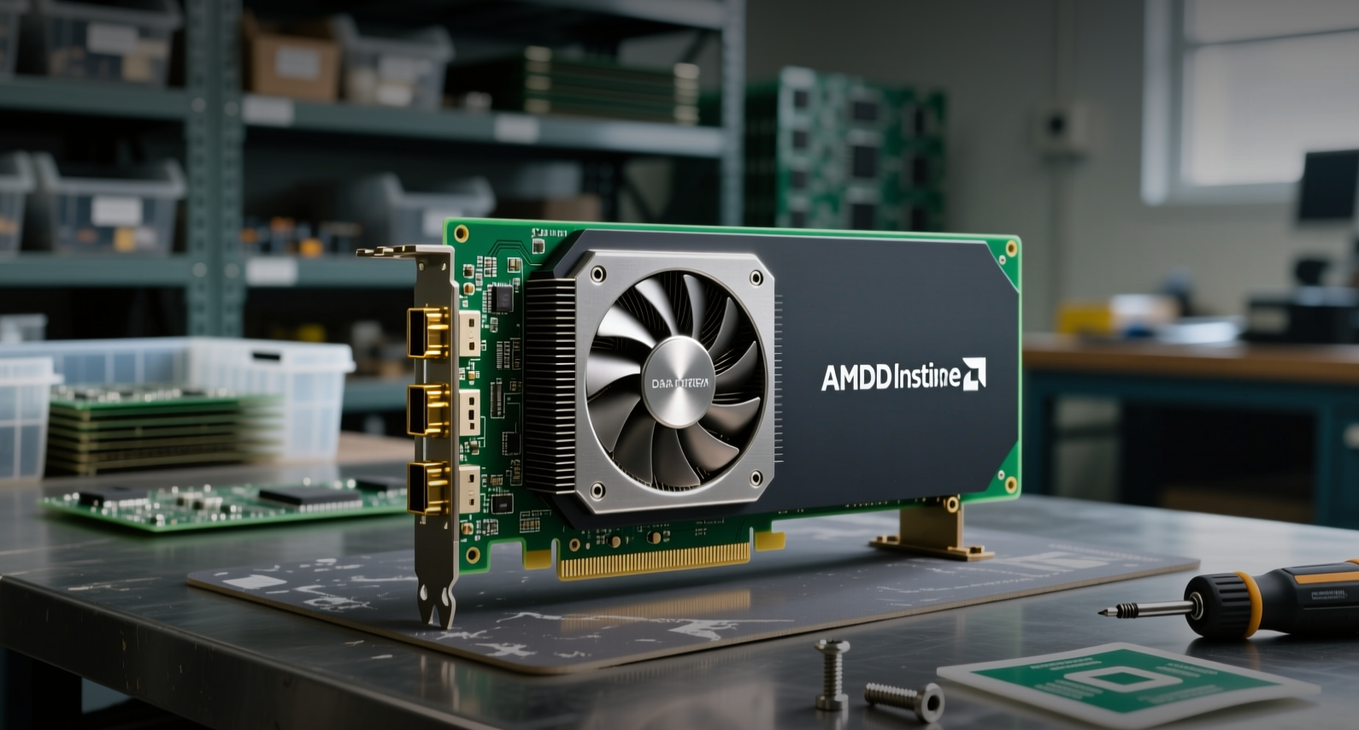
Advanced Micro Devices became the 14th U.S. company to cross a $1 trillion market capitalization on Monday, a threshold it held only briefly as the stock touched a record $613 before settling near $609, up more than 9% on the session. The milestone arrived inside a sector-wide advance rather than a company-specific catalyst. Arm Holdings jumped more than 12% and Intel gained over 11%, extending a rally across chip names tied to artificial intelligence and data-center infrastructure. Nvidia, the AI bellwether AMD competes against in data-center accelerators, added just 0.4%, lagging the group. "Crossing a trillion dollars puts AMD in a different conversation with institutional allocators, but the multiple now assumes data-center share gains that have not yet shown up in reported revenue," said Rachel Kim, semiconductor analyst at Edgen. "The stock is being priced against Nvidia's execution, not against its own history." AMD's market value stood at more than $998 billion at the time of writing, according to Koyfin data, after peaking above the $1 trillion line in morning trade. The shares were the top trending ticker on Stocktwits, with retail sentiment in bullish territory and chatter levels high, according to the platform. The trillion-dollar club AMD joined is dominated by Nvidia at $5.37 trillion, Apple at $4.91 trillion and Alphabet at $4.21 trillion, per Yahoo Finance data compiled Sept. 21. Among chipmakers, Taiwan Semiconductor Manufacturing Co. sits at $2.25 trillion, Broadcom at $1.71 trillion and Micron Technology at $1.15 trillion — the last two having crossed the line before AMD. What separates AMD's entry from Broadcom's and Micron's is the narrowness of the margin. AMD cleared the threshold by roughly $2 billion of market value before falling back below it, a move of less than 0.2% in share price. Broadcom and Micron hold cushions of $710 billion and $150 billion respectively above the same line, making AMD's membership the most fragile in the group. The rally's breadth, not its depth, carried the session. Arm and Intel both gained more than 10% without company-specific news, a pattern that points to fund flows rotating into laggard chip names rather than fresh demand data. Nvidia's 0.4% gain, meanwhile, left the sector's largest company essentially flat while smaller peers ran — a divergence that historically precedes consolidation in chip equities when the lead name stops participating. AMD's competitive position rests on two product lines: data-center accelerators that challenge Nvidia's dominance in AI training and inference, and server CPUs that compete with Intel. The company has been one of the primary beneficiaries of the AI infrastructure buildout, but it remains well below Nvidia, Apple, Alphabet and the other large technology companies in absolute scale. For investors, the milestone resets the benchmark against which AMD will be judged. At a $1 trillion valuation, the company must now deliver data-center revenue growth that justifies a multiple previously reserved for Nvidia, Apple and Microsoft. Any quarter that misses that bar carries more downside than it would have at a $500 billion market cap, because the valuation already discounts years of share gains. The next test comes with AMD's quarterly results, when data-center segment revenue and forward guidance will show whether the AI demand that lifted the stock to $613 is translating into orders. Until then, the trillion-dollar tag remains a price event, not an earnings one. This article is for informational purposes only and does not constitute investment advice.
Sep 21 2026, 15:30
Viant Technology jumps 18.6% as volume outruns estimate trend
Viant Technology shares climbed 18.6% in the most recent session, the advertising software maker's sharpest one-day advance in recent memory, on trading volume that ran above its average, according to Zacks Investment Research. The move arrived without a company-issued catalyst. No earnings release, guidance update, or regulatory filing accompanied the gain, and Viant's most recent quarterly disclosure predates the session. Traders pointed to a thin float and a compressed short base as the likeliest mechanical drivers, with the stock's advance accelerating once it cleared levels where sellers had previously capped it. The counterweight sits in the estimate data. The latest trend in earnings estimate revisions may not translate into further price increases in the near term, Zacks said, a caution that separates the size of the move from the direction of the underlying numbers. When a stock re-rates this far in a single session while consensus estimates hold flat or drift lower, the gain is being paid for by repositioning rather than by a change in expected cash flows. That distinction matters for anyone holding the position. An 18.6% single-session gain on above-average volume is a flow event: it reflects who bought and how urgently, not what the business is expected to earn. Flow events reverse when the buying stops. Estimate revisions, by contrast, tend to persist — they move in slow, serial steps as analysts update models after channel checks and guidance. ## What the ad-tech tape says Viant sits in the demand-side platform tier of digital advertising, alongside The Trade Desk and Magnite, and competes for the same programmatic budgets that Alphabet's Google Ads and Amazon's advertising unit absorb at far greater scale. The sector's re-rating over the past several quarters has been driven by connected-TV inventory and retail media, two categories where Viant has positioned its platform. Peer moves in the same session were not of comparable magnitude, which argues against a sector-wide catalyst and in favor of a company-specific flow. When an entire ad-tech cohort rallies together, the read-through is usually a demand signal. When one name moves 18.6% alone, the read-through is usually positioning. The volume detail carries the same message. Above-average turnover on a day with no news means existing holders were not the marginal buyers — new money was. That is bullish while it lasts and fragile when it stops, because the buyers who created the move have no fundamental anchor to hold them in place. ## The estimate gap is the real test Estimate revisions are the slowest-moving and most reliable of the sell-side signals. They lag price, which is why a stock can surge while the revision trend stays flat or negative — and why that divergence is worth watching rather than dismissing. For the strength to hold, one of two things has to happen. Either the company reports results that force analysts to raise numbers, converting the price move into a valuation the estimates support, or the flow that drove the session continues long enough for the revision trend to catch up. Absent both, the 18.6% gain is a level the stock has to grow into. The next scheduled checkpoint is Viant's next quarterly earnings report, which will be the first hard test of whether the session's buyers were early or simply wrong. Until then, the stock trades on positioning, and positioning is the least durable input in equity markets. This article is for informational purposes only and does not constitute investment advice.

Sep 21 2026, 15:25
Dow climbs 200 points as Chicago Fed index slips below zero
US equities opened the week higher, with the Dow Jones Industrial Average up over 200 points toward 51,924, after the Chicago Fed's national activity index slipped to minus 0.04 in August from a revised 0.08 in July — a reading that puts growth below its long-run trend and revives the case for a less restrictive Federal Reserve. The advance was broad rather than narrow. The S&P 500 added 1.04% to 7,730 and the Nasdaq 100 jumped 2.13% to 30,275, with the tech-heavy gauge outpacing the blue chips by more than a full percentage point. The Russell 2000 gained 0.57% to 2,877, a smaller move that suggests buying was concentrated in large-cap growth names rather than a wholesale rotation into rate-sensitive small caps. "The index is a slow-moving confirmation, not a trigger," said Dean Seal, the Dow Jones Newswires reporter who covered the release. The Chicago Fed said two of the four broad categories of indicators used to build the index decreased month over month, with production-related indicators turning negative while employment and personal consumption measures improved slightly and barely crossed into positive territory. The CFNAI Diffusion Index, a three-month moving average, eased to 0.02 from 0.04. A reading below zero on the headline gauge signals the economy is expanding more slowly than its historical average, and the diffusion measure near zero means the weakness is not yet broad enough to be called a contraction. Cross-asset markets told a more mixed story than the equity tape. The 10-year Treasury yield sat at 4.97%, down about 3 basis points, a modest decline that stops short of the sharp bond rally that usually accompanies a genuine dovish repricing. The dollar was firmer against most majors, with USD/JPY at 157.48, up 0.31%, and USD/EUR at 0.8719, up 0.08% — a combination that argues against traders pricing an imminent policy pivot. Oil supplied a separate, unrelated push. Brent crude fell 2.85% to $100.39 a barrel and WTI slipped to $96.55 as traders weighed the prospect of additional Iranian supply, easing the energy-cost pressure that has been one of the stickier components of headline inflation. Gold traded at $4,350.98 an ounce, down 0.50%. Beneath the headline index, the session's leadership was narrow and specific. Intel surged 13.54%, Advanced Micro Devices gained 9.26% and Arm Holdings rose 14.45%, while Moderna added 9.33% and Paramount Skydance climbed 8.86%. On the losing side, FedEx fell 3.12%, United Parcel Service dropped 3.39% and HP Inc. slid 3.66% — logistics and hardware names that carry more direct exposure to goods demand than to the rate outlook. That split matters for how the CFNAI signal should be read. If slower activity were genuinely driving the session, cyclicals and transports would be leading the advance, not semiconductor and biotech names. The pattern instead points to a market treating soft data as permission to extend positioning in long-duration growth stocks, while the dollar's firmness and the shallow move in yields cap how far that trade can run. The next test arrives with the September employment report and the following CPI print, both of which will either confirm the August cooling or mark it as a one-month wobble. Traders will also watch whether the 10-year yield can break below 4.90%, the level that has twice capped rallies since the summer, and whether the Dow can hold above 51,900 on above-average volume. This article is for informational purposes only and does not constitute investment advice.