Edgen AI operates independently of, and is not controlled by Aspen Digital Financial Limited.
AMD briefly tops $1 trillion as AI chip stocks surge
 Edgen Stock·Sep 21 2026, 15:31
Share to
Share to
Copy link

[1] AMD hits with a major milestone as AI stocks blaze higher (https://www.marketwatch.com/story/amd-hits-wi ...)[2] AMD becomes latest chipmaker to reach $1 trillion valuation on AI demand (https://www.msn.com/en-us/news/other/amd-beco ...)[3] AMD Stock’s Relentless Rally Pushes It Into The Trillion-Dollar Club, Albeit Briefly – Chip Stocks Light Up Wall Street (https://finance.yahoo.com/markets/stocks/arti ...)[4] AMD Becomes Latest Chipmaker to Reach $1 Trillion Valuation on AI Demand (https://money.usnews.com/investing/news/artic ...)[5] Hang Seng Index (https://economictimes.indiatimes.com/markets/ ...)
Related News

Sep 21 2026, 16:05
Moderna jumps 9% as melanoma data wins ESMO symposium slot
Moderna shares climbed 9% to $167.90 on Monday after the company secured the marquee slot at Europe's largest oncology meeting for its experimental melanoma vaccine, a placement that reprices a dataset investors still cannot read. The Cambridge, Massachusetts-based company said three abstracts on intismeran autogene, an investigational mRNA individualized neoantigen therapy, were accepted for the European Society for Medical Oncology congress in Madrid on Oct. 23-27. The INTerpath-001 trial, which tests intismeran autogene plus pembrolizumab against pembrolizumab alone in patients whose stage IIB-IV melanoma had been surgically removed, will be presented Oct. 24 at 4:30 PM CEST, or 10:30 AM EDT, by Georgina V. Long of Sydney. Moderna will host an investor webcast the same day at 7:00 PM CEST. No new efficacy data was released Monday. The melanoma result was first reported in August, and the announcement adds only the venue and a fixed date. A Presidential Symposium is the congress's highest-profile placement, typically reserved for datasets organizers expect to shape clinical practice. "Moderna's advance runs several times either fund's move, placing today's reaction firmly in one name rather than in biotech as a group," David Moadel wrote in a 24/7 Wall St. market-movers note published Monday. The stock's gain dwarfed its peers and the broader market. Merck, which co-owns intismeran autogene and supplies the pembrolizumab used in the combination, rose 1% to $148.95. BioNTech, which runs its own individualized mRNA cancer immunotherapy programs, added 2% to $97.71. The iShares Biotechnology ETF gained 1% to $207.28, while the SPDR S&P 500 ETF Trust rose 1.16% to $770.54. Moderna traded between $159.06 and $170.15 on the day, against a 52-week range of $22.28 to $176.66. The company's market capitalization stands at $58.14 billion. The muted peer reaction is the notable detail. Merck's oncology franchise is large enough that the same readout that reshapes Moderna's business barely registers against it, which is why the pembrolizumab partner moved a fraction of a percent while Moderna moved 9%. BioNTech's gain is real but modest, indicating the platform read-across is not doing much work. Monday's price action reads as a Moderna-specific re-rating rather than a group re-rating of mRNA oncology as a category. The move extends a violent stretch for the equity. Moderna rose 93% on Aug. 19 when the melanoma therapy met its primary goal, then gave back 18% the following session and 20% in a separate one-day reversal. The stock added 6% on Sept. 17, extending what was then a 137% monthly gain, without a new trial result or analyst upgrade to explain it. Bloomberg Intelligence estimates the intismeran autogene program could reach up to $12 billion in non-risk-adjusted peak sales by 2040 in a best-case scenario, compared with roughly $5.4 billion on a risk-adjusted basis. That analysis spans melanoma, lung, kidney, bladder, gastric and pancreatic cancers. Two poster presentations round out Moderna's ESMO presence. Abstract 3151P covers adjuvant intismeran autogene plus FOLFIRINOX in resectable pancreatic ductal adenocarcinoma from a Phase 1 study, presented Oct. 25. Abstract 2550TiP covers INTerpath-014, a Phase 3 study of adjuvant intismeran autogene plus subcutaneous pembrolizumab or intismeran monotherapy versus placebo in completely resected high-risk stage I non-small cell lung cancer, presented Oct. 26. For holders, the setup is a binary event with a known date and an unknown result. The market is paying Monday for an assessment of a dataset no one outside the trial has seen, and the stock has already been repriced once on this program. Between now and Oct. 24, price action runs on expectation rather than fresh data, and any additional abstract text or sell-side previews can move shares in either direction. Options activity around the late-October window is likely to reflect that concentrated event risk. This article is for informational purposes only and does not constitute investment advice.

Sep 21 2026, 16:02
Microvast faces Sept 21 lead-plaintiff deadline in securities suit
Two national plaintiffs' firms are competing for the lead-plaintiff role in a securities class action against Microvast Holdings Inc., with investors who bought the Nasdaq-listed battery maker between April 1, 2025 and March 16, 2026 given until September 21, 2026 to seek control of the case. The class period brackets four separate disclosures that erased roughly 55 percent of the company's market value across 12 months, ending with a 34.2 percent single-day drop. "The complaint alleges that defendants overstated Microvast's ability to reach its margin targets and to complete the Huzhou Phase 3.2 expansion by the end of 2025," Pamela A. Mayer, a partner at Kaplan Fox & Kilsheimer LLP, said in the firm's September 21 notice. Faruqi & Faruqi LLP, which filed its own reminder the same day, directs investors to partner Josh Wilson at 877-247-4292. The damages theory rests on the gap between what Microvast told investors about its Chinese manufacturing buildout and what its financial statements later showed. The company announced the Huzhou Phase 3.2 expansion at the start of the class period, saying added capacity would be online before the end of 2025, and paired that with guidance for improved margins under a "strategic repositioning away from low-margin segments." The first crack came on June 25, 2025, when short seller Grizzly Research published a report alleging Microvast "is fabricating a significant part of its business and capabilities," including by overstating activity at its production facilities. The stock fell as much as $0.40, or about 10.23 percent, intraday before closing at $3.90. On August 1, 2025, the company disclosed the departure of Chief Financial Officer Schultz just three months after he joined; shares dropped $0.30, or 9.93 percent, to close at $2.72 on August 4, 2025. The expansion timeline slipped on November 10, 2025, when Microvast said production following Huzhou Phase 3.2 would not begin until the first quarter of 2026 — after repeatedly telling investors the capacity would be online by the fourth quarter of 2025. Shares fell $0.50, or about 10 percent, to $4.48 on November 11, 2025. The final disclosure, and the one that anchors the damages calculation, arrived on March 16, 2026. Microvast reported gross margin of approximately 1 percent for the quarter ended December 31, 2025, down from roughly 36 percent a year earlier, which it attributed to inventory impairment charges on "specialized ESS components." Revenue of $96.5 million for the quarter fell 15 percent year over year and missed the $136.4 million consensus estimate by $39.9 million. Shares fell $0.79, or 34.2 percent, to close at $1.52 on March 17, 2026. ## What the lead-plaintiff fight is worth The appointment matters less for the class than for the pace of the case. The court names the investor with the largest financial interest in the relief sought who is also adequate and typical of class members, and that investor then directs strategy and any settlement talks. Kaplan Fox, founded in 1956, cites more than $10 billion recovered for clients, including a $2.425 billion recovery for Bank of America shareholders and $800 million for the Arkansas Teacher Retirement System in litigation against Allianz Global Investors. Faruqi & Faruqi, founded in 1995, says it has recovered hundreds of millions of dollars for investors. Neither firm's notice states a claimed loss figure or a class size, and no damages estimate has been disclosed. Microvast has not publicly responded to the complaint, and no motion to dismiss has been docketed as of the September 21 deadline. For a company whose shares closed at $1.52 after the final disclosure, the practical exposure is twofold. A securities judgment or settlement would land on a balance sheet already absorbing inventory impairments, and the discovery process will pull internal documents on Huzhou construction progress and margin forecasting into the public record — material that competitors including CATL and BYD, both larger players in the same lithium-ion and energy-storage market, can read alongside investors. The next scheduled date is the September 21, 2026 lead-plaintiff motion deadline. If no investor with a substantial loss steps forward, the court can appoint the most adequate plaintiff among those who do move, which typically slows the case. If an institutional holder with a large class-period position files, expect a consolidated complaint and a defense motion to dismiss within the following two quarters — the point at which the litigation either narrows to specific statements or expands to cover the full class period. This article is for informational purposes only and does not constitute investment advice.
Sep 21 2026, 16:00
Hormuz strikes hit 2 vessels as Brent holds above $105
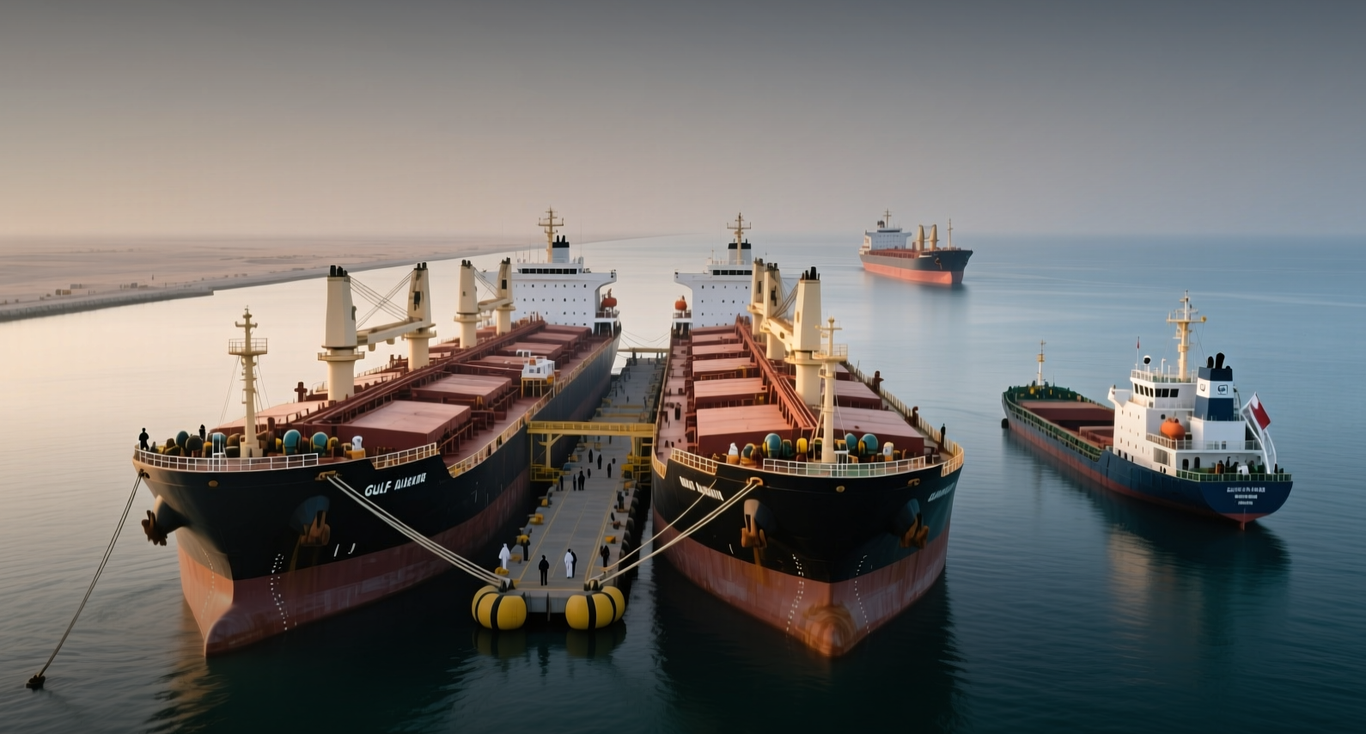
A liquefied petroleum gas carrier was struck by projectile debris while exiting the Strait of Hormuz on Monday, the second attack on a commercial vessel in the chokepoint in a single day, according to the United Kingdom Maritime Trade Operations center. The UKMTO said the LPG carrier's crew was unharmed, the vessel was continuing to its next port of call under its own power, and no environmental impact had been reported. Authorities are investigating. Earlier on Monday, the same agency reported an "unknown projectile" struck a tanker heading into the strait, injuring two crew members; that vessel also kept moving under its own power. Both incidents land on a waterway that carried roughly 20 million barrels a day in peacetime — about a fifth of global oil supply — and where traffic is already running well below normal. Iran has asserted control over much of the strait since the U.S. and Israel launched the war on Feb. 28, and the resulting blockade pushed producers into a costly workaround: ship-to-ship transfers in the Gulf of Oman, where tankers raft together to move crude onto larger vessels outside the risk zone. That patchwork is expensive. Benchmark freight rates for a very large crude carrier hauling Gulf crude to China have climbed above $30 per barrel, the highest on record, according to LSEG data. With Brent crude trading around $105, freight now accounts for more than a quarter of the delivered cost, against 2 percent to 3 percent before the war. "We are witnessing one of the biggest wealth transfers from oil producers to tanker owners," said Keshav Lokhiya, chief executive of HiLo Analytics. Exports through Hormuz reached about 6.5 million barrels a day so far in September, the highest since the brief spike after the June ceasefire, Kpler data show. Roughly 2.5 million barrels a day of that is expected to load via ship-to-ship transfers in the Gulf of Oman this month, up from 1.4 million in August — about 40 percent of current Hormuz volumes, in a method rarely used before the war. ## A $30 barrel of freight rewrites the export map The economics of the shuttle system explain why producers keep using it even as attacks continue. Abu Dhabi National Oil Company developed the approach in April, using tankers as shuttles between Gulf terminals and safer Omani waters rather than committing them to multi-week round trips to Asia. Saudi Aramco has since leaned on the same method, after Iran-backed militants in Iraq struck the kingdom's East-West pipeline on Sept. 10, cutting off roughly 4 percent of global oil supplies that had been flowing to the Red Sea port of Yanbu. Houthi forces have simultaneously tightened their grip on the Bab el-Mandeb Strait. The result is a market that is adapting rather than seizing up. UAE oil exports are set to reach 3.6 million barrels a day in September, above the 2025 average of 3.4 million. But the cost of that adaptation is being absorbed somewhere: producers are offering deeper discounts on their crude to keep it competitive, and the expanded use of tankers as shuttles has tightened global vessel availability, pushing freight rates higher across unrelated routes. The last time the strait saw a comparable multi-vessel attack sequence, in the tanker incidents of mid-2019, Brent added roughly 4 percent over the following week and war-risk premiums for Gulf transits jumped several-fold before retreating once attribution was established. Monday's strikes have not yet produced a comparable move, in part because both vessels continued under their own power and no cargo was lost. ## The unattributed projectile is the swing factor What keeps the risk premium elevated is that neither UKMTO notice named an attacker. Without attribution, insurers cannot reprice Gulf transits on a defined threat model, and shipowners cannot judge whether the corridor along Oman's coastline — where vessels increasingly sail with navigation systems switched off under U.S. naval protection — remains viable. That ambiguity cuts both ways for prices. A formal state-level response or a third strike within days would likely widen war-risk premiums again and push Brent toward the $108 level touched last week, when the Saudi pipeline attack and the Red Sea squeeze combined. A quiet stretch, by contrast, would let the premium bleed out the way it did in 2019, with freight rates staying structurally high but the headline risk bid fading. For energy importers in Asia, which absorb the bulk of Gulf barrels, the exposure is now less about the spot price of crude than about the delivered cost. A VLCC cargo of 2 million barrels at $30 per barrel of freight carries $60 million in shipping cost alone — a figure that flows straight into refinery margins in China, India and South Korea, and from there into diesel and jet fuel prices. The UKMTO has not indicated when its investigation will conclude. Traders will be watching the next 48 hours for a third incident, and the war-risk market for the first sign that underwriters are repricing the corridor. This article is for informational purposes only and does not constitute investment advice.