Edgen AI operates independently of, and is not controlled by Aspen Digital Financial Limited.
3 data center REITs pay 2-3% dividends as AI funding gap hits $1.4 trillion
 Edgen Stock·Jul 08 2026, 12:32
Share to
Share to
Copy link


[1] Old-School Dividend-Paying Data Center REITs May Be the Best and Safest Technology Idea Now (https://247wallst.com/investing/2026/07/08/wh ...)[2] Private capital is taking AI chips off the table - PitchBook (https://pitchbook.com/news/articles/private-c ...)[3] Brookfield’s Csquare Targets $1.35B Data Center IPO (https://finance.yahoo.com/real-estate/article ...)[4] 3 Equity REIT Stocks to Watch Amid Rising Demand Trends (https://finance.yahoo.com/real-estate/article ...)
Related News
Sep 21 2026, 11:03
Sa Sa guides interim profit above HK$150 million as Macau sales rebound
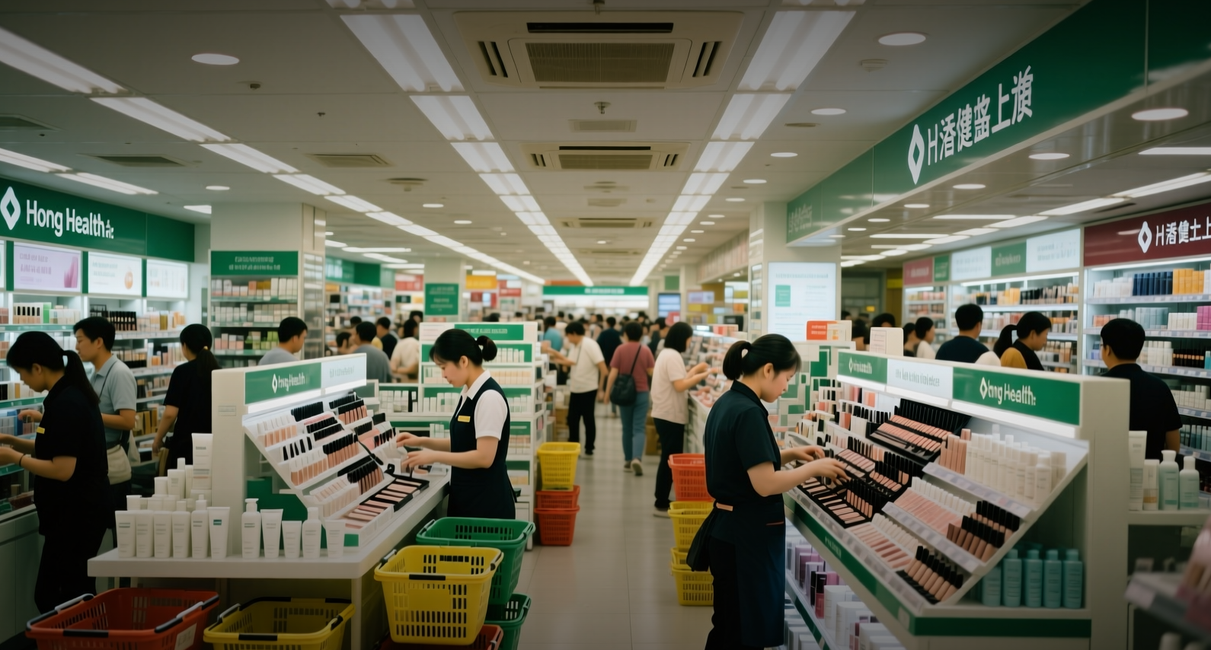
Sa Sa International Holdings Ltd. (00178.HK) said interim net profit for the six months ending September will exceed HK$150 million, roughly triple the HK$50.2 million booked a year earlier, on double-digit growth in Hong Kong and Macau store productivity. The Hong Kong cosmetics retailer, known in Chinese as 莎莎國際控股有限公司, filed the positive profit alert with the Hong Kong stock exchange on Sept. 21. It attributed the gain to year-on-year increases in same-store sales, transaction volume, average transaction value and items per transaction across its two core markets, plus rapid growth in B2C online sales and profitability. Same-store sales are the load-bearing number in the alert. The metric strips out revenue added by new openings, so growth in it points to higher footfall and larger baskets at stores Sa Sa already operates rather than to network expansion. The company did not disclose the percentage growth rates for any of the four operating metrics, and the figures remain unaudited pending the formal interim results. The Hong Kong retail backdrop supports the direction of travel. Total retail sales for January to October reached HK$311.7 billion, narrowing the year-on-year decline to 0.2%, with medicines and cosmetics among the categories posting moderate growth, according to Cushman & Wakefield's Hong Kong Property Markets 2025 Review. The average high street vacancy rate fell to 6.6% in the fourth quarter, the lowest since the pandemic, and the broker forecasts high street rents rising 2% to 3% in the first half of 2026. Peer data corroborates the cosmetics channel specifically. DFI Retail Group, which operates Mannings in Hong Kong and Macau, reported a 5% like-for-like sales increase in those two markets for 2025, driven by tourist store sales, with Health and Beauty division sales up 7% to US$2.6 billion and underlying operating profit up 8% to US$228 million. Tourist arrivals into Hong Kong rose 12% over the same period, DFI said in its preliminary results published March 3. Sa Sa's online arm is the second engine. The alert cites improved operational effectiveness on digital platforms, a shift from the revenue-at-any-cost approach that has weighed on margins across Asian beauty e-commerce. The company has not disclosed the online segment's revenue contribution or margin, leaving investors to gauge scale at the interim results. The alert also reflects a smaller drag from the mainland. Sa Sa closed its offline store network in China and has pivoted to cross-border e-commerce, a retrenchment that narrowed related losses. The company's last declared final dividend was HK$0.0340 per share with a special dividend of HK$0.0190, both announced June 25, following an interim dividend of HK$0.0115 declared Nov. 20, 2025. Short selling in the stock stood at HK$226,540, or 2.796% of turnover, as of Sept. 21, a modest reading that suggests limited positioning against the earnings recovery. The shares added HK$0.005, or 0.429%, on the session. For holders, the alert is a directional signal that Hong Kong and Macau discretionary retail is converting higher visitor traffic into profit rather than just sales, and that the online business has crossed into contributing earnings. The confirmation test comes with the audited interim results for the six months ended September, where the company will need to disclose the actual same-store sales growth rate and any interim dividend decision. Sa Sa's small market capitalisation means the read-across to larger Hong Kong retail names is sentiment-driven rather than fundamental. This article is for informational purposes only and does not constitute investment advice.

Sep 21 2026, 10:56
Nasdaq futures jump 1% as China-US talks lift global stocks
Equity futures climbed and European semiconductor shares led gains after Chinese and US negotiators opened economic and trade consultations in New York, with Nasdaq 100 futures up 1% and S&P 500 futures ahead 0.65% as of early Monday trading. The talks, held Sunday morning and led by Vice Premier He Lifeng, Treasury Secretary Scott Bessent and US Trade Representative Jamieson Greer, covered trade and investment, artificial intelligence, the Iran war and a possible extension of the trade truce including tariff cuts, according to Xinhua and Bloomberg. The two sides also held a separate dialogue on AI issues. "The catalyst for this move is the good start to the China-US dialogue," said Mark Cranfield, strategist at Bloomberg Intelligence, describing the current configuration of falling crude, rising equities and modestly higher Treasury futures as a "Goldilocks mood." Europe's semiconductor complex did the heaviest lifting. STMicroelectronics, ASML Holding and ASM International each rose 2% to 3%, pushing the Euro Stoxx 50 up 0.77% at the open, Germany's DAX up 0.73%, France's CAC 40 up 0.58% and the UK's FTSE 100 up 0.22%. In US premarket trading, megacap technology was mixed: Meta Platforms gained more than 2%, while SK Hynix, Tesla and Micron Technology each added more than 1% and Apple slipped 0.2%. The cross-asset picture reinforced the equity bid. Brent crude fell 2% to $97.38 a barrel, a fourth consecutive decline and the longest losing streak since June, easing the inflation pressure that has framed rate expectations since the Federal Reserve raised borrowing costs last week for the first time since 2023. The 10-year Treasury yield dropped 3 basis points to 4.97%, and spot gold fell 0.6% to $4,351.58 an ounce. ## Hormuz flows add a supply-side cushion Oil's slide has a physical counterpart. Shipments of crude and gas through the Strait of Hormuz climbed to a six-month high over the past two weeks, after US mine-clearing and escort operations reopened the waterway's main channel. Admiral Brad Cooper, commander of US Central Command, said in a video statement Saturday that allied Gulf states have moved more than 10 billion barrels of crude through the strait over the past several months. "The momentum is clearly building," Cooper said. Cheaper crude cuts both ways for the trade narrative. It lowers the headline inflation risk that would otherwise force the Fed into a faster tightening path, but it also signals softer global demand — a tension investors will have to price as the week's policy calendar fills in. The yen was the outlier. Japan's currency slipped 0.1% to 157.04 per dollar after a weekly loss of more than 2%, with liquidity thinned by a three-day Japanese holiday. Reports Friday that Bank of Japan officials had called market participants to check exchange rates fueled speculation that authorities are preparing to intervene, adding a volatility risk that could spill into risk assets if the currency breaks lower. The Bank of Japan raised borrowing costs last week on a divided vote, following the Fed's hike, leaving both central banks in tightening mode even as the oil-driven inflation impulse fades. That combination — tighter policy, cheaper energy — is what has allowed equities and bonds to rally together rather than at each other's expense. Attention now turns to Thursday's White House summit between Donald Trump and Xi Jinping, Xi's first US visit in nearly three years. China's Foreign Ministry confirmed Monday that Xi will make a state visit on Sept. 23-25 at Trump's invitation, with an "in-depth exchange of views" on bilateral ties and global issues. The one-year trade truce is winding down, and the New York consultations are the groundwork for whatever replaces it. This week carries no major US economic data releases, which leaves the summit as the dominant driver for positioning. A tariff-cut agreement covering agriculture and energy would extend the equity rally; a breakdown would hand the inflation story back to oil and the rate story back to the Fed. This article is for informational purposes only and does not constitute investment advice.
Sep 21 2026, 10:56
Novo Nordisk slides 7% as $23 billion obesity target underwhelms
A repeat of existing guidance proved worse than a cut for Novo Nordisk, whose shares tumbled as much as 7% after the Danish drugmaker restated its $23 billion obesity drug sales target. The figure, presented as part of the company's post-Wegovy growth strategy, left buy-side growth assumptions unmet even though management did not lower its forecast. "The market was looking for a number that moved the needle, and a repeat of the existing target does not do that," Sam Goldstein, healthcare analyst at Edgen, said. Novo Nordisk (NVO) trades in Copenhagen and New York, and the drawdown marked one of its sharpest single-session declines of the year. The $23 billion figure covers obesity drug revenue and sits alongside a stated ambition to launch more than five blockbuster drugs by 2030, according to the company's strategy presentation. Management did not raise the obesity target, and no updated peak-sales estimate for individual pipeline assets was disclosed. The reaction reflects a repricing of the GLP-1 franchise rather than a change in the underlying business. Wegovy and its injectable rival from Eli Lilly have driven the obesity category's expansion, and any signal that growth is plateauing at the current guidance level compresses the multiple investors are willing to pay for that revenue stream. Pricing pressure and the arrival of additional oral and injectable competitors have made each incremental guidance update a referendum on the category's ceiling. The selloff extended beyond Novo Nordisk. The move pressures the broader obesity theme, including Eli Lilly, and weighs on European pharmaceutical indices where Novo Nordisk is a top-tier constituent. For holders, the signal is directional: unchanged guidance is now being read as a ceiling rather than a floor, and the burden shifts to the next quarterly update to demonstrate that the $23 billion target is conservative rather than aspirational. Novo Nordisk's next catalyst is its upcoming quarterly results, when investors will compare actual obesity revenue against the run-rate implied by the $23 billion target. A print that tracks ahead of that pace would reframe the current drawdown as an overreaction; one that merely matches it would confirm the repricing. This article is for informational purposes only and does not constitute investment advice.