Report
No Data Yet

**Lockheed Martin is taking its venture capital strategy across the Atlantic, opening a London office with a $100 million commitment to European defense technology startups.** Lockheed Martin Corp. is expanding its venture capital arm to Europe, committing at least $100 million from its $1 billion Lockheed Martin Ventures fund to defense technology startups in the United Kingdom and the region. "Our presence will help us seize opportunities for investing earlier in the startup lifecycle, ensure technical interoperability with existing platforms, and better support our allied customers," Chris Moran, vice president and general manager of Lockheed Martin Ventures, said. The expansion follows the largest capital boost in the fund's history. Lockheed Martin announced in April it would increase the fund's investment capacity to $1 billion from $400 million. Since its founding in 2007 with an initial $100 million, the fund has deployed more than $500 million across 120 companies, with 60 maturing into suppliers. Over the past two years alone, 25 startups have been added to the portfolio. The move positions Lockheed Martin to tap into Europe's growing demand for sovereign defense capabilities as NATO allies boost military spending. The company said it expects its investment strategy to evolve as technology and startup ecosystems mature across markets where it operates. **Why Europe Now** European governments are accelerating defense procurement as geopolitical tensions reshape security priorities across the continent. Lockheed Martin's venture arm has already invested in several European startups, with more deals expected to close soon, according to the company. The London office will serve as a hub for sourcing and managing those investments. The $100 million allocation represents about 10 percent of the fund's total capacity, though the company said it expects the strategy to expand over time. Dan Tenney, senior vice president of Global Business Development and Strategy at Lockheed Martin, said the investments will help strengthen the transatlantic defense industrial base and increase supply chain resilience, generating economic benefits for the U.S. and its allies. **A Track Record of Deployment** Lockheed Martin Ventures is one of the longest continuously operating corporate venture capital firms in the aerospace and defense sector. Its portfolio spans technologies including artificial intelligence, advanced manufacturing, space systems, and cybersecurity — areas where European startups have been attracting increased venture funding. The expansion mirrors a broader trend of U.S. defense contractors deepening ties with European partners. Lockheed Martin earlier this year signed a memorandum of understanding with Rheinmetall to co-produce ATACMS missiles in Europe, and it has been working with NATO allies to accelerate PAC-3 missile sustainment across the region. This article is for informational purposes only and does not constitute investment advice.

President Trump secured $3 billion in defense contracts at the NATO summit in Ankara, locking in deals for four US companies to expand missile production across Europe while simultaneously threatening to cut trade with Spain over its refusal to meet the alliance's new spending target. "These contracts represent a significant step in strengthening NATO's deterrence capabilities," a senior US administration official said on condition of anonymity, as the deals were not yet publicly announced. "The expansion of missile production capacity across Europe will benefit both alliance readiness and American manufacturing." The contracts were awarded to Lockheed Martin Corp., RTX Corp., Boeing Co. and Anduril Industries, a privately held defense technology company. The $3 billion package focuses on ramping up production of missile systems at facilities across multiple European nations, though specific country allocations and delivery timelines were not disclosed. The defense deals came as Trump escalated his long-running campaign against NATO allies he considers insufficient on defense spending. The president singled out Spain, calling it "a wasted cause" after the country refused to commit to the alliance's new benchmark calling on members to invest 5 percent of gross domestic product in defense. Trump told Treasury Secretary Scott Bessent to halt commerce with Spain, according to Reuters, though trade continued normally after a similar threat in March. **The Spain trade threat** The two countries traded roughly $47 billion in goods in 2025, including about $26 billion in US exports to Spain and $21 billion in imports from Spain, according to US Census Bureau data. Any attempt to single out Spain would face legal hurdles, as the European Union negotiates trade policy as a bloc rather than through separate bilateral deals with individual member states. Spain was the only NATO member to publicly reject the full 5 percent target, instead seeking flexibility in how it meets the alliance's capability goals. The pushback follows months of tension between Washington and Madrid over Iran. Spain refused to allow US use of the jointly operated Rota and Moron bases for offensive operations against Iran, saying the strikes lacked international legal backing. **Defense sector implications** The $3 billion in contracts will likely boost order backlogs for the four US defense contractors. Lockheed Martin, the world's largest defense company by revenue, and RTX, the parent of Raytheon, are the two biggest beneficiaries given their established missile production infrastructure in Europe. Boeing's defense unit and Anduril, which has rapidly expanded its footprint in the defense technology space, round out the awardees. The last major US defense contract expansion in Europe came in 2023, when the Pentagon awarded $1.2 billion in contracts to replenish weapons stocks sent to Ukraine. The current $3 billion package is more than double that amount, reflecting the alliance's shift toward sustained higher defense spending after Russia's invasion of Ukraine in 2022. NATO's push for members to spend 5 percent of GDP on defense, up from the current 2 percent guideline, would represent a historic increase in alliance-wide military expenditure. If adopted by all members, the new target would add roughly $400 billion annually to NATO defense budgets based on current GDP levels, creating a sustained pipeline of contracts for US and European defense manufacturers. This article is for informational purposes only and does not constitute investment advice.

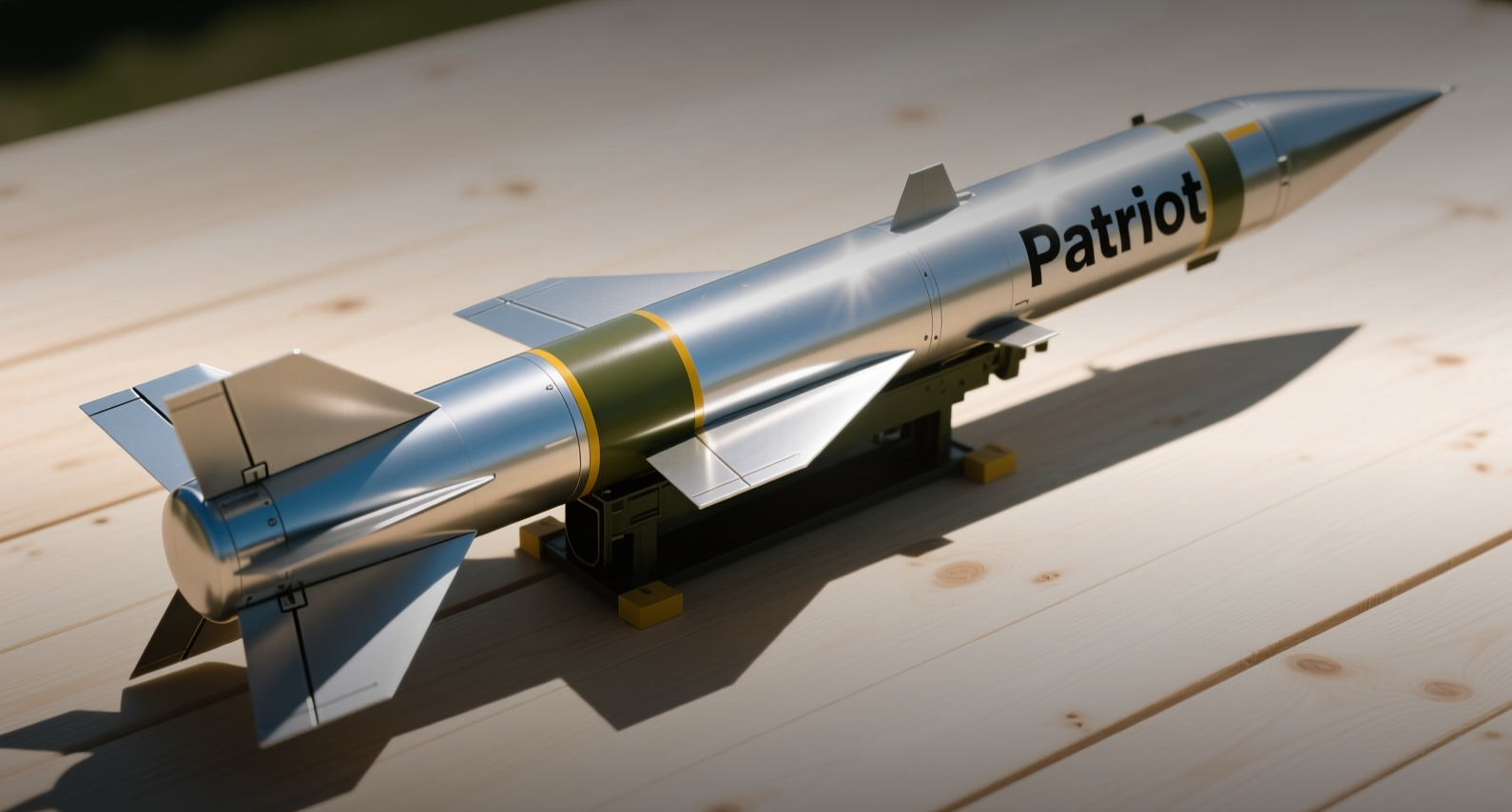
President Donald Trump said the US will grant Ukraine a license to manufacture Patriot interceptors, addressing a shortage that has left Kyiv unable to stop Russian ballistic missiles and boosting Lockheed Martin Corp.'s production outlook. "It's a defensive weapon, which I like better than an offensive weapon," Trump said Wednesday at the NATO summit in Ankara, Turkey, alongside Ukrainian President Volodymyr Zelensky. "We're going to give a license to you to make Patriots." The announcement comes as Russia has intensified its ballistic missile campaign against Ukrainian cities. Since July 1, Ukraine has intercepted as few as four of 46 ballistic missiles fired by Russia, according to the Institute for the Study of War. In the latest attack early Wednesday, Ukrainian air defenses shot down 139 of 169 drones but none of five ballistic missiles, air force data showed. More than 20 people died in a strike Sunday night when none of 23 ballistic missiles were intercepted. The Patriot system, produced by Lockheed Martin Corp. and RTX Corp., is the only weapon in Ukraine's arsenal capable of intercepting ballistic projectiles. A single battery costs about $1 billion. Lockheed produced roughly 600 Patriot interceptors last year and is ramping to 2,000 annually, though the US used more than half its stockpile during its war with Iran earlier this year, according to the Center for Strategic and International Studies. Russia can produce 60 to 65 Iskander ballistic missiles a month, according to Ukraine's military intelligence, while Ukraine's stockpile of interceptors has dwindled to critically low levels. Trump acknowledged the US cannot spare many additional systems. "We have Patriots, but we don't have that many. We need them for ourselves too," he said. The president said he had not yet informed Lockheed Martin or RTX of the decision but expressed confidence the companies would cooperate. "We have great power over the companies, those companies that make the Patriot," Trump said. "I think they can produce it pretty quickly. Once we explain it, we'll bring the company here." It remains unclear whether the missiles would be manufactured inside Ukraine or in a neighboring country. Military expert Ivan Stupak, a former Ukrainian security service officer, told the BBC that producing such advanced munitions on Ukrainian territory faces significant obstacles. "Technically and legally, I think this will be deployed to European soil instead — and supervised," he said, adding the process could take many months. The license commitment marks a sharp departure from Trump's past criticism of Zelensky, including a contentious Oval Office meeting last year. On Wednesday, Trump said the two had developed a "very good" relationship and that both Moscow and Kyiv wanted to end the war. He said he would speak with Russian President Vladimir Putin later in the day. Trump also signaled openness to purchasing Ukrainian drones, which Kyiv has developed into a sophisticated industry after having limited expertise when Russia invaded in 2022. Ukraine has signed nine drone deals with other nations, including agreements with Denmark, Estonia and the Netherlands announced Tuesday. The last time the US authorized licensed production of a major weapons system abroad was for Japan's Mitsubishi Heavy Industries to build Patriot interceptors under a 2015 agreement, a process that took years to reach full production capacity. The Ukraine license could face similar timelines. At the summit, NATO allies pledged €70 billion in military equipment and training for Ukraine in 2026, with commitments to sustain equivalent levels in 2027, according to the summit declaration. For Lockheed Martin, the license represents a potential expansion of its addressable market beyond US government procurement. The company's shares have gained 18% this year through Tuesday's close, outperforming the S&P 500's 12% advance, as defense spending has risen across NATO member states. This article is for informational purposes only and does not constitute investment advice.

Trump threw his weight behind Ukraine's campaign of long-range strikes deep inside Russia and granted Kyiv a license to produce US Patriot missile interceptors, marking the strongest pro-Ukraine stance of his second term. "It's an escalation, but it's also an escalation that could help lead to an end," Trump said Wednesday alongside President Volodymyr Zelensky at the NATO summit in Ankara, Turkey. The announcement came as Russia killed at least 21 civilians in an 11-hour drone and missile barrage on Kyiv last week, firing 74 missiles and 496 drones, according to Ukraine's air force. Ukraine has run critically low on Patriot interceptors, leaving its capital exposed during repeated Russian attacks that have killed more than 16,000 civilians since the full-scale invasion began, per the United Nations. None of the 29 ballistic missiles fired at Ukraine on Monday were shot down by air defenses, Ukraine's air force said. More than 50,000 people sheltered in subway stations during the assault, the Kyiv Metro said. The shift complicates Trump's parallel outreach to Russian President Vladimir Putin, with whom he held a 90-minute call Saturday. "We have a lot of pressure on President Putin," Trump said. "I don't think he likes what's going on." Senior European officials said Putin has not altered his ambitions of subjugating Ukraine despite mounting battlefield losses and a fuel crisis triggered by Ukraine's drone campaign against Russian oil refineries. A report by the Center for Strategic and International Studies estimated that up to 1.8 million soldiers have been killed, wounded or gone missing on both sides, with Russian troops accounting for most of that number. ### Patriot Production and the Air Defense Gap Ukraine's foreign minister, Andrii Sybiha, described the situation as a "night of horror" in Kyiv and pleaded with partner countries to supply more Patriot systems, which offer the best protection against Russian ballistic missiles. The latest versions of Patriot interceptors can engage incoming short-range ballistic missiles, cruise missiles and drones at altitudes up to 15 kilometers and distances of up to 35 kilometers. Trump's decision to grant a production license could help address what Zelensky called an "insufficient supply of interceptor missiles" that has left Ukrainian cities vulnerable. Finland's President Alexander Stubb said Ukraine's intensified drone and missile strikes deep inside Russia have strengthened Kyiv's position. "Ukraine is in a better position, militarily, politically, and financially, than they have been at any time in this war," Stubb told the Financial Times. "That is why we are seeing a lot of uneasy activity in Russia right now." Stubb said Ukraine's capabilities in drones and missiles are "superior to those of most members of the alliance." ### A Two-Track Diplomacy Trump's public embrace of Ukraine's military strategy stands in marked contrast to his fiery encounter with Zelensky in early 2025 and past proposals that European allies criticized as favoring Moscow. The US president said he is maintaining pressure on Putin while pursuing a diplomatic off-ramp. "But I talked to President Putin a lot. He wants to end the war," Trump said. The Kremlin has described Trump's position as consistent, even as Russia's defense ministry said its bombardment of Kyiv was retaliation for Ukrainian strikes on civilian infrastructure inside Russian territory. Ukrainian forces struck one of Russia's largest oil refineries overnight in the Nizhny Novgorod region east of Moscow, starting a fire, Ukraine's General Staff said. Ukraine's frequent attacks inside Russia have targeted oil refineries, causing a fuel crisis that has frustrated Russians already feeling the war's economic toll. The last time the US authorized a comparable expansion of military support for Ukraine, defense stocks rallied while Russian assets sold off. The S&P 500 defense sector rose 8% in the month following the initial Patriot system deployment to Ukraine in late 2022, according to FactSet data. A similar dynamic could unfold as investors price in sustained demand for Patriot systems and related munitions, while heightened geopolitical risk may drive flows into safe-haven assets including gold and US Treasuries. US defense contractors including RTX and Lockheed Martin, which manufacture Patriot components, stand to benefit from increased production orders. This article is for informational purposes only and does not constitute investment advice.

President Donald Trump confirmed Lockheed Martin's Sikorsky unit is funding a $5 million to $6 million granite helipad on the White House South Lawn, after the new VH-92A Marine One fleet proved too powerful for the existing grass landing area. "The new helicopters generate so much power during landing, they had caused damage to the White House lawn," Trump told reporters in the Oval Office Monday, adding that Sikorsky "felt a little bit guilty" and agreed to pay the full cost. The 23-strong VH-92A Patriot fleet, delivered by Sikorsky in 2024, vents exhaust heat downward — scorching the South Lawn and limiting the aircraft's use at the White House. The older VH-3D Sea Kings, first deployed in 1978, remain in service through year-end, according to a Marine Corps aviation plan. Trump said the helipad will allow officials to "finally retire 45-year-old helicopters." The project marks the latest in a series of high-profile White House renovations under Trump, including the demolition of the East Wing for a new ballroom and a proposed 250-ft triumphal arch near Arlington National Cemetery. Construction has been accelerated ahead of Chinese President Xi Jinping's Sept. 24 state visit, adding roughly $875,000 in costs, according to documents viewed by the Washington Post. Lockheed Martin said in a statement that "this specific contribution was made to the National Park Service" and was "conducted in full accordance with all applicable laws and regulations." The company did not disclose the exact cost or completion timeline. A White House official told TIME the helipad is expected to be finished sometime in September. The VH-92A program traces its roots to the early 2000s, when President George W. Bush launched an effort to modernize the presidential helicopter fleet. That program was scrapped by the Obama administration after cost overruns. Obama restarted the effort, and Sikorsky finally won the contract in May 2014. The last of 23 aircraft was delivered in August 2024, with former President Joe Biden taking the first flight aboard a VH-92A that same month. The helipad has drawn bipartisan criticism. Democratic Sen. Kirsten Gillibrand of New York called the project a "joke," arguing Trump is prioritizing construction over legislation such as a bipartisan housing bill. Sen. Mark Warner of Virginia criticized the accelerated timeline, saying Trump is "charging taxpayers an extra $875,000 just to speed up construction of his private White House helipad." Trump's broader renovation agenda has faced legal and legislative hurdles. The Senate parliamentarian in May ruled against including ballroom funds in the party's budget reconciliation bill. House Democrats have introduced legislation to block the 250-ft arch project. The Lincoln Memorial Reflecting Pool, meanwhile, required further repairs after new blue paint peeled and an algae bloom turned the water green. For Lockheed Martin, the helipad contribution reinforces its relationship with the administration at a time when defense spending remains a key policy focus. The company's Sikorsky unit has manufactured presidential helicopters for decades, and the VH-92A fleet represents a roughly $5 billion program, according to Pentagon budget documents. This article is for informational purposes only and does not constitute investment advice.

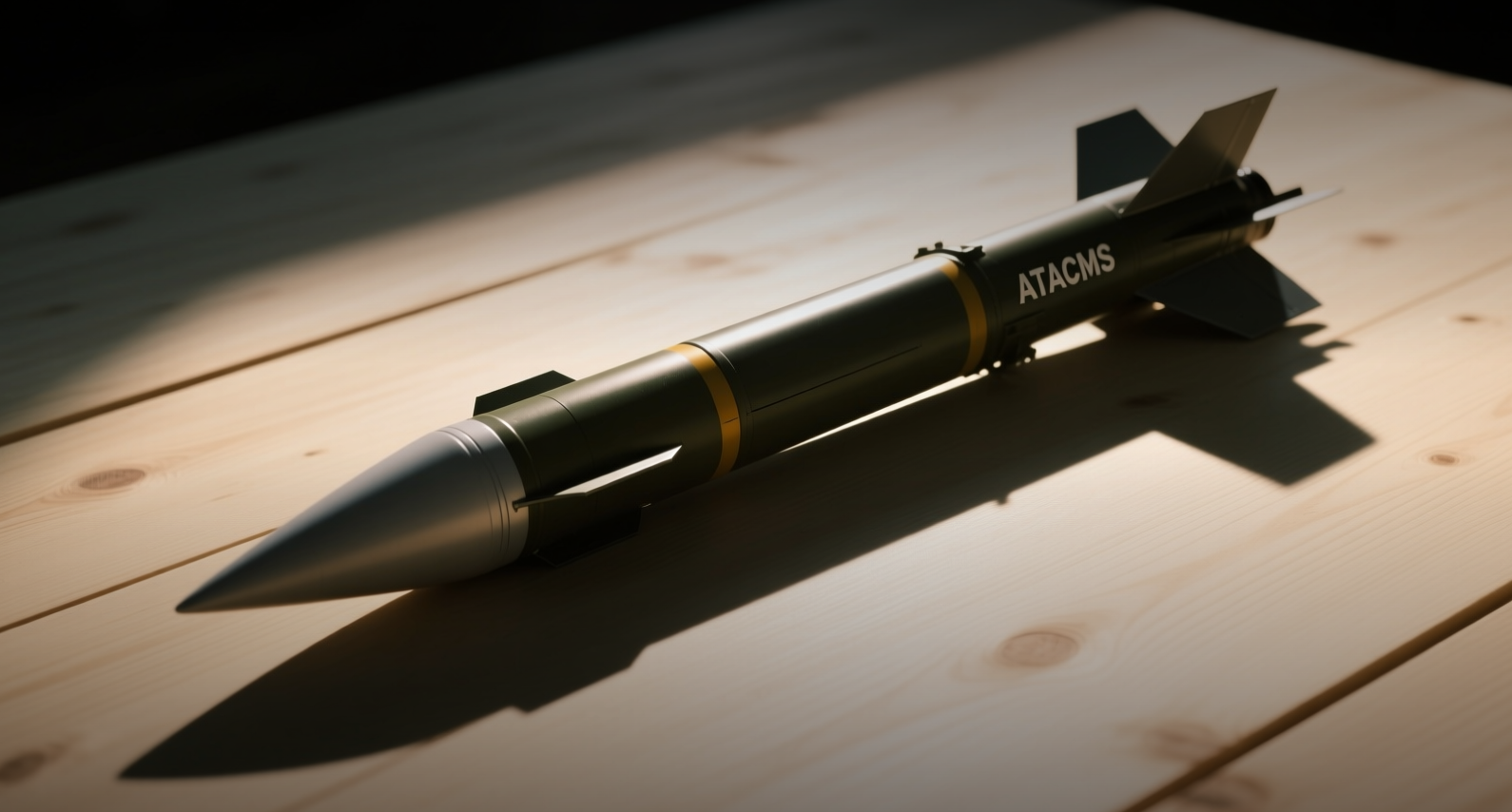
**Lockheed Martin and Rheinmetall will build the first ATACMS production line outside the US at a German facility dating back to the 19th century.** Lockheed Martin and Rheinmetall signed a memorandum of understanding Tuesday to establish a joint venture producing ATACMS guided missiles in Germany, creating the first European center of excellence for the weapon system outside the United States. "This partnership marks a watershed moment for European security and allied industrial cooperation," said Jay Pitman, president of Lockheed Martin International. "By combining Lockheed Martin's unmatched missile expertise with Rheinmetall's manufacturing excellence, we'll deliver combat-proven capabilities faster and more efficiently to our allies." The agreement, announced at the NATO Summit Defense Industry Forum in Ankara, places production at Rheinmetall's Unterluess facility in northern Germany, a site commissioned more than 125 years ago that employs about 4,000 workers. A rocket motor factory at the site is nearing completion, with production of rocket motors and guided missile components scheduled to begin as early as 2027. The facility already houses "Werk Niedersachsen," one of Europe's most modern artillery ammunition plants, which opened last year. The deal addresses a critical gap in NATO's munitions supply chain as European allies seek to reduce dependence on US-based production amid heightened security demands. Rheinmetall CEO Armin Papperger said the partnership strengthens "autonomy in defense policy" for Germany and Europe, while Dennis Goege, Lockheed Martin's chief executive for Europe, described it as "a strong signal for Europe's defense industry and for NATO's long-term resilience." The joint venture comes as NATO members face renewed pressure from the Trump administration to boost defense spending above the current 2 percent of GDP target. European defense budgets have risen sharply since Russia's 2022 invasion of Ukraine, with Germany committing 100 billion euros to a special defense fund and several allies pledging to reach 3 percent of GDP. The last major US-European co-production of a strategic missile system was the Patriot air defense program, which began manufacturing in Europe in the 1980s. For Rheinmetall, the ATACMS deal extends a rapid expansion. The Düsseldorf-based defense contractor has more than doubled its revenue since 2022, driven by ammunition orders from Ukraine and European rearmament programs. Its shares have gained more than 150 percent over the past two years, outperforming the Stoxx Europe 600 Aerospace & Defense Index, which rose about 80 percent in the same period. Lockheed Martin, the world's largest defense contractor by revenue, reported $71 billion in sales last year, with international customers accounting for about a quarter of that total. The Unterluess site's selection underscores Germany's push to anchor critical defense manufacturing on domestic soil. The facility, which already produces weapon systems, ammunition, and tracked vehicles, also operates Europe's largest privately owned firing range. Rheinmetall has invested heavily in expanding its ammunition capacity, with the rocket motor factory representing the latest addition to a production network that now spans artillery shells, propellants, and guided missiles. This article is for informational purposes only and does not constitute investment advice.

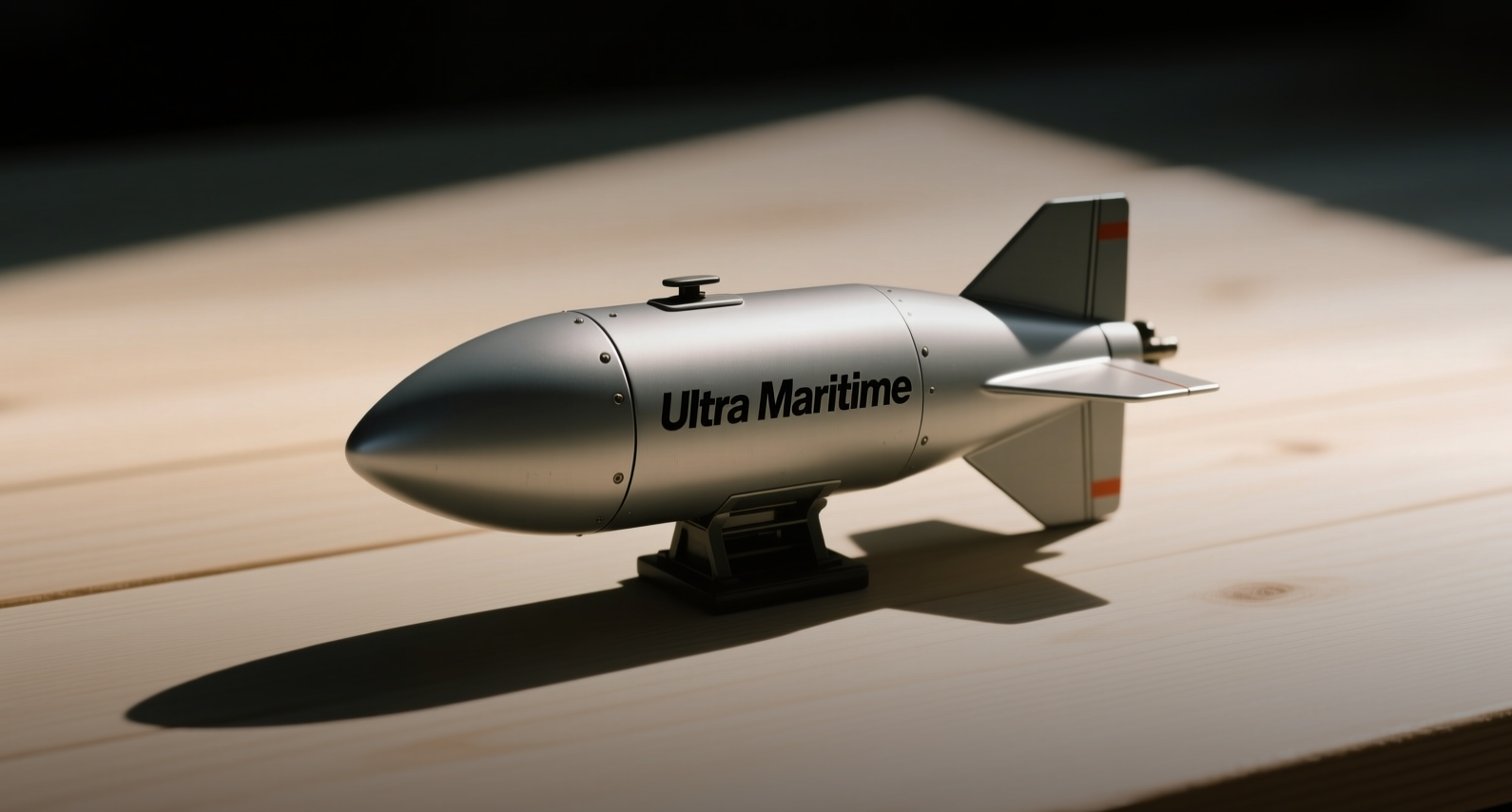
**Lockheed Martin's $3.45 billion acquisition of Ultra Maritime marks the latest consolidation in the defense sector as navies race to modernize anti-submarine warfare capabilities.** Lockheed Martin agreed to buy Ultra Maritime for $3.45 billion on Monday, adding sonar and torpedo defense systems to its portfolio as allied navies accelerate spending on undersea warfare technology. "Undersea superiority belongs to those who move fastest and work together best," said Stephanie C. Hill, president of Lockheed Martin Rotary and Mission Systems. "By joining forces with Ultra Maritime, we're accelerating our commitment to deliver the most advanced undersea and anti-submarine warfare capabilities to our U.S. and allied partners across the globe." The all-cash transaction values Ultra Maritime at roughly 2.7 percent of Lockheed Martin's $125.6 billion market capitalization. Ultra Maritime, which Advent International acquired in 2022, develops sonobuoys, towed sonar arrays, hull-mounted sonar systems, and autonomous maritime sensing platforms for allied naval forces. Citi served as financial adviser to Lockheed Martin, with Hogan Lovells Cadwalader providing legal counsel and Fried Frank advising on tax. The deal reflects a broader push by defense contractors to consolidate niche maritime technology providers as China's naval expansion and undersea infrastructure investments drive demand for anti-submarine warfare systems. Lockheed Martin expects the transaction to close in the second half of 2026, subject to regulatory approvals. **Ultra Maritime's Turnaround Under Advent** When Advent International invested in Ultra Maritime in 2022, the business had mission-critical technology but had been underinvested and was not yet fully delivering for customers, said Shonnel Malani, managing partner at Advent and chair of the board at Ultra Electronics. Over four years, Advent strengthened Ultra Maritime's industrial capacity and developed next-generation autonomous solutions. The sale price reflects that turnaround, with Advent exiting at a premium to its 2022 entry. **What the Deal Means for Defense Investors** Lockheed Martin shares traded at $544.75 on Monday, near the midpoint of their 52-week range of $410.11 to $692.00. The stock carries a price-to-earnings ratio of 26.38 and offers a dividend yield of 2.5 percent. The acquisition expands Lockheed Martin's addressable market in maritime defense, a segment where allied governments are increasing budgets amid rising undersea threats from state actors. Ultra Maritime's exportable product lines — particularly its sonobuoys and towed sonar arrays — give Lockheed Martin a broader platform to compete for international naval contracts that historically went to European defense primes. This article is for informational purposes only and does not constitute investment advice.

BAE Systems, Leonardo and Japan Aircraft Industrial Enhancement Co. secured a $6.14 billion contract through their Edgewing joint venture to develop a next-generation stealth fighter, the largest award yet under the trilateral Global Combat Air Programme. The 18-month contract, awarded by the GCAP Agency and running from July 1, 2026 to Dec. 31, 2027, will fund the advanced concept and assessment phase and further joint detailed design and development of the aircraft, which is slated to replace the Eurofighter Typhoon in Royal Air Force service and Japan's F-2 fleet by 2035. "This contract represents the trust placed in us by all three nations and our GCAP Agency partners, trust fostered by the rapid progress made under the first international contract," Marco Zoff, chief executive officer of Edgewing, said in a statement. The joint venture, established a year ago and headquartered in the UK, serves as the single prime contractor and design authority for the life of the aircraft. The award follows the UK's commitment of 8.6 billion pounds ($11.4 billion) over four years to GCAP in its long-awaited Defence Investment Plan, published Tuesday after months of delay. The DIP allocated 15 billion pounds of new defense funding, short of the 28 billion pounds the Ministry of Defence had requested, leaving the department to find 10.7 billion pounds in savings. The stopgap contract signed in April, worth 686 million pounds, had kept work alive for three months while London resolved its funding dispute. The program is overseen by the GCAP International Government Organization, established in 2024, whose steering committee directs the GCAP Agency from its headquarters in Reading, England. Wider delivery is supported by trinational industrial consortia managing the aircraft's electronics and propulsion systems, including the GCAP Electronics Evolution grouping for sensing and communications and a power and propulsion consortium developing the engine. "The program is vital for global security and defeating future threats, while sharing costs, technological advantages and creating highly skilled jobs in all three nations," Masami Oka, GCAP Agency chief executive, said. "With this long-term funding, the future of GCAP has never been more assured." The contract provides multi-year revenue visibility for BAE Systems, Leonardo and JAIEC, whose shares are likely to benefit as investors price in the extended production timeline. For the European defense sector, the deal signals sustained government commitment to next-generation military aviation at a time when the US remains the dominant Western fighter manufacturer, with only Boeing and Lockheed Martin producing operational combat aircraft. This article is for informational purposes only and does not constitute investment advice.

Boeing Co., Lockheed Martin Corp. and Oracle Corp. — three companies with billions of dollars in federal contracts and regulatory matters before the Trump administration — are sponsoring Freedom 250, the president's aligned effort to celebrate America's 250th birthday, according to fundraising materials reviewed by congressional investigators. Fundraising pitches for the event offer high-dollar donors significant access to President Donald Trump, including private receptions and photo opportunities, according to a report released Thursday by House Democrats on the Committee on Natural Resources. The report alleges the arrangement creates the appearance of a pay-to-play scheme in which corporate contributions to Trump-backed projects could yield favorable treatment from his administration. "Donors who wanted to support the bipartisan America250 commission were instead given wire instructions for Freedom 250, a Trump-controlled entity," Rep. Jared Huffman, the ranking Democrat on the committee, said in the report. "This fits a pattern of the president hijacking the nation's 250th birthday celebration to boost his own political and financial interests." The three companies named as sponsors — Boeing, Lockheed Martin and Oracle — collectively hold tens of billions of dollars in active U.S. government contracts. Boeing is the Pentagon's second-largest contractor by spending, Lockheed Martin is the largest, and Oracle provides cloud infrastructure for multiple federal agencies. All three also have regulatory issues pending before agencies overseen by the White House. Freedom 250 was created last fall as a limited liability corporation wholly owned by the National Park Foundation, the fundraising arm of the National Park Service. The structure allows it to operate as what Democrats call a "financial black box," shielded from competitive bidding, accounting and transparency rules that would typically apply to a federally controlled entity. Its sole employee appears to be CEO Keith Krach, a wealthy Trump supporter and former State Department official. Congress allocated $150 million in federal funds to the Interior Department for 250th anniversary events under Trump's tax and spending bill approved last year. America250, the bipartisan commission established by Congress in 2016 to plan the celebrations, expected $100 million of that total but has received only $25 million, according to the Democratic report. The remaining funds have been redirected to Freedom 250, though the exact amount remains undisclosed. The report also alleges that Freedom 250 CEO Krach traveled to the World Economic Forum in Davos, Switzerland, in January to personally solicit foreign government officials and business leaders for donations. Trump appointees at the State Department, including some ambassadors, have also held fundraising events overseas seeking foreign contributions, the report says. Freedom 250 spokesperson Danielle Alvarez denied the group accepts foreign donations. Freedom 250 has focused on staging large-scale events in Washington, including a UFC cage fight at the White House on Trump's 80th birthday, the Great American State Fair on the National Mall and the upcoming July 4 celebration featuring a Trump speech and fireworks display the president has touted as the "show of a lifetime." Alvarez dismissed the Democratic report as "categorically false" and a "partisan smear from politicians who would rather manufacture division" than celebrate a national milestone. "Freedom 250 remains fully committed to uniting Americans at this historic moment and giving all Americans a spectacular birthday they can be proud of," she said. The last time a presidential administration faced similar allegations of trading access for donations was during the Trump administration's first term, when inaugural committee donors with federal interests received access to Cabinet officials and policy meetings. That episode resulted in multiple federal investigations and a guilty plea from a foreign national for illegal campaign contributions. For investors, the controversy introduces headline risk for the three named contractors. Boeing shares have already faced pressure this year from production delays and regulatory scrutiny at the Federal Aviation Administration. Lockheed Martin's F-35 program, the Pentagon's costliest weapons system, is subject to annual appropriations decisions. Oracle's federal cloud contracts, valued at more than $1 billion annually, face competition from Amazon Web Services and Microsoft Corp. Any perception of impropriety could slow contract awards or trigger enhanced oversight from congressional committees. This article is for informational purposes only and does not constitute investment advice.

**President Donald Trump's investment accounts executed more than 21,000 securities trades in 2025, including heavy buying days before and after his tariff announcements, according to a 900-page financial disclosure that has reignited ethics debates.** President Donald Trump's investment accounts made more than 21,000 securities trades worth as much as $1.86 billion in 2025, with heavy buying clustered around his tariff announcements, a financial disclosure shows. "The amount of trading is far more than most financial advisers are doing for their clients — exponentially," said Dan Weiskopf, a senior portfolio manager at Tidal Financial Group, which oversees ETFs that mirror congressional stock trades. "I just don't see President Trump being a hands-off kind of guy." Trump averaged 85 trades per market day across eight separate accounts, with 10 days accounting for about a quarter of all transactions, the filing shows. On April 8, one day before Trump paused his Liberation Day tariffs, his accounts bought 327 individual stocks — including $100,001 to $250,000 of Apple — with no selling. Apple shares surged more than 15 percent the next day, their best single-day performance since 1998, as the S&P 500 posted its eighth-best day ever with a 9.5 percent gain. The disclosure, released more than 14 months after many of the trades occurred, adds to mounting calls from both Republicans and Democrats for greater scrutiny of presidential financial interests and has renewed debate over whether the STOCK Act's 45-day reporting requirement carries sufficient penalties — currently a $200 late fee per trade. **Trading Patterns Around Policy Decisions** Trump's busiest trading days coincided with market-moving policy shifts. His asset managers executed 616 trades on Feb. 3, one day before tariffs on Canada, Mexico and China were scheduled to take effect. They made 640 trades a month later after Trump lifted a pause on those tariffs, and 446 trades on April 4 amid a selloff triggered by his Liberation Day announcement. On Aug. 18, the accounts made their biggest single-day moves, shifting more than $75 million. One account bought between $5 million and $25 million each in Nvidia, Apple and Microsoft. That same account purchased at least $1 million in Eli Lilly, JPMorgan and Visa. Days after the account bought Intel shares, Trump announced plans for the government to take a roughly 10 percent equity stake in the chipmaker. Intel shares have since risen more than 370 percent. The accounts also bought shares of MP Materials, a rare-earths producer, in eight trades through May. The Pentagon took a 15 percent equity stake in the company in July as part of a first-of-its-kind deal to boost domestic rare-earths production. Trump reported between $100,001 and $1 million in capital gains from his MP Materials stake. **Cross-Account Trading and Portfolio Overlap** In more than 200 instances, Trump's accounts bought a stock in one account while selling the same stock in another on the same day. On four separate days, an individual security was both bought and sold within the same account. The filing does not indicate the exact timing or value of those trades. Trump's top stock holdings — Apple, Nvidia, Broadcom, Microsoft and Tesla — are mainstays of the S&P 500. Shares of Lockheed Martin appeared in six of his eight accounts, while McDonald's, Microsoft and Pfizer appeared in seven. About half of all trades fell within the lowest reporting range of $1,001 to $15,000, suggesting many more smaller transactions may have gone unreported. The Trump Organization said the president's holdings are independently managed by third-party financial institutions with no input from Trump, his family or the company. "Neither President Trump, his family, nor The Trump Organization has any role in selecting, directing, approving, influencing or soliciting specific investments," Eric Trump said in a social media post. Trump told CNBC on Thursday, "My kids run it. I've made a tremendous amount of money, more than I would have ever thought I would have made, and I let people invest it, I don't even speak to." The White House said the president's investments pose no conflict of interest. "Neither the President nor his family has ever engaged — or will ever engage — in conflicts of interest," spokeswoman Anna Kelly said. The previous time a president faced similar scrutiny over personal trading was during the Trump administration's first term, when the Government Accountability Office found that the White House had violated the STOCK Act by failing to disclose certain financial information. The current disclosure dwarfs those earlier reports at nearly 1,000 pages, and the cover page notes that Trump paid late filing fees for transactions not previously reported. This article is for informational purposes only and does not constitute investment advice.

**U.S. Defense Secretary Pete Hegseth's plan to announce additional troop cuts in Europe was blocked by senior White House officials, exposing internal divisions ahead of next week's NATO summit in Ankara where all 32 member states will gather.** Hegseth planned to tell NATO's top military chiefs in Brussels last month that the U.S. was preparing further reductions beyond the canceled armored brigade rotation to Poland and the earlier withdrawal of an infantry brigade from Romania, people familiar with the matter said. The proposal was nixed after it was shared with National Security Advisor Marco Rubio and other senior officials, the people said. Hegseth instead announced a six-month review of U.S. force posture in Europe. "The important aspect of the meeting is to what extent the rift between the United States and Europe can be healed or narrowed during the summit," said Fatih Ceylan, a former Turkish ambassador to NATO and security analyst at the Ankara Policy Center. "We should not expect miracles, but nonetheless if there is a convergence of ideas emphasizing the importance of NATO, that should be seen as a success." The internal policy split comes as Trump has threatened to withdraw from NATO and reduce U.S. troop levels, criticizing allies for failing to support the U.S.-led war on Iran and efforts to reopen the Strait of Hormuz. The Pentagon's defense strategy issued in January signaled the U.S. would reduce its military presence in Europe as it focuses more on the western Pacific and the Western Hemisphere, giving European nations primary responsibility for the continent's conventional defense. The last major U.S. troop reduction in Europe came in 2020 when the Trump administration withdrew about 12,000 troops from Germany, cutting the total to roughly 35,000 before the Ukraine war prompted a buildup to approximately 100,000. The summit will test whether the alliance can project unity despite Trump's mercurial approach. NATO officials are considering scrapping plans to hold another summit next year in Albania, officials said. U.S. troop levels and allied military spending are expected to be central topics when Trump meets with leaders in Ankara on July 7-8. **Turkey's Balancing Act** Turkey, a NATO member since 1952 with the alliance's second-largest army after the United States, has positioned itself as both a reliable ally and an independent actor. President Recep Tayyip Erdogan described Turkey as working to ensure the Ankara summit "will stand as a reference point in NATO's history." Yet Turkey has often acted independently, frustrating allies by refusing to participate in sanctions on Russia, engaging in disputes with Greece, and purchasing Russian S-400 missile defense systems — a move that led to its expulsion from the U.S.-led F-35 program in 2019 and forfeiture of $1.4 billion in down payments. Turkey also delayed Finland and Sweden's NATO membership until securing concessions on counter-terrorism cooperation and blocked the appointments of NATO chiefs in 2009 and 2024. More recently, Turkey has leaned closer to the alliance. NATO missile defenses intercepted four missiles fired from Iran into Turkish territory during the Iran war, and Italy and Germany deployed air defense systems to help Turkey respond to heightened threats weeks before the summit. Trump has also signaled a willingness to rebuild defense ties, notifying Congress of his intention to sell Turkey roughly 80 F-110 aircraft engines for its KAAN fighter program, while Vice President JD Vance suggested the administration is examining whether Turkey could rejoin the F-35 program. "Turkey wishes to distinguish itself as a foreign policy actor that is independent of NATO and the West," wrote Hamish Kinnear, principal Middle East and North Africa analyst at risk intelligence company Verisk Maplecroft, in a note. "While Turkey is not abandoning its balancing approach, it is tilting closer to the West, primarily because of NATO." **Security Crackdown and Domestic Control** In Ankara, authorities have deployed tens of thousands of police and placed air defenses on high alert, while banning demonstrations, concerts, and graduation ceremonies during the summit. Security units have detained more than 200 people suspected of links to extremist groups, while a Turkish court blocked access to websites critical of NATO on security grounds. Several journalists from opposition-leaning media organizations were denied accreditation to cover the summit. Henri J. Barkey, professor emeritus at Lehigh University, wrote that the summit will bestow two major prizes on Erdogan: Trump's appearance validating his global role for outside audiences and his autocratic rule for his own population. "Beyond the daily persecution, hundreds have been arrested ahead of the summit, yet the U.S. government, unlike any predecessor, has stayed utterly silent," Barkey wrote for the Council on Foreign Relations. The summit's outcome will shape defense sector sentiment and European security markets. The policy instability over U.S. troop levels introduces uncertainty for defense contractors with significant NATO exposure, including Lockheed Martin, RTX, and Northrop Grumman, while the broader geopolitical risk could affect European equities and the euro. If the summit produces a unified front on defense spending commitments, it could stabilize sentiment; if Trump's criticism of allies dominates, the risk premium on European defense and currency markets may widen further. This article is for informational purposes only and does not constitute investment advice.

**Iran launched at least four attack drones at vessels in the Strait of Hormuz, with one striking a cargo ship, in what President Donald Trump called a "foolish violation" of the US-Iran ceasefire.** President Donald Trump accused Iran of violating the US-Iran ceasefire by launching four one-way attack drones at ships in the Strait of Hormuz, with one striking a cargo vessel's deck and three shot down by US forces. "The Islamic Republic of Iran shot at least four One Way Attack Drones at Ships transversing the Strait of Hormuz," Trump wrote on Truth Social. "One of the Drones solidly hit the upper deck of a large and very expensive Cargo Carrying Ship. Obviously, this is a foolish violation of our Ceasefire Agreement." The targeted cargo carrier sustained damage to its upper deck but remained operational and continued its voyage, Trump said. US forces intercepted and destroyed three of the four drones. Iranian Foreign Minister Abbas Araghchi held a phone conversation Friday with UAE Deputy Prime Minister Sheikh Abdullah bin Zayed al-Nahyan, who stressed the importance of fully abiding by the ceasefire provisions and maintaining freedom of navigation through the strategic waterway, according to a readout from the Emirati Foreign Ministry. The Strait of Hormuz handles about 20 percent of the world's petroleum transit, making any disruption a direct threat to global energy supplies. A prolonged escalation could derail the US-Iran ceasefire framework and send crude prices sharply higher, with Brent and WTI facing immediate upside risk as traders price in a renewed supply premium. **Oil at the Center of the Escalation** The waterway connects Persian Gulf producers — including Saudi Arabia, Iraq, Kuwait, and the UAE — to global markets, with an estimated 21 million barrels of oil and petroleum products passing through daily. Any sustained disruption threatens to tighten an already supply-sensitive market, where OPEC+ production cuts have kept spare capacity limited. The last time a similar confrontation occurred in the Strait of Hormuz was in 2019, when attacks on tankers and Saudi Aramco facilities temporarily knocked out about 5.7 million barrels per day of production and sent Brent crude surging nearly 15 percent within days. While the current incident is smaller in scale, the geopolitical context is different: the US and Iran had reached a ceasefire agreement, making this alleged violation a potential setback for diplomatic efforts that had been aimed at stabilizing the region. **Market Implications** Energy stocks are likely to rally on the open as investors price in a higher risk premium for Middle East crude supply. The S&P 500 energy sector, which has gained about 8 percent year-to-date, could extend those gains as traders anticipate wider margins for producers. Defense contractors including Lockheed Martin and RTX may also see gains as investors expect increased US naval presence in the region. Conversely, airline and shipping stocks could face pressure from rising fuel costs and potential rerouting around the chokepoint. Safe-haven assets are expected to strengthen. Gold, which typically benefits from geopolitical uncertainty, may see inflows alongside the US dollar. The CBOE Volatility Index, or VIX, could spike as options traders hedge against further escalation. Broader equity indices such as the S&P 500 and Dow Jones face downside risk as investors reassess the probability of a wider regional conflict. The next key date to watch is any formal response from Tehran. Iran has not yet publicly commented on Trump's accusation, and the UAE's call for "serious diplomacy and responsible dialogue" suggests Gulf states are seeking to de-escalate rather than escalate. The incident also raises questions about the durability of the US-Iran ceasefire, which had been seen as a rare diplomatic achievement in the region. *This article is for informational purposes only and does not constitute investment advice.*

Ondas Holdings' counter-drone subsidiary Sentrycs will embed its Cyber-over-RF technology into Lockheed Martin's Sanctum platform, giving military operators a non-kinetic option to detect and seize control of unauthorized drones without jamming or physical interception. "Combining Lockheed Martin's advanced modular defense architecture with Sentrycs' precise, non-disruptive detection and mitigation technology creates a stronger and more comprehensive operational capability," Eric Brock, chairman and CEO of Ondas Holdings, said in a statement. Sentrycs' technology operates at the communication protocol layer, enabling operators to identify, track and take control of rogue drones without collateral interference with surrounding communications or infrastructure. The system avoids wide-area jamming and kinetic engagement — a critical distinction for protecting airports, stadiums and densely populated venues. Lockheed Martin's Sanctum platform combines artificial intelligence, cloud-enabled data fusion and a modular defense architecture to detect, track and neutralize aerial threats, including coordinated swarms. The collaboration comes as Ondas has been rapidly scaling its defense business. The company landed more than $40 million in new June orders for autonomous defense gear, including counter-UAS systems, loitering munitions and ground systems, pushing second-quarter order volume past $150 million. Ondas also agreed last week to acquire Cyberhawk, a drone inspection and infrastructure data provider, for about $125 million, with closing expected in the third quarter. First-quarter revenue jumped to $50.1 million from $4.3 million a year earlier, and the company raised its 2026 revenue target to at least $390 million. Backlog stood at $457 million after accounting for acquisitions. The global unmanned aerial vehicle market is projected to climb to $40.6 billion by 2030 from $26.1 billion in 2025, a compound annual growth rate of 9.2%, according to industry estimates. The aerial imaging segment, which relies heavily on drone-based solutions, is expected to reach $8.2 billion by 2030 from $3.9 billion in 2025, growing at more than 16% annually. U.S. officials in January announced a $115 million push for counter-drone technology ahead of the 2026 FIFA World Cup and America's 250th anniversary events, while FEMA approved $250 million for 11 host states to acquire these systems. Ondas faces competition from DroneShield, which Axios reported supplied gear to Kansas City police for World Cup security, and Fortem Technologies, which secured a multimillion-dollar order to protect U.S. World Cup sites using radar and drone interceptors. Lockheed Martin separately secured a potential $35 billion contract to scale production of its THAAD interceptor system and an $8.4 billion extension for Precision Strike Missile production, underscoring the broader defense buildup that benefits companies across the supply chain. Ondas shares traded at $7.96 on June 24, down 6.7% on the session, as the stock gave back some gains from a run-up driven by the string of contract announcements. Lockheed Martin shares closed at $491.64, down 7.6% over the prior week despite the multi-billion-dollar contract awards. The partnership gives Ondas a distribution channel into Lockheed Martin's defense customer base, while Lockheed gains a precise, non-kinetic mitigation layer for its Sanctum architecture — a combination that positions both companies to capture a larger share of the fast-growing counter-UAS market. This article is for informational purposes only and does not constitute investment advice.

The Pentagon is pulling together SpaceX, Rocket Lab and Lockheed Martin to build a space-based laser network for tracking airborne threats. SpaceX has enlisted Rocket Lab and Lockheed Martin as partners in a military space-laser project to build a satellite network capable of tracking airborne threats, according to government documents published June 24. The documents, reviewed by MarketWatch, list the three companies as partners on the project under the U.S. Space Force. The program is described as a space-laser initiative focused on detecting and tracking airborne threats from orbit. The project adds to a wave of defense space contracts reshaping the sector. Boeing separately won a contract worth as much as $2 billion to build two next-generation MUOS communications satellites for the Space Force, prevailing over Lockheed Martin in a competition announced June 23. Rocket Lab earlier this year demonstrated its end-to-end defense capability with the Victus Haze mission, launching a satellite for the Space Force within 16 hours and 42 minutes of receiving the order, under a $32 million contract. The laser-equipped satellite network represents a new category of space-based defense, moving beyond communications and surveillance into active threat tracking. For the companies involved, the project opens a revenue pipeline that could rival traditional satellite programs, which typically run into the billions. The Space Force's broader push to commercialize ground infrastructure — including the SCAR program, which replaced a $1.7 billion single-vendor contract with an open competition — signals that future defense spending will favor companies that can deliver integrated systems. ## Defense contractors race for space-based tracking contracts The project places SpaceX, already the Pentagon's largest launch provider, in a new role as prime contractor for a space-based sensor network. Lockheed Martin brings its experience building the five-satellite MUOS constellation, the military's primary narrowband communications system, while Rocket Lab contributes its vertically integrated satellite manufacturing and rapid-launch capabilities demonstrated during Victus Haze. The shift toward space-based threat detection mirrors a broader Pentagon strategy. The Space Force's Rapid Capabilities Office earlier this month issued a pre-solicitation under the SCAR program for electronically steered phased-array antennas, seeking commercially derived systems that can be produced at scale. Northwood Space, a California startup, won a $49.8 million contract in January through the Joint Antenna Marketplace to augment Satellite Control Network capacity. ## What the project means for defense stocks For investors, the project confirms that defense space spending is moving beyond traditional satellite communications into active threat detection and response. Lockheed Martin, which lost the $2 billion MUOS Service Life Extension contract to Boeing, gains a foothold in a newer, potentially larger program. Rocket Lab, which generated $601.8 million in revenue in 2025, secures a role alongside the industry's two largest contractors — a sign that its end-to-end mission model has traction at the highest levels of military procurement. The last time the Pentagon consolidated multiple contractors into a single classified space program was the Space Based Infrared System, which ultimately generated more than $15 billion in cumulative contract value across its development and production phases. This article is for informational purposes only and does not constitute investment advice.

**President Trump is pressing the nation's largest defense contractors to accelerate weapons production as months of operations against Iran deplete critical munitions stockpiles.** The White House meeting with Boeing, Lockheed Martin and Honeywell on Wednesday marks the second such gathering in four months as the Pentagon scrambles to replenish inventories of precision-guided munitions and air-defense systems strained by the campaign against Iran. "Production capacity is the binding constraint right now — the administration is making clear that shareholder returns must take a back seat to national security requirements," said a person familiar with the meetings, who spoke on condition of anonymity to discuss private deliberations. The meeting follows a March 6 session that included chief executives from Lockheed Martin, RTX Corp., BAE Systems, Boeing, Honeywell Aerospace, L3Harris Technologies and Northrop Grumman. Since then, President Trump signed an executive order in January curtailing dividend payments and stock buybacks, and invoked the Defense Production Act on June 11 to address what he called "systemic constraints in the munitions industrial base, including limited production capacity, fragile supply chains, long-lead dependencies, and related production bottlenecks." Northrop Grumman and RTX each raised their dividends by about 7 percent in May, while RTX and Lockheed have halted buybacks. Boeing has not participated in share buybacks or issued a dividend since 2020. The push to accelerate production comes as the U.S. engages in peace talks with Iran while simultaneously sustaining military operations that have drawn down inventories of key munitions. The Pentagon is pressing contractors to move faster on tentative production agreements struck earlier this year, with demand for air-defense systems surging among both the U.S. and its allies. The last time the U.S. faced a comparable munitions shortfall was during the early phases of the Ukraine conflict, when the Pentagon depleted its stockpile of Javelin anti-tank missiles and 155mm artillery shells, triggering a multiyear ramp-up that took production from 14,000 shells per month to more than 80,000. The current strain on missile inventories — particularly for air-defense interceptors and precision-guided munitions — is driving a similar urgency, though the administration is now targeting a broader range of systems across multiple contractors simultaneously. Wednesday's meeting is expected to include direct questions from the president to Northrop Grumman about its decision to offer a share buyback earlier this year, according to the person familiar. The administration's January executive order sought to redirect cash from shareholder payouts into production capacity, and Congress is considering codifying similar provisions into law. The geopolitical stakes extend beyond the battlefield. The Strait of Hormuz handles about 21 percent of global oil trade, and any escalation with Iran risks disrupting that chokepoint. Gold has risen as a haven play, while defense sector stocks have rallied on expectations of sustained government procurement. The broader market implication is that a prolonged drawdown — and the subsequent replenishment cycle — could keep defense spending elevated for years, reshaping capital allocation across the industrial base. This article is for informational purposes only and does not constitute investment advice.

**The Pentagon's largest-ever missile defense procurement signals a new era of production-at-scale defense contracting under the Department of War's Acquisition Transformation Strategy.** The U.S. Department of War awarded Lockheed Martin a seven-year contract worth up to $35 billion to quadruple production of THAAD interceptors, one of the first major procurements under its new Acquisition Transformation Strategy. "This award represents a fundamental shift in how the Pentagon buys missile defense — moving from annual increments to multiyear, production-at-scale commitments," a Lockheed Martin spokesperson said in a statement. The contract is structured as an undefinitized contract action, allowing work to begin immediately while final terms are negotiated. The award covers a seven-year period and aims to quadruple THAAD interceptor output. It is one of the first full-scale transitions from framework agreement to contract execution under the Acquisition Transformation Strategy, a Pentagon initiative designed to accelerate procurement timelines and increase production volumes across critical weapons systems. The contract comes as the Pentagon ramps up missile defense spending amid heightened geopolitical tensions. The Department of War requested $21 billion in FY 2027 for munitions, counter-drone technologies and unmanned systems, a sharp increase from $13 billion for autonomous systems in FY 2026, according to DefenseScoop. THAAD, which intercepts short- to intermediate-range ballistic missiles, has become a cornerstone of U.S. and allied air defense architecture. ### Pentagon's Acquisition Transformation Takes Shape The THAAD award is part of a broader Pentagon push to scale weapons production through multiyear contracting. Under the Acquisition Transformation Strategy, the Department of War is shifting from single-year procurement cycles to longer-term commitments that allow contractors to invest in production capacity. The strategy mirrors approaches used in the Collaborative Combat Aircraft program, where the Air Force awarded separate contracts for air vehicles and mission autonomy software to accelerate delivery, with the service requesting $1 billion for CCA in FY 2027 alone. Lockheed Martin's Missiles and Fire Control division, which produces THAAD, is expected to expand its manufacturing footprint to meet the increased production targets. The company did not disclose specific production volumes or facility expansion plans. The last major multiyear missile defense procurement of this scale was the Ground-based Midcourse Defense system, which received approximately $15 billion over a decade. The THAAD contract, at up to $35 billion over seven years, represents more than double that commitment on an annualized basis, reflecting the Pentagon's assessment of a heightened ballistic missile threat from adversaries including North Korea and Iran. ### What the THAAD Award Means for Defense Contractors For Lockheed Martin, the contract adds roughly $5 billion per year to its backlog, providing long-term revenue visibility. The defense giant reported $71 billion in total backlog as of its most recent filing. For the broader defense sector, the award signals that the Pentagon is willing to commit to large-scale, multiyear production contracts, potentially benefiting suppliers across the missile defense supply chain including Raytheon Technologies, Northrop Grumman and Boeing. The contract also validates the Pentagon's new approach to procurement. By committing to a seven-year production run, the Department of War gives Lockheed Martin the certainty needed to invest in dedicated production lines, tooling and workforce — a model it may apply to other critical munitions programs. Investors will watch for follow-on awards under the Acquisition Transformation Strategy, which could include long-range precision strike missiles, hypersonic weapons and next-generation interceptors. This article is for informational purposes only and does not constitute investment advice.
**The Pentagon's top brass is being hollowed out at a pace unseen in modern American history, with Defense Secretary Pete Hegseth forcing out more than two dozen senior officers in a campaign that risks politicizing the military chain of command during an active war with Iran.** Hegseth has fired or forcibly retired 24 generals and senior commanders since President Donald Trump returned to office in January 2025, according to a tally by the Guardian. About 60% of those removed have been Black or female, a pattern critics say reflects the administration's campaign against diversity, equity and inclusion initiatives across the armed forces. "The senior leadership of the US military has been substantially damaged," said Paul Eaton, a retired Army major general who commanded US forces after the 2003 invasion of Iraq. "You develop a fracture in the cohesion of the people at that level. It is if you haven't been purged, you wonder if you are next if you say the wrong thing." The latest casualty is Gen. Chris Donahue, the top US Army commander in Europe, who will relinquish his four-star post at a ceremony in Germany on July 2 — his European assignment cut short mid-tour. Donahue, who led Delta Force commandos against Islamic State and was the last American service member to depart Afghanistan in 2021, submitted retirement papers at the Pentagon's request, according to the Wall Street Journal. His command is being downgraded from four stars to three as part of Hegseth's broader push to reduce the general and flag officer corps by 10% overall and 20% for four-star positions. Donahue joins a growing list of high-profile ousters. In April, Hegseth fired Gen. Randy George as Army chief of staff after the general reportedly refused an instruction to strike four officers — two Black men and two women — from a promotion list. Gen. CQ Brown, the first Black chairman of the Joint Chiefs of Staff, was terminated in February 2025 and replaced by Dan Caine, a retired three-star general who had to be quickly promoted to four-star rank. Adm. Lisa Franchetti, the first woman to serve as chief of naval operations and sit on the Joint Chiefs, was also removed. **The purge extends beyond combat commands.** Hegseth has fired top military lawyers for the Army, Navy and Air Force, along with the directors of the Defense Intelligence Agency and the NSA. The New York Times reported in November that Hegseth has fired or sidelined dozens of officials "with little explanation," creating "an atmosphere of anxiety and mistrust" within the department. The timing raises acute concerns. The Pentagon has told senators it needs roughly $80 billion to cover the cost of the US war against Iran, according to the Associated Press. The Senate on Tuesday approved a war powers resolution seeking to block military action against Iran by a 50-48 vote — the first time the chamber has passed such a measure — reflecting growing unease among lawmakers about the conflict and the deal Trump struck to end it. Five former defense secretaries, including retired Gen. Jim Mattis who served under Trump, condemned the pattern of firings as "reckless" in a joint letter to Congress last year. They warned that "talented Americans may be far less likely to choose a life of military service if they believe they will be held to a political standard" and that "those currently serving may grow cautious of speaking truth to power." The Reagan Institute's December poll found public confidence in the military has fallen to roughly 50%, down from 70% in 2018. The partisan gap has widened sharply: confidence among Democrats dropped to 33%, while Republican confidence rebounded to 67%. For defense contractors, the leadership vacuum creates uncertainty around procurement priorities and strategic direction. Lockheed Martin Corp., Northrop Grumman Corp. and RTX Corp. — the three largest US defense firms by revenue — face an unpredictable Pentagon that has sidelined experienced commanders in favor of less accomplished political loyalists. The $80 billion Iran war supplemental, if approved, would provide a near-term revenue catalyst, but the longer-term risk is a military whose senior leaders are selected for ideological alignment rather than operational competence. Hegseth, a former Fox News host and National Guard infantry major, has focused much of his energy on issues of personal interest — shaking up the Pentagon's chaplain services and publicly invoking that "Christ is king" in meetings. Most day-to-day operations are overseen by Deputy Defense Secretary Steve Feinberg, a billionaire investment firm owner. Insiders describe Hegseth as increasingly isolated, surrounded by a small coterie including his wife Jennifer, his brother Phil, and personal attorney Tim Parlatore. The last time the US military experienced a comparable leadership shake-up was in 1949 when Defense Secretary Louis Johnson purged senior Navy officials over the "Revolt of the Admirals" — a dispute about strategic bombing priorities that led to the resignation of the Navy secretary and the firing of the chief of naval operations. That episode was resolved within months. The current purge has now been underway for 16 months with no end in sight. *This article is for informational purposes only and does not constitute investment advice.*

Treasury Secretary Scott Bessent on Tuesday laid out five principles for U.S. economic statecraft, calling for domestic industrial capacity, trade reciprocity and a more assertive defense of American supply chains against foreign coercion. "Supply chain security requires diversifying away from dangerous concentrations and building enough capacity at home to ensure that the American people are never at the mercy of a foreign chokepoint abroad," Bessent said in a speech at the Economic Club of New York. The speech, adapted from a Wall Street Journal op-ed, invoked Alexander Hamilton's call for the newly independent U.S. to develop manufacturing self-sufficiency. Bessent said the nation must "enlarge the sphere of our domestic commerce" in semiconductors, artificial intelligence, quantum computing, advanced manufacturing, shipbuilding, critical minerals and pharmaceuticals — sectors he described as "sources of national power." The framework signals a sharp break from the post-war open-trade consensus and comes as the Trump administration simultaneously pressures defense contractors to ramp up weapons production, invokes the Defense Production Act to address depleted munitions stockpiles, and negotiates a fragile peace with Iran that has reopened the Strait of Hormuz — a chokepoint handling 21% of global oil trade. The five principles — national capacity, reciprocity, rule-setting for the next economy, financial leadership, and serving the American people — represent the most comprehensive articulation of the administration's economic worldview from a Cabinet-level official. Bessent said the U.S. would "insist on trade that is fair, reciprocal and consistent with our national interest," warning that partner countries should expect "a nation that insists on reciprocity" and "will not allow economic policy to grow detached from national strategy." The average U.S. tariff on Chinese goods stands at elevated levels following multiple escalation rounds since 2018, with the previous rounds reducing bilateral trade by hundreds of billions of dollars, according to Census Bureau data. Bessent did not announce new tariff measures but said the Treasury possesses "many tools to remedy practices that distort trade and undermine reciprocity" and would use them "judiciously but decisively." On supply chains, Bessent acknowledged that full domestic production of every component is "unrealistic and unnecessary" but said the U.S. must "diversify away from dangerous concentrations." The comments come as the Pentagon faces depleted munitions stockpiles after conflicts in Ukraine, Gaza and the Red Sea. President Trump last week called defense CEOs to the White House to discuss ramping up production, and the administration has signaled it may curtail dividend payments and stock buybacks at defense contractors that fail to deliver on contracts. Lockheed Martin Corp. and General Motors Co. have already announced a partnership to explore defense manufacturing expansion, with Trump saying GM is "all excited about building weapons." The Treasury chief also addressed financial innovation, saying the U.S. should support developments that strengthen the dollar, improve efficiency and preserve financial system integrity, though he offered no specific policies. He added that new technologies must meet U.S. standards for transparency, security, consumer protection and law enforcement access — a statement with implications for stablecoin and digital asset regulation. The last time a Treasury secretary delivered a similarly sweeping economic doctrine speech was in 2023, when Janet Yellen outlined "friendshoring" principles in a speech at Johns Hopkins SAIS. That framework prioritized trusted trading partners but stopped short of the industrial-policy assertiveness Bessent outlined Tuesday. The shift reflects a bipartisan consensus in Washington that the U.S. tolerated trade asymmetries for too long in service of Cold War strategic goals, and that the era of unconditional market access is over. Bessent's speech also carried implications for financial markets. The dollar index has remained elevated as the administration's tariff policies and geopolitical posture have driven safe-haven flows, while defense stocks including Lockheed Martin and RTX Corp. have outperformed the broader market this year on expectations of sustained military spending. A more assertive U.S. stance on supply chains could accelerate reshoring trends in semiconductors and critical minerals, benefiting domestic producers while creating headwinds for export-dependent economies in Asia and Europe. This article is for informational purposes only and does not constitute investment advice.
General Motors Co. returned $30 billion to shareholders through buybacks since 2021, retiring 500 million shares, a Barron's stock pick said. "The business is producing significant free cash flow, and management is enhancing per-share value by repurchasing shares at a discount to our estimate of intrinsic value," Joe Pittman, an investment analyst at Oakmark, said. GM generated $53 billion in free cash flow over the past five years. Its market capitalization stands at about $75 billion, down from a peak of almost $100 billion in late 2021. The stock closed at $79.58 on Wednesday, up about 40 percent over five years. Shares trade at roughly 6.5 times estimated 2026 earnings, compared with the S&P 500's 22 times. The company's free-cash-flow yield of 14 percent far exceeds the index's roughly 3 percent. The automaker earned $12.7 billion in operating profit in 2025, down from $14.9 billion a year earlier, as tariffs caused a mini-downturn for the US auto industry. Automotive free cash flow fell to $10.6 billion from $14 billion. GM is currently executing a $6 billion share repurchase and raised its quarterly dividend to 18 cents from 15 cents, yielding about 0.9 percent. On Tuesday, GM Defense and Lockheed Martin Corp. announced a memorandum of understanding to collaborate on strengthening the US defense industrial base. The partnership will focus on supply chains, advanced manufacturing and production capacity. GM plans to invest $9 billion in capital expenditures and $7 billion in research and development this year, while Lockheed is investing $9 billion by 2030 to increase ammunition production. Citi analyst Mike Ward rates GM shares a Buy with a $131 price target, implying 55 percent upside. Barron's Al Root set a $135 target, citing improving affordability as price increases moderate and wages rise. The buyback program and new defense venture give GM multiple paths to per-share value growth even if its market capitalization stays flat. Investors will watch the USMCA trade pact review in July, which could introduce tariff volatility for the sector. This article is for informational purposes only and does not constitute investment advice.