Report
No Data Yet

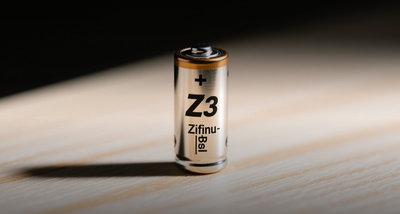
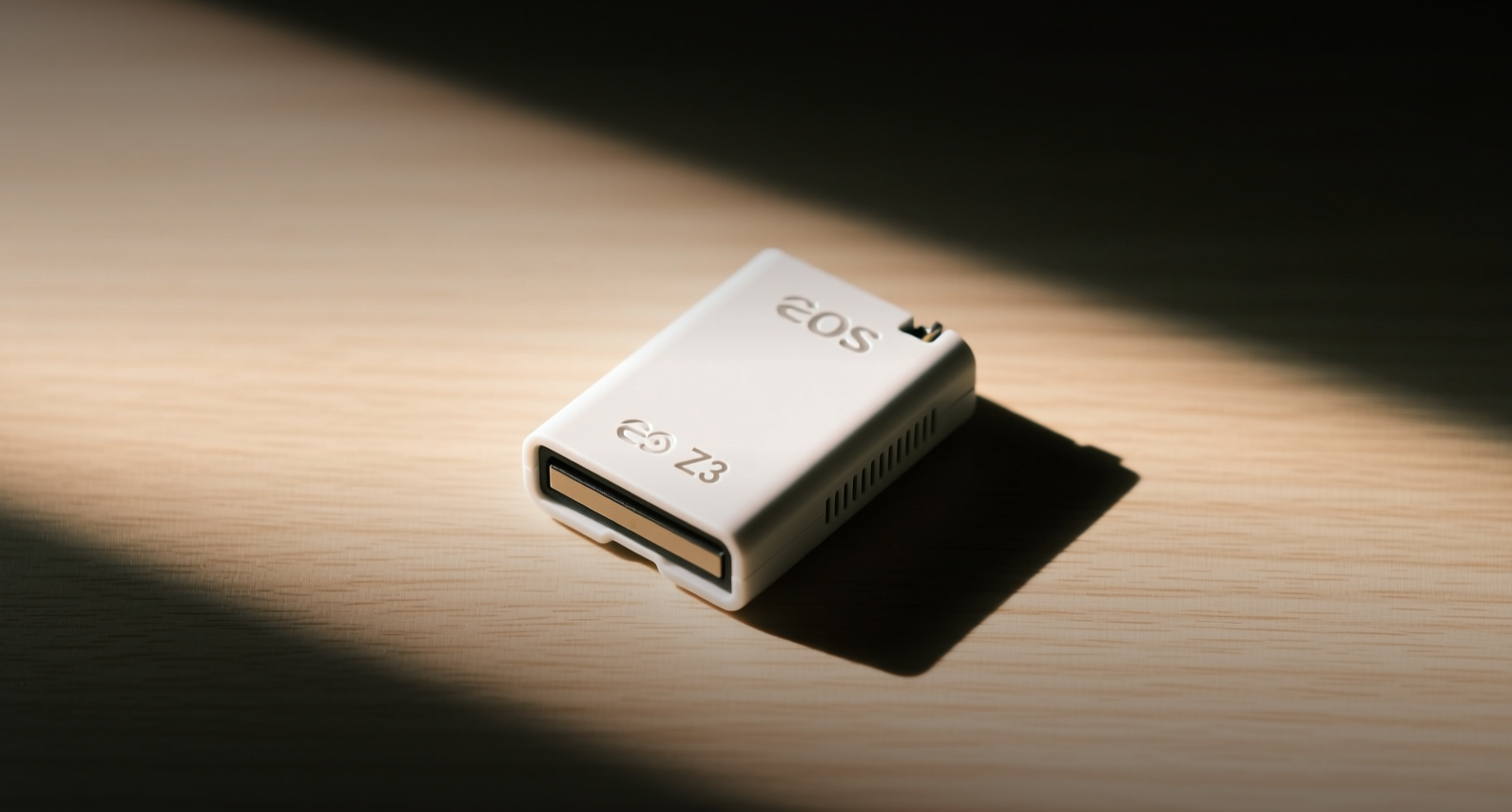
**Eos Energy Enterprises delivered a record quarter and a defense contract in the same week, signaling that American-made zinc batteries are moving from niche technology to a national security asset.** Eos Energy Enterprises (EOSE) reported preliminary second-quarter 2026 revenue of $68 million to $69 million, the highest quarterly total in company history and more than triple the prior-year period. First-half 2026 revenue already exceeded all of 2025, the company said. Backlog reached $807 million at June 30, up about 25% from the prior quarter, as new orders outpaced shipments. "This award validates the strategy we've built around American technology innovation, manufacturing and supply chains," Joe Mastrangelo, Eos chief executive officer, said of the Golden Dome contract. "Today, we're proving that America can still manufacture advanced technology at scale and deliver for our nation's most critical missions." The company collected about $78 million from customers during the quarter, exceeding reported revenue. Cash and restricted cash totaled roughly $364 million at quarter-end. Gross margin loss came in between 69% and 73%, reflecting the costs of ramping two commercial production lines across two manufacturing facilities. Battery Line 2 began commercial production in mid-June and has already shown higher yields and faster cycle time than Battery Line 1 in its early ramp. Eos completed site acceptance testing for 50% of its bipolar automation line, with full commissioning expected in July. The Golden Dome contract with the Department of War positions Eos's Z3 zinc-based long-duration energy storage technology as a mission-critical asset for national defense. President Donald Trump highlighted the award during Senator Dave McCormick's Defense and National Security Summit in Carlisle, Pennsylvania. The initial deployment will serve as a prototype at a critical installation, with the program structured to scale as defense needs evolve. Eos's system uses a non-flammable aqueous zinc chemistry with about 91% domestic content and is compliant with Section 842 NDAA and FEOC requirements — a compliance foundation the company spent the past year building. **The Frontier Pipeline and the Path to Scale** The Frontier Power USA partnership provides the clearest window into Eos's commercial trajectory. Frontier's 1.8 GWh of closed and selected projects now accounts for roughly 90% of its 2 GWh capacity reservation with Eos, directly linking the company's manufacturing ramp to a specific utility-scale project pipeline. Successful project conversion and financing — including Eos's own rights offering — sit at the center of both the catalyst path and the funding risk. Eos is targeting a 4 GWh annual run-rate capacity by year-end, with an eventual goal of 8 GWh of annual production capacity in Allegheny County, Pennsylvania. The Thorn Hill facility serves as the cornerstone of this expansion, adding automated manufacturing capacity for the Z3 platform and supporting the company's commitment to create 1,000 jobs across the region. **What This Means for Investors** Eos shares surged nearly 10% on the news before settling to a 4.6% gain, trading at $4.405. The stock still trades well below the $9.62 fair value implied by the company's narrative projections of $1.2 billion revenue and $151.2 million earnings by 2029. More optimistic analysts have modeled $1.8 billion revenue and $468.6 million earnings by that year, though persistent losses and ongoing capital needs remain the primary risk. The Golden Dome contract and record backlog strengthen the bull case, but the company must convert commercial momentum into positive margins before the investment thesis fully shifts from speculation to execution. This article is for informational purposes only and does not constitute investment advice.

**Eos Energy Enterprises won a Department of War contract to supply zinc-based long-duration battery storage for the Golden Dome missile defense system, marking one of the first deployments of commercial energy storage technology for US national security infrastructure.** Eos Energy Enterprises Inc. was awarded a Golden Dome for America contract by the Department of War to integrate its Z3 zinc-based long-duration energy storage systems into the nation's missile defense shield, the company said Wednesday. The initial deployment will be a prototype at a critical military installation, with the program structured to scale as defense needs evolve. "This award validates the strategy we've built around American technology innovation, manufacturing and supply chains," Joe Mastrangelo, chief executive officer of Eos, said in a statement. "Today, we're proving that America can still manufacture advanced technology at scale and deliver for our nation's most critical missions." President Donald Trump highlighted the award during Senator Dave McCormick's Defense and National Security Summit in Carlisle, Pennsylvania. "Eos in Pittsburgh just agreed to a multi-million-dollar partnership with the Department of War to build energy storage technology in support of our Golden Dome missile defense," Trump said. The Z3 system uses a non-flammable aqueous zinc chemistry with roughly 91 percent domestic content and a predominantly US-based supply chain, making it compliant with Section 842 of the National Defense Authorization Act and foreign entity-of-concern rules. Eos manufactures and assembles the systems at its Thorn Hill facility in the Pittsburgh region, where its second battery line recently entered commercial production. The company is targeting 8 gigawatt-hours of annual manufacturing capacity in Allegheny County and expects to create 1,000 jobs across the region. The Golden Dome initiative is a multi-billion-dollar national missile defense program. The Space Development Agency separately awarded roughly $1.75 billion this week for satellite-based missile tracking, with Colorado-based Sierra Space receiving $798 million and Florida-based L3Harris receiving $955 million to build 18 space vehicles each, according to a separate announcement. Eos' role focuses on ground-based energy resilience — ensuring that radar, command-and-control, and interceptor sites maintain uninterrupted power during extended operations. Long-duration energy storage, defined as four to 16-plus hours of discharge, has become a strategic capability for defense infrastructure because it can maintain operational readiness during grid outages or attacks on power infrastructure. Eos' zinc chemistry offers an alternative to lithium-ion batteries, which carry fire risks and rely on supply chains dominated by China. The company's system is classified as non-flammable and uses non-precious earth materials. "We spent the last year building the relationships, compliance foundation and technical proof points the Department of War requires," Michelle Buczkowski, chief administration officer at Eos, said. "This award reflects that work. Eos is ready to deliver for the Department's mission at scale." Senator Dave McCormick, who hosted the summit, said: "The Golden Dome should be built on American technology. Eos' technology will help secure the power infrastructure our military depends on, while creating good jobs right here in Pennsylvania." Eos separately disclosed preliminary second-quarter results, expecting record quarterly revenue and record backlog. The company's Battery Line 2 at Thorn Hill is now in commercial production, and it completed site acceptance testing for half of its bipolar automation line, with full commissioning expected this month. The contract positions Eos within a growing trend of defense agencies procuring commercial clean energy technology for mission-critical applications. As the US military expands its reliance on radar networks, satellite ground stations, and data centers, the need for resilient, long-duration backup power that does not depend on diesel supply chains is likely to increase. Eos shares trade on the Nasdaq under the ticker EOSE. This article is for informational purposes only and does not constitute investment advice.

Eos Energy Enterprises Inc. secured its first purchase order under a 2 GWh capacity reservation agreement with Frontier Power USA, advancing a 400 MWh zinc-based battery project in Texas that validates the manufacturer's domestic supply chain strategy. The Redbird project, a 100 MW / 400 MWh system using Eos' Z3 technology, will serve the Electric Reliability Council of Texas market with four-hour dispatchable storage for energy shifting and grid reliability, the company said Thursday. Developed by Bimergen Energy Corp. and previously by Bridgelink, the project was acquired by Frontier Power USA, which will provide 100 percent of the equity for construction. "Redbird did not happen overnight. It came from years of working with Bimergen to move projects under active development toward execution," said Nathan Kroeker, chief commercial officer at Eos. "What FPUSA adds is the capital to turn opportunities into operating assets." The purchase order converts part of a 2 GWh firm capacity reservation agreement between Eos and FPUSA, a platform backed by Cerberus Capital Management that integrates development, manufacturing capacity, institutional capital and insured performance. With this order, Eos has now fulfilled nearly 50 percent of its 1 GWh master supply agreement with Bridgelink while advancing an additional 12 GWh development pipeline across ERCOT, PJM, CAISO and MISO markets. "We developed Redbird to address growing demand for dispatchable storage in ERCOT and selected Eos because Z3 is purpose-built for the multi-hour applications the market requires," said Cole Johnson, co-chief executive officer at Bimergen Energy. The order arrives as Eos ramps production at its Thorn Hill facility in Marshall Township, Pennsylvania. The company commissioned a second battery line this month after completing site acceptance testing, targeting 4 GWh of annual production capacity by the end of 2026. Eos said it surpassed its full-year 2025 output in the first 164 days of 2026, with lessons from the first line incorporated into the second facility's design. "We took the lessons learned from commissioning and operating Line 1 and incorporated them directly into the design of this facility and production line," said John Mahaz, chief operating officer at Eos. "The result is a more efficient manufacturing environment with better flow and a stronger foundation for future expansion." Eos' Z3 battery uses a zinc-based aqueous electrolyte with non-degradable bipolar electrodes and fully sealed polymer casing, targeting 4- to 16-hour discharge applications with a claimed operational life of at least 25 years. The technology competes with lithium-ion systems from Tesla Inc. and Fluence Energy Inc. for long-duration storage contracts, though zinc-based chemistries offer advantages in safety and domestic material sourcing since zinc is abundant and non-precious. The UK market is also opening for Eos. Frontier Power UK has acquired two long-duration storage projects under development in Scotland expected to use approximately 2.8 GWh of Eos Z3 Idensity battery systems. A decision on whether those projects will secure cap-and-floor support from the UK government is expected in summer 2026. "FPUSA was created to bridge the gap between project development and execution," said Aaron Maczonis, managing director at Cerberus Capital Management. "FPUSA is building relationships with leading developers, assembling a portfolio of high-quality projects, and providing access to the capital needed to bring them online." Eos shares, which trade on the Nasdaq under the ticker EOSE, have climbed this week alongside news of the manufacturing expansion and the FPUSA order. The company's ability to convert its 12 GWh pipeline into revenue-generating purchase orders will determine whether the stock can sustain its recent momentum, as investors weigh the zinc battery maker's production scale-up against execution risk in a market dominated by lithium-ion incumbents. This article is for informational purposes only and does not constitute investment advice.

Eos Energy Enterprises Inc. started commercial production at its second Pennsylvania battery plant and detailed a rights offering for its Frontier Power joint venture, advancing its push to reach 4 GWh of annual manufacturing capacity by year-end. "Battery Line 2 demonstrates our ability to continuously improve as we scale," John Mahaz, chief operating officer of Eos, said. "The result is a more efficient manufacturing environment with better flow and a stronger foundation for future expansion." The Thorn Hill facility's new line reduces raw material travel by 86% and shortens production length by 40% compared with Line 1, the company said. Line 1 surpassed its full-year 2025 production in the first 164 days of 2026. The rights offering supports Frontier Power USA's 2 GWh capacity reservation agreement, which in May led to a 480 MWh battery project acquisition in Texas from Bimergen Energy. Eos shares rose as investors welcomed the financing clarity and manufacturing progress. The company targets full production on Line 2 by the fourth quarter of 2026, with the new facility providing a replicable blueprint for future capacity additions. Eos trades on the Nasdaq under the ticker EOSE. **Manufacturing Replication Proves Scalable at Thorn Hill** The company incorporated lessons from commissioning Line 1 directly into the design of Line 2, using single-piece flow architecture and advanced pick-and-place gantry systems. Production operators are already onsite at Thorn Hill, with subassemblies coming online in the early third quarter and full production targeted for the fourth quarter of 2026. The new layout was engineered to optimize manufacturing flow and productivity. Compared with Battery Line 1, the design reduces raw material travel by 86% and shortens overall production line length by 40%, improving material handling and supporting higher operating efficiency. The company said the successful replication of its manufacturing process at a second facility reduces execution risk for future expansion. Eos's zinc-based battery technology, which it calls Znyth, uses non-precious earth components and is designed for long-duration energy storage applications of 4 to 16-plus hours. The company positions its non-flammable chemistry as a safer alternative to lithium-ion systems for utility-scale and microgrid applications. The technology competes directly with iron-air batteries from Form Energy and iron-flow systems from ESS Inc. in the emerging LDES market. **Frontier JV Drives 2 GWh Project Pipeline** Frontier Power USA's 2 GWh capacity reservation agreement with Eos is beginning to convert into tangible projects. In May, FPUSA acquired a 480 MWh battery project portfolio in Texas from Bimergen Energy and signed a strategic framework agreement with Stella Energy Solutions to advance a 2 GWh pipeline built around Eos technology. In the United Kingdom, Frontier Power Energy Holding Ltd acquired rights to the Ayr and Busby projects in Scotland, which are expected to use approximately 2.8 GWh of Eos Z3 Indensity systems under an existing framework agreement announced in April 2025. While subject to development milestones and closing conditions, these opportunities demonstrate the demand that Line 2 was built to support. The rights offering provides the capital structure to fund this pipeline. The structured raise strengthens Eos's balance sheet as it transitions from proving its manufacturing model to scaling production for commercial deliveries. **Investment Angle: Execution Risk Reduced, Pipeline Visible** The dual catalysts — manufacturing scale-up and project pipeline financing — address two of the biggest investor concerns for long-duration energy storage companies: production execution and demand conversion. Eos's ability to replicate its manufacturing process at a second facility reduces execution risk for future expansion, while the Frontier JV provides a visible path to monetizing its contracted backlog. The U.S. Department of Energy has identified a need for 225 GW of long-duration energy storage capacity by 2050 to support grid decarbonization, a target that would require massive manufacturing scale-up across the sector. Eos's progress toward 4 GWh of annual capacity positions it to capture a share of that demand, though the company faces competition from established lithium-ion providers and emerging LDES rivals. This article is for informational purposes only and does not constitute investment advice.