Report
No Data Yet

The Dow Jones Industrial Average set a new all-time high for the third consecutive session before reversing to close 0.3% lower at 52,834. "The intraday record shows the market's underlying strength, but profit-taking in high-flying chip names pulled the broader market back," said Sarah Lin, equity market analyst at Edgen. The S&P 500 fell 0.5% and the Nasdaq Composite dropped 1.2%. The Dow had risen as much as 0.5% in morning trading, crossing the 53,100 level for the first time, before giving up gains. Leading the Dow's advance were 3M, Amgen, Procter & Gamble, Google parent Alphabet, and Apple. The chip selloff was the day's dominant drag. Samsung Electronics dropped 7% in Seoul trading despite reporting second-quarter revenue of roughly 171 trillion Korean won ($112.7 billion) and operating profit of about 89.4 trillion won ($59 billion), both above consensus. The weakness spilled into US-listed peers: Intel fell 6.5%, Advanced Micro Devices dropped more than 3%, and Marvell Technology declined 6.5%. The VanEck Semiconductor ETF lost 3%. Energy was the S&P 500's best-performing sector, gaining more than 3%, as oil prices surged after the Treasury Department revoked a waiver allowing Iran to sell its crude. West Texas Intermediate futures jumped 4.9% to $71.90 a barrel, while Brent crude rose 5.1% to $75.70. Occidental Petroleum, Devon Energy, and APA each gained between 5% and 6%. The 10-year Treasury yield rose about seven basis points to 4.54%, while the US Dollar Index edged up 0.2% to 101.08. Gold futures fell 1.2% to $4,115 an ounce. Bitcoin traded near $63,700, little changed over the past 24 hours. In other single-stock moves, SpaceX shares fell about 7% on their first day as a member of the Nasdaq 100 index. Caterpillar dropped nearly 5% after announcing the acquisition of Skycatch, a mining data analytics firm, though the stock remains up more than 60% year to date. Walmart rose more than 1% after announcing thousands of price cuts across categories. Rivian sank 11% after the electric-vehicle maker announced a public offering of about 75 million shares. The reversal from intraday highs leaves the Dow up about 14% year to date, while the S&P 500 has gained roughly 18%. Investors now turn to the start of second-quarter earnings season next week, with big banks including JPMorgan Chase and Wells Fargo scheduled to report. This article is for informational purposes only and does not constitute investment advice.

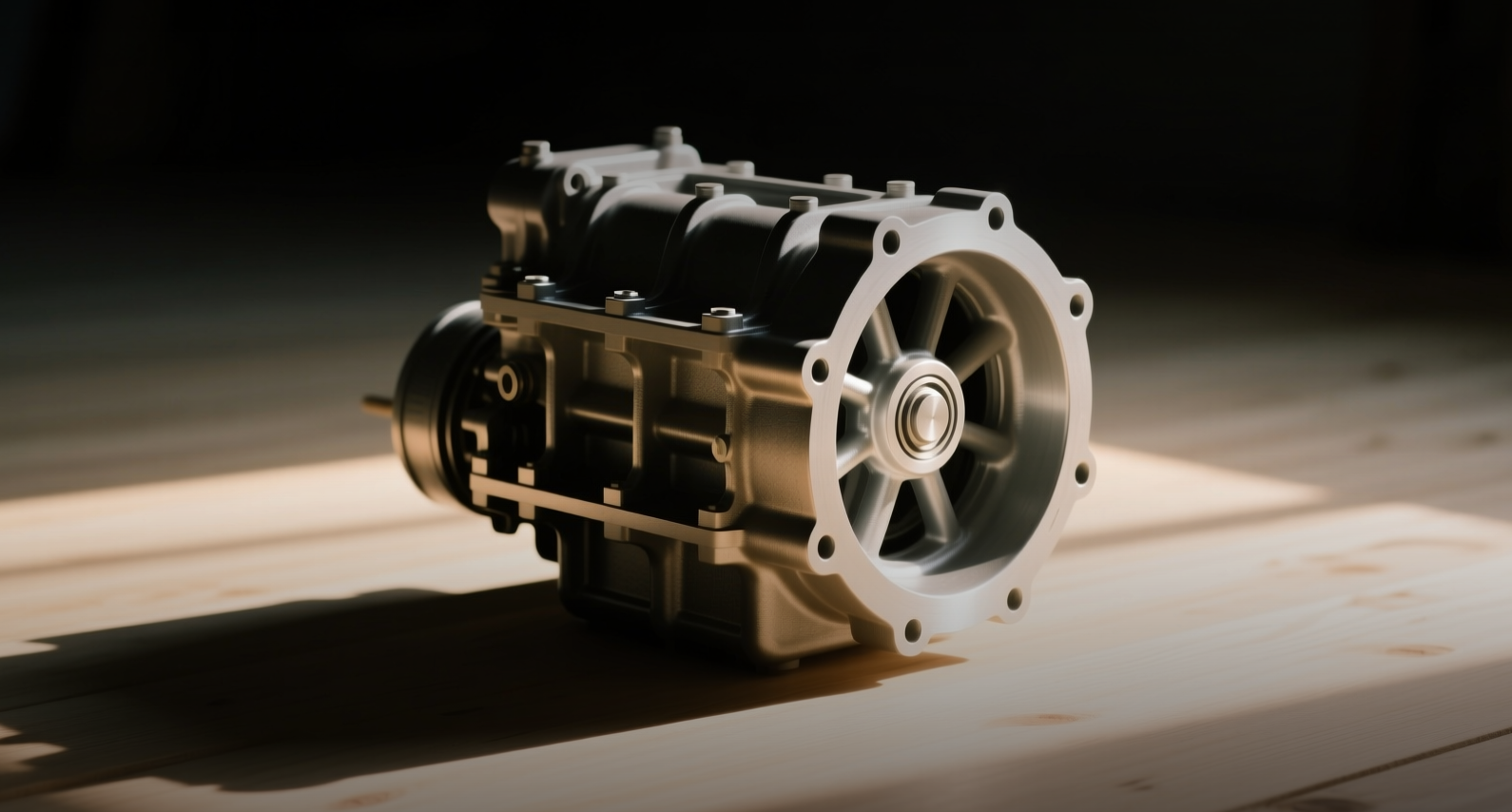
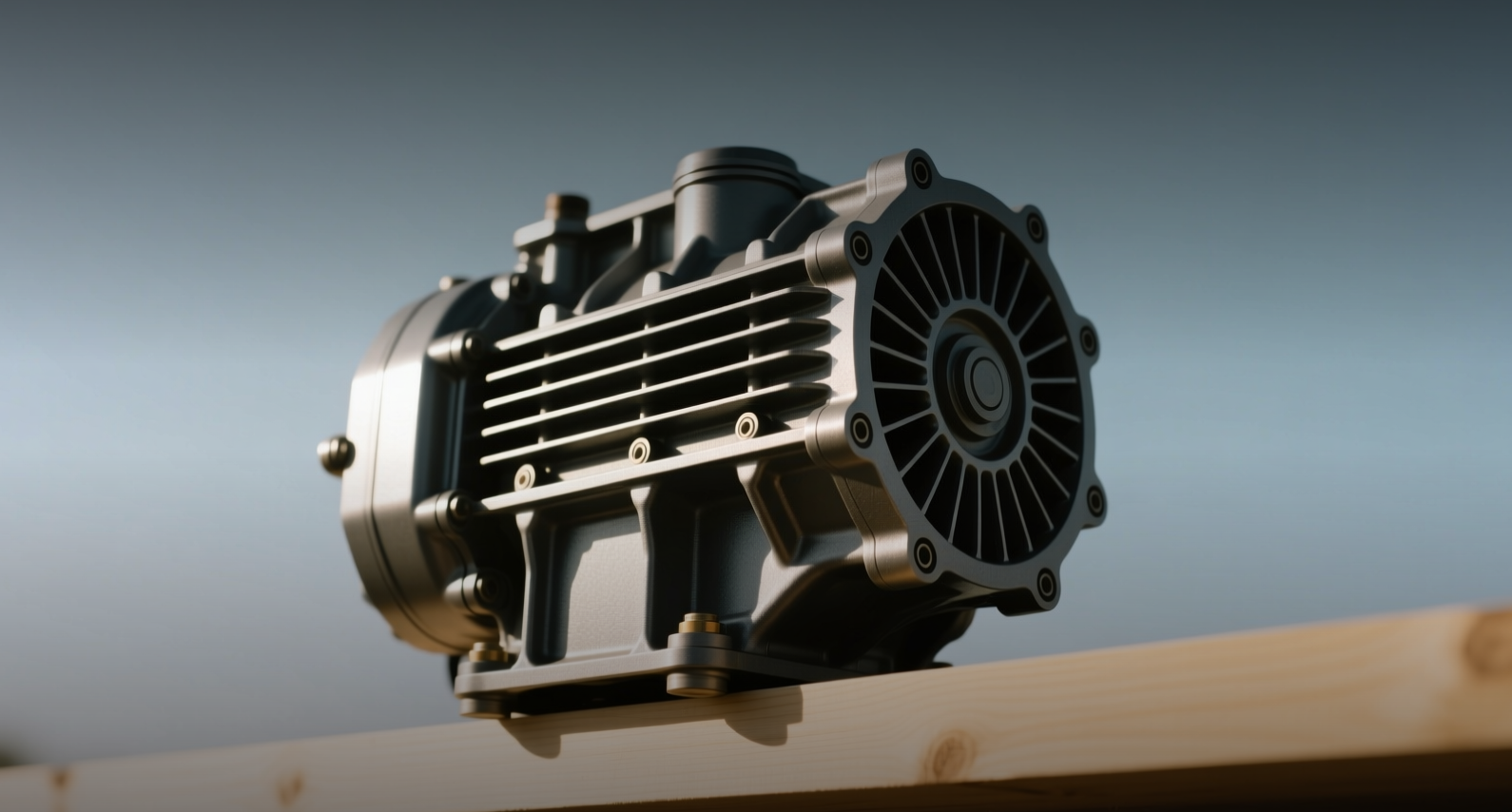
**Hyperscalers are turning to rows of small natural-gas engines to power AI data centers, bypassing grid bottlenecks that delay new capacity by years.** Reciprocating engine makers are racing to expand production as hyperscale data centers turn to off-grid natural-gas power to bypass multiyear grid connection delays, with Innio reporting data center sales more than doubled in the first quarter. "The shift from 'what's available' to 'what's best' is already underway among data center operators," Musfika Mishi, an analyst at BloombergNEF, said. "Reciprocating engines are gaining more traction because they can be delivered in one to two years versus seven to eight for heavy-duty turbines." Innio's Jenbacher engines are the most popular choice, with 8.3 GW of announced data center projects planning to use them, according to BloombergNEF. Vantage Data Centers alone plans 620 units totaling 2.58 GW at its Stargate Frontier campus in Texas. Rolls-Royce and Caterpillar follow with 3.7 GW and 3.6 GW respectively. Caterpillar's order backlog of reciprocating engines rose more than 3.5 times, while Rolls-Royce data center revenue increased 35% in its last quarter of 2025. An engine-based off-grid system costs about $103 per MWh over 30 years, cheaper than turbines at $106 to $109.50 per MWh and fuel cells at $140 per MWh, BloombergNEF estimates. Innio, which went public in June, is the most leveraged to the trend — data centers accounted for 61% of its equipment orders in the 12 months through the first quarter. Its shares have risen 46% from the IPO price, with an enterprise value of roughly 34 times forward EBITDA. ## The Manufacturing Race Innio plans to triple its manufacturing capacity to about 10 GW by 2030, according to RBC Capital Markets. Caterpillar said it would increase turbine manufacturing by 2.5 times and large reciprocating engine capacity to three times its 2024 levels. The expansion comes as lead times for engines range from one to two years, compared with up to three years for aeroderivative turbines and seven to eight years for heavy-duty utility-scale turbines. The engines have advantages beyond availability. They offer quicker response times than turbines, making them suitable for data centers with large swings in power usage, and require less battery storage on site. They also lose less efficiency in hot climates such as Texas, where many new data centers are being built because of natural gas access, and have no heavy water requirements for cooling. ## Overbuild Risk Looms The biggest question hanging over the sector is whether manufacturers are overbuilding. About 15 GW of engine capacity is currently dedicated to the power sector, but manufacturers across all engine types — including marine and heavy-duty uses — have the capacity to produce 250 GW, according to Thunder Said Energy. Repurposing some of that capacity for data centers would require only minor investment. A moderate overbuild may be manageable. In an oversupplied market, data center customers would likely shift from buying based on availability to prioritizing the best technology, according to RBC. Innio's Jenbacher engines are considered the best in class, with the fastest ramp times and the largest high-speed engine capacity at up to 5 MW per unit, sector analysts said. Diversified manufacturers such as Caterpillar, Rolls-Royce and Wartsila could redirect engine production to their traditional customers if data center orders slow. Innio trades at a premium to diversified peers — Caterpillar and Rolls-Royce both have forward EBITDA multiples below 30 times — reflecting its pure-play exposure to data center power demand. But the valuation also leaves less room for error if the manufacturing buildout overshoots demand. For investors, the key question is whether the current capacity expansion will match the pace of AI infrastructure buildout, or repeat the boom-and-bust cycle that scarred power equipment makers in the early 2000s. This article is for informational purposes only and does not constitute investment advice.

Michael Burry shorted Caterpillar at $1,060.98, adding the construction-equipment maker to a list of bearish wagers against stocks he says have been inflated by the artificial intelligence boom. "The proximate cause of today's rally is big spending announced out of Korea. Well, I see that as the beginning of the end," Burry wrote Tuesday on his SubStack, referring to Samsung Electronics and SK Hynix's plan to invest more than $500 billion in a new chipmaking hub in South Korea. Burry also disclosed new short positions in Tesla, Applied Materials and the iShares Semiconductor ETF (SOXX), alongside an existing bet against Nvidia. Caterpillar shares surged 86% in the first half of 2026 as investors embraced the company as a proxy for AI infrastructure buildout. Burry said the stock's price-to-sales ratio had climbed to the highest level in at least three decades. The SOXX is trading about 65% above its 200-day moving average, a level Burry said was reached only during the dot-com bubble. The investor, who famously profited from betting against subprime mortgages before the 2008 financial crisis, has been an outspoken critic of AI-related stock valuations. His November 2025 short on Palantir has paid off, with shares down about 40% since he announced the position. Nvidia shares are trading about 5% lower. Burry set a price target of $416.22 for his Tesla short. Samsung and SK Hynix, which together produce about two-thirds of the world's memory chips, said they will invest 800 trillion won ($518 billion) to build two fabrication plants each in South Korea's southwest region. The companies have reported record profits in recent months as AI demand for high-bandwidth memory chips surged. Burry's SOXX put options pay off in March if the semiconductor index drops about a third from its peak. Burry said he had never shorted Caterpillar before and had always done well on the long side. "Caterpillar jumped out at me," he wrote. The bets signal Burry expects the massive capital spending on AI infrastructure to eventually disappoint. His next catalyst will come in March, when the SOXX options expire and investors assess whether the Korean chip hub investment delivers returns. This article is for informational purposes only and does not constitute investment advice.

Data center operators are turning to small-engine generators from companies including Generac Holdings Inc. and Cummins Inc. as grid bottlenecks threaten to stall a buildout that will require 151,734 MW of US capacity by 2030, more than double the 62,242 MW online in March 2026, according to S&P Global Market Intelligence. "The most significant barrier to data center growth is not a shortage of power generation but a lack of transmission and substation capacity to deliver it," S&P Global Market Intelligence said in a report. On-site gas-fired generation is expected to cover 25% of new data center demand by 2030. PJM Interconnection, the grid operator covering 13 states and 65 million people, has seen capacity prices surge more than 1,000% since 2024 as data center connection requests overwhelm supply. Members voted Tuesday to advance a procurement plan that would begin Sept. 10, though the board has yet to finalize terms. Hyperscalers including Amazon.com Inc., Alphabet Inc., Meta Platforms Inc. and Microsoft Corp. have quintupled contracted carbon-free capacity since 2022, expanding beyond renewables to nuclear and on-site power for reliability. For small-engine manufacturers, the structural demand represents a new growth vertical. Generac and Cummins, traditionally tied to residential backup and industrial power markets, now face a multiyear procurement cycle from data center developers racing to secure power before capacity is booked. Caterpillar Inc., another industrial power player, also stands to benefit as the market for off-grid data center generation expands. **Grid Reality Bites** The bottleneck is transmission infrastructure, not power generation. Developers are shifting to less-congested grid areas and deploying on-site generation to bypass interconnection queues that can stretch five years or more. PJM's non-binding vote Tuesday advanced a proposal allowing data centers to either pay for new power supplies or agree to curtail usage during peak stress — a structure designed to prevent broader blackouts while accommodating demand growth. **The Investment Case** For investors, the question is whether the off-grid power opportunity is priced in. Generac shares have gained this year as data center orders emerged, though the company still derives the majority of revenue from residential backup power. Cummins' industrial power segment could see a similar tailwind as data center operators lock in multiyear supply agreements. The 25% of new demand expected to be met by on-site gas generation by 2030 represents roughly 22,000 MW of addressable capacity — a figure that could drive significant revenue growth for industrial power companies if grid constraints persist. This article is for informational purposes only and does not constitute investment advice.

Michael Burry shorted Caterpillar Inc. for the first time alongside Tesla Inc. and Nvidia Corp., calling the AI and semiconductor rally overextended. "The Philadelphia Semiconductor Index is trading more than 65% above its 200-day moving average, a stretch seen only once before — in 2000," Burry wrote in his paid "Cassandra Unchained" Substack post Tuesday. He added that the index's price-to-sales ratio sits above 16 times, a level that stripping out Nvidia "barely dents." Burry disclosed the positions in a quarter-end sweep against stocks he considers overvalued. He shorted Caterpillar at $1,060.98, Nvidia at $198.09, the iShares Semiconductor ETF (SOXX) at $642.80, and Applied Materials Inc. at $729.40. Tesla came last in the list, shorted at $416.22 after the stock jumped roughly 10% in Tuesday's session. He did not disclose position sizes, share counts, or options structures for any of the five bets. The disclosure marks Burry's most concentrated bearish wager since shutting down his hedge fund in late 2025. His broader thesis — that AI and semiconductor stocks have priced in perfection — carries weight with valuation metrics stretched to historic extremes, though his track record on Tesla specifically has been mixed. The SOXX puts were rolled from January 2027 to March 2027 with strikes moved to the low-to-mid $400s, while he maintained QQQ January puts. **Caterpillar enters Burry's crosshairs for the first time** The Caterpillar short is the most notable addition. The industrial bellwether, whose performance tracks global infrastructure investment, mining, and energy capital expenditure, has nearly doubled in the AI-driven rally of 2026. Burry's bearish stance may reflect a view that the industrial cycle is peaking as global economic growth slows, though his Substack post did not specify a thesis for the Caterpillar position specifically. **Tesla: a familiar target with an unfamiliar framing** Burry's Tesla short comes with important caveats. He shorted into a 10% rally rather than chasing a falling stock, writing: "Happy it jumped back to this level." The position size is unknown, and his history with Tesla shorts has been overstated before. A 2021 Scion Asset Management 13F filing showed put options tied to 800,100 Tesla shares, which much of the press reported as a $534 million bet — a figure that represented notional value, not capital at risk. He covered that position by November 2021. Tesla trades around 295 times earnings on declining profits, with annual dilution of about 3.6% and a trillion-dollar pay package layered on top. Still, Burry himself has acknowledged that a sound valuation argument does not automatically make a good short. **The semiconductor thesis is the main event** The bulk of Tuesday's note focused on semiconductors, not individual stocks. Burry argued the SOX index's 65% deviation above its 200-day moving average and price-to-sales ratio above 16 times represent a historic extreme. He rolled his SOXX puts forward and raised strikes, signaling conviction that a drawdown is approaching. "It is only a matter of time now," he wrote. Burry's latest disclosures paint a picture of an investor betting against crowded AI trades while going long beaten-down names — he recently bought December 2028 LEAP call options on Microsoft Corp. at a $700 strike. The pair trade reflects a view that the AI trade has bifurcated: the infrastructure winners are overbought, while established franchises have been oversold. Investors will watch whether Burry's semiconductor thesis plays out as the sector enters second-half earnings season. *This article is for informational purposes only and does not constitute investment advice.*

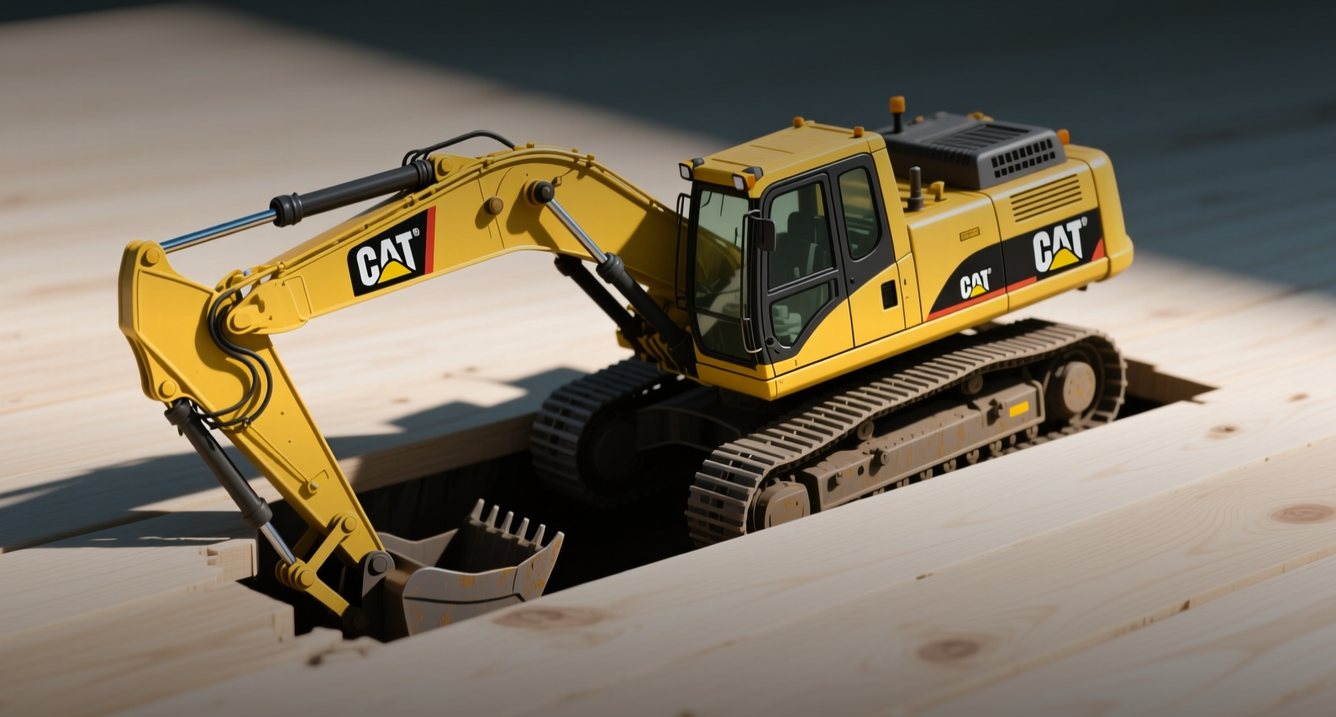
**Caterpillar shares surged to an all-time high above $990 as a preliminary US-Iran peace agreement drove a broad market rally and reinforced the AI data center demand thesis powering the industrial giant's growth.** Caterpillar Inc. rose 3% to a record above $990, leading the Dow Jones Industrial Average higher after the US and Iran agreed to a preliminary 60-day ceasefire. "The AI infrastructure buildout is the invisible layer of the tech stack, and Caterpillar's engines are the foundation," Chief Executive Officer Joe Creed said on the company's most recent earnings call. The stock added about 131 points to the Dow, which gained 1.4%. The S&P 500 rose 1.9% while the Nasdaq Composite climbed 3%. The rally erased roughly half of last Wednesday's 5.9% decline triggered by geopolitical uncertainty. West Texas Intermediate crude fell to around $80 a barrel after President Donald Trump said the Strait of Hormuz would reopen, with a signing ceremony expected Friday in Geneva. Caterpillar's surge reflects two converging forces: a de-escalation in the Middle East that lowers the oil-cost headwind for industrial activity, and the company's deepening role in the AI economy. Power generation revenue jumped 41% to $2.82 billion last quarter, almost entirely on engines sold to data centers, while the total backlog hit a record, up 79% year over year. Management has raised its 2026 revenue outlook and now expects power generation revenue to more than triple by 2030. The stock has gained 73% year to date and 177% over the past 12 months, making it the most influential component of the price-weighted Dow. At roughly $990, Caterpillar's share price now dwarfs Apple's $298, meaning a 10% move in CAT moves the Dow roughly twice as much as an equivalent move in the world's largest company. The rally has been driven by hyperscaler AI capital spending. Microsoft, Amazon, Alphabet and Meta together are on track to spend more than $700 billion on AI infrastructure this cycle. Creed has described the opportunity as providing "the invisible layer of the tech stack," with large engines and turbines providing both backup and 24/7 prime power for data centers. A gas engine running around the clock generates roughly 40 times the lifetime services revenue of a standby diesel unit. The stock's technical setup remains constructive. The 50-day moving average at $873 has held as support on every notable pullback this year. The relative strength index at 65 suggests momentum is healthy without being overextended. The $1,000 level represents the next major test; a breakout on volume would confirm the continuation of one of the strongest uptrends in the market. On the fundamental side, Caterpillar raised its quarterly dividend 8% to $1.63 on June 10, extending its Dividend Aristocrat streak to 32 consecutive years. Adjusted earnings per share jumped 30% in the first quarter, even as segment margins absorbed a 270-basis-point tariff hit. The key risk to monitor is the sustainability of hyperscaler capital spending. The next two earnings cycles from Microsoft, Amazon, Alphabet and Meta, due in late July and late October, will provide the clearest signal on whether the current pace of AI infrastructure investment can be maintained. This article is for informational purposes only and does not constitute investment advice.

Caterpillar shares climbed 2.1% to a record $970.99, extending a winning streak to five sessions as options data flashed a bullish signal. "This marks the ninth time in three years the equity's 10-day put/call volume ratio crossed 1.0 and hit the 90th percentile," said Rocky White, senior quantitative analyst at Schaeffer's Investment Research. "CAT was higher one month later 100% of the time after these signals, with an average 11.3% return." The stock's 10-day put/call volume ratio stood at 1.72, ranking in the 92nd annual percentile, while its Schaeffer's put/call open interest ratio of 1.37 ranked above 84% of readings from the past year. Caterpillar has gained 68% in 2026 alone, with reliable technical support from its 80-day moving average. The shares carry a Schaeffer's Volatility Scorecard of 84 out of 100, indicating the stock has consistently realized higher-than-expected volatility. Analysts remain split on the industrial giant, with 10 of 24 covering firms maintaining a "hold" rating, leaving room for potential upgrades. J.P. Morgan Securities recently raised its price target to $1,165, implying roughly 20% upside from current levels. A move matching the historical signal's average return would put Caterpillar at approximately $1,080 — a new record. The rally reflects growing investor conviction in Caterpillar's data center power business, where Power Generation revenue rose 41 percent year over year to $2.82 billion in the first quarter. Chief Executive Officer Joe Creed plans to triple large reciprocating engine capacity to roughly 15 gigawatts annually, backed by a record $63 billion backlog that surged 79 percent from a year earlier. First-quarter earnings of $5.54 per share beat the $4.64 consensus by 19.3 percent, on revenue of $17.4 billion that grew 22.2 percent. Risks remain. Caterpillar guided for $2.2 billion to $2.4 billion in full-year 2026 tariff costs, with about $700 million expected in the second quarter alone. Resource Industries profit fell 39 percent in the first quarter, with segment margin contracting 700 basis points to 10 percent. Three group presidents sold large blocks of common stock near $927 in May, according to regulatory filings. The stock trades at 36 times forward earnings, a premium multiple for a cyclical industrial. The consensus 12-month analyst target of $920 implies roughly 1 percent downside from current levels, though J.P. Morgan's $1,165 target and the historical options signal suggest the bull case may have further room to run. This article is for informational purposes only and does not constitute investment advice.