Report
No Data Yet

**Optical communication stocks fell more than 3% in US pre-market trading Monday, joining a broader selloff that erased billions from AI and semiconductor shares.** Coherent, Lumentum, Corning and Credo each fell more than 3% in pre-market trading, according to market data. The declines hit a sector that had been among the best performers this year, with Coherent shares more than doubling over the past 12 months on surging demand for optical transceivers — the fiber-optic components that connect GPUs in AI data centers. The selloff extended across the semiconductor complex. SK Hynix's US-listed shares sank 10.4%, while Micron Technology dropped 6.6%, according to pre-market data. Nvidia fell 2.16%, and storage makers SanDisk, Seagate Technology and Western Digital each lost more than 5%. Among chip equipment makers, Applied Materials fell 4.72% and Lam Research dropped 4.31%. CPO-related stocks — tied to co-packaged optics, a technology that integrates optical components directly with switch chips to reduce power consumption in AI data centers — also moved lower. Lumentum fell 4.24%, while Applied Optoelectronics dropped 4.01%, extending a pullback from recent highs. The pullback comes after a blistering rally in optical stocks this year. Coherent's datacenter and communications segment generated $1.36 billion in revenue last quarter, up 41% from a year earlier, driven by demand for 800G transceivers used in AI clusters. The company received a $2 billion investment from Nvidia tied to US manufacturing and was added to the S&P 500 in June. The optical component supply chain has been one of the tightest bottlenecks in AI infrastructure. Hyperscalers including Microsoft, Amazon and Google have been ordering 800G transceivers as fast as manufacturers can produce them, pushing contract manufacturers like Fabrinet to nearly double capital spending to $64 million last quarter to meet demand. The transition to 1.6T transceivers — the next generation of optical interconnects — is expected to accelerate through 2027, creating a multiyear tailwind for the sector. The competitive dynamics in the optical sector have shifted dramatically this year. Coherent has emerged as the dominant merchant supplier of high-speed transceivers, while smaller players like Applied Optoelectronics and Lumentum have carved out positions in specific segments. Credo Technology, which specializes in high-speed connectivity solutions, has benefited from the same demand wave. Monday's coordinated decline suggests the market is treating the sector as a single trade, making individual stock selection less relevant during broad risk-off moves. For investors, the question is whether the AI infrastructure trade is experiencing a healthy pullback or the beginning of a more sustained rotation. Optical component makers have been among the biggest beneficiaries of hyperscaler capital spending, with Coherent, Lumentum and Applied Optoelectronics each posting triple-digit percentage gains over the past year. Coherent trades at roughly 38 times forward earnings, a premium that reflects its leadership in the optical transceiver market but also leaves it vulnerable to sentiment shifts. Any sustained pullback in Nvidia's shares could ripple through the entire optical supply chain that depends on its GPU shipments, making Monday's pre-market action a key signal for investors watching the AI trade. This article is for informational purposes only and does not constitute investment advice.
**Semiconductor stocks surged Thursday, tracking an 8.8% rally in Chinese chip shares fueled by Changxin Memory Technologies' $4.34 billion Shanghai IPO plans.** US chipmakers rebounded sharply in premarket trading, recovering some of the ground lost after Samsung Electronics' forecast-beating results triggered a sector-wide selloff earlier this week. Micron Technology, Intel, Coherent and Marvell Technology each climbed more than 3% by 5:41 a.m. ET, while Applied Materials rose 3.8% and Advanced Micro Devices gained 2.2%. "The China semiconductor rally is providing a much-needed bid after the Samsung profit-taking shook confidence," said Rachel Kim, semiconductor analyst at Edgen. "Changxin's IPO is a reminder that memory demand remains structurally strong, even if near-term positioning got overextended." The CSI Semiconductor Index closed up 8.8% after Changxin Memory Technologies, the world's fourth-largest DRAM maker with about 7.7% global market share, said it would begin book-building July 15 for a Shanghai IPO aiming to raise 29.5 billion yuan, or roughly $4.34 billion. The move reignited enthusiasm for chip stocks across Asia and spilled into US premarket trading, with South Korea's Kospi closing 0.6% higher as SK Hynix rose 5.3% and Samsung gained 0.8%. The rebound comes just two days after a brutal selloff sparked by Samsung's preliminary second-quarter results. The South Korean giant reported operating profit of 89.4 trillion won ($58.44 billion) — nearly 19 times higher than a year earlier and exceeding the LSEG SmartEstimate of 87.3 trillion won. Revenue jumped 129% to 171 trillion won. Yet Samsung shares fell sharply as investors locked in profits following the stock's red-hot rally, raising broader questions about whether the artificial-intelligence-driven demand that has powered the chip sector's surge can sustain elevated pricing. **The Memory Price Question** Memory chip prices have risen sharply over the past year, and the Samsung selloff highlighted growing investor anxiety about demand durability. The PHLX semiconductor index remains down about 15% from its record high in late June, while Micron has dropped more than 20% since hitting its own peak on June 25. Despite the pullback, the index is still up roughly 75% year-to-date, and Micron has more than doubled. The so-called hyperscalers — Microsoft, Meta Platforms and Alphabet — are under increasing scrutiny as earnings season approaches. Their capital expenditure plans for AI infrastructure directly determine revenue visibility for chipmakers. A slowdown in spending growth could pressure the lofty valuations that semiconductor stocks command. Intel, which reports second-quarter results on July 23, guided for non-GAAP earnings per share of $0.20 on revenue of $14.3 billion at the midpoint — an 11% year-over-year increase and a sharp turnaround from the $0.10 per-share loss it posted a year earlier. Analysts expect full-year 2026 EPS of $1.09, a 161% surge from 2025. **What's at Stake for Investors** The semiconductor sector has added nearly half of the S&P 500's market value gains this year, according to JonesTrading data. But the speed of the rally has fueled debate about sustainability. Intel trades at 904 times trailing earnings, though its forward multiple of 137 reflects expectations of a dramatic earnings recovery. On Stocktwits, retail sentiment was neutral on Micron and the Roundhill Memory ETF, while bearish on Intel and AMD — a cautious posture ahead of earnings. The key question for the weeks ahead is whether the China-driven rebound has legs or represents a dead-cat bounce before another leg lower. Changxin's IPO will test investor appetite for memory exposure at a moment when the sector's valuation has rarely been higher. If the offering prices successfully, it could validate the bull case that AI-driven memory demand has further to run. If it stumbles, the selloff that began with Samsung may not be over. This article is for informational purposes only and does not constitute investment advice.
**The semiconductor industry lost $1.3 trillion in market value this week as investors questioned whether AI infrastructure spending can justify stretched valuations.** A record $58 billion quarterly profit from Samsung Electronics wasn't enough to satisfy markets that have priced two years of AI-driven growth into semiconductor stocks, triggering a sector-wide selloff that erased $1.3 trillion in market value. "Expectations are up, and fundamentals are struggling to meet these high sky-high demands," FBB Capital's Mike Bailey told CNBC, capturing the dynamic that turned Samsung's 19-fold profit surge into a 7% stock decline in Seoul. The Philadelphia Semiconductor Index fell 10.8%, while the VanEck Semiconductor ETF dropped 13% over 10 sessions and the iShares Semiconductor ETF lost 8% in a single week. Intel led U.S. decliners with a 21% plunge, followed by Micron at minus 22%, Applied Materials at minus 10% and AMD at minus 8%. Samsung shares slid 7% in Seoul even after reporting preliminary second-quarter operating profit of about $58.4 billion, a 1,810% surge from a year earlier that nonetheless missed the elevated bar set by a 150% year-to-date rally. The selloff reflects a gathering debate over whether hyperscalers' 67% jump in AI capital expenditures to $650 billion can generate sufficient returns, especially as enterprise customers push back on AI service pricing and Meta begins renting out spare AI computing capacity. The answer will start taking shape July 16 when TSMC reports, followed by Intel on July 23. The valuation math has become the central tension. AMD trades at 208 times earnings, leaving virtually no room for disappointment. Nvidia's forward price-to-earnings ratio of 21.7x sits well below its five-year average of 72x, according to Goldman Sachs, but the stock's 12-month price target still implies 56% upside. Micron's implied upside is 66%, per Investing.com consensus estimates. Intel bucks the trend — it trades 8% above its average price target, according to Zacks. Bank of America's Bubble Risk Indicator hit 0.91, exceeding the Nasdaq 100's reading of 0.69 during the dot-com peak of June 2000, chief strategist Michael Hartnett said. The concentration risk is acute: Samsung and SK Hynix together represent more than half of South Korea's Kospi benchmark, and the VKospi volatility index has exceeded even pandemic-era spikes. **Supply chain realities complicate the bear case** The bullish argument rests on physical constraints that no valuation model can quickly resolve. High-bandwidth memory, the critical component powering AI training infrastructure, is sold out through most of 2027, according to CNBC. SK Hynix is listing $29 billion in American depositary receipts on the Nasdaq on July 10, a signal that memory suppliers see sustained demand. South Korea's current-account surplus exceeded $100 billion in the first four months of 2026, driven almost entirely by memory chip exports, with ING projecting a full-year surplus near $250 billion. Second-quarter semiconductor industry earnings are projected to grow 131% from a year earlier, according to FactSet. Wedbush analyst Dan Ives described the cycle as "third inning, one out in a nine-inning game," suggesting the selloff represents a mid-cycle reset rather than a structural peak. Morgan Stanley's Michael Wilson echoed that view, calling the recent drop a correction within an ongoing upcycle. **What investors should watch next** The near-term direction hinges on whether major chipmakers can clear the elevated bar set by the market's own expectations. TSMC's July 16 report will provide the first read on whether foundry demand matches the AI capex narrative. Intel's July 23 results will test whether its foundry turnaround and Apple partnership momentum can offset the broader sector headwind. For investors, the selloff creates a valuation check rather than a fundamental break. Samsung's record profit confirms the memory and AI capex cycle remains intact, but multiples stretched by 2026's 150% rallies in names like Samsung and Applied Materials leave stocks vulnerable to any earnings shortfall. The HBM supply constraint through 2027 provides a floor for the bull case, but the path from current levels depends on whether upcoming reports confirm the growth trajectory or reveal cracks in the AI spending thesis. This article is for informational purposes only and does not constitute investment advice.

**SpaceX's Terafab semiconductor complex could single-handedly double the global wafer-fab equipment market over five years.** SpaceX plans to spend about $135 billion on wafer-fab equipment for its Terafab project over the next five years, roughly matching the entire global market for such tools this year, according to UBS. "The Terafab represents a new demand source the size of TSMC," Tim Arcuri, UBS analyst who initiated coverage of SpaceX with a buy rating, said in a July 7 note. "This will be a major theme in upcoming earnings seasons as construction gets under way." SpaceX's AI-focused business is expected to devote about $1.1 trillion toward capital expenditures over five years, with roughly 20 percent — about $225 billion — allocated to the Terafab. Applying the industry-standard 60 percent conversion rate for wafer-fab equipment, that translates to $135 billion in tool spending, Arcuri estimated. The facility has already placed about $5 billion in equipment orders for a pilot line expected in 2027, with spending projected to reach $10 billion in 2028 and exceed $50 billion annually by 2030 or 2031. If realized, the Terafab would make SpaceX a buyer of chip-making equipment on par with Taiwan Semiconductor Manufacturing Co., which builds most of the world's advanced chips. The spending trajectory could push the global wafer-fab equipment market toward $300 billion by 2029, Arcuri said. For equipment suppliers including Applied Materials, KLA Corp. and Lam Research, the Terafab represents a multi-year structural demand driver that could lift the entire sector's addressable market. Elon Musk first unveiled the Terafab concept in March, arguing that existing foundries — including TSMC, Samsung and Micron — cannot expand fast enough to meet SpaceX's demand. Current global fab output for AI compute equals only about 2 percent of what SpaceX requires, Musk said at the time. The company plans to manufacture two chip categories: edge inference processors for its Optimus humanoid robots and high-power chips optimized for space environments. Musk estimated ground-based compute demand at 100 to 200 gigawatts annually, while space-based compute could reach about 1 terawatt. The Terafab's design calls for a fully vertical integrated semiconductor complex under one roof — mask shop, leading-edge logic and memory fabrication, advanced packaging and testing — enabling a rapid design-to-manufacturing feedback loop. SpaceX has filed tax abatement requests in Grimes County, Texas, showing an initial semiconductor fab investment of $55 billion, with potential expansion to $119 billion if all phases are completed. That would support roughly 80,000 wafer starts per month of memory capacity and two logic fabs of about 20,000 wafer starts per month each, plus mask-making and back-end packaging lines. **Intel's Role and the Memory Question** Intel is in discussions with SpaceX about a technology licensing arrangement similar to the historical IBM-AMD framework, according to UBS. Under such a deal, Intel would provide process recipes, manufacturing intellectual property, PDK design rules and tooling know-how while retaining underlying technology ownership and collecting licensing fees. If the Terafab pilot line proves successful, Intel's "Ohio One" facility could be folded into the project as a joint venture, the report said. Conversely, if the Terafab fails to achieve independence, SpaceX's incentive to invest further in Intel would increase. On the memory side, Musk has identified memory chips as a Terafab production target, but the source of memory intellectual property remains unclear. Existing memory suppliers have limited incentive to license core IP to a potential competitor. However, the report noted that a successful Terafab memory operation could pressure Korean manufacturers to accelerate front-end memory fab construction in the US — Samsung already holds ample land for expansion at its Taylor, Texas site, while Micron and SK Hynix are also monitoring the situation. **Investment Impact** For semiconductor equipment makers, the Terafab represents a multi-year demand driver regardless of its ultimate form. Applied Materials, KLA and Lam Research — which produce the inspection, metrology and etching tools needed for advanced chip fabrication — stand to benefit most directly from the projected $135 billion in equipment spending. ASML, the Dutch supplier of extreme ultraviolet lithography machines essential for leading-edge nodes, would also be a key beneficiary, though the company was not named in the UBS report. Teradyne, which makes chip-testing equipment, could see incremental demand as the Terafab's packaging and test operations scale. The broader implication for investors: the wafer-fab equipment market, currently valued at roughly $135 billion annually, could nearly double in size within five years if the Terafab spending materializes as projected. Equipment suppliers trading at 20x to 25x forward earnings could see multiple expansion as the market reprices for a structurally larger total addressable market. The Terafab's construction timeline and equipment order cadence will be a key theme in semiconductor earnings calls over the coming quarters. *This article is for informational purposes only and does not constitute investment advice.*

**Applied Materials' record earnings and raised outlook confirm the AI infrastructure buildout is spreading beyond GPUs into the broader semiconductor manufacturing chain.** Applied Materials Inc. posted record quarterly revenue of $7.91 billion in its fiscal second quarter, up 11% from a year earlier, as surging demand for advanced chip-making equipment tied to artificial intelligence infrastructure drove the stock to a 52-week high of $739.67. "The semiconductor equipment business will increase more than 30% in calendar 2026," Chief Executive Officer Gary Dickerson said, citing fast-growing demand from AI infrastructure investments across hyperscalers, memory manufacturers and foundries. The Santa Clara, California-based company reported non-GAAP earnings per share of $2.86, up 20% year over year, with gross margins reaching 50%. Analysts now expect fiscal 2026 adjusted EPS of $12.11, a 28% increase from $9.42 in fiscal 2025, according to Zacks estimates. Revenue is projected to climb 17% to $33.29 billion this year and another 25% to $41.74 billion in fiscal 2027. The results reinforce a shift in the AI spending cycle: while graphics processing units captured the first wave of investment, the buildout is now flowing into wafer fabrication equipment for advanced logic, DRAM and high-bandwidth memory production. Applied Materials, with a market capitalization of about $551.5 billion, is the largest supplier of deposition, etch and inspection tools — positioning it to capture a disproportionate share of that spending. The company's stock has gained more than 370% from its low point last year and roughly 200% year to date, outpacing the broader semiconductor sector and the S&P 500 Index. KeyBanc Capital Markets raised its price target to $750, while Sesquania set a $900 target — the highest on Wall Street — with both firms citing Applied Materials' leadership in growth segments tied to AI manufacturing. **Valuation in Context** At about 52 times forward earnings, Applied Materials trades above its modeled fair multiple of roughly 59 times, according to Simply Wall St data. But analysts have begun valuing semiconductor equipment companies on normalized earnings several years ahead rather than near-term results, arguing that the current multiple will compress as earnings catch up. KeyBanc's $750 target is based on estimated fiscal 2028 EPS of $24.17. The company returned $765 million to shareholders last quarter through $400 million in share repurchases and $365 million in dividends. Management has also increased production plans and inventory levels to meet rising customer demand, while expanding logistics capabilities. **Competitive Landscape** Applied Materials competes with ASML Holding NV, Lam Research Corp. and KLA Corp. in the semiconductor equipment market. While ASML holds a monopoly on extreme ultraviolet lithography systems, Applied Materials dominates the deposition and etch segments — critical for advanced packaging technologies like CoWoS (chip-on-wafer-on-substrate) that enable high-bandwidth memory integration in AI accelerators. The company's EPIC Center, a collaborative platform for commercializing future manufacturing technologies, has announced new partner engagements as customers accelerate their own roadmaps to keep pace with AI-driven demand. **So What for Investors** Applied Materials shares trade at roughly 52 times forward earnings, near the semiconductor equipment industry average of about 54 times. With fiscal 2027 EPS estimates rising 14% over the past 60 days and revenue expected to surpass $41 billion, the bull case rests on whether AI-related wafer fabrication equipment spending remains elevated through the decade. The risk: a pullback in hyperscaler capital expenditure or geopolitical exposure to China, which accounted for a significant portion of equipment sales in prior cycles. This article is for informational purposes only and does not constitute investment advice.
**Anthropic's early-stage push to develop proprietary AI chips with Samsung as a potential manufacturing partner sent semiconductor stocks into a broad selloff across US and European markets.** Anthropic's early-stage push to develop proprietary AI chips and its talks with Samsung Electronics as a potential manufacturing partner triggered a broad selloff in semiconductor stocks, with the Philadelphia Semiconductor Index sliding 4.3% and the Nasdaq 100 turning negative after an initial gain driven by weaker-than-expected US jobs data. The project remains nascent, with no detailed design or manufacturing work begun, Anthropic told The Information. The company said Amazon's Trainium chips, Google's tensor processing units and Nvidia's graphics processors will remain core to its computing strategy. Anthropic is considering Samsung's 2-nanometer manufacturing process — which packs more transistors per square millimeter to improve performance per watt — and the Korean conglomerate's advanced packaging facilities, according to The Information. The company recently hired Clive Chan, an early member of OpenAI's custom chip team, as part of a deliberate engineering buildout. The move mirrors a strategy adopted by OpenAI, which tapped Broadcom to design its first custom inference chip, called Jalapeño, unveiled last month. The selloff hit memory makers hardest. Sandisk tumbled 12%, Western Digital fell 7.5% and Micron Technology dropped 4.3%. AMD slid 3.9%, Intel lost 2.9% and Nvidia declined 1.3%. European chip stocks also fell, with ASML, ASM International and BE Semiconductor Industries each dropping more than 3% and Nokia losing 4.1%. **Why AI Labs Are Building Their Own Silicon** The move by Anthropic follows a playbook adopted by Google, Amazon, Meta and Microsoft, all of which have developed proprietary silicon to reduce dependence on third-party suppliers. Nvidia, despite the competitive noise, has not lost ground — The Information's own estimates put the company's AI chip market share at 74%, higher than before the inference-chip arms race began. For Samsung's foundry business, winning a marquee AI client like Anthropic would be a significant victory. The Korean company has struggled with leading-edge process yields relative to TSMC's N2 node, a concern analysts have repeatedly raised. Google is separately considering using Samsung for part of a future tensor processing unit, according to The Information, which would represent another win for Samsung's contract manufacturing business if confirmed. **Investment Impact** The selloff reflects a market recalibrating the competitive dynamics of the AI chip supply chain. Nvidia shares fell 1.3% on the news. Broadcom, which generates custom chip design revenue from OpenAI, and Taiwan Semiconductor Manufacturing both traded higher in the session, as investors appeared to view the competitive threat as distant. The broader implication is that as more AI labs bring chip design in-house, the pricing power and volume commitments of incumbent semiconductor manufacturers face a longer-term threat. Samsung, SK Hynix and Micron all participated in Anthropic's $65 billion fundraising round in May, giving the AI company deep ties to the memory chip industry it may now be seeking to disrupt. For investors, the key question is whether Nvidia's 74% market share can withstand a wave of custom silicon from its own customers — a dynamic that could take years to play out but is already moving stock prices. This article is for informational purposes only and does not constitute investment advice.

Applied Materials shares tumbled 7% to $672.50, erasing about $40 billion in market value, as a broad selloff in semiconductor stocks deepened after Michael Burry disclosed short positions against several AI leaders. The decline in the chip-equipment maker, which now holds a market capitalization of $533.9 billion, was part of a wider rout that dragged memory-chip makers Micron Technology and Sandisk down 11% each. The selloff was concentrated in semiconductor and infrastructure stocks, while communications and financial services sectors posted gains. Palantir Technologies climbed 8% on a deal with Nvidia, bucking the broader tech weakness. Burry, the investor known for his bet against subprime mortgages before the 2008 financial crisis, has taken short positions against Nvidia and Applied Materials, according to regulatory filings. The news added to profit-taking pressure on chip stocks that had surged earlier this year on AI enthusiasm. Meta Platforms' announcement that it would move into cloud computing further pressured infrastructure names, sending CoreWeave down 14%. The selloff comes as the Institute for Supply Management's June manufacturing survey showed growth slowing and prices dropping, data that could ease some upward pressure on inflation. The 10-year Treasury yield edged up to 4.48%, while gold rose 0.26% to $4,048.90. Federal Reserve Chairman Kevin Warsh, speaking at the European Central Bank Forum, offered few clues on potential rate changes but reiterated his commitment to bringing down inflation. For investors, the Applied Materials decline shows that even the semiconductor equipment sector — which directly benefits from AI-driven chip manufacturing demand — is not immune to valuation concerns after months of outsized gains. The broader Nasdaq Composite fell 0.66% to 26,040.03, while the S&P 500 slipped 0.22% to 7,483.23. The Dow Jones Industrial Average hit an intraday record before closing nearly flat at 52,305.24, a sign the selloff was concentrated in technology stocks rather than the broader market. Applied Materials competes with Lam Research and Tokyo Electron in the wafer fabrication equipment market, a sector that has seen elevated valuations as AI chip demand drives fab expansion. The company's equipment is used in manufacturing advanced chips at TSMC and Samsung, making it a bellwether for semiconductor capital expenditure trends. Any sustained pullback in Applied Materials shares could indicate broader concerns about the sustainability of AI-driven chip spending, particularly if it leads to delayed fab construction or reduced capital expenditure forecasts from major foundries. This article is for informational purposes only and does not constitute investment advice.

**A two-day surge in optical connectivity stocks gave way to profit-taking Wednesday as Michael Burry's new short bets against the AI sector weighed on sentiment.** Optical communication stocks fell in pre-market trading Wednesday, with Corning Inc. sliding more than 3%, as a blistering rally fueled by AI data center deals gave way to profit-taking. Coherent Corp. dropped over 3%, while Credo Technology Group and Lumentum Holdings each fell more than 2%. "Increasing investments in AI data centers are driving a major expansion in optical markets," Morgan Stanley analysts wrote in a note Monday, projecting the market could grow from roughly $30 billion in 2025 to more than $65 billion by 2028. The firm raised its price target on Corning to $127 from $103. Corning had surged 15.7% Monday after announcing a $6 billion supply deal with Meta Platforms Inc. and jumped another 18% Tuesday on a partnership with Nvidia Corp. that included warrants to purchase up to 15 million shares at $180 apiece. The stock is up more than 85% year to date and has more than tripled over the past 12 months. Mizuho raised its target to $145 from $120 with an outperform rating, while Morgan Stanley maintained an equal-weight rating. The pullback comes as the broader semiconductor sector faces headwinds from Michael Burry's new bearish bets, disclosed Tuesday in a Substack post. Burry said he shorted Tesla Inc. at $416.22 and established new short positions against Nvidia, Applied Materials Inc. and the iShares Semiconductor ETF. Micron Technology fell over 2% and SanDisk dropped nearly 4% in pre-market trading, reflecting the broader sector weakness. **Optical Connectivity Becomes AI's Bottleneck** The selloff follows a period of extraordinary demand for optical components, which hyperscalers need to link thousands of Nvidia GPUs within AI data centers. Corning said it would boost U.S. fiber production capacity by more than 50% and build three new manufacturing facilities in North Carolina and Texas, creating 3,000 jobs. The company's Q4 net sales rose 20% to $4.22 billion, with earnings per share jumping 72% to $0.62. Nokia's optical networking business also saw explosive growth from AI data center buildout, the company said in its recent earnings report, leading it to increase investments in the business. The optical market's expansion is being driven by the limits of legacy network infrastructure, which is approaching capacity constraints, according to Morgan Stanley. **What the Short Bets Mean for the Sector** Burry's new short positions target the heart of the AI trade — Nvidia, semiconductor equipment maker Applied Materials, and the broad SOXX ETF — suggesting he sees valuation excess in a sector that has powered much of the market's gains. Optical stocks, which have ridden the same wave, are now caught in the downdraft. For investors, the question is whether this is a temporary pullback in a secular growth story or the beginning of a broader correction. Optical connectivity demand is tied directly to AI CapEx, which remains elevated: SoftBank completed a $10 billion follow-on investment in OpenAI on July 1, and Japan committed 387.3 billion yen in AI subsidies through its Noetra initiative. But with Corning trading near all-time highs after a 63% first-half rally, some profit-taking was inevitable. This article is for informational purposes only and does not constitute investment advice.

Michael Burry shorted Caterpillar at $1,060.98, adding the construction-equipment maker to a list of bearish wagers against stocks he says have been inflated by the artificial intelligence boom. "The proximate cause of today's rally is big spending announced out of Korea. Well, I see that as the beginning of the end," Burry wrote Tuesday on his SubStack, referring to Samsung Electronics and SK Hynix's plan to invest more than $500 billion in a new chipmaking hub in South Korea. Burry also disclosed new short positions in Tesla, Applied Materials and the iShares Semiconductor ETF (SOXX), alongside an existing bet against Nvidia. Caterpillar shares surged 86% in the first half of 2026 as investors embraced the company as a proxy for AI infrastructure buildout. Burry said the stock's price-to-sales ratio had climbed to the highest level in at least three decades. The SOXX is trading about 65% above its 200-day moving average, a level Burry said was reached only during the dot-com bubble. The investor, who famously profited from betting against subprime mortgages before the 2008 financial crisis, has been an outspoken critic of AI-related stock valuations. His November 2025 short on Palantir has paid off, with shares down about 40% since he announced the position. Nvidia shares are trading about 5% lower. Burry set a price target of $416.22 for his Tesla short. Samsung and SK Hynix, which together produce about two-thirds of the world's memory chips, said they will invest 800 trillion won ($518 billion) to build two fabrication plants each in South Korea's southwest region. The companies have reported record profits in recent months as AI demand for high-bandwidth memory chips surged. Burry's SOXX put options pay off in March if the semiconductor index drops about a third from its peak. Burry said he had never shorted Caterpillar before and had always done well on the long side. "Caterpillar jumped out at me," he wrote. The bets signal Burry expects the massive capital spending on AI infrastructure to eventually disappoint. His next catalyst will come in March, when the SOXX options expire and investors assess whether the Korean chip hub investment delivers returns. This article is for informational purposes only and does not constitute investment advice.

**Memory chip and hardware supply chain stocks delivered the best quarterly performance in history as AI infrastructure spending cascaded beyond Nvidia.** The US memory chip and hardware supply chain index surged 159% in the second quarter, more than quadrupling from 69.59 points at the start of the year to 277.74 points, as investors rotated from AI hyperscalers into semiconductor enablers. "The rotation out of AI hyperscalers into AI enablers has shifted investors' euphoria into semis, driving spectacular rallies," Barclays analyst Anshul Gupta said in a note. The index closed at 268.03 on June 30, up 3.83% on the day, capping a June gain of 27.26%. Among the best performers, Micron Technology rose 304% in the first half of 2026, while Intel gained 278% and Advanced Micro Devices added 171%, according to LSEG data. Sandisk, spun off from Western Digital in February 2025, led the S&P 500 with an 858% surge. The rally reflects a fundamental shift in AI spending patterns: as hyperscalers like Amazon, Alphabet, Meta and Microsoft pour capital into data centers, the companies supplying memory, storage and networking gear are capturing an increasing share of that investment. The VanEck Semiconductor ETF rose 71% in the second quarter, its best quarterly performance since inception in 2000. ## Memory Makers Lead the Charge Micron, one of three major producers of computer memory, saw its market value swell by roughly $920 billion in the second quarter alone. The company reported last week that revenue in the latest quarter more than quadrupled from a year earlier, driven by skyrocketing memory prices from AI chip demand. Its gross margin jumped to 84.9% from 39% a year earlier. Micron CEO Sanjay Mehrotra announced new customer agreements that he expected would "significantly enhance the durability and predictability" of the company's financial performance, according to a company statement. Intel, the legacy maker of central processing units, added $480 billion in market cap during the second quarter as its stock jumped 216%. The company is building US chip factories while benefiting from renewed demand for CPUs as more AI workloads move to devices. AMD, Intel's rival in both CPUs and graphics processing units, added $615 billion in value after its stock nearly tripled. ## Beyond Chips — The Infrastructure Boom Spreads The rally extended well beyond memory and processor makers. Marvell Technology, which makes networking gear for data centers, climbed about 200% in the second quarter. Arm, which supplies chip designs to other semiconductor companies, rose 134%. Seagate Technology and Western Digital, the dominant players in data storage, gained 250% and 271% respectively in the first half, according to LSEG. Dell Technologies, a major supplier of AI servers, rose 243% in the first six months of 2026. Applied Materials and Lam Research, which manufacture the equipment used to produce chips, gained 181% and 153% respectively. The breadth of the rally suggests the AI infrastructure buildout is entering a new phase. While Nvidia remains the dominant AI chipmaker, its stock gained only 15% in the second quarter — a fraction of the returns delivered by the companies supplying the ecosystem around it. For investors, the question is whether valuations can sustain the pace. Micron trades at 8.1 times forward earnings, the lowest forward P/E among the top 20 S&P 500 performers this year, reflecting lingering concern over the cyclical nature of the memory business. Sandisk's forward P/E has actually declined to 12 times despite its 858% gain, as earnings estimates have risen even faster than the stock price. Jefferies analyst Blayne Curtis raised his price target on Sandisk to $3,000 on Friday, implying 32% upside from its closing price of $2,273.73. This article is for informational purposes only and does not constitute investment advice.

**Wall Street strategists are drawing fresh comparisons between today's AI stock rally and the dot-com bubble, warning that valuations in semiconductor and hardware names have surpassed levels seen at the peak of the 1999 mania.** Applied Materials Inc. this week crossed the price-to-sales valuation it held at the peak of the dot-com bubble in April 2000, as strategists warned that AI stock valuations now rival — and in some cases exceed — the excesses of the 1999 mania. "The parallels to 1999 are becoming harder to ignore," said Victor Dergunov, an investing group leader at Seeking Alpha. "The current AI-driven rally is the most significant bubble in market history." The Shiller cyclically adjusted price-to-earnings ratio for the S&P 500 stands near 42, approaching levels last seen during the dot-com era. SanDisk Corp. has surged 4,800% over the past 12 months, while Micron Technology Inc. gained 875% and Seagate Technology Holdings PLC rose 705%, according to market data. The S&P 500's concentration in a handful of AI-linked megacaps has reached levels that exceed the tech-heavy index composition of early 2000. The comparison matters because the dot-com bust erased $5 trillion in market value from the Nasdaq between March 2000 and October 2002. With hyperscaler capital expenditure commitments exceeding $700 billion in 2026, any slowdown in AI infrastructure spending could trigger sharp corrections in memory, hardware, and cloud stocks that have priced in years of uninterrupted growth. **Valuations Stretch Beyond Dot-Com Peaks** The valuation debate centers on whether AI represents a genuine productivity revolution or a speculative mania detached from earnings reality. Applied Materials, the semiconductor equipment maker, now trades at a price-to-sales multiple that exceeds its dot-com peak, according to Investor's Business Daily. The company's market capitalization has swelled past $400 billion as AI chipmakers race to secure manufacturing capacity. Micron's gross margin expanded to 74.4% in its fiscal second quarter from 36.8% a year earlier, with revenue surging 196% to $23.86 billion. Chief Executive Officer Sanjay Mehrotra called memory "a strategic asset" in the AI era — unusual language for a commodity business that has historically been defined by boom-bust cycles. The company guided the current quarter to $33.5 billion in revenue at an 81% gross margin. **The Picks-and-Shovels Rotation** Billionaire investor Stanley Druckenmiller sold his entire Alphabet Inc. stake in the first quarter of 2026 and rotated the proceeds into SanDisk, Seagate, Micron, Broadcom Inc., and Arm Holdings PLC, according to a 13F filing. The trade reflects a thesis that whichever foundation model wins the AI war, the hardware layer gets paid regardless. Broadcom, the laggard of the group with a 58% 12-month gain, still pays a dividend and offers the cleanest retail entry point among the five, analysts said. But buying SanDisk after a 4,800% surge is a different trade than the one Druckenmiller made earlier this year, and the entry price now does the work the thesis used to do. **What Happens When CapEx Peaks** The risk, strategists argue, is that AI infrastructure spending is inherently cyclical. Hyperscaler capital expenditure commitments are unprecedented, but eventual slowdowns in data center buildouts could leave memory and hardware suppliers with overcapacity. The Roundhill Memory ETF fell 15% in a single session earlier this month after a guidance miss, illustrating how quickly sentiment can shift in the memory trade. Seagate's Mozaic HAMR drives are qualified at five of the world's largest cloud customers, with nearline production largely spoken for through mid-2026. But once those contracts are fulfilled, the question becomes whether demand can sustain the current production run rates. "The bull case is already priced in," said Kenio Fontes, an analyst at Seeking Alpha. For investors, the bubble comparison carries real portfolio implications. A rotation out of high-growth AI names into value or defensive sectors could accelerate if the narrative shifts from "AI revolution" to "AI overvaluation." The S&P 500's year-end target of 8,000, maintained by some strategists, assumes the rally continues — but the margin for error is narrowing with each new all-time high. This article is for informational purposes only and does not constitute investment advice.

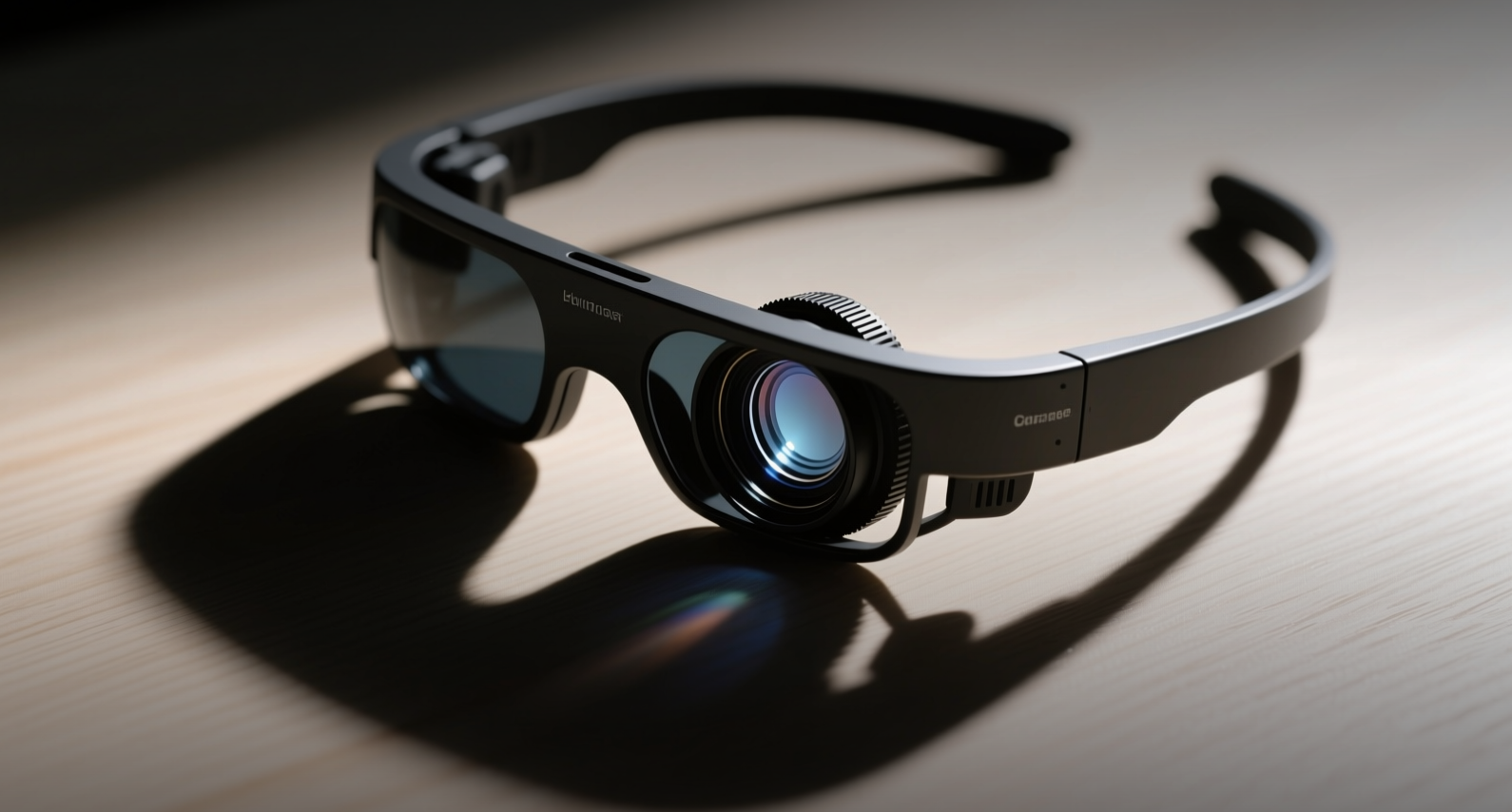
Applied Materials Inc. jumped 8% on Wednesday after unveiling SENZ, an integrated visual system for augmented reality glasses that positions the semiconductor equipment giant as a key infrastructure supplier in the emerging smart eyewear market. "This is a full-stack optical platform, not a component play," said Rachel Kim, semiconductor supply chain analyst at Edgen. "Applied Materials is packaging waveguide optics, light engines and sensing into a single co-optimized system — exactly what AR hardware makers need to reduce BOM complexity." SENZ combines waveguide optics, a light engine, sensing technology, vision correction and electronic dimming into what the company calls an "integrated ambient visual platform" for AI-enabled smart eyewear. The system targets manufacturers building AR glasses, a category that remains nascent but is attracting heavy investment from Meta Platforms Inc., Snap Inc. and Alphabet Inc.'s Google. The stock surge added roughly $14 billion to Applied Materials' market capitalization, reflecting investor optimism that the company can open a new revenue stream beyond its core semiconductor equipment business. AMAT shares closed at their highest level in three months, according to market data. **Why SENZ Matters Now** The launch comes as the AR glasses market reaches an inflection point. Snap this week began taking preorders for its Specs AR glasses at $2,195 — a consumer version of its developer-focused headset — while Meta has sold more than 7 million units of its Ray-Ban smart glasses at roughly $350. Apple's Vision Pro, priced at $3,500, has struggled to find a mass audience. Applied Materials' move targets the supply chain bottleneck that has kept AR glasses expensive and bulky. By integrating multiple optical components into a single system, SENZ could lower the bill of materials for manufacturers — a critical factor if AR glasses are to reach price points that drive mass adoption. The company did not disclose pricing for SENZ or name initial customers. Production timelines and volume commitments were not yet announced. **Competitive Landscape** Applied Materials enters a market where the optical subsystem suppliers are fragmented. Waveguide technology — the method of projecting images through transparent lenses — has been developed by startups like Lumus and Dispelix, while light engines have come from companies such as Omnivision and Himax Technologies. By offering a co-optimized system, Applied Materials could capture higher value per device than selling individual components. The company's existing relationships with every major chipmaker — it supplies deposition and etching equipment to TSMC, Samsung and Intel — give it manufacturing scale that pure-play optics startups lack. For AR glasses makers, the question is whether an integrated system from a semiconductor equipment supplier can match the performance of specialized optics vendors. Applied Materials said SENZ uses "billions of invisibly small nanostructures" in its waveguide design, a technology similar to what Boeing uses in 787 Dreamliner windows. **Investor Implications** Applied Materials trades at roughly 22 times forward earnings, in line with its five-year average. The SENZ launch provides a narrative for multiple expansion if the company can convert its semiconductor manufacturing expertise into a meaningful AR revenue stream. The addressable market remains speculative. IDC estimates AR glasses shipments could reach 50 million units annually by 2030, up from roughly 2 million in 2025. At an assumed optical subsystem value of $100-$200 per device, the total opportunity could range from $5 billion to $10 billion — modest relative to Applied Materials' $27 billion in annual revenue but high-margin if the company captures significant share. Snap's Spiegel said this week that consumers are "ready to think about computing differently" after nearly 20 years of the iPhone. Whether that translates into demand for $2,000-plus AR glasses — and the components inside them — will determine whether SENZ becomes a growth driver or a niche product line. This article is for informational purposes only and does not constitute investment advice.

Applied Materials surged 8% to a record, while ASML and Lam Research each gained more than 5%, as Citigroup's NAND upgrade lifted chip equipment stocks. "We see a multi-year upcycle in NAND equipment demand driven by AI storage requirements and the transition to higher-layer 3D NAND," Citigroup analyst Christopher Danely, who raised his price targets on Applied Materials and Lam Research, said in a note to clients. The Philadelphia Semiconductor Index rose alongside the moves, with Aehr Test Systems jumping more than 13%. Kulicke & Soffa Industries Inc., which supplies wire bonding and advanced packaging equipment for AI chips, also hit a 52-week high, climbing 3.3% after its earnings per share nearly tripled. The global semiconductor equipment market was valued at more than $138 billion in 2025, according to industry data. The coordinated rally shows that institutional investors are betting on a sustained capital expenditure cycle in memory and logic chips. UBS estimates Micron Technology Inc. will spend more than $50 billion on capacity over the next five years, a portion of which flows directly to equipment makers. Applied Materials trades at roughly 22 times forward earnings, while Lam Research commands about 24 times — multiples that reflect the market's conviction that AI-driven fab construction has years left to run. **NAND Spending Becomes the Next Catalyst** Memory chip makers have accelerated their transition to 300-plus layer 3D NAND, a process that requires more deposition and etch steps per wafer. Each additional layer increases the number of passes through equipment from Applied Materials and Lam Research, making NAND a higher-intensity consumer of capital equipment per unit of output than logic chips. Citigroup's upgrade specifically called out this dynamic, arguing that the NAND equipment trough has passed and that orders are inflecting higher. **AI Demand Creates a Two-Track Boom** While NAND spending is recovering, the AI-driven buildout of data centers continues to drive demand for leading-edge logic equipment. ASML's extreme ultraviolet lithography systems, which cost more than $350 million each, remain the bottleneck for producing the most advanced AI accelerators from Nvidia Corp. and Advanced Micro Devices Inc. TSMC, the sole manufacturer of Nvidia's H100 and Blackwell-series chips, has committed to expanding its CoWoS (chip-on-wafer-on-substrate) advanced packaging capacity, benefiting equipment suppliers across the board. For investors, the question is whether the current valuations already price in the NAND recovery. Applied Materials has gained roughly 40% year to date, while Lam Research is up a similar magnitude. Both trade above their five-year average forward P/E multiples. Morgan Stanley's Joseph Moore has maintained an overweight rating on Lam Research, arguing that the NAND recovery is "still in its early innings" and that consensus estimates for 2027 have room to rise. The next catalyst is Micron's quarterly earnings, expected in late June, which will provide the first official read on NAND pricing and capex plans. *This article is for informational purposes only and does not constitute investment advice.*
Aehr Test Systems jumped more than 13%, while Applied Materials and Amkor Technology each rose over 7% and ASML gained more than 5%, as the semiconductor equipment sector extended a rally fueled by the US-Iran peace deal and sustained AI infrastructure spending. "Customers are accelerating their capacity expansion plans for 2026 and beyond because demand for chips is outpacing supply," Christophe Fouquet, chief executive officer of ASML, said in the company's most recent earnings call. ASML's net bookings hit $15.28 billion in the fourth quarter of 2025, with extreme ultraviolet lithography tools alone accounting for $8.60 billion. The Philadelphia Semiconductor Index, known as the SOX, crossed 14,000 for the first time on June 15 after the US and Iran reached a peace deal ending their nearly four-month conflict. The index has surged 75% year-to-date as big tech companies race to build AI data centers. ASML became the first European company to cross $700 billion in market capitalization, while Applied Materials and Lam Research both hit all-time highs in Monday's session. Ten of the 30 stocks in the SOX index reached record highs that day, including chipmakers Advanced Micro Devices and Micron Technology alongside equipment makers KLA, Entegris, Nova, and Teradyne. The equipment sector's strength signals that chipmakers are placing orders for next-generation production tools, a leading indicator of semiconductor output 12 to 18 months out. With ASML's backlog at $45 billion and management raising its 2026 revenue guidance to between €36 billion and €40 billion, the capital expenditure cycle appears to have room to run. ## AI Capex Is Structurally Tight The rally in equipment stocks reflects a structural shift in semiconductor demand rather than a cyclical upswing. AI data center buildouts require advanced chips manufactured on leading-edge nodes, which in turn require the most expensive lithography and deposition tools. ASML's high-NA EUV machines, priced at more than $350 million each, are essential for producing chips at the 2nm node and below — a process that packs more transistors per square millimeter, improving performance per watt. BofA Securities reiterated its buy rating on ASML with a $2,268 price target, citing a potential path to €73 billion in sales and more than €90 in earnings per share by 2030. JP Morgan upgraded its out-year estimates after concluding ASML can ship more than 110 low-NA EUV tools annually, well above the prior ceiling of 90 units. The primary risk to the equipment sector remains export controls. ASML management explicitly built a wide bandwidth into its 2026 guidance to accommodate potential outcomes of ongoing discussions around restrictions, and China revenue is expected to decline significantly this year. Morningstar moved to a sell rating on ASML in late May, citing overvaluation at a trailing price-to-earnings ratio of 62 times. For investors, the equipment rally creates a clear divergence: companies with direct exposure to leading-edge AI chip production — ASML, Applied Materials, Lam Research — are benefiting from structural demand that extends beyond any single geopolitical event. The peace deal removed a risk premium that had weighed on the entire sector, but the fundamental driver remains the multiyear AI infrastructure cycle. ASML shares, up 75% year-to-date, trade at 51 times forward earnings, a premium that the company's $45 billion backlog and monopoly position in EUV lithography may justify as long as AI capex continues to grow. This article is for informational purposes only and does not constitute investment advice.