Edgen AI operates independently of, and is not controlled by Aspen Digital Financial Limited.
US strikes supertanker near Iran's Kharg Island as blockade widens
 Edgen Stock·Jul 16 2026, 21:27
Share to
Share to
Copy link

[1] Vessels with transponders turned off and ship-to-ship transfers near Oman show Strait of Hormuz traffic continues (https://wallstreetcn.com/livenews/3135291 ...)[2] US strikes Iranian-linked oil tanker deep within Persian Gulf (https://www.thehindubusinessline.com/news/wor ...)[3] Dark ships and Oman transfers indicate Hormuz transits continue (https://www.msn.com/en-in/news/other/dark-shi ...)[4] Tankers Go Dark in Strait of Hormuz After Regional Escalation and Attacks - News and Statistics - IndexBox (https://www.indexbox.io/blog/oil-and-lng-tank ...)[5] Iran-Linked Traffic Surges Through Hormuz Strait Just Before U.S. Blockade Resumes - finance.biggo.com (https://finance.biggo.com/news/6d074abf-3c50- ...)
Related News

Jul 16 2026, 22:27
Nasdaq drops 1.5% as chip stock selloff overshadows TSMC's record profit
The Nasdaq Composite fell 1.5% to 25,881.95 on Thursday as a broad selloff in semiconductor stocks overshadowed better-than-expected results from Taiwan Semiconductor Manufacturing Co. "The weight of chips in the S&P 500 has grown from 8% to over 20% in the past few years," said Paul Nolte, senior wealth advisor and market strategist at Murphy & Sylvest. "If you look at the rest of the market, it's doing fine." The S&P 500 lost 0.5% to 7,533.77, while the Dow Jones Industrial Average slipped 0.2% to 52,553.32. Technology was the worst-performing S&P 500 sector, falling 1.8%, with the Philadelphia Semiconductor Index dropping 4.3%. Memory-chip makers led the decline: SanDisk tumbled 13%, Seagate Technology fell 10%, and Micron Technology lost more than 5%. U.S.-listed shares of TSMC slipped 2.3% even after the world's largest contract chipmaker posted a 77% jump in quarterly profit and raised its full-year capital expenditure forecast to as much as $64 billion. The selloff shows how elevated expectations have become for a chip sector that has surged nearly 70% this year, leaving even strong earnings vulnerable to profit-taking. With the Federal Reserve's next meeting in September and the third wave of Trump tariffs beginning next week, investors face competing narratives about the durability of the AI-driven rally. Healthcare provided the main counterweight, with the sector rising 2.2%. UnitedHealth Group gained 1.2% after reporting adjusted earnings of $6.38 per share, well above the $4.87 consensus, and lifting its full-year profit outlook to as much as $20 a share. Abbott Laboratories surged 11% to lead the S&P 500 after also beating estimates and raising guidance. Breadth data showed a mixed picture beneath the headline weakness. On the New York Stock Exchange, declining issues outnumbered advancers by a 1.08-to-1 ratio. The Nasdaq saw a wider 1.64-to-1 spread, with 2,979 stocks falling versus 1,817 rising. The S&P 500 recorded 42 new 52-week highs and just two new lows, while the Nasdaq logged 197 new highs and 155 new lows. Trading volume on U.S. exchanges totaled 17.19 billion shares, below the 21.19 billion 20-day average. The 10-year Treasury yield edged up one basis point to 4.57%, while the U.S. dollar index rose 0.3% to 100.78. Gold futures fell 1.8% to $3,980 an ounce. Oil prices declined modestly, with West Texas Intermediate crude down 0.7% to $79 a barrel, as traders assessed renewed fighting in Iran after the collapse of a short-lived ceasefire. **Earnings Season Tests High Expectations** Beyond chips, the second-quarter earnings season delivered several beats. United Airlines fell 1.8% after surging oil prices weighed on its forward guidance. GE Aerospace slid 4.1% despite lifting its 2026 profit forecast. J.B. Hunt Transport Services jumped 7% after reporting profit and revenue above analysts' estimates. S&P 500 companies are expected to post aggregate earnings growth of 24.8% from a year earlier, with technology earnings alone seen jumping 65.5%, according to LSEG data. The divergence between chip stocks and the rest of the market suggests a rotation may be underway, with investors questioning whether AI-related spending can sustain the semiconductor sector's valuation after a 70% year-to-date rally. The next major test comes with Netflix's results after Thursday's close, followed by a wave of Big Tech earnings in the coming weeks. This article is for informational purposes only and does not constitute investment advice.

Jul 16 2026, 21:34
Gold slides below $4,000 as moving average rejection deepens selloff
COMEX gold fell below $4,000 an ounce, extending its decline to four consecutive weeks after sellers rejected a test of the 52-week moving average. "The market is trading on the weak side of the 52-week moving average at $4,255.51, signaling strong long-term selling pressure," James Hyerczyk, a technical analyst and author of two books on technical analysis, said. Spot gold settled last week at $4,088.38, down $67.02 or 1.61 percent, after entering the long-term retracement zone of $4,069.54 to $3,707.82. The weekly low reached $3,959.08, the first test of that zone since gold rallied from a November 2024 bottom of $2,536.85 to a January 2026 peak of $5,602.23. The 50 percent to 61.8 percent Fibonacci retracement of that range defines the current support band. The June nonfarm payrolls report lands Thursday morning instead of the usual Friday release, with markets closing early for the Independence Day holiday. A strong number would reinforce the higher-for-longer rate narrative, keeping pressure on the non-yielding asset as Treasury yields climb. A miss would give gold bulls their first opening in a month to argue the tightening cycle is losing economic support. **Thin liquidity amplifies the risk** The holiday schedule compresses the entire payrolls reaction into a few hours before desks go dark Thursday afternoon. Friday markets are closed. When institutional order flow exits, the book thins enough that a single large ticket can move gold several dollars in either direction. "The entire reaction gets compressed into a few hours before the desks go dark," Hyerczyk said. "Traders do not have the luxury of studying the number overnight and adjusting Monday morning. They have to decide Thursday and live with it through a three-day weekend." The 52-week moving average at $4,255.51 now acts as overhead resistance, confirming the downtrend on the weekly swing chart. A trade through $4,891.54 would change the main trend to up, but the market remains in sell-the-rally mode until that level is reclaimed. **Value zone for long-term buyers** The retracement zone at $4,069.54 to $3,707.82 represents a potential accumulation area for passive investors, according to Hyerczyk. The last bottom before gold's sharp rally in late 2025 sits at $3,886.46, making that level the next downside target if selling pressure continues. Central bank purchases continue to provide structural support beneath the market, with official sector buying expected to persist through 2026 as countries diversify reserves. That buying is large in scale, consistent, and not driven by any single jobs report, limiting how far the selloff can extend during periods of macro pressure. Gold at current levels trades roughly 29 percent below its January 2026 all-time high of $5,602.23 and about 6 percent below its 52-week moving average. The metal remains down for four straight weeks, the longest losing streak since the November 2024 bottom. This article is for informational purposes only and does not constitute investment advice.
Jul 16 2026, 21:30
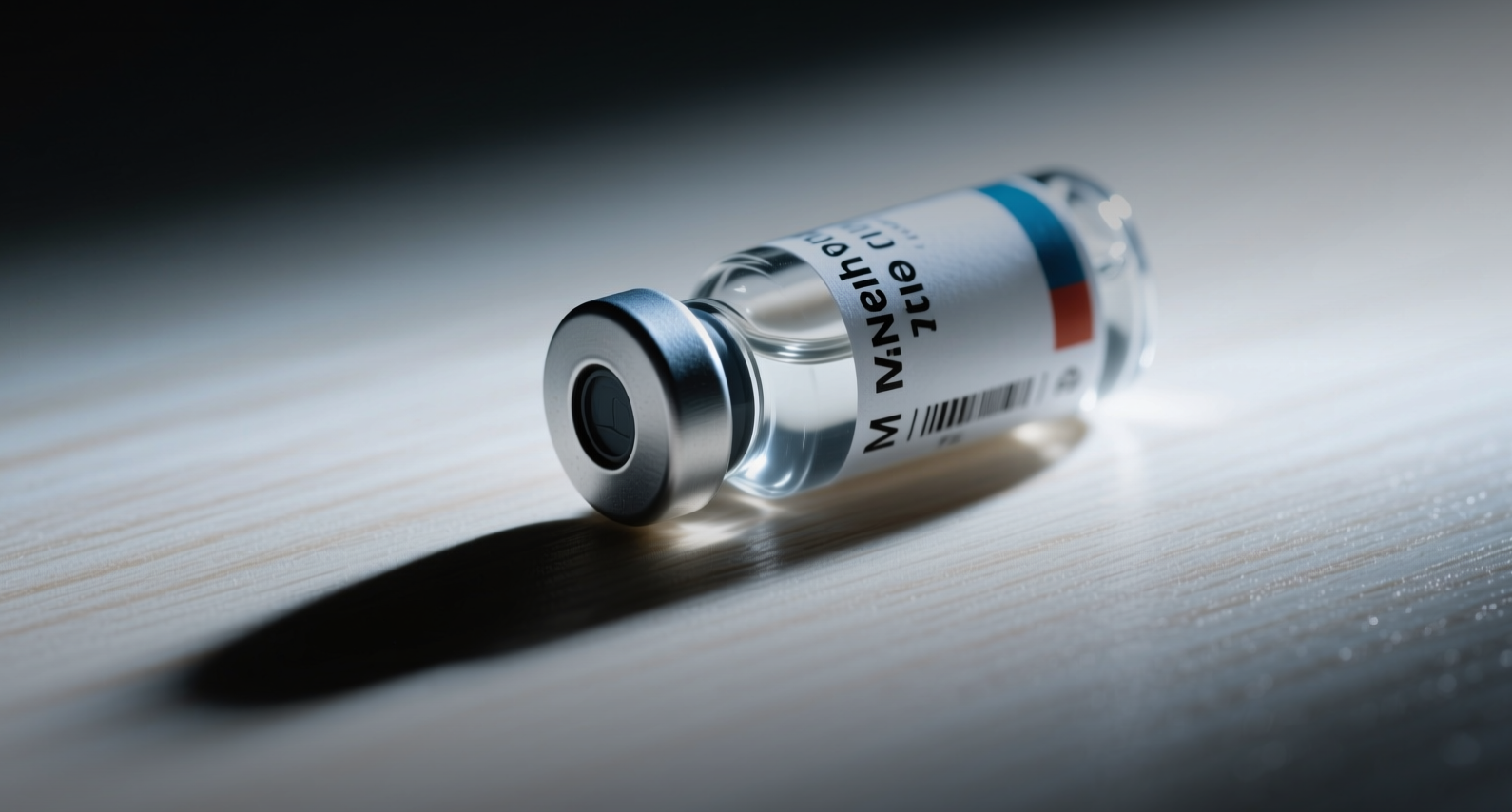
Jasper Therapeutics merges with Kira in $132M biotech deal
Jasper Therapeutics Inc. completed its all-stock acquisition of Kira Pharmaceuticals and raised $132 million in a concurrent private placement, creating a combined company with three clinical-stage immunology assets and cash runway through the second half of 2028. "The quality of their science and the deep expertise of their team" drove the decision to merge, Jeet Mahal, president and chief executive officer of Jasper, said in a statement. The combined entity will focus on advancing KP-104, a dual-complement inhibitor for paroxysmal nocturnal hemoglobinuria and renal disorders, alongside briquilimab, an anti-KIT antibody for severe combined immunodeficiency, and KP-701, a preclinical B-cell receptor targeted therapy. The private placement was co-led by Affinity Asset Advisors and Ikarian Capital, with participation from Columbia Threadneedle Investments, Sirenia Capital Management, Balyasny Asset Management, and Mirador Therapeutics, among others. Pro-forma cash is expected to fund operations through multiple clinical milestones, including KP-104 Phase 2 interim data in the fourth quarter of 2026 and an end-of-Phase 2 meeting with the FDA for PNH in the first half of 2027. The deal structure gives pre-merger Jasper equity holders about 6.68% of the combined company's common stock, Kira holders about 49.86%, and PIPE investors about 43.46%, on a fully diluted as-converted basis. Existing Jasper shareholders also received a contingent value right worth $30 million tied to a priority review voucher for briquilimab by December 2028. Kira out-licensed two earlier-stage assets — KP-301 and KP-402 — to Mirador Therapeutics for $12 million upfront plus development and sales milestones, allowing the combined company to concentrate resources on its lead programs. **KP-104 Leads the Pipeline** KP-104, also known as Vensobafusp alfa, is a bifunctional biologic that targets both the alternative and terminal complement pathways simultaneously, a dual mechanism that differentiates it from single-pathway inhibitors such as Alexion's Soliris and Ultomiris. The drug is Phase 2/3 ready and has already generated positive data in treatment-naive PNH patients. The combined company plans to report interim data from Stage 1 of a Phase 2 basket trial in rare renal indications in the fourth quarter of 2026, with updated data in the second quarter of 2027. A new indication for KP-104 will be announced by the end of this year. Briquilimab, a late-stage anti-KIT antibody, is advancing toward a pre-BLA meeting with the FDA for SCID in the first quarter of 2027. The drug blocks stem cell factor from binding to the KIT receptor, inhibiting survival signals for mast cells and hematopoietic stem cells. The company is also evaluating the mast-cell mediated disease landscape and plans to provide an update on clinical development in the second half of 2026. KP-701, a novel dual-acting anti-CD79BxCD32B monoclonal antibody for autoantibody-mediated disorders, is expected to enter Phase 1 testing in the first quarter of 2027, with first-in-human data anticipated in the third quarter. **Cash Runway and Investor Implications** The combined company holds enough capital to reach key value-inflection points without near-term dilution risk, a critical factor for biotech investors evaluating early-stage pipelines. Jasper shares trade on Nasdaq under the ticker JSPR. The company did not disclose post-merger cash balance but said the $132 million private placement, combined with existing cash and the $12 million upfront from the Mirador out-licensing, funds operations through the second half of 2028. This article is for informational purposes only and does not constitute investment advice.