Edgen AI operates independently of, and is not controlled by Aspen Digital Financial Limited.
Two US troops killed in Jordan as Iran conflict widens to new fronts
 Edgen Stock·Jul 18 2026, 17:21
Share to
Share to
Copy link

[1] USA: Two servicemen killed in action in Jordan (https://wallstreetcn.com/livenews/3136082 ...)[2] Reports Of Injured US Troops Emerge Days After Iran’s Strike On Jordan. Here’s What We Know (https://www.newsx.com/world/reports-of-injure ...)[3] US strikes Iran for 7th consecutive night; Tehran says 38 killed, claims attacks on American bases in Kuwait, Jordan, Bahrain (https://www.thestatesman.com/world/us-strikes ...)[4] Iran says it is suspending commitments to interim deal with US as the two exchange attacks (https://wsvn.com/news/us-world/iran-says-it-i ...)[5] RAW FOOTAGE: 14 US Troops KILLED, 400+ Injured in Iran ATTACK? Iran Missiles BLAST OFF, Hit US Bases (https://www.oneindia.com/videos/raw-footage-1 ...)
Related News

Jul 18 2026, 20:12
Pershing Square USA trades 20% below IPO as closed-end fund discount widens
**Bill Ackman's closed-end fund Pershing Square USA trades at a 20% discount to its IPO price, exposing structural differences between fund vehicles and operating companies like Berkshire Hathaway.** Pershing Square USA Ltd., Bill Ackman's closed-end fund, trades about 20% below its initial public offering price, allowing investors to buy $1 of Ackman-selected assets for roughly $0.80. "The closed-end structure means the fund's shares trade based on supply and demand, not the portfolio's underlying value, creating a persistent discount that an operating company doesn't face," according to a Motley Fool analysis of the fund's structure. Berkshire Hathaway, by contrast, is an operating company that owns and runs businesses including insurance, utilities, railroads, and home building, in addition to holding stakes in publicly traded companies. The closed-end fund structure issues a fixed number of shares at IPO, meaning the share count doesn't change even as the portfolio value fluctuates daily. This creates the potential for the market price to diverge from NAV — a dynamic that has pushed Pershing Square USA to a roughly 20% discount. Ackman is also building a Buffett-like business around Howard Hughes Holdings, an operating company that recently acquired an insurance business to mimic the Berkshire formula. That structure, unlike the closed-end fund, does not face the same discount risk because its shares reflect the value of underlying businesses, not a portfolio of liquid securities. The 20% discount signals weak investor demand for the closed-end fund structure, even when managed by a high-profile investor like Ackman. It could dampen enthusiasm for similar celebrity-managed fund IPOs and put pressure on Ackman's reputation and future fundraising capabilities. Existing investors face immediate paper losses, while prospective buyers get a bargain that reflects structural risk, not just a temporary mispricing. The divergence between Pershing Square USA's market price and its NAV highlights a structural challenge unique to closed-end funds. Unlike mutual funds, which are bought and sold at NAV from the fund sponsor at the end of each trading day, closed-end funds trade on exchanges based on supply and demand. When demand falls short of supply, the shares trade at a discount — and that discount can persist for years. For Ackman, the discount represents a reputational setback. The billionaire investor has long positioned himself as a Buffett-style value investor, and the Pershing Square USA IPO was marketed as a way for retail investors to access his concentrated portfolio of high-conviction bets. The 20% discount suggests that investors are not willing to pay full price for that access. The broader implication extends beyond Ackman. If a high-profile launch like Pershing Square USA struggles to maintain its NAV, other fund managers considering similar closed-end structures may face a harder sell with investors. The closed-end fund market has historically been prone to persistent discounts, but the scale of this discount — 20% on a newly launched vehicle — is notable. Closed-end fund discounts in the U.S. have historically averaged between 5% and 10%, making Pershing Square USA's discount roughly double the typical range. This article is for informational purposes only and does not constitute investment advice.

Jul 18 2026, 20:10
Jamie Dimon says AI spending will reach $1 trillion by 2027
**JPMorgan Chase CEO Jamie Dimon expects global AI infrastructure spending to hit $1 trillion next year, a figure that would reshape capital allocation across the technology sector and test the limits of the current build-out cycle.** JPMorgan Chase reported its biggest-ever quarterly profit by a US bank on July 14, posting net income of $16.9 billion and adjusted earnings per share of $7.70 — 38.7% above the $5.55 consensus estimate. Revenue surged 27.7% year-over-year to $57.35 billion, driven by an 86% jump in equities trading revenue and a 30% increase in investment banking fees. The results underscored how the AI infrastructure build-out is filtering through the broader economy, with banks benefiting from heightened capital markets activity tied to technology sector financing. "AI went from $400 billion last year to $700 billion this year," Dimon said on the earnings call. "People project, which so do our people, it will be like a little over a trillion next year." The CEO's forecast, which covers spending across hyperscaler data centers, GPU procurement, networking equipment, and power infrastructure, positions AI as the dominant driver of corporate capital expenditure for the foreseeable future. He noted that total US CapEx runs at roughly $4 trillion annually, meaning AI-related investment could account for a quarter of all corporate spending by 2027. The scale of the forecast carries significant implications for the technology supply chain. Nvidia, whose H100 and Blackwell GPUs power the majority of AI training and inference workloads, has seen its data center revenue grow from $15 billion in fiscal 2023 to an expected $100 billion-plus in fiscal 2026. AMD, with its MI300X and upcoming MI400 accelerators, and Broadcom, which designs custom AI chips for hyperscalers, are competing for a share of the build-out. Microsoft, Amazon, Alphabet, and Meta collectively spent more than $200 billion on capital expenditures in the trailing twelve months, with the majority directed toward AI infrastructure. **The $1 trillion question** Whether the spending trajectory is sustainable depends on whether enterprise AI adoption generates returns that justify the investment. Dimon acknowledged the uncertainty, telling analysts the environment is "getting close to as good as it gets" and that "we just don't know how long it's going to last." His caution echoes a broader debate on Wall Street: Goldman Sachs published research in June questioning whether the $1 trillion in AI spending would produce commensurate revenue, while Sequoia Capital has estimated that the AI industry needs to generate $600 billion in annual revenue to justify current infrastructure investment. JPMorgan itself is investing heavily in the technology. The bank raised its full-year adjusted expense guidance to about $107.5 billion, with a portion directed toward AI tools, and Dimon said the company has "almost 1,000 use cases today" across risk management, fraud detection, marketing, hedging, and document processing. He cautioned, however, that the benefits of AI would ultimately accrue to customers rather than shareholders. "The ultimate beneficiary of AI will be our customers," Dimon said. "In a competitive capitalist world, we always use AI to do a better job for the customers, and we can't just say it's going to increase our margins." **Who wins, who loses** The $1 trillion forecast is most bullish for companies that supply the physical infrastructure of AI. Nvidia, trading at roughly 35x forward earnings, remains the primary beneficiary, though its dominance faces challenges from custom chips designed by hyperscalers and from AMD's growing product lineup. TSMC, which manufactures the advanced chips for Nvidia, AMD, and Broadcom, stands to gain from sustained high utilization of its 3nm and 2nm nodes. On the energy side, utilities and nuclear power providers are seeing unprecedented demand growth as data center power consumption accelerates. The risk is that the spending cycle peaks before returns materialize. If enterprise AI adoption disappoints or if efficiency gains from model optimization reduce the need for compute, the $1 trillion figure could mark a top rather than a baseline. For now, Dimon's forecast — grounded in the capital allocation decisions of the world's largest companies — carries weight. JPMorgan's own results show a bank firing on all cylinders, and its CEO is betting that AI will keep the engine running. This article is for informational purposes only and does not constitute investment advice.
Jul 18 2026, 20:07
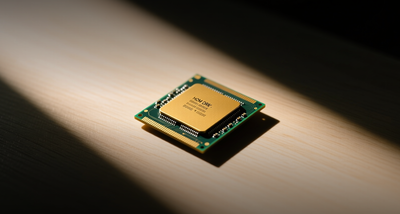
Memory makers surge 200% as Huang's CES call reshapes AI trade
**Jensen Huang's January declaration that memory had become AI's biggest bottleneck has triggered a rotation that lifted Micron and Sandisk more than 15x beyond Nvidia's 2026 stock gain.** When Nvidia Corp. Chief Executive Officer Jensen Huang told CES 2026 attendees that memory capacity had become the primary constraint on AI model performance, he set in motion a rotation that has reshaped the semiconductor investment landscape. "We would like this AI to stay with us our entire lives and remember every single conversation we've ever had with it," Huang said at the January event. "This context memory, which started out fitting inside an HBM, is no longer large enough." Since that speech, Micron Technology Inc. shares have surged nearly 200 percent in 2026, while Sandisk Corp. has soared almost 500 percent — dwarfing Nvidia's 11 percent gain over the same period. The outperformance reflects a fundamental shift in how the market values the AI supply chain, as investors price in a multiyear supercycle for high-bandwidth memory (HBM) and data center storage. The numbers behind the rally are stark. Micron reported fiscal third-quarter revenue of $41.4 billion, already exceeding its full fiscal 2025 total of $37.3 billion. Its cloud memory revenue jumped to $13.7 billion from $3.3 billion a year earlier, while core data center revenue hit $11.5 billion versus $1.5 billion. Sandisk's quarterly revenue reached $5.9 billion, up 251 percent, with its data center segment growing sevenfold to $1.4 billion. **HBM4 Orders Concentrate Around SK Hynix** The memory crunch is most acute in HBM, the specialized stacked DRAM that Nvidia's GPUs require for training and inference workloads. Huang has said Nvidia will be the "only customer" of HBM4 for an extended period, and the company has pushed SK Hynix Inc. to accelerate production by six months from its original schedule. Industry analysts estimate SK Hynix has locked in between 50 percent and 70 percent of Nvidia's anticipated HBM4 orders, according to reports. In early June, the two companies formalized a multiyear partnership to co-develop advanced memory for AI factories, with SK Hynix planning to double its wafer capacity by 2030. **Long-Term Contracts Signal Structural Shift** Both Micron and Sandisk are locking in demand through multiyear agreements that could help the memory industry escape its historical boom-bust cycle. Micron signed 16 strategic customer agreements in its fiscal third quarter, with cash deposits and financial commitments totaling $22 billion to date. Sandisk secured three contracts representing at least $42 billion in total contractual revenue. These long-duration deals suggest hyperscale cloud operators are treating memory and storage as strategic infrastructure rather than commodity procurement — a structural change that, if sustained, could support higher valuations across the sector. For investors, the rotation raises a question: has the market already priced in the memory supercycle, or is there room for further gains? Micron's revenue acceleration has outpaced its historical valuation range, while Sandisk's 500 percent year-to-date gain leaves little room for execution missteps. The risk is that memory remains a cyclical industry despite the AI-driven demand — a downturn in hyperscale capital expenditure or a shift in Nvidia's architecture could reverse the flows just as quickly as they arrived. For now, however, the data points in one direction: memory is the bottleneck, and the bottleneck is getting paid. This article is for informational purposes only and does not constitute investment advice.