Edgen AI operates independently of, and is not controlled by Aspen Digital Financial Limited.
Jamie Dimon says AI spending will reach $1 trillion by 2027
 Edgen Stock·Jul 18 2026, 20:10
Share to
Share to
Copy link


[1] JPMorgan Chase CEO Jamie Dimon Thinks AI Spending Is Going to Reach $1 Trillion Next Year (https://www.fool.com/investing/2026/07/18/jpm ...)[2] menu (https://intellectia.ai/blog/q2-2026-bank-earn ...)[3] JPMorgan Chase Stock Beats Q2 Estimates as Equities Trading Revenue Surges 86% | TIKR.com (https://www.tikr.com/blog/jpmorgan-chase-stoc ...)[4] The Bull Case For JPMorgan Chase (JPM) Could Change Following Record-Breaking Q2... (https://finance.yahoo.com/markets/stocks/arti ...)[5] Earnings call transcript: JPMorgan Chase tops Q2 2026 forecasts as stock rises... (https://www.investing.com/news/transcripts/ea ...)
Related News
Jul 19 2026, 02:06
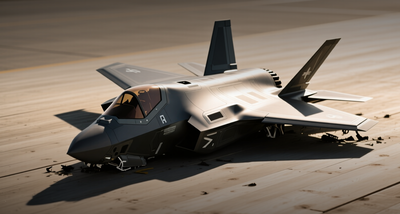
Pentagon deploys F-16s, F-35s as US-Iran conflict enters 8th day
**The Pentagon is rushing F-16 and F-35 fighter jets to the Middle East as the United States and Iran enter an eighth consecutive night of strikes, escalating a conflict that has already killed 16 American service members and pushed oil above $88 a barrel.** The deployment includes F-16s from the US Air Force's 480th Fighter Squadron at Spangdahlem Air Base in Germany and F-35 stealth fighters from the 48th Fighter Wing at RAF Lakenheath in Britain, according to Air & Space Forces Magazine and the Wall Street Journal. The aircraft could be used to strike Iranian radar systems and surface-to-air missile batteries, the report said. "The American partner decided to adjust its force posture in the region, and as part of that move, in coordination with the Israel Defense Forces, it was decided to add more refueling aircraft to the existing force in Israel," the Israeli military said in a statement Saturday, confirming the US is sending additional aerial refueling planes to Israeli air bases. The escalation follows the death of two US service members in an Iranian attack on Jordan's Muwaffaq Salti Air Base, where a US THAAD missile defense system had previously been damaged in March. A third service member remains missing. The fatalities bring the total US military death toll to 16 since the conflict began Feb. 28, according to the Wall Street Journal. **Oil prices surge as Strait of Hormuz chokepoint tightens** Brent crude crossed $88 a barrel Friday, up about $4 from the prior close and the highest in a month, as the Strait of Hormuz — which handles about 21 percent of global oil trade — effectively became a war zone. Only eight ships transited the strait on Thursday, the lowest in three weeks, according to maritime tracking firm Kpler. Seven of the eight vessels used the Iranian-controlled northern route rather than the US-supported Omani corridor, a sign crews fear being targeted. The US has bombed at least seven bridges around Bandar Abbas, a key port city used by Iran's Islamic Revolutionary Guard Corps to transport ammunition and supplies across the strait, Axios reported. Washington has also redirected three commercial vessels since reinstating a naval blockade of Iranian ports Tuesday, Central Command said, and disabled one oil tanker. Iran has retaliated by striking targets across at least seven countries — Jordan, Iraq, Kuwait, Bahrain, Qatar, Saudi Arabia, the UAE and Oman — hitting a water desalination plant in Kuwait and a Kuwait Petroleum Corp. facility. Jasem Mohamed Albudaiwi, secretary general of the Gulf Cooperation Council, called the attacks "war crimes requiring international accountability." **Israel watches from the sidelines, prepares its own target list** Israel has offered to join US strikes but Washington has rejected the proposal, urging restraint, according to Israeli officials. Any Israeli involvement would depend on whether Iran attacks Israeli territory directly — something Tehran has so far avoided, likely because of the risk of triggering a broader Israeli response. Prime Minister Benjamin Netanyahu warned Iran this week: "Do not count on it being quiet if you attack us. Do not count on a rerun. This will be a different event, much more powerful." Israeli officials said the military has prepared its own list of potential infrastructure targets in Iran, including energy facilities and railway networks, and described what they called "surprises" for Tehran if the confrontation expands. The last time Israel conducted direct strikes on Iranian territory was in April, following an Iranian missile barrage, when Israeli jets hit military installations near Isfahan and Natanz. Iranian Supreme Leader Mojtaba Khamenei accused Washington of violating the ceasefire agreement, calling President Trump's signature "utterly worthless and devoid of credibility." Iran has suspended its commitments under the interim memorandum of understanding signed in mid-June, which had briefly calmed the Strait of Hormuz and sent oil prices below $72 a barrel. The State Department issued a worldwide security alert Saturday, urging Americans to "exercise increased caution" globally, citing concerns that Iran-aligned groups could target US interests and citizens overseas. The department warned of potential flight cancellations and periodic airspace closures. This article is for informational purposes only and does not constitute investment advice.

Jul 19 2026, 01:27
Tech momentum sell-off hits 40% in fastest decline on record
**The unwind of the momentum trade has erased 40% from the TMT factor basket in 17 trading days — the fastest and deepest drawdown in market history.** Goldman Sachs' high-beta momentum portfolio has plunged 33% from its June peak, marking the sharpest unwind of the momentum trade since the early 2000s, as a brutal rotation out of high-flying technology stocks rips through global equity markets. "Over the past three weeks, market leadership has been tested, with the momentum factor delivering the sharpest sell-off since the early 2000s," a team of Goldman Sachs strategists wrote this week. Mark Wilson, the firm's EMEA head of hedge fund sales, described the move as a "brutal rotation" driven by crowding and leverage rather than any deterioration in corporate fundamentals. The TMT momentum factor — a basket of the most crowded technology, media and telecom names — has fallen 40% peak-to-trough in just 17 sessions, surpassing the historical median drawdown of 22% over 33 days, according to Morgan Stanley's quantitative and derivatives strategy team. The broader momentum factor is down 28%, with storage chip stocks accounting for roughly two-thirds of the decline. South Korea's Kospi has dropped 27% from its peak, and a wave of margin calls hit roughly one in 30 Korean adults this week, according to local reports. The Invesco S&P 500 Momentum ETF, a popular proxy for the trade, is down 5% from its recent high. The divergence between strong fundamentals and deteriorating price action is the market's central tension. US banks reported corporate loan growth of 17% year-over-year, investment banking revenue surged more than 40%, and large banks posted a 19% return on tangible equity — the highest since the financial crisis. TSMC raised its 2026 revenue growth guidance to more than 40%. Yet both bank stocks and TSMC sold off on the news, a pattern Wilson said makes this sell-off "difficult to find a fundamental signal" in. ## Stock-Level Volatility Hits Record Divergence From Index Beneath the surface, market risk structure is fracturing in unusual ways. The Goldman Sachs high-beta momentum portfolio is now roughly 10 times more volatile than the S&P 500 — a ratio not seen since the Covid crash in November 2020, according to the firm's volatility trading desk. The average implied volatility of individual S&P 500 stocks stands at 40%, or 2.8 times the index's implied volatility, a record gap. Meanwhile, the three-month implied correlation among S&P 500 components has fallen to 0.14, the lowest ever, meaning stocks are moving independently even as the index appears calm. ## Where to Hide as Rotation Deepens Goldman Sachs identified several pockets of the market with low correlation to the crumbling momentum trade. Dividend Aristocrats — S&P 500 companies that have raised payouts for at least 25 consecutive years — have the lowest correlation of any group, according to the bank's analysis. The ProShares S&P 500 Dividend Aristocrats ETF is up 7% this year. Real estate stocks have also held up, with the Vanguard Real Estate Index Fund ETF gaining 10% year-to-date, narrowly beating the S&P 500. Software stocks, battered earlier this year in the so-called "SaaSpocalypse," have rebounded 25% from their April lows, with Palo Alto Networks up 24% and CrowdStrike up 21% in the past month. Wilson said he believes the momentum unwind is "close to the end" but cautioned that near-term reversal catalysts are scarce heading into the summer months. With Q2 earnings season underway, the second derivative of earnings growth — the rate at which growth is slowing — will become increasingly important, he said, while noting that tech valuations remain elevated across most metrics. This article is for informational purposes only and does not constitute investment advice.

Jul 19 2026, 01:08
TSLY costs investors 30% upside as Tesla rally exposes option flaw
YieldMax TSLA Option Income Strategy ETF capped investor returns by roughly 30 percent as Tesla shares surged 31.59 percent over the past year. "The covered-call structure works well in sideways markets but systematically underperforms during sustained rallies," said Priya Mehta, equity market analyst at Edgen. "Investors are trading upside for yield." TSLY paid $13.29 per share in trailing 12-month distributions, but the forward annualized run rate has compressed to $3.33. In 2024, monthly checks ranged from $0.40 to $1.29. In 2026, weekly payments have shrunk to between $0.26 and $0.35, with one payout at just $0.0707. A meaningful portion of prior distributions consisted of return of capital, lowering cost basis rather than generating true income. Since its November 2022 inception, TSLY returned 55.36 percent on a total-return basis. Over roughly the same period, Tesla shares gained 86.21 percent. The fund closed at $26.73 on July 10, 2026, while its $17.65 starting NAV appears preserved only because distributions are re-added. **How the Fund Works** TSLY is a synthetic covered-call fund that parks cash in Treasury bills, sells call options on Tesla, and distributes the option premium as monthly or weekly payments. As of April 30, 2026, the fund held roughly $877 million in Treasury bills across five CUSIPs alongside a small position in TSLA call options. It carried $84.8 million in liabilities against $922 million in assets, with net derivative positions at negative 7.67 percent of net assets. When Tesla rallies past the strike price, those short calls generate losses that the NAV absorbs. The fund's expense ratio is not publicly disclosed in current filings, though YieldMax funds in this category typically charge a 0.99 percent management fee. **The Alternative** A barbell of direct Tesla shares paired with short-duration Treasury ETFs such as the iShares 0-3 Month Treasury Bond ETF or the SPDR Bloomberg 1-3 Month T-Bill ETF replicates TSLY's actual balance sheet more transparently. The approach carries zero management fee at most brokers, no capped upside, and no synthetic overlay. The trade-off is losing the automatic call-writing convenience and the headline yield figure. The right question for holders is what they gave up to receive that yield. If TSLY's share price grinds lower while Tesla stock keeps making highs, the hidden cost has already been paid. Whether the yield justifies capped upside, NAV decay, and taxable return-of-capital is a decision best made with full transparency, not a marketing sheet. This article is for informational purposes only and does not constitute investment advice.