Edgen AI operates independently of, and is not controlled by Aspen Digital Financial Limited.
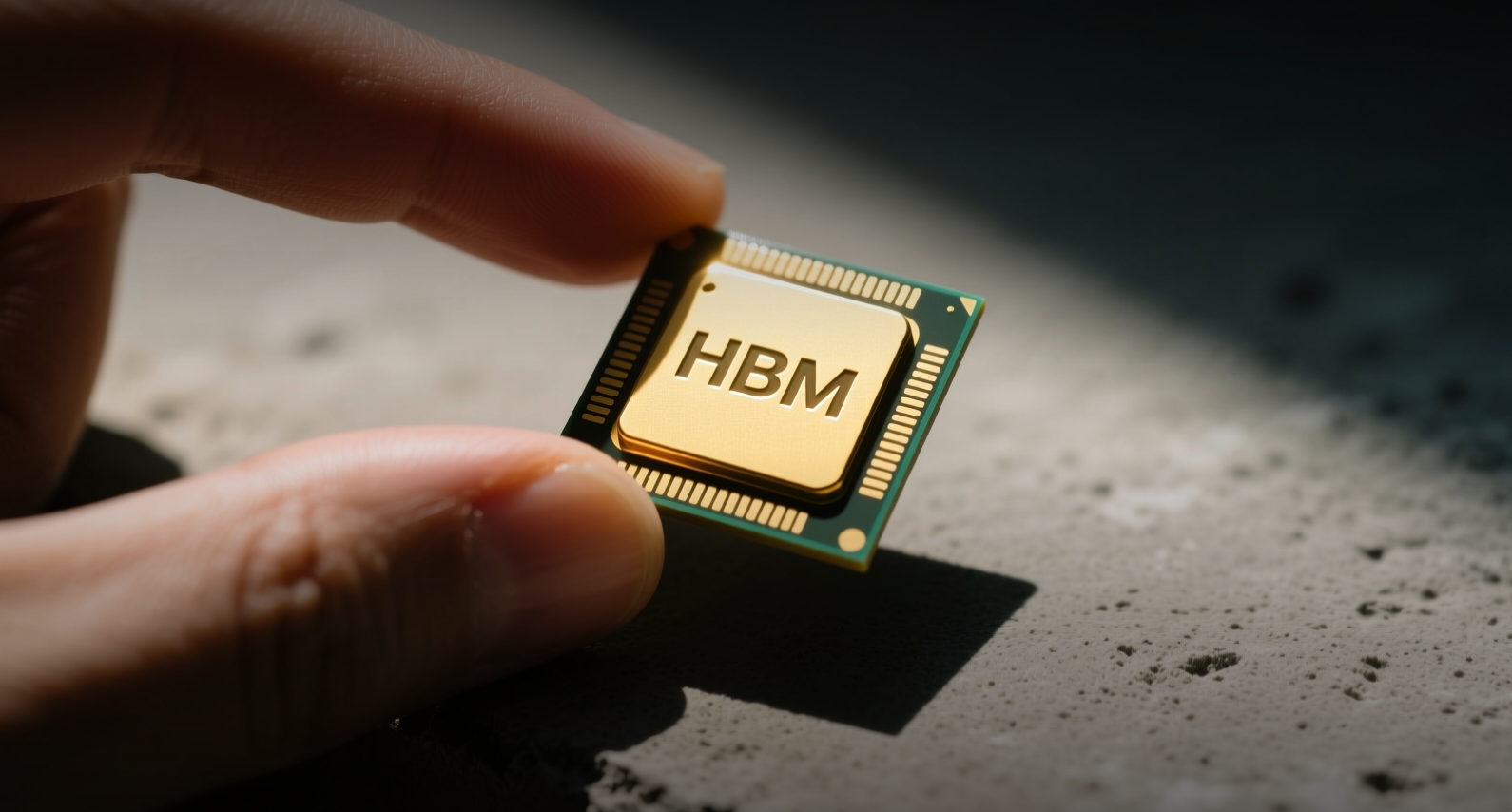
SK Hynix surges 30% to daily limit as Kospi jumps 18%
 Edgen Stock·Jul 31 2026, 11:25
Share to
Share to
Copy link
[1] SK Hynix's 30% Stock Rise in Korea Is Nothing to Celebrate (https://www.barrons.com/articles/sk-hynix-sto ...)[2] SK Hynix Stock Just Hit Its Daily Limit in South Korea for the First Time Ever,... (https://www.benzinga.com/markets/asia/26/07/6 ...)[3] South Korea’s Kospi index jumps nearly 18% on a surge in chipmaking stocks (https://apnews.com/article/stock-markets-rate ...)[4] Inside one of the wildest months in South Korea's stock market history (https://finance.yahoo.com/markets/stocks/arti ...)[5] Chipmakers Samsung and SK Hynix soar nearly 30% as Amazon sparks relief rally (https://finance.yahoo.com/markets/stocks/arti ...)
Related News

Jul 31 2026, 12:51
enVVeno wins FDA IDE approval as Q2 loss narrows 46%
**enVVeno Medical secured the first FDA IDE approval for a transcatheter replacement venous valve, targeting 3 million US patients with no effective treatment options.** enVVeno Medical received FDA Investigational Device Exemption approval to begin the TAVVE pivotal trial for its enVVe System, a first-in-class transcatheter replacement venous valve for severe deep chronic venous insufficiency, while cutting its second-quarter net loss 46 percent year over year. "enVVe has the potential to completely change the treatment trajectory for the 3 million US patients that suffer from severe, deep venous CVI and have no effective treatment options," Rob Berman, chief executive officer of enVVeno Medical, said. The TAVVE study will enroll approximately 230 patients across up to 40 US clinical sites, with enrollment expected to begin in the second half of 2026. The company ended the quarter with approximately $21.5 million in cash and investments, comprising $2.8 million in cash and $18.7 million in short-term investments, which management expects to fund operations into the third quarter of 2027. Net loss narrowed to $3.6 million, or $5.37 per share, from $6.7 million, or $11.52 per share, in the same period last year. Cash burn was $3.4 million in the second quarter, and the company expects it to rise to between $4 million and $5 million per quarter as the study begins enrolling patients. The FDA IDE approval marks the first time the agency has cleared a US pivotal study for a transcatheter replacement venous valve, establishing enVVeno as the frontrunner in a market with no approved non-surgical option. The company also expanded its intellectual property portfolio with a new US patent covering key components of the enVVe System, strengthening its competitive position ahead of the trial. ## First FDA IDE for a Transcatheter Venous Valve Deep chronic venous insufficiency occurs when valves in the deep veins of the legs fail, allowing blood to pool and causing pain, swelling, and in severe cases, venous ulcers. The condition affects an estimated 3 million people in the US, and current treatment options are limited to compression therapy and surgical procedures, with no approved minimally invasive replacement valve available. The enVVe System is designed to be delivered via catheter, offering a non-surgical alternative for patients who have exhausted conservative management. The FDA's IDE approval is notable not just for enVVeno but for the broader field of venous intervention. It shows the agency's willingness to evaluate transcatheter venous valve technology through the pivotal study pathway, potentially opening the door for other developers in the space. The trial's design — approximately 230 patients across up to 40 sites — reflects a substantial investment in clinical evidence generation, and the company's new US patent covering key components of the enVVe System adds a layer of protection that could deter potential competitors. ## Cash Runway Extends Into Q3 2027 The company's balance sheet appears adequate to support the trial's early phase. With $21.5 million in cash and investments and a projected burn rate of $4 million to $5 million per quarter, enVVeno has roughly five to six quarters of runway, extending into the third quarter of 2027. The 46 percent year-over-year reduction in quarterly net loss reflects disciplined capital management as the company prioritized its clinical program over other spending. For a company with no approved products and no revenue, the extended runway reduces near-term dilution risk. The new US patent covering key components of the enVVe System also strengthens the company's position in potential partnership or acquisition discussions, as intellectual property is a critical factor in medical device valuations. Shares of enVVeno closed at $10.63 on July 30, up 2.2 percent, before slipping in pre-market trading following the announcement. The stock's valuation now hinges on execution of the TAVVE trial — enrollment speed, safety data, and ultimately, whether the device demonstrates efficacy in a patient population with no good alternatives. If the trial delivers positive results, enVVeno would be positioned to capture a market that has remained underserved for decades. This article is for informational purposes only and does not constitute investment advice.

Jul 31 2026, 12:50
Fed's 3 Dissents for Rate Hike as Inflation Holds at 3.7%
Three Federal Reserve officials dissented for a rate hike Wednesday, the most in a decade, as inflation pressures from the Middle East conflict, tariffs, and AI investment test Chairman Kevin Warsh's resolve to hold at 3.5 percent to 3.75 percent. "If inflation remains elevated, with pressure stemming from the Middle East conflict, tariffs or AI, the committee may ultimately force a rate hike that the chair himself does not appear eager to deliver," said Gregory Daco, chief economist at EY-Parthenon. Beth Hammack of the Cleveland Fed and Neel Kashkari of the Minneapolis Fed said Thursday that stubborn inflation drove their dissenting votes, joining Dallas Fed President Lorie Logan in pushing for a quarter-point increase. The three dissents mark the first time in a decade that three officials voted against a policy decision in the same direction. Markets price more than 60 percent odds of a quarter-point hike at the September meeting, according to the CME FedWatch tool, with October and December also seen as live. The Fed last raised rates in July 2023, and Warsh has held the benchmark steady for two consecutive meetings while vowing to restore price stability. The June PCE reading showed headline inflation at 3.7 percent year-over-year, down from 4.1 percent in May, but the decline was driven largely by a temporary truce with Iran that has since broken down. If September data shows inflation re-accelerating, the committee could force a hike despite Warsh's reluctance. **The 3.7% Inflation Problem Splitting the FOMC** The dissents come as the Fed confronts inflationary pressures that extend well beyond the Middle East. Massive investments in artificial intelligence are driving up prices for electricity, computer chips, and skilled labor to build data centers. Several companies have announced price increases tied to soaring chip costs. President Donald Trump's tariffs, imposed on more than 80 countries last week after the Supreme Court struck down earlier levies, have also pushed prices higher, though economists broadly agree the impact has been less severe than initially feared. Warsh acknowledged the constraints at his post-meeting press conference. "We've got no magic wand. This isn't something that we're going to be able to carry out in days or weeks," he said. The chair has now concluded two consecutive meetings vowing to bring inflation in check without raising rates. The internal divide was visible in the projections. Half of the 18 Federal Open Market Committee participants projected a rate increase would be necessary later this year, while the other nine projected no additional increases. Several officials who voted for the July pause have warned in recent speeches that they may be forced to raise rates if inflation doesn't show sustained signs of slowing. Hammack wrote in a LinkedIn post that inflation is "unduly high" and "isn't coming from only one source — it's broad based." Logan called for increasing rates in a mid-July speech. The June PCE data offered some encouragement, with the Fed's preferred inflation gauge falling to 3.7 percent from 4.1 percent. Core PCE, which strips out food and energy, rose 0.1 percent for the month and was 3.3 percent higher than a year ago. But the headline improvement was mostly driven by a drop in energy prices during a brief break in fighting with Iran that cut gas prices by nearly 50 cents a gallon. Traffic through the Strait of Hormuz has since returned to a standstill with renewed fighting between the U.S. and Iran, raising concerns that a second bout of energy-driven inflation could become entrenched. **What Happens at September's Meeting** Officials will receive two more months of inflation, employment, and other economic data before the September meeting. The next PCE release, covering July, is scheduled for August 26. Household spending advanced 0.3 percent in June in nominal terms, with real PCE up 0.4 percent, while personal income rose 0.2 percent and the personal saving rate came in at 2.7 percent — data that suggests the consumer remains resilient even as prices stay elevated. If the data shows inflation cooling, Warsh's hold could hold. If not, the pressure for a hike — from both inside and outside the committee — will only intensify. The last time three officials dissented in the same direction was a decade ago, and that episode preceded a period of sustained tightening. Markets are already pricing the possibility, with FedWatch showing more than 60 percent odds of a September hike and investors seeing October and December as live meetings. This article is for informational purposes only and does not constitute investment advice.

Jul 31 2026, 12:39
BP launches $2.6 billion North Sea sale, ending 60-year era
**BP's exit from the North Sea marks the biggest supermajor retreat from the basin since it sold the Forties field in 2003.** BP launched a formal sale of its UK North Sea business, valued at about $2.6 billion by Rystad, ending six decades of offshore production as new CEO Meg O'Neill accelerates a $20 billion divestment program. The move, announced Friday, hands the basin's five major production hubs to a buyer willing to back their final years. "The North Sea remains integral to the UK's energy system. However, as we focus our portfolio and direct capital to our highest-value opportunities, we believe our North Sea business will be better positioned as part of another company," O'Neill said in a statement. "It has world-class people, resilient assets and a proud heritage." BP shares rose 0.4 percent at 0810 GMT, lagging a 0.7 percent gain in the European energy index. The basin's output has collapsed to about 1 million barrels of oil equivalent a day last year from 4.5 million at the turn of the millennium, and BP generated roughly 5 percent of its production from the British North Sea in 2025, about 117,000 barrels of its 2.3 million daily total. The sale is the centerpiece of O'Neill's plan to shed $20 billion of assets by the end of 2027, with $9 billion to $10 billion targeted this year. Decommissioning costs of up to $3 billion complicate pricing, and failed private talks with Ithaca Energy over a roughly 2 billion pound deal pushed BP to open a public auction. Rystad analyst Matt Cooper said the public process may be designed "to introduce other competing parties and avoid being cornered by a single buyer." ## A Basin Under 78% Tax The decision is the sharpest rebuke yet of Britain's tax regime, which levies an effective rate of up to 78 percent on North Sea profits through the Energy Profits Levy. Russell Borthwick, chief of the Aberdeen & Grampian Chamber of Commerce, called it "another stark reminder that confidence in the UK Continental Shelf has been badly shaken after years of policy uncertainty, punitive taxation and mixed messages about the future of the industry." Prime Minister Andy Burnham has taken a "pragmatic" stance on drilling, softening Labour's pledge to halt new licences, while Energy Minister Miatta Fahnbulleh said she is in close contact with BP over the sale. The retreat echoes BP's 2003 decision to sell the Forties field to Apache, which began the supermajors' departure from the basin. Since then, ExxonMobil, Chevron, ConocoPhillips, Shell, TotalEnergies and Eni have all sold, merged or reduced North Sea operations as production falls and other regions offer better returns. Norway, by contrast, has kept a stable tax regime that continues to draw investment. ## Who Could Buy Potential buyers include Neo Next+, a joint venture of TotalEnergies, HitecVision and Repsol, and Ithaca Energy, majority-owned by Delek Group and Eni. BP operates five hubs employing about 1,100 workers, including the Clair oilfield, the largest on the UK continental shelf. The company will retain its UK aviation fuel distribution, retail sites, trading desk and London headquarters, and has agreed to sell its Culzean stake, cutting UK output by about 25,000 barrels a day. BP, which has worked the basin for more than six decades, will cut 700 jobs as part of the restructuring, according to an internal email. If a buyer emerges, the deal would hand the basin's remaining infrastructure to a smaller operator willing to back its final years; if not, BP may retain the decommissioning liabilities and sell only its producing assets. O'Neill's decision marks a sharp turn from her early comments that the North Sea still held "untapped potential," and the outcome will shape whether other supermajors follow her out of the basin. This article is for informational purposes only and does not constitute investment advice.