Edgen AI operates independently of, and is not controlled by Aspen Digital Financial Limited.
enVVeno wins FDA IDE approval as Q2 loss narrows 46%
 Edgen Stock·Jul 31 2026, 12:51
Share to
Share to
Copy link

[1] enVVeno Medical Reports Second Quarter 2026 Financial Results and Advances Towards FDA Pivotal Trial for First-in-Class Non-Surgical Replacement Venous Valve (https://www.accessnewswire.com/newsroom/en/bi ...)[2] enVVe Venous Valve Trial Expected to Enroll About 230 Patients - Stock Titan (https://www.stocktitan.net/news/NVNO/en-v-ven ...)[3] enVVeno Medical Reports Second Quarter 2026 Financial Results and Advances Towards FDA Pivotal Trial for First-in-Class Non-Surgical Replacement Venous Valve - Yahoo! Finance Canada (https://ca.finance.yahoo.com/news/envveno-med ...)[4] FDA IDE pivotal trial and 2027 cash runway for enVVeno Medical (NASDAQ: NVNO) - Stock Titan (https://www.stocktitan.net/sec-filings/NVNO/1 ...)[5] enVVeno Medical receives FDA approval for pivotal trial By Investing.com - Investing.com Canada (https://ca.investing.com/news/stock-market-ne ...)
Related News
Jul 31 2026, 13:58
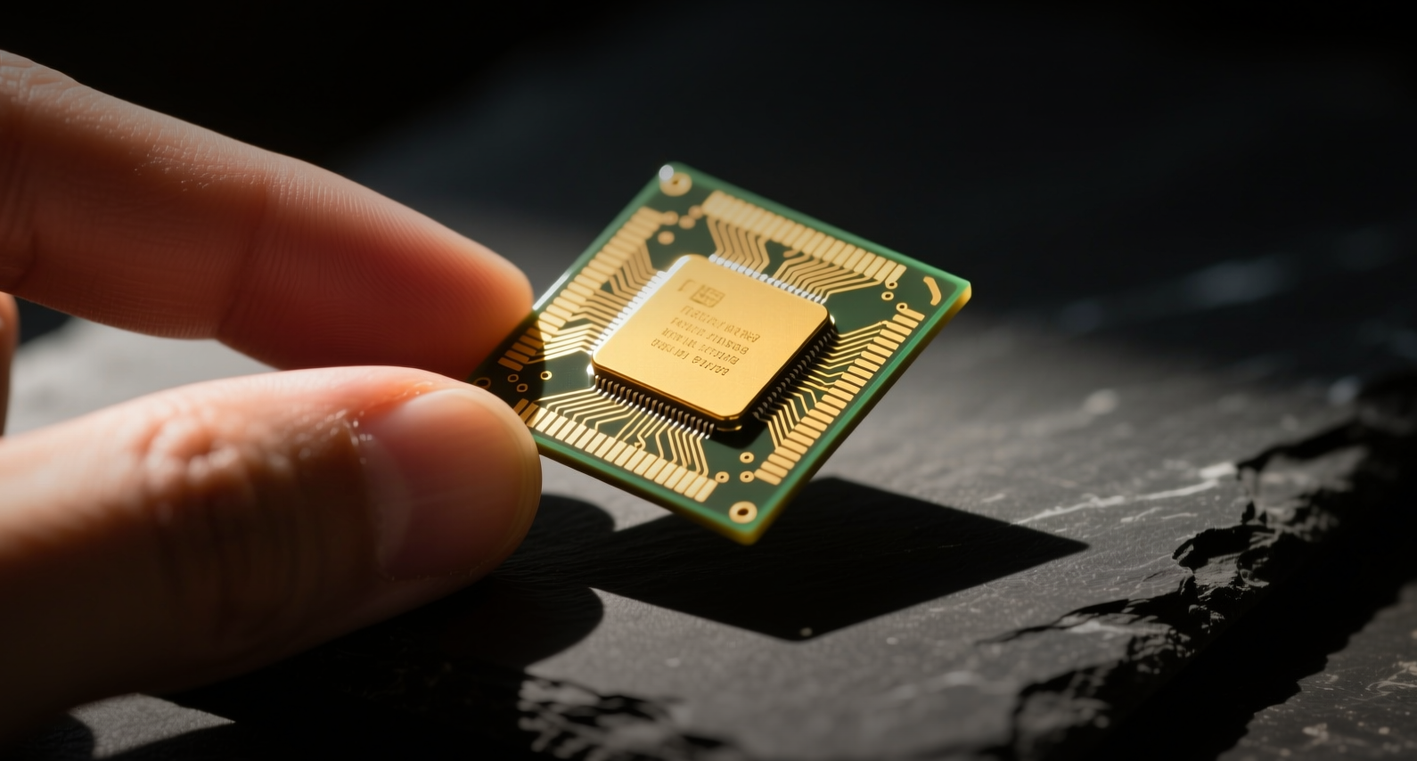
SEALSQ commercializes Miraex quantum photonics after $200M fund deal
**SEALSQ's $200 million bet on quantum photonics moves from lab to market.** SEALSQ Corp began commercial deployment of Miraex SA's quantum photonics technology July 31, following its $200 million fund-financed acquisition of the Swiss startup, targeting governments and telecom operators. "Miraex closes the quantum interconnect layer of our Quantum Sovereign Vertical Stack, the one piece the industry cannot scale without," Carlos Moreira, chairman and CEO of SEALSQ, said. "We now own it outright, acquired and funded through our $200 million Quantum Fund." The acquisition, completed June 2, was financed through SEALSQ's Quantum Fund, which has deployed more than $65 million into strategic quantum investments. Miraex's proprietary Thin Film Lithium Tantalate Photonic Integrated Circuit (TFLT PIC) platform converts quantum information between microwave frequencies — used by superconducting quantum processors from IBM and Google — and optical frequencies for long-distance quantum communications. The commercial rollout targets four markets: distributed quantum computing, quantum networking, quantum sensing, and a Quantum Orbital Space Cloud for satellite-based quantum networks. SEALSQ shares rose 3.81 percent to $2.45 following the announcement, giving the company a market capitalization of roughly $546 million. The move positions SEALSQ as a full-stack supplier of post-quantum security infrastructure — from semiconductors and cryptography to quantum networking hardware — competing with specialized quantum interconnect firms and the broader quantum computing sector. ## Four Markets, One Interconnect Layer Miraex's TFLT PIC platform addresses a core bottleneck in scaling quantum systems: converting quantum states between the microwave domain of superconducting processors and the optical domain of fiber networks. Without this conversion layer, quantum processors remain isolated islands, unable to communicate over distance. The technology is built on thin film lithium tantalate, a material with strong electro-optic properties that enable efficient frequency conversion at scale. The four commercial targets reflect different stages of quantum infrastructure maturity. Distributed quantum computing interconnects separate processors to build modular supercomputers, potentially multiplying compute capacity without requiring a single monolithic machine. Quantum networking provides the optical backbone for Quantum Key Distribution (QKD) and the future quantum internet, where encryption keys are transmitted using quantum states that reveal any interception attempt. Quantum sensing delivers photonic technologies for navigation without GPS, defense systems, and critical infrastructure monitoring. The Quantum Orbital Space Cloud extends radiation-tolerant photonics to secure satellite communications and space-based quantum networks. ## Sovereign Stack vs. the Quantum Giants SEALSQ's strategy hinges on vertical integration — combining secure semiconductor hardware, post-quantum cryptography, quantum communications, and now photonic interconnects into a single platform. The company is targeting hyperscalers, telecom operators, defense organizations, and critical infrastructure operators seeking sovereign quantum infrastructure. The approach differs from IBM and Google, which focus on building quantum processors themselves. SEALSQ instead supplies the connective tissue — the hardware and software layer that enables quantum systems to scale beyond single processors. Miraex, headquartered at the EPFL Innovation Park in Ecublens, Switzerland, becomes the cornerstone of this effort. SEALSQ's integration of Miraex also reinforces Switzerland's position as a quantum innovation hub. The company's Root-to-Qubit strategy — spanning semiconductor roots to quantum qubits — now has a commercial revenue path. With more than $65 million already deployed from its Quantum Fund, SEALSQ is betting that the quantum interconnect layer becomes as essential to quantum computing as networking equipment is to classical data centers. The competitive field is crowded. IBM's roadmap targets 1,000-plus qubit systems by 2027, while Google's Willow processor demonstrated error correction milestones in late 2024. Both rely on superconducting qubits that operate at microwave frequencies — precisely the domain Miraex's photonic interconnects bridge. If SEALSQ can establish its TFLT PIC platform as the standard interconnect for these systems, the addressable market extends beyond its own quantum stack to every superconducting quantum processor in development. For investors, the question is whether SEALSQ can convert its research pipeline into recurring revenue before larger competitors build equivalent interconnect capabilities in-house. The company's $546 million market cap reflects early-stage expectations, with commercial traction in the four target markets yet to be demonstrated. SEALSQ's post-quantum semiconductor business — spanning multi-factor authentication tokens, smart energy, medical systems, defense, and industrial automation — provides a revenue base while the quantum photonics segment scales. This article is for informational purposes only and does not constitute investment advice.

Jul 31 2026, 13:55
Fed's 9-3 Hold Removes Forward Guidance as a Policy Tool
The Federal Reserve's July decision was a hold on the surface, but a quiet overhaul of how it communicates the path ahead. The Federal Reserve left its policy rate at 3.50%-3.75% in a split 9-3 vote, recasting the removal of forward guidance as a deliberate policy tool rather than a communications adjustment. "Inflation remains above target and the committee is committed to restoring price stability," the Federal Open Market Committee said in its post-meeting statement, dropping the explicit guidance on future moves that markets had leaned on. Three policymakers dissented in favor of a hike, the widest internal split of the current cycle. The committee's decision to strip forward guidance from its language leaves investors without a stated reference point for the next move, a shift the Fed framed as a policy instrument in its own right. The ambiguity carries a cost. With the fed funds rate unchanged and inflation still above the 2 percent target, traders must now price the remainder of 2026 without the committee's own roadmap. That uncertainty is likely to surface in wider swings across equities and fixed income as the next meeting approaches. ## A Policy Tool, Not a Press-Release Edit The distinction matters. Forward guidance has historically been read as a communications device, a way to telegraph intent without committing. By reclassifying its removal as a policy tool, the Fed shows that the absence of guidance is itself a stance, one that keeps every option open while inflation runs hot. The 9-3 vote reflects that internal disagreement: three officials wanted a hike, a minority large enough to suggest the committee is not unified on the path ahead. The shift also changes how the market reads the statement itself. When guidance is present, a single phrase can move yields by several basis points. Without it, every data release becomes the primary input, and the committee's silence carries as much weight as its words. For a central bank that has leaned on communication as a lever, handing that lever back to the data is a meaningful change in posture. ## Markets Lose Their Anchor For investors, the change removes the single most reliable input in rate forecasting. Without explicit guidance, futures markets must infer the path from data alone, and the split vote complicates that read. The practical effect is a reassessment of rate-cut expectations for the rest of 2026, with borrowing costs, equity valuations, and sector performance all sensitive to how quickly the committee moves. The last time the Fed leaned on data dependence over guidance, markets swung sharply on each inflation print, a pattern that could repeat as the next decision date nears. For fixed-income investors, the loss of guidance raises the premium demanded for holding duration, while equity investors face a wider range of plausible outcomes for discount rates. The committee's next move, whenever it comes, will now arrive with less warning than markets have grown used to, and the split vote leaves the direction of that move genuinely open.

Jul 31 2026, 13:49
Westinghouse Electric files for IPO as 3rd nuclear listing of 2026
**Westinghouse Electric has confidentially filed with the SEC for an IPO, marking the third nuclear company to pursue public markets in 2026.** Westinghouse Electric confidentially filed for an IPO on July 31, joining two nuclear peers already listed in 2026 as investor appetite for atomic power accelerates. The Cranberry Township, Pennsylvania-based company submitted a draft registration statement on Form S-1 with the Securities and Exchange Commission, according to a company statement Friday. Westinghouse is jointly owned by Cameco, which holds a 49 percent stake, and Brookfield Renewable Partners, which owns 51 percent. The company provides nuclear products and services to utilities worldwide, including nuclear fuel, service and maintenance, instrumentation, control and design of nuclear power plants. It has not yet determined the number of shares to be offered or the price range for the proposed offering. X-Energy and Standard Nuclear completed traditional IPOs in 2026, setting a benchmark for nuclear sector valuations. The filing reflects renewed investor interest in nuclear energy as a strategic sector in the clean energy transition. The listing could attract significant institutional investment and set a benchmark for nuclear sector valuations as utilities and data center operators increasingly turn to atomic power for reliable, carbon-free baseload electricity. The confidential filing allows Westinghouse to keep its financial information private until closer to the listing date, a standard practice that lets companies prepare for IPOs without public market scrutiny. The company has not disclosed a target valuation, expected deal size, or use of proceeds. Westinghouse's return to public markets follows a complex ownership history. Brookfield acquired the company in 2018 after the bankruptcy of Toshiba's nuclear construction subsidiary, and Cameco purchased its 49 percent stake in 2023. The dual ownership structure — pairing a uranium producer with a renewable energy infrastructure investor — reflects the nuclear sector's growing appeal across the energy value chain. **X-Energy and Standard Nuclear Priced in 2026** The IPO wave in nuclear energy extends beyond Westinghouse. X-Energy and Standard Nuclear completed traditional IPOs in 2026, and the sector has drawn attention from institutional investors seeking exposure to clean energy infrastructure. Nuclear power has gained renewed policy support as governments and corporations seek carbon-free baseload electricity to meet climate targets and power AI data centers. The timing of the filing coincides with a broader reassessment of nuclear energy's role in the energy transition. Utilities are extending the operating lives of existing reactors, and technology companies have signed power purchase agreements with nuclear operators to secure reliable electricity for data centers. These dynamics have strengthened the investment case for nuclear technology suppliers. For Westinghouse, the IPO would provide access to public capital markets to fund growth in its nuclear fuel, services, and plant design businesses. The company's position as a supplier to utilities worldwide gives it exposure to both existing reactor maintenance and new build programs. The listing could also serve as a valuation benchmark for the nuclear technology sector. With X-Energy and Standard Nuclear already trading publicly, investors will have multiple data points to compare Westinghouse's financial performance against its peers. This article is for informational purposes only and does not constitute investment advice.