Edgen AI operates independently of, and is not controlled by Aspen Digital Financial Limited.
SEALSQ commercializes Miraex quantum photonics after $200M fund deal
 Edgen Stock·Jul 31 2026, 13:58
Share to
Share to
Copy link
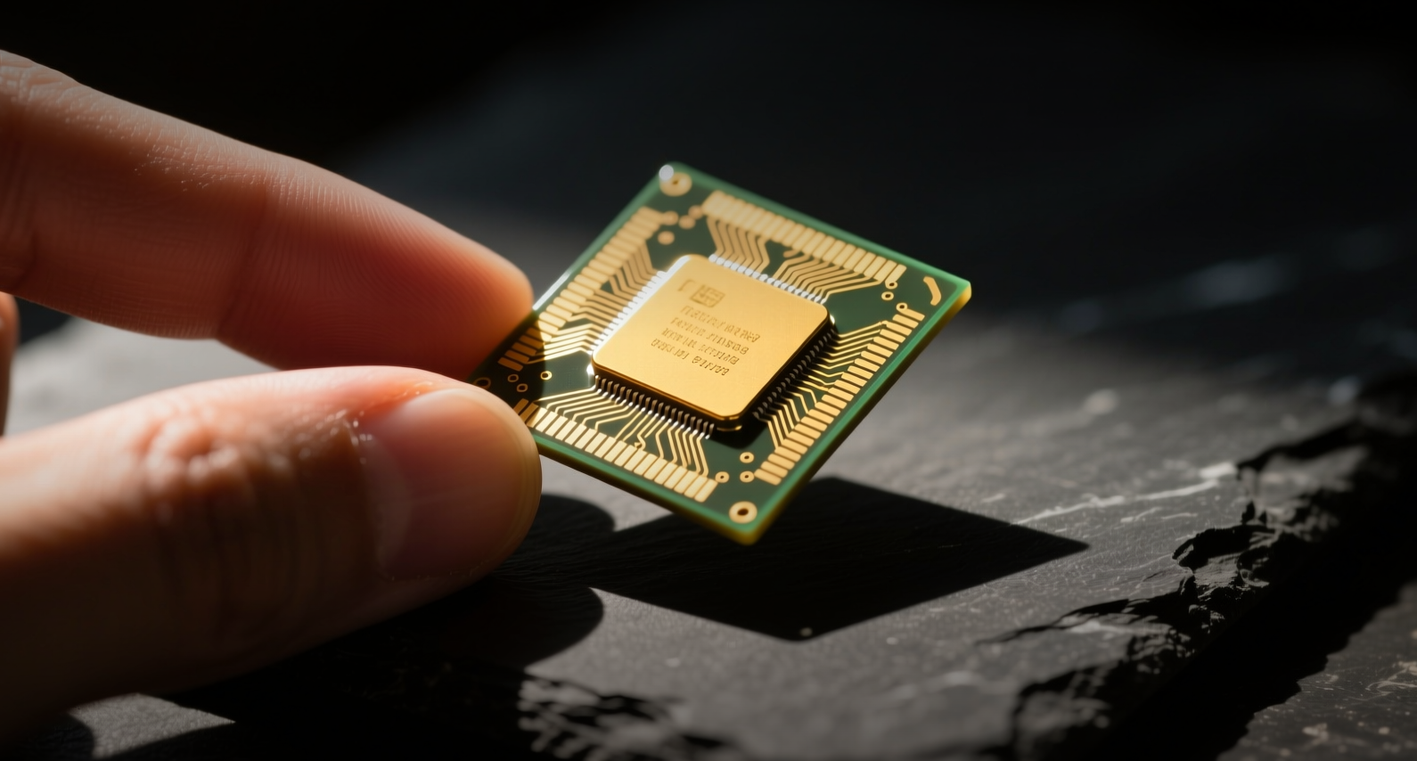
[1] SEALSQ Launches Commercial Phase of Miraex Quantum Photonics Technology Following Strategic Acquisition (https://www.globenewswire.com/news-release/20 ...)[2] SEALSQ Corp Launches Commercial Phase of Miraex Quantum Photonics Technology Following Acquisition - Quiver Quantitative (https://www.quiverquant.com/news/SEALSQ+Corp+ ...)[3] SEALSQ Starts Commercial Rollout of Microwave-to-Optical Link - Stock Titan (https://www.stocktitan.net/news/LAES/sealsq-l ...)
Related News

Jul 31 2026, 14:34
Iran suspends Hormuz passage, cutting off 20% of global oil
Iran's "Persian Gulf Strait Authority" declared Hormuz closed to normal passage on July 31, citing continued US military aggression in surrounding waters, a move that threatens roughly 20 percent of global oil and LNG trade. "The region's energy sector appears weaker and more vulnerable than at any point since the war began," said Ron Bousso, energy columnist at Reuters, in a July 30 analysis. Combined exports from the Gulf and Saudi Arabia's west coast have already slipped to around 6.2 million barrels per day this week, less than half the wartime peak of 13.4 million bpd hit in late June and far below the more than 20 million bpd that typically left the region before the conflict, according to data analytics firm Kpler. The announcement follows the unraveling of the US-Iran interim ceasefire deal on June 17 and renewed US strikes against Iranian targets this week after Tehran and allied militias targeted tankers and two major refineries in Kuwait and Saudi Arabia. The formal closure raises the stakes for global energy markets that have been operating under an effective shutdown for months. India's Mangalore Refinery has already issued a crude purchase tender explicitly asking suppliers to avoid the Red Sea and the Strait of Hormuz, while Asian and European LNG importers are pressing Qatar and the UAE for lower prices and stronger supply guarantees. If the closure persists, crude prices could spike well beyond current levels, triggering safe-haven flows into gold and US Treasuries and a broad sell-off in global equities. **Exports Already Halved** The suspension accelerates a decline that has been building since the US and Israel launched strikes against Iran more than five months ago. Gulf producers have been forced to reroute shipments through the Red Sea, but Yemen's Iran-backed Houthi militia declared an embargo on Saudi exports last week, complicating that alternative corridor. Attacks on tankers and energy infrastructure have forced two major refineries in Kuwait and Saudi Arabia to shut down. The last comparable disruption came during the Iran-Iraq War in the 1980s, when the "Tanker War" led to US naval escorts of reflagged Kuwaiti tankers and a sustained period of elevated oil prices and war-risk insurance premiums. That conflict eventually ended with a ceasefire, but the current standoff has no obvious diplomatic off-ramp. The US has so far failed to eliminate Tehran's ability to disrupt shipping with air strikes, while President Donald Trump appears reluctant to embark on a deeper regional war. **Buyers Rethink Gulf Dependence** The psychological damage may outlast the physical disruption. For decades, Gulf energy supplies commanded a reliability premium from Asian buyers. The war has demonstrated that Iran can disrupt the strait using relatively cheap drones and missiles, and even if shipping resumes, the threat will persist. Gulf producers may be forced to offer discounts to retain customers, and importers are already seeking more bespoke, direct supply deals outside the liquid spot market. Oman presented Tehran with a Gulf-backed proposal under which Iran would help administer the strait and collect voluntary fees from vessels using the route. Iran rejected the proposal, insisting that the entire inbound shipping channel and part of the outbound route should fall under its control, according to an Iranian official. Washington has repeatedly rejected any suggestion that ships should pay tolls to transit the strait. The immediate question is whether the US will respond militarily to enforce freedom of navigation or whether diplomatic pressure will force a compromise. With Tehran demanding control over the strait and Washington refusing to legitimize any Iranian authority over the waterway, the standoff has no obvious near-term resolution. Energy markets are pricing in a prolonged period of elevated risk, with higher insurance premiums and shipping costs becoming the new cost of doing business in the Gulf. For Asian importers that depend on Gulf crude for a significant share of their refining feedstock, the cost of rerouting and higher insurance could translate directly into higher fuel prices for consumers. This article is for informational purposes only and does not constitute investment advice.

Jul 31 2026, 14:32
Moderna norovirus vaccine misses interim bar, shares fall 7%
Moderna's experimental norovirus vaccine mRNA-1403 missed the pre-specified statistical threshold for early success in a Phase 3 interim analysis, the company said Thursday. "The study remains ongoing, and we are enrolling an additional cohort to evaluate the seasonal vaccine's efficacy during the coming winter season," Moderna said in its Q2 2026 earnings release. Shares of Moderna (NASDAQ: MRNA) fell about 7 percent in morning trading. The miss extends a trial that has stretched across three enrollment seasons, an FDA clinical hold, and a case-accrual shortfall on two continents. The company did not disclose the observed efficacy point estimate, consistent with the blinded study design. Missing the interim bar does not mean the vaccine was proven ineffective. The statistical threshold for early stopping is set higher than the bar for the final readout, because examining accumulating data multiple times inflates the risk of a false positive. The trial remains blinded and ongoing, with a definitive efficacy readout now unlikely before the 2027-2028 timeframe. The Nova 301 trial dosed its first participant in September 2024, timed to the Northern Hemisphere norovirus season. After struggling to accrue cases in the Southern Hemisphere, the trial returned north for a second season. In February 2025, the FDA placed the study on clinical hold following a single report of Guillain-Barré syndrome, a rare neurological condition; the hold was lifted about May 2025. A single case among roughly 25,000 participants does not establish a causal link. mRNA-1403 is a trivalent vaccine encoding the major capsid protein of three norovirus genotypes — GII.4, GI.3, and GII.3 — delivered in lipid nanoparticles. Phase 1/2 data confirmed strong HBGA-blocking antibody responses against all three targets. The science appears sound; the constraint is epidemiology. Norovirus circulates in geographically uneven, year-to-year variable waves driven by outbreak clusters, making case accrual unpredictable. No approved norovirus vaccine exists anywhere in the world. The disease causes about 21 million cases, 109,000 hospitalizations, and 900 deaths annually in the US, mostly among adults 65 and older, with an economic cost exceeding $5.5 billion. Globally, norovirus causes an estimated 200,000 deaths per year. HilleVax's HIL-214 failed a Phase 2b trial in infants in July 2024 with 5 percent efficacy, though its adult program showed 61.8 percent effectiveness in a separate study. The norovirus setback complicates Moderna's push to diversify beyond respiratory vaccines. The company reported a Q2 net loss of $782 million, or $1.97 per share, on revenue of $145 million, with cash and investments of $6.9 billion at June 30. Investors will watch Aug. 5, when the FDA decides on mFLUSIVA, Moderna's mRNA flu vaccine, which an advisory panel recommended unanimously in June. Approval would give Moderna its first vaccine against a routine, annually recurring disease. This article is for informational purposes only and does not constitute investment advice.

Jul 31 2026, 14:30
B3 delays Brazil market open July 31 after clearing file issue
B3, Brazil's primary stock exchange, delayed the market open July 31 after a clearing file processing failure disrupted trading systems. The disruption stemmed from a clearing file processing issue, according to Reuters, which reported the exchange's systems encountered technical difficulties before the scheduled opening. B3, formally known as B3 S.A. - Brasil, Bolsa, Balcão, operates Brazil's primary equities and derivatives markets from São Paulo. The delay halted trading activity in Brazil's equity market, potentially triggering investor uncertainty and reduced trading volumes upon reopening. The exchange has not yet disclosed when normal operations will resume or the specific technical details of the failure. The incident raises broader concerns about exchange infrastructure reliability, potentially prompting regulatory scrutiny of B3's operational resilience. Brazil's securities regulator, the Comissão de Valores Mobiliários, may require the exchange to strengthen backup systems and disaster recovery protocols. The failure also highlights the vulnerability of centralized market infrastructure, where a single processing error can halt trading for an entire national market. B3 processes billions of dollars in daily trading volume across equities, fixed income, and derivatives, making it a critical component of Brazil's financial system. The exchange's clearing operations are central to price discovery and settlement for thousands of listed companies and millions of investor accounts. Investors may reassess their reliance on centralized exchanges following this incident, with some potentially exploring alternative trading venues. However, B3's dominant position in Brazil's capital markets means any prolonged outage could have significant economic consequences, affecting pension fund allocations and foreign portfolio flows. The exchange has historically handled the vast majority of equity trading in Brazil, leaving limited alternatives for institutional investors. The exchange's technical issues come as Brazil's central bank navigates an inflation environment where mid-July consumer prices slowed more than expected, with the annual rate approaching the target band, according to data reported by US News. The outage adds another layer of uncertainty for investors already monitoring monetary policy direction and its implications for equity valuations. Traders pointed to the clearing file issue as the primary catalyst for the disruption. The exchange has not yet provided a timeline for when trading will resume, and market participants are watching for further updates from B3. The incident follows a pattern of exchange infrastructure failures globally, raising questions about the resilience of centralized trading systems in an era of increasing market complexity. This article is for informational purposes only and does not constitute investment advice.