Edgen AI operates independently of, and is not controlled by Aspen Digital Financial Limited.
Sino-US trade rebounds 3 months as new relations framework takes hold
 Edgen Stock·Jul 22 2026, 02:37
Share to
Share to
Copy link

[1] General Administration of Customs: The New Positioning of Sino-US Relations Provides Stable Expectations for Sino-US and International Economic and Trade Development (https://wallstreetcn.com/livenews/3137899 ...)[2] How will UK foreign policy change under Ed Miliband? (https://www.ft.com/content/e0aaea6b-a8b2-4482 ...)[3] Live updates: Polls close in Arizona after voters cast ballots in battleground state primary (https://www.nbcnews.com/politics/2026-electio ...)[4] China’s Solar Exports Shift Toward Asia and Africa Despite Tax Rebate Cuts - CarbonCredits.com (https://carboncredits.com/chinas-solar-export ...)[5] USA-China-EU: Between Cooperation and Fragmentation in Global Trade - Modern Ghana (https://www.modernghana.com/news/1512145/usa- ...)
Related News

Jul 22 2026, 03:39
OpenAI deletes ad network job listing as revenue targets face scrutiny
OpenAI posted a job listing describing plans to build a publisher-facing ad network, then deleted the references — a move that highlights the gap between its $100 billion revenue target and the early-stage reality of ChatGPT's advertising business. "This is a huge sign that OpenAI is building toward an advertising business far beyond just ChatGPT," Debra Aho Williamson, founder of the AI-focused research firm Sonata Insights, said. The job posting, first reported by CMO Insider, called for a "support delivery lead" whose responsibilities included "inventory setup, ad serving integrations, reporting, and yield-impacting issues" for publishers. After CMO Insider contacted OpenAI, the company edited or deleted five sentences referencing publisher-side work, later saying the role covers agencies and brands. OpenAI told CMO Insider it is not entering demand extension — the practice of extending advertiser demand to external websites — though analysts said the job description described exactly that model. The episode comes as OpenAI faces mounting pressure to justify its private valuation and scale high-margin revenue ahead of a widely expected public offering. The company has projected $2.5 billion in ad revenue in 2026 and roughly $100 billion by 2030, according to reports from Axios and The Information. EMARKETER estimates the entire US chatbot advertising market will generate less than $1 billion this year and only $5.41 billion by 2030 — a 90% shortfall from OpenAI's five-year target. **The ad inventory bottleneck** OpenAI began selling ads on ChatGPT in February after years of resistance from Chief Executive Officer Sam Altman, who said in 2024 that he "hates ads" and called the combination of AI and advertising "uniquely unsettling." The company's financial concerns won out, and under former applications chief Fidji Simo, OpenAI began exploring ad formats. Advertisers who committed hundreds of thousands of dollars to early trials complained that demand outpaced available supply, with OpenAI slow to spend their budgets despite asking for hefty upfront commitments. Dave Dugan, OpenAI's head of global ad solutions, told Business Insider in June that ad delivery had improved as the company grew more confident in the ChatGPT user experience. Still, OpenAI only serves ads to users on free or lower-priced tiers in select regions, limiting its native ad inventory to the chat interface. A publisher ad network would solve that bottleneck. By extending advertiser demand to external websites — similar to the Facebook Audience Network or Google Display Network — OpenAI could offer marketers more placements while giving publishers a cut of ad revenue. That model would also mark a shift in OpenAI's relationship with media companies, which currently do not receive a share of ChatGPT's ad revenue. Some publishers, including Axel Springer, have direct licensing deals for training data, while others — including the New York Times, Ziff Davis, and a coalition of local news outlets — are actively suing OpenAI for copyright infringement. **The revenue reality check** Nate Elliott, an analyst at EMARKETER, said OpenAI's $100 billion target is unrealistic. "We look at their numbers and the assumptions required to get there, and we don't see any of those assumptions as logical or reasonable," Elliott said. To hit that goal, OpenAI would need to dramatically grow its user base, charge top-tier ad rates, and fill ChatGPT with an "unbearably" high load of ads, he said. Advertisers testing ChatGPT's platform describe it as rudimentary compared with Google and Meta's tools. Greg Hockenbrocht, chief executive of marketing startup Launch10, said his campaign got a far lower click-through rate than on Google ads, and the platform lacks features for generating ad copy and testing variants. "My own expectation was that given it was an ads platform launched by one of the leading foundation model companies, that the platform would be a little more, call it, 'AI-native,'" Hockenbrocht said. OpenAI has been adding features quickly — cost-per-click bidding, conversion tracking, and geographic targeting within the US — but remains years behind the advertising infrastructure that Google and Meta have built over two decades. Dugan has pitched OpenAI's engineering speed as a competitive advantage, saying the company's engineers use its own Codex tool to build the ad product on a weekly release cycle. For investors, the gap between OpenAI's revenue projections and market reality carries implications beyond the company itself. If OpenAI cannot scale advertising to the levels it has forecast, the company may need to lean more heavily on subscription revenue from ChatGPT Plus, Pro, and Enterprise tiers, or push for higher API pricing — moves that could slow user growth. The ad network strategy, if pursued, would also put OpenAI in direct competition with Google and Meta for publisher relationships and advertiser budgets, a contest where both incumbents hold decades of data and infrastructure advantages. This article is for informational purposes only and does not constitute investment advice.
Jul 22 2026, 03:39
Wistron opens $700 million Texas factory for Nvidia's latest AI chips
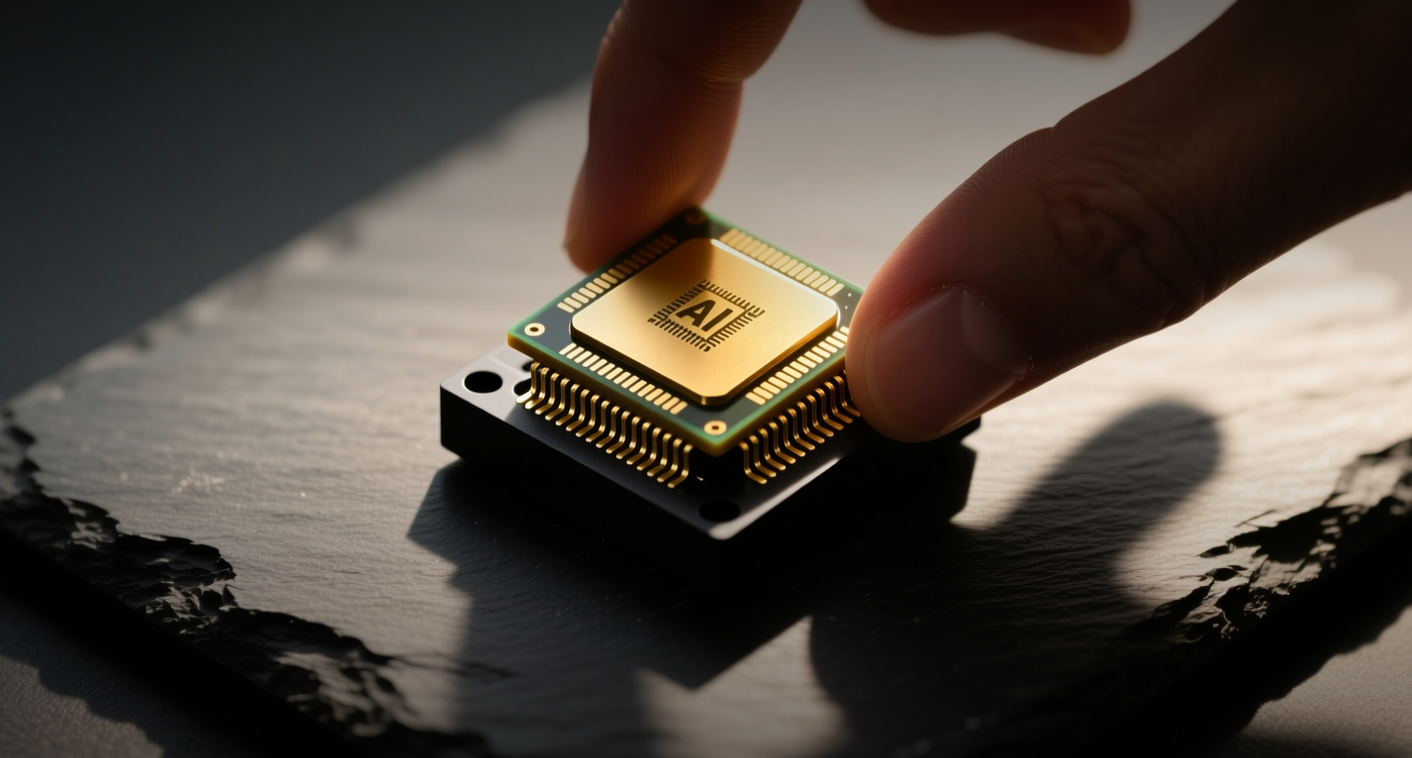
Nvidia supplier Wistron launched a $700 million manufacturing facility in Fort Worth, Texas, to mass-produce the chipmaker's latest AI superchips, deepening the reshoring of critical artificial intelligence infrastructure as demand for computing power surges. The factory is producing Nvidia's GB300 Grace Blackwell Ultra Superchip — which Chief Executive Officer Jensen Huang has described as "the most powerful AI supercomputer in the world" — and will also manufacture the next-generation Vera Rubin Superchip, Wistron said. The site is the first in the US where the GB300 has been built and mass-produced. The plant is expected to scale to tens of thousands of computing boards per month by the end of this year, according to Nvidia. It has already created more than 500 jobs and is on track to employ 1,000 workers by year-end. The facility forms part of the $500 billion US investment commitment Nvidia announced in 2025. The move reflects a broader push by Taiwanese electronics manufacturers to expand US production capacity as the Biden-era CHIPS Act incentives and rising geopolitical tensions over Taiwan — where TSMC, the world's advanced chip foundry, is based — drive supply chain diversification. Wistron joins other Nvidia suppliers such as Foxconn and Pegatron in building US assembly plants for AI servers and networking gear. **GB300 vs. Vera Rubin: Two Generations of AI Silicon** The GB300 Grace Blackwell Ultra Superchip pairs Nvidia's Grace CPU with the Blackwell GPU architecture using NVLink-C2C interconnect, delivering performance gains over the prior-generation H100 (which offered 990 TFLOPS FP16). Nvidia has not disclosed full GB300 benchmark specifications, but the company has positioned it as the flagship AI training and inference platform for 2026. The Vera Rubin Superchip, named after the American astronomer, represents Nvidia's next architecture and is expected to enter production in 2027. By committing the Fort Worth facility to both generations, Wistron is signaling a multiyear production relationship that extends beyond a single product cycle. **Supply Chain Implications** The Fort Worth plant reduces Nvidia's reliance on Asian assembly hubs for its highest-value systems. While the GB300's core silicon — the Blackwell GPU die — is fabricated at TSMC's fabs in Taiwan, final assembly, testing, and packaging into complete computing boards now occurs on US soil. This split manufacturing model creates logistical complexity but insulates Nvidia from single-region disruption risk. The facility also supports Nvidia's push to sell complete AI systems — not just chips — to hyperscale cloud providers such as Microsoft, Amazon, and Google, which are spending tens of billions annually on AI data center infrastructure. Delivering fully assembled, tested systems from a US factory shortens lead times for those customers. **What It Means for Investors** Nvidia shares have more than tripled since early 2024 as the company's data center revenue surged past $100 billion on an annualized basis. The Wistron investment, while modest relative to Nvidia's roughly $3 trillion market capitalization, signals that the company expects AI infrastructure demand to remain elevated for years. Rival chipmakers Advanced Micro Devices and Intel are also expanding their AI accelerator lines, but Nvidia's software ecosystem — built around its CUDA platform — remains a competitive moat that competitors have struggled to erode. The reshoring trend also benefits US-based contract manufacturers and industrial real estate in Texas, though it adds cost pressure to Nvidia's gross margins, which have hovered around 75%. Wistron's ability to ramp production to tens of thousands of boards per month will be a key metric for investors tracking Nvidia's supply capacity heading into 2027. This article is for informational purposes only and does not constitute investment advice.
Jul 22 2026, 03:37
Anthropic eyes Physical Intelligence in 2026 AI acquisition spree
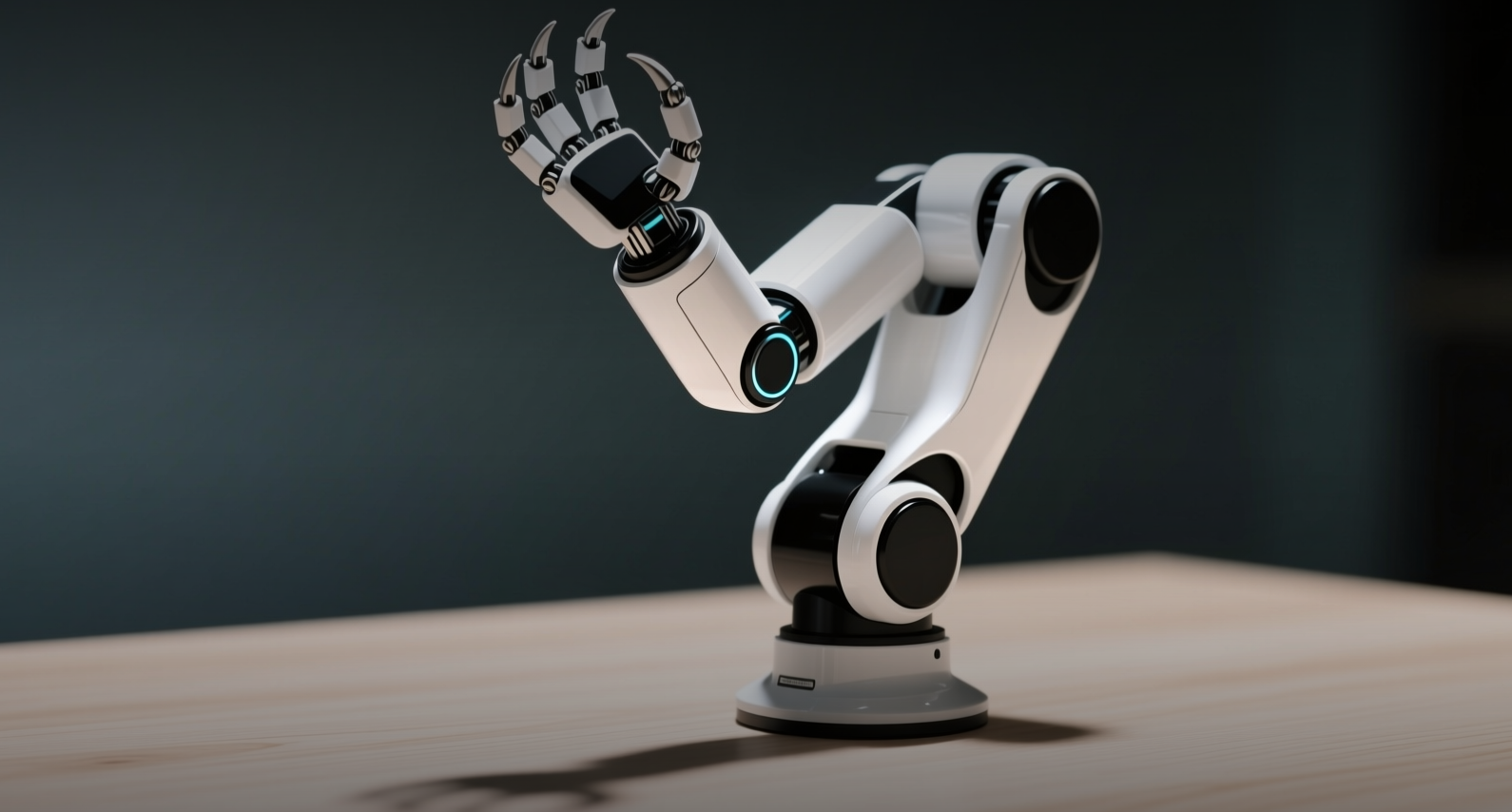
Anthropic's rumored acquisition of robotics startup Physical Intelligence would mark the latest in a year of aggressive dealmaking by leading AI labs. The deal, first reported by TechCrunch, would add embodied AI capabilities to Anthropic's portfolio as the company competes with OpenAI for enterprise customers willing to spend on integrated solutions rather than raw API access. "These acquisitions are about converting model capability into enterprise revenue faster than the other guy," a person familiar with the dealmaking strategy said. "If you can't build it in six months, you buy it." Neither Anthropic nor Physical Intelligence has confirmed the talks. Physical Intelligence, a San Francisco-based startup, develops foundation models for robots to perform complex physical tasks — stacking boxes, folding laundry, assembling components — without task-specific programming. The startup was valued at roughly $2 billion in its last funding round, according to PitchBook data. Anthropic has raised more than $14 billion since its founding, including a $4 billion commitment from Google in late 2025. For Anthropic, acquiring Physical Intelligence would signal a bet beyond language models into the physical world, where AI could control manufacturing, logistics and warehouse automation. That would put it in more direct competition with Tesla's Optimus robot program and Google's DeepMind robotics division, both of which have invested billions in embodied AI. The robotics AI market is projected to reach $35 billion by 2030, according to Goldman Sachs. The acquisition spree by Anthropic and OpenAI reflects a structural shift in how AI labs deploy their capital. With hundreds of billions in market value tied to their models, both companies are racing to build moats around their technology stacks — not just through better training data or larger compute clusters, but through ownership of the applications that sit on top. OpenAI has been the more aggressive buyer, acquiring at least eight companies in the past 18 months, including consumer products and developer tools. Anthropic has been more selective, focusing on infrastructure and safety-related acquisitions. A Physical Intelligence deal would be its largest and most strategically significant to date. ## Why Embodied AI Matters Now Physical Intelligence's approach — using large foundation models trained on diverse physical tasks rather than programming robots for specific jobs — could reduce deployment costs by as much as 60%, the startup has claimed. Anthropic's Claude model family, known for strong reasoning and safety alignment, could provide the cognitive layer for such systems. The combination would create a full-stack robotics platform: Claude for reasoning, Physical Intelligence's models for physical control. The deal would also give Anthropic a tangible product story beyond API access. While OpenAI has pursued partnerships with robotics companies and invested in physical-world AI through its venture arm, Anthropic has largely remained a pure-play model provider. Acquiring Physical Intelligence would change that, giving it a direct route into the $35 billion robotics AI market. ## The Price of Staying Competitive The rumored acquisition comes as both Anthropic and OpenAI face mounting pressure to show that their massive capital raises are translating into sustainable revenue. Enterprise customers are increasingly asking for integrated solutions — models that can act on their outputs, not just generate text. That dynamic has pushed both labs to build or buy their way into applications. For investors, the question is whether these acquisitions will generate returns commensurate with their price tags. Physical Intelligence's $2 billion valuation would make it Anthropic's most expensive acquisition by a wide margin. The company did not disclose the rumored deal price. Anthropic's existing investors include Google, which has committed $4 billion, and Salesforce, which participated in its most recent funding round. Anthropic's move into physical-world AI, if confirmed, would reshape the competitive terrain of embodied intelligence. Rivals including Tesla, Google and Amazon all have robotics programs that could face a new well-funded competitor. For now, the rumor shows a broader truth about AI in 2026: the winners will be defined not just by the models they build, but by the applications they own. This article is for informational purposes only and does not constitute investment advice.