Edgen AI operates independently of, and is not controlled by Aspen Digital Financial Limited.
QIA hands JPMorgan $20B mandate with $15B for public equities
 Edgen Stock·Sep 21 2026, 13:56
Share to
Share to
Copy link


[1] Qatar Investment Authority, JPMorgan Announce $20 Billion Partnership (https://www.wsj.com/finance/investing/qatar-i ...)[2] J.P. Morgan and Qatar Investment Authority ink $20B partnership (https://seekingalpha.com/news/4644742-j-p-mor ...)[3] Qatar's wealth fund and JP Morgan Asset Management to launch $20 billion partnership (https://www.aol.com/articles/qatars-wealth-fu ...)[4] Qatar launches wealth fund division for domestic investments (https://www.reuters.com/world/middle-east/qat ...)[5] JPMorgan, Qatar Investment Authority Target $20 Billion Partnership, Bloomberg Reports (https://www.marketscreener.com/news/jpmorgan- ...)
Related News
Sep 21 2026, 14:04
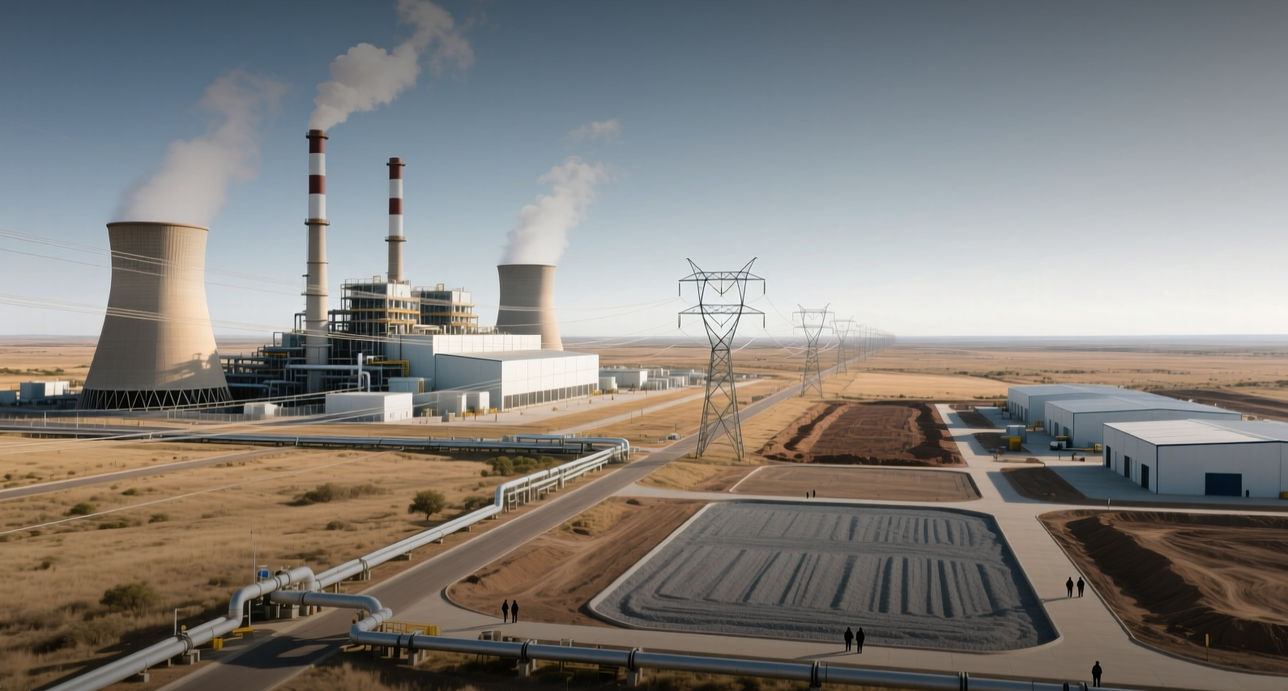
New Era locks 207 MW Vistra power for Texas data center
New Era Energy & Digital's subsidiary TCDC PowerCo has signed a 20-year power purchase agreement with Luminant ET Services, a Vistra Corp. affiliate, covering a minimum of 200 MW and up to 207 MW for Phase 1 of the company's Texas Critical Data Center, with firm power expected to reach the site in the third quarter of 2027. "Having firm, contracted power for Phase 1 in New Era's name is an incredible milestone which we believe materially reduces Phase 1 development risk at TCDC," Charlie Nelson, Chairman and Chief Executive Officer of New Era, said. "With the land secured, construction permits in hand, Phase 1 power contracted for 20 years, and room to expand to multiple phases, we believe this is an attractive opportunity to any quality tenant currently in the market." The electricity will come from Vistra's 1,180 MW natural gas-fired generating facility in Odessa, Texas, which sits immediately adjacent to the 493-acre TCDC site in the Permian Basin. The contract runs an initial 20-year term with automatic one-year renewals thereafter. New Era's stated build-out plan scales the campus to 1.4 GW of anticipated capacity over time, meaning the Phase 1 agreement covers roughly 15% of the site's eventual power envelope. Alongside the PPA, affiliates of both companies signed a development framework agreement. Once power delivery begins, Vistra receives a 5% non-voting interest in the portion of the data center project it supplies, plus a right of first refusal on future TCDC development opportunities and a right of first offer on certain development opportunities serving other New Era projects. "Demand for reliable power to support digital infrastructure continues to grow across the United States," Claudia Morrow, Senior Vice President of Corporate Development and Strategy at Vistra, said. "We are pleased to work with New Era on a long-term power arrangement for the TCDC project and to establish a framework that allows us to evaluate additional power opportunities together over time." New Era shares rose 20.30% to $7.05 in pre-market trading on the Nasdaq, after closing Friday's regular session 0.86% higher. Vistra shares gained 1.42% to $142.45 in pre-market NYSE activity, following a 2.01% decline at Friday's close. ## Why 207 MW in the Permian Basin matters more than the headline number The structure of the deal is the story. New Era is not buying power from a utility at regulated tariff; it is contracting directly with a merchant generator that owns the plant next door. That arrangement, sometimes described as behind-the-meter supply, removes the interconnection queue from the critical path — a queue that in ERCOT has stretched to multi-year waits for large loads. New Era's own description of its strategy leans on exactly this: large-acreage sites paired with flexible power, deployed in modular phases to shorten time-to-power for hyperscale, enterprise and edge operators. The counterparty carries weight too. Vistra is one of the largest competitive power producers in the United States, with a generation fleet spanning gas, nuclear and renewables, and a retail and power-marketing arm that sells electricity to millions of customers. Its 1,180 MW Odessa plant is roughly 5.7 times the size of the Phase 1 commitment, leaving physical headroom for the later phases New Era has flagged. Vistra's own framing of the deal — a framework "that allows us to evaluate additional power opportunities together over time" — points at that headroom rather than a one-off contract. The scarcity backdrop explains the pricing power on both sides. Data center developers across Texas, Virginia and the Midwest are competing for long-dated electricity supply, and the constraint is increasingly generation and interconnection rather than land or capital. That dynamic has pushed merchant generators with existing gas fleets into a stronger negotiating position, and it has made contracted power a prerequisite for tenants evaluating a site. New Era's CEO framed the PPA as the step that turns TCDC "from a site with a power plan into permitted powered land." For investors, the read-through is about risk transfer. A 20-year contract with a named investment-grade-adjacent counterparty converts an uncertain development cost into a known, financeable line item — the kind of visibility lenders and prospective tenants both require. It also gives New Era a defensible answer to the question that has stalled comparable projects: where does the electricity actually come from, and who is on the hook if it does not arrive? The open items are the ones the announcement does not price. New Era has not disclosed the contract's dollar value, the power price per MWh, or the credit support required to secure its obligations — the company's own risk disclosure flags "the ability to obtain credit support to secure contractual obligations on commercially reasonable terms or at all." No anchor tenant has been named for Phase 1. And the 5% non-voting interest Vistra receives only vests once delivery starts, which ties Vistra's equity upside to a 2027 energization date that has not yet been tested by construction. The comparison set is instructive. Vistra has been assembling large-load offtake agreements with data center operators as a way to underwrite its generation book, a strategy that has drawn scrutiny from analysts focused on whether contracted volumes can be delivered on schedule. New Era, with a market capitalization in the hundreds of millions rather than tens of billions, is the smaller party in the relationship and carries the development risk that Vistra's framework agreement is structured to limit. The 20.30% pre-market move in NUAI against Vistra's 1.42% gain captures that asymmetry precisely: for New Era, the PPA is existential; for Vistra, it is one more contract in a growing book. What happens next is a tenant announcement and a construction schedule. Phase 1 power is due in the third quarter of 2027, and the automatic one-year renewals mean the contract's economics extend well beyond the first tenant's lease term — a structure that favors a developer able to sign long-duration commitments. Until a tenant is named and the contract's value is disclosed, the market is pricing a de-risked site, not a leased one. This article is for informational purposes only and does not constitute investment advice.
Sep 21 2026, 14:01
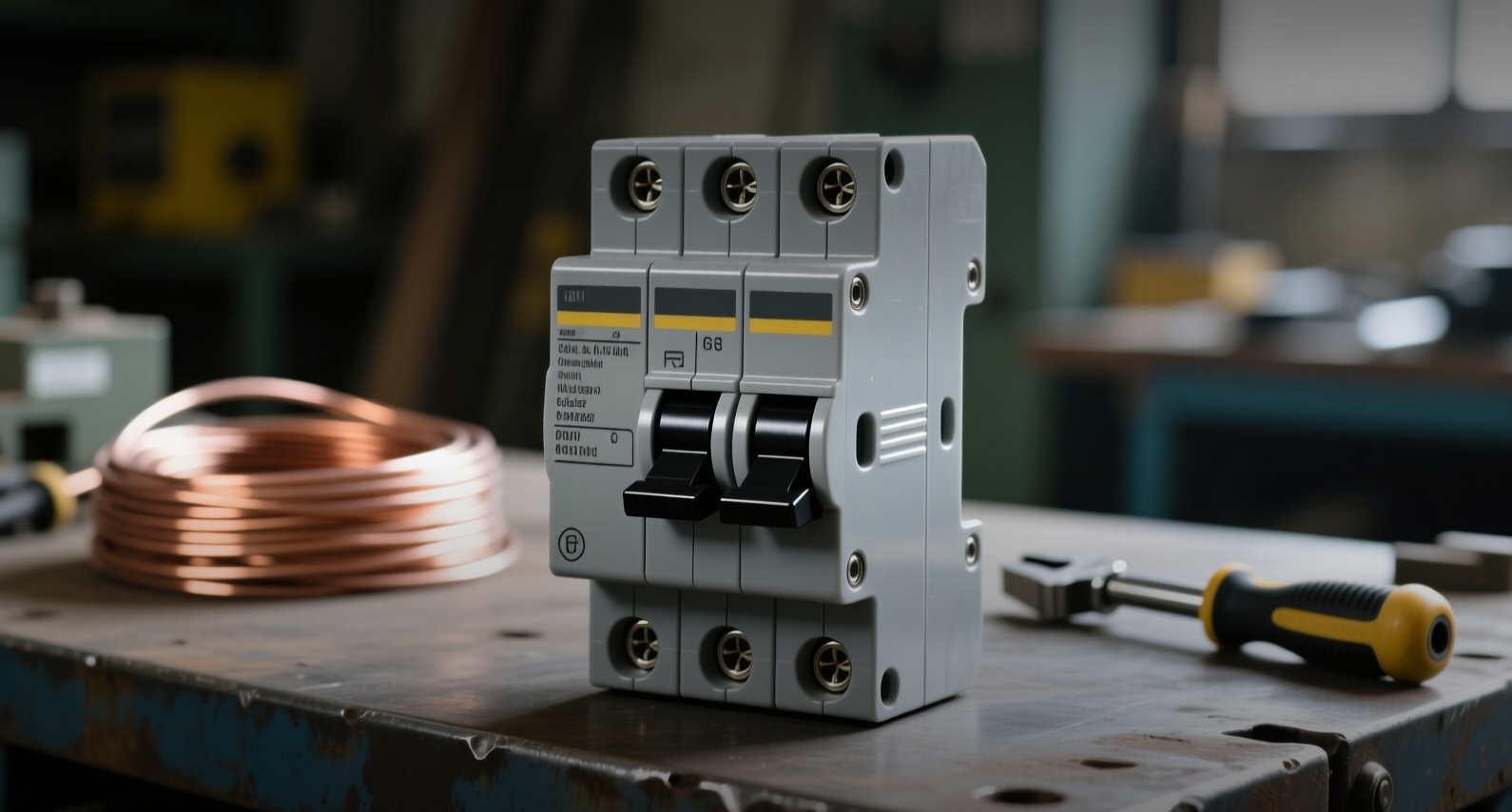
Eaton jumps 3.7% on heavy volume as EPS estimates edge higher
Eaton shares rose 3.7% to close at $424.77 in the prior session, with trading volume running well above the stock's normal pace, as the consensus earnings estimate for the current quarter drifted higher over the past 30 days. The move marks a sharp reversal for the power management company, which had lost 1.4% over the four weeks through the close. The advance came on volume far heavier than a typical session, a sign that institutional buyers, not retail momentum, drove the tape. Eaton is expected to report quarterly earnings of $3.53 per share in its upcoming release, a 15% increase from the year-ago period, according to consensus estimates. Revenue is forecast at $8.41 billion, up 20.3% year over year. The consensus EPS estimate for the quarter has been revised marginally higher over the last 30 days. "Trends in earnings estimate revisions have historically shown a strong correlation with near-term stock price movements," Zacks Investment Research said in its note on the session. The firm carries Eaton at a Zacks Rank #3 (Hold). The operating backdrop supports the revision trend. Eaton's Electrical orders have held steady across utility, industrial, residential and commercial markets, underpinning management's full-year 2026 organic growth guidance of 11-13%. At the end of the second quarter of 2026, total Electrical backlog stood 43% above the year-earlier level, while Aerospace backlog rose 28%. That pipeline gives the company visibility beyond the current year. Eaton's manufacturing footprint has also blunted the tariff exposure that has pressured other industrial names. The company builds in the zone of sale, a strategy that offsets higher material costs, and it has used acquisitions to enter new markets and widen its revenue base. The read-across from peers was muted, which sharpens the case that the session's gain was company-specific. AZZ, another name in the Zacks Manufacturing - Electronics industry, closed 0.7% lower at $132.72 and has returned -4.1% over the past month. AZZ's consensus EPS estimate for its upcoming report has been unchanged over the past month at $1.82, a 17.4% increase from the prior year, and it also carries a Zacks Rank #3 (Hold). For holders, the signal is directional rather than decisive. A marginally higher quarterly estimate and a 43% electrical backlog support the case for continued order-driven growth, but a Rank #3 implies the revision trend is not yet strong enough to shift the consensus materially. The next test is Eaton's upcoming quarterly report, where the $3.53 EPS figure and the 11-13% organic growth guidance will either confirm the revision trend or stall it. Investors should also watch whether the electrical backlog growth rate holds above 40% sequentially, since that is the metric most directly tied to the 2026 revenue outlook. This article is for informational purposes only and does not constitute investment advice.

Sep 21 2026, 13:58
Diesel at $6.29 a gallon squeezes small business margins
The average U.S. diesel price reached a record $6.29 a gallon, up 68% from $3.74 a year earlier, a cost shock that lands hardest on the trucking, retail and agricultural firms least able to pass it through. The reading, from the Energy Information Administration's weekly survey for the week ended Sept. 11, came as October West Texas Intermediate settled at $100.30 a barrel on Sept. 18 and Brent at $103.87, keeping crude in triple digits for a second week. "Staying in business means staying competitive — the buyer who gets a product onto the shelf fastest and cheapest wins — and gas, power, and fuel costs all feed into that equation," said Mohiuddin Rubel, additional managing director of Denim Expert Ltd., a garment supplier to H&M. Small Business Administrator Kelly Loeffler, speaking Sept. 21 as the diesel print circulated, pointed to new SBA capital initiatives and rising Gen-Z business formation as the offsetting side of the ledger. The squeeze is visible in the distillate data. U.S. distillate inventories rose 1.585 million barrels in the week ended Sept. 11, well above expectations, while commercial crude stocks fell just 640,000 barrels against a forecast draw of about 1.6 million — a combination that loosened product supply without relieving the retail price. Refinery crude inputs fell 256,000 barrels a day. Gasoline stocks built by 794,000 barrels. Diesel is the marginal barrel that freight, farming and construction cannot substitute away from, which is why it has decoupled from the softer crude tape. The macro transmission runs through rates. The Federal Reserve raised the target range for the federal funds rate by 25 basis points to 3.75%-4.00% on Sept. 16, its first hike in more than three years, and the 10-year Treasury yield rebounded to about 4.995% by Sept. 18. December gold settled at $4,424.90, up $25.20, as the hike was digested. For a small firm financing a vehicle fleet or a working-capital line, a higher policy rate and a record fuel bill arrive in the same quarter. That is the arithmetic the SBA initiatives are meant to answer. Loeffler's capital programs target credit access for firms that banks have tightened against, and the Gen-Z formation trend she cited is the demand-side case: newer businesses carry less legacy debt and more digital distribution, so they are less sensitive to fuel-intensive logistics. The programs' scale and eligibility rules have not yet been disclosed, which limits how much of the margin gap they can close in the near term. The last time diesel ran this far above crude's implied crack was the 2022 supply crunch, when distillate tightness kept retail prices elevated for roughly four months after crude retreated. The pattern matters now because WTI has already softened from its midweek highs on reports of increased flows through the Strait of Hormuz, yet diesel has not followed. If the next EIA report shows distillate stocks building for a third consecutive week, the retail price should begin to ease and the margin pressure with it. If inventories tighten again, or if diplomacy around the Strait stalls, the energy pathway into headline inflation stays open — and the Fed's stated willingness to respond to strong demand keeps the higher-for-longer rate path in play. The stakes are quantifiable. Diesel at $6.29 versus $3.74 a year ago adds roughly $2.55 a gallon to every mile a small carrier runs, and a long-haul truck burning about 6.5 miles per gallon absorbs about $0.39 of extra cost per mile. For a fleet running 100,000 miles a year, that is about $39,000 in additional fuel expense — against a sector where net margins for small carriers typically sit in the low single digits. That is the mechanism by which an energy price becomes a solvency question rather than a cost line. This article is for informational purposes only and does not constitute investment advice.