Edgen AI operates independently of, and is not controlled by Aspen Digital Financial Limited.
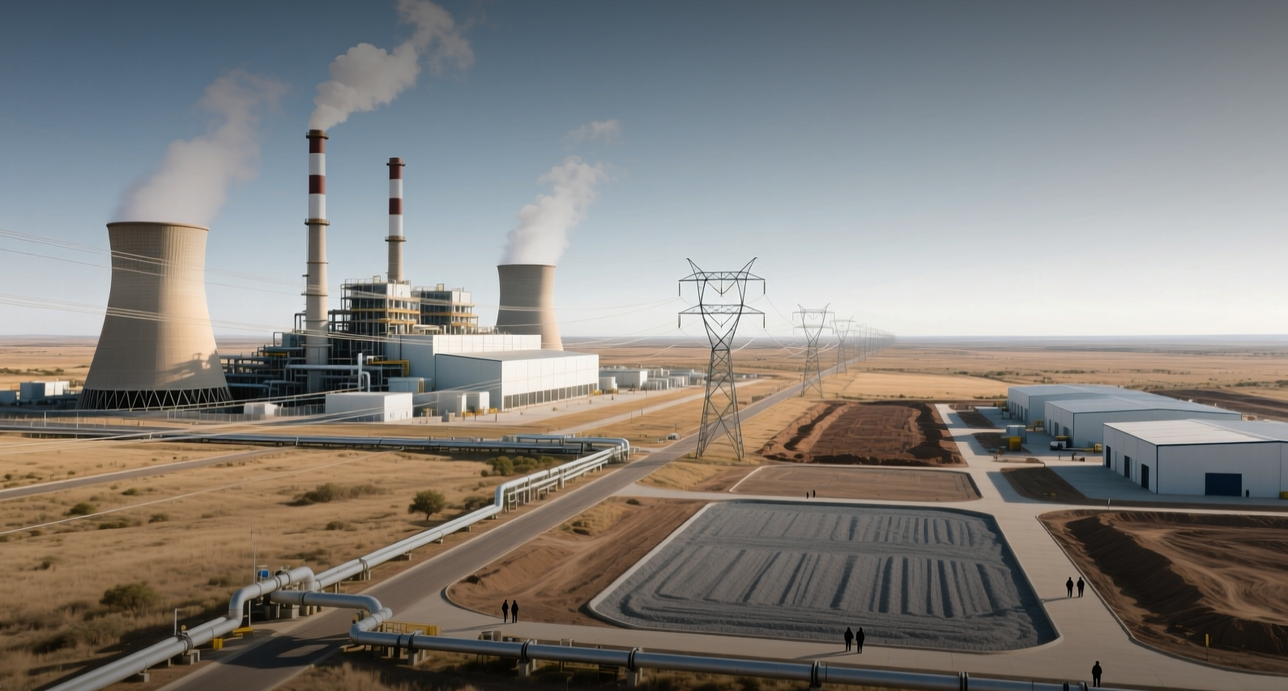
New Era locks 207 MW Vistra power for Texas data center
 Edgen Stock·Sep 21 2026, 14:04
Share to
Share to
Copy link


[1] New Era Energy secures 20-year power deal with Vistra for Texas data center project (https://www.proactiveinvestors.com/companies/ ...)[2] New Era Energy's TCDC PowerCo Signs 20-year PPA With Vistra's Luminant ET Services (https://www.rttnews.com/3692578/new-era-energ ...)[3] New Era Energy & Digital Secures 20-Year, 207 MW PPA with Vistra (https://finance.yahoo.com/energy/articles/era ...)[4] The data center backlash is reshaping American politics — one community at a time (https://www.npr.org/2026/09/21/nx-s1-5927288/ ...)
Related News

Sep 22 2026, 15:59
Papa John's sinks 17% as sales fall 8.3% and dividend suspended
A quarterly payout that had anchored the Papa John's International Inc. (NASDAQ: PZZA) investment case is gone, and the pizza chain's North American same-store sales are shrinking faster than management had told investors to expect. Shares closed at $24.64 on August 6, 2026, down $5.11 or 17.18% in one session, after the company reported an 8.3% drop in North American comparable sales, scrapped its dividend and reset its full-year outlook. "It's clear that our transformation is taking longer than expected," CEO Todd Allan Penegor said on the company's second-quarter conference call. "We must execute better and move faster." The company told investors it now expects global system-wide sales to decline between 2% and 4% for fiscal 2026, with adjusted EBITDA of $180 million to $190 million. North American comparable sales are guided to a decline of 6% to 8% for the year, against a prior outlook of roughly a 3% decline at the midpoint — a deterioration of about 4 percentage points. Papa John's also said it will spend roughly $35 million on supplemental marketing and franchisee subsidies to accelerate the turnaround. Penegor added that the company "probably didn't meet the consumer as much as we should have," and that its rebuilt innovation pipeline was "not bringing in as many new consumers with the innovation as we had expected." Removing the payout strips out a cash-return leg that had supported the stock through the earlier phase of the turnaround, and the guidance reset shifts the investment case entirely onto the pace of comparable-sales recovery. Papa John's operates close to 6,000 restaurants across roughly 50 countries and territories and reported total revenue of about $2.1 billion for fiscal 2025, essentially flat year over year. It competes with Domino's Pizza (NASDAQ: DPZ), Yum Brands' Pizza Hut (NYSE: YUM) and Little Caesars in an increasingly promotional quick-service pizza market. The disclosures drew a federal securities class action covering investors who bought Papa John's common stock between August 7, 2025 and August 5, 2026. The complaint alleges the company made materially false or misleading statements by describing the transformation as working while North American comparable sales steadily declined. Law firms including Wolf Haldenstein Adler Freeman & Herz, Kaplan Fox & Kilsheimer, Levi & Korsinsky and Bronstein, Gewirtz & Grossman have issued notices to shareholders. The lead-plaintiff deadline is November 2, 2026. The complaint cites a sequence of management reassurances during the class period. On August 7, 2025, Penegor said second-quarter results were "evidence that our strategy is working" and that the company had "returned to comparable sales growth in North America." On November 6, 2025, with North American comparable sales down roughly 3%, he pointed to "strong performance and building momentum" in international markets. On May 7, 2026, when an Oppenheimer analyst suggested management derisk its guidance, Penegor said the outlook was already "derisked" and a "prudent and realistic outlook for the year." The single-session repricing from $29.75 to $24.64 leaves the shares well below their pre-disclosure level, with the comparable-sales trend now the only variable that matters for the equity story. Investors will watch the third-quarter 2026 report for evidence that the $35 million marketing push is stabilizing North American traffic, and the November 2 lead-plaintiff deadline sets the near-term legal calendar. This article is for informational purposes only and does not constitute investment advice.
Sep 22 2026, 15:55
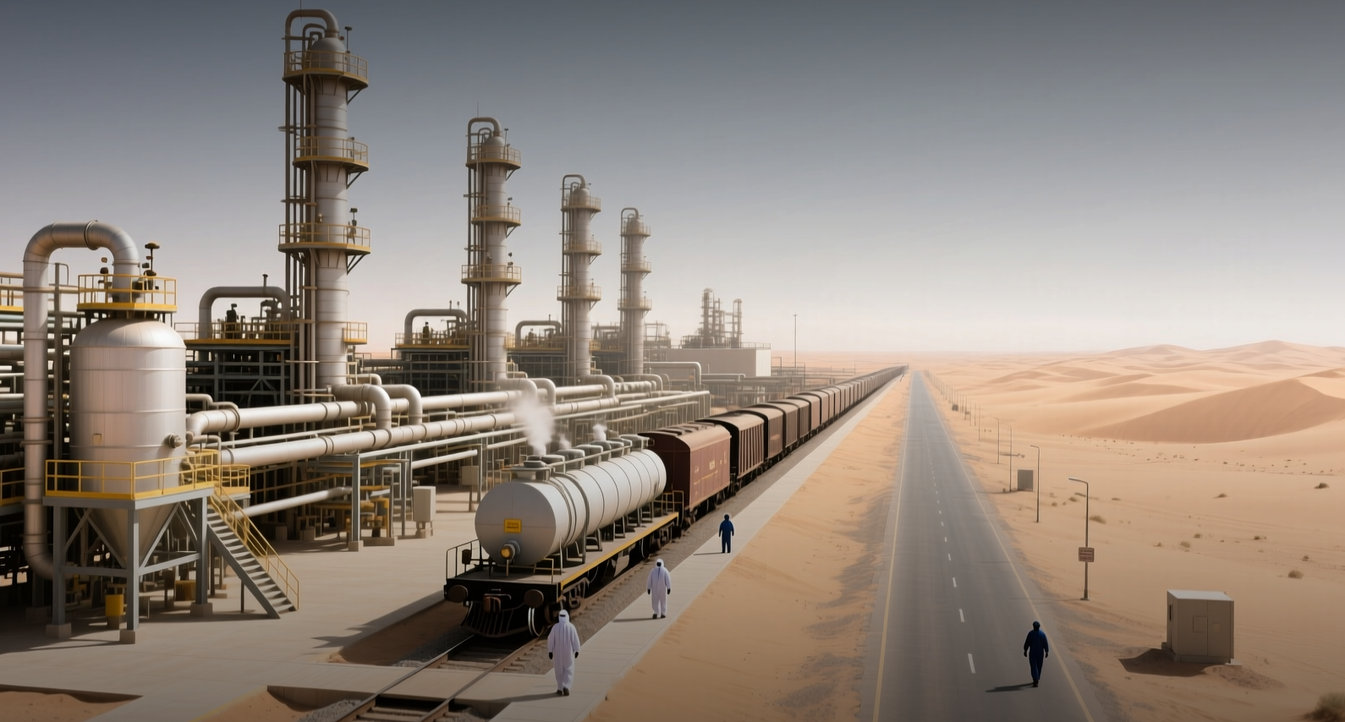
Aramco plans gas division in $1.8 trillion value-unlock test
Saudi Aramco plans to reorganize its business around a new gas division, a move two people with knowledge of the matter said is designed to leave the door open to listing business units later and raise capital against them. The restructuring has not been confirmed by the company, and no financial terms, timeline or scope have been disclosed. Aramco did not respond to a request for comment. The plan was reported by Reuters on Sept. 22. A standalone gas arm would, for the first time, give investors a discrete set of numbers for a business Aramco currently reports inside a consolidated upstream and downstream structure. Aramco's market value stood at roughly $1.8 trillion, making it the world's third-largest listed company, and its shares trade on the Tadawul exchange under the ticker 2222.SE. The company reported $106.2 billion of net income for 2025, its weakest annual profit since 2021, as Brent crude averaged below $80 a barrel for much of the year. The logic of a carve-out rests on the gap between how the market prices oil and how it prices gas. Aramco has committed to lifting gas production by more than 60 percent from 2021 levels by 2030, with the Jafurah unconventional field — the largest non-associated gas development outside the U.S. — expected to reach 2 billion standard cubic feet per day of sales gas by 2030. Qatar, its closest regional competitor, is adding 48 million tonnes a year of LNG capacity through the North Field East and North Field South expansions, with first output from North Field East now guided to the first half of 2027 after slipping from 2026. **Gulf listing capacity is the constraint, not the appetite** Any Aramco unit IPO would land on a Gulf equity market that has already absorbed a heavy supply of state-linked paper. Saudi Arabia has raised more than $30 billion from listings since 2019, including Aramco's own $29.4 billion record float, and the Tadawul All Share Index has been the region's deepest pool of domestic institutional capital. A gas unit large enough to matter to Aramco's valuation would rank among the biggest offerings ever attempted in the region, and would compete for the same sovereign and pension money that has anchored prior deals. The template exists. ADNOC Gas listed in Abu Dhabi in 2023, raising about $2.5 billion, and ADNOC has since floated units spanning drilling, logistics and refining. Aramco has followed a narrower path, selling stakes in its base oil and pipeline businesses to institutional buyers rather than listing them. A gas division would convert that private-placement habit into a public-market option. For peers, the read-through is mixed. A listed Aramco gas vehicle would create a new benchmark for valuing gas-weighted producers, including Shell and TotalEnergies, both of which have expanded LNG portfolios. It would also sharpen competition for the LNG demand growth that U.S. developers such as Cheniere Energy and Venture Global are counting on through the end of the decade. **Gas is the hedge against the oil-demand narrative** The strategic driver is the widening split between oil and gas in long-dated energy forecasts. The International Energy Agency expects global coal consumption to rise 1.2 percent to a record 8.94 billion tons this year, a reminder that hydrocarbon demand is not falling in a straight line, while gas is the fuel most often named as the bridge in transition scenarios. Aramco's own messaging has shifted accordingly, with gas and chemicals positioned as growth engines alongside crude. That framing matters for valuation. Oil majors trade at a discount to the broader market on peak-demand concerns; gas and LNG assets have attracted higher multiples because their demand curve extends further. Separating the two inside Aramco would let the market apply different multiples to each, which is the arithmetic behind every carve-out of this kind. What happens next depends on disclosure. Aramco's next scheduled results and any accompanying strategy update will show whether the gas division appears as a reporting segment, which would be the first hard evidence the plan is moving. Until then, the market has a structure and no numbers — and the value-unlock case rests entirely on what those numbers eventually show. This article is for informational purposes only and does not constitute investment advice.

Sep 22 2026, 15:41
Guidewire cloud ARR jumps 35% as backlog shields 2027 guidance
Guidewire Software closed fiscal 2026 with cloud annual recurring revenue up 35% year over year, lifting total ARR to $1.24 billion on a constant-currency basis and topping the high end of management's own guidance. "Cloud ARR now represents 84% of our total ARR, and fully ramped ARR grew 22%, the fourth consecutive year it outpaced reported ARR growth," Chief Executive Officer Mike Rosenbaum said on the company's fiscal fourth-quarter earnings call. Total ARR rose 19% from a year earlier. Subscription revenue climbed 37% to $916 million, and fully ramped ARR — which counts contracts at their eventual run rate rather than current billings — reached 22% growth. Guidewire ended the year with 105 customers generating more than $5 million each in fully ramped ARR, up from 86 a year earlier. Retention is doing much of the work. Annual gross ARR attrition came in below 1.5%, and attrition among core systems customers stayed under 1%. New products added to the mix: ProNavigator booked 14 wins in the fourth quarter and 28 for the full year, while PricingCenter signed eight fourth-quarter deals and 12 across fiscal 2026. Management said both performed materially better than initially expected. For fiscal 2027, Guidewire guided ARR to $1.45 billion to $1.46 billion, roughly 18% constant-currency growth at the midpoint. More than half of the projected net new ARR is already under contract. Two caveats sit inside that number. Management expects attrition to normalize after fiscal 2026's unusually low level, which had added about one percentage point to ARR growth. A smaller share of the growing backlog is also scheduled to convert into ARR during fiscal 2027, with more ramping events pushed to later years. The timing shift matters more than the total. Guidewire's model recognizes ARR as multi-year contracts ramp, so a backlog weighted toward later periods can hold reported growth below the pace the underlying bookings imply. Fully ramped ARR growing three points faster than reported ARR is the clearest evidence of that gap. The read-through extends beyond insurance software. ServiceNow, which sells governed agentic AI across IT, employee, CRM and security workflows, guided third-quarter 2026 subscription revenue to about $3.98 billion, implying 20.5% year-over-year growth and 20% at constant currency. Both companies are monetizing the same enterprise shift from perpetual licenses to subscription, and both are leaning on contracted commitments to smooth the transition. For holders, the signal is that Guidewire's revenue quality is improving even as headline ARR growth decelerates from 19% toward 18%. The company's next catalyst is its fiscal first-quarter 2027 report, when investors will see whether the contracted backlog converts on schedule and whether attrition stays near the fiscal 2026 trough. This article is for informational purposes only and does not constitute investment advice.