Edgen AI operates independently of, and is not controlled by Aspen Digital Financial Limited.
Papa John's faces Nov 2 lead plaintiff deadline after $5.11 drop
 Edgen Stock·Sep 14 2026, 17:58
Share to
Share to
Copy link


[1] Levi & Korsinsky Reminds Shareholders of a Lead Plaintiff Deadline of November 2, 2026 in Papa John's International, Inc. Lawsuit – PZZA (https://www.globenewswire.com/news-release/20 ...)[2] Levi & Korsinsky Reminds Unicycive Therapeutics Investors of the Pending Class Action Lawsuit With a Lead Plaintiff Deadline of November 2, 2026 - UNCY (https://www.businesswire.com/news/home/202609 ...)[3] REPL Shareholder Alert: October 5, 2026 Lead Plaintiff Deadline in Replimune Group, Inc. Securities Class Action - Contact Levi & Korsinsky (https://www.businesswire.com/news/home/202609 ...)[4] Levi & Korsinsky Reminds Papa John’s International Investors of the Pending Class Action Lawsuit With a Lead Plaintiff Deadline of November 2, 2026 - PZZA (https://www.businesswire.com/news/home/202609 ...)[5] REPL Shareholder Alert: Investors With Losses May Seek to Lead the Class Action in Replimune ... (https://www.reflector.com/news/national/repl- ...)
Related News

Sep 22 2026, 17:38
Raiffeisen wins €3.15 billion Rasperia judgment it may never collect
Raiffeisen Bank International now holds a court-verified claim worth about €3.15 billion ($3.60 billion) against Rasperia, after a Vienna judge entered a default judgment against the EU-sanctioned Russian firm on Tuesday. Whether that claim ever becomes money is a separate question the ruling does not answer. The order resolves liability in a dispute tied to the Austrian lender's Russian operations and to assets linked to Oleg Deripaska. It does not resolve collection. Rasperia is designated under European Union sanctions, and a default judgment — entered because the defendant did not appear — is the weakest form of enforceable order a claimant can hold. "Winning a default judgment against a sanctioned counterparty is the easy part," said Hannah Park, a banking analyst who covers European lenders. "The hard part is finding an asset that is not frozen, not inside Russia, and not already claimed by another creditor. For Rasperia, that set is close to empty." The award equals roughly 3.6 percent of RBI's total assets and a far larger share of its annual profit, which makes the accounting treatment the real story for shareholders. Under the judgment, RBI holds a receivable, not cash. European banks mark such claims at recoverable value, and a sanctioned Russian defendant with no reachable assets typically supports a provision close to the full amount — meaning the €3.15 billion may add little or nothing to CET1 capital. RBI's Russian subsidiary, AO Raiffeisenbank, has been the single largest source of the group's earnings volatility since 2022 and the single largest source of regulatory friction. The European Central Bank has pressed the group to shrink that exposure, and the EU's sanctions framework restricts any transaction that would release value to a designated entity. Any settlement with Rasperia would require a sanctions carve-out from European authorities before a single euro could move. The judgment does give RBI leverage it did not have before. A court-verified claim of €3.15 billion can be set against Rasperia's own claims, used as a bargaining chip in the long-running dispute over the Austrian bank's Russian stake, or assigned to a third party willing to pursue recovery. It also strengthens RBI's position if the group eventually seeks compensation or an asset swap as part of an exit from Russia. Investors have treated the news as procedural rather than transformative. RBI shares trade at a discount to Western European peers, and that discount is driven by Russia exposure and capital return capacity, not by litigation outcomes. A judgment that cannot be collected does not close the discount. The next milestones are procedural: Rasperia can seek to have the default judgment set aside, which would restart proceedings, and RBI must decide how to carry the receivable in its next set of accounts. Neither step produces cash. Until an enforcement court in a jurisdiction where Rasperia holds assets recognizes the award, the €3.15 billion stays on the page and off the balance sheet. This article is for informational purposes only and does not constitute investment advice.
Sep 22 2026, 17:34
Trump discloses 1,156 July trades with up to $25M Microsoft sales
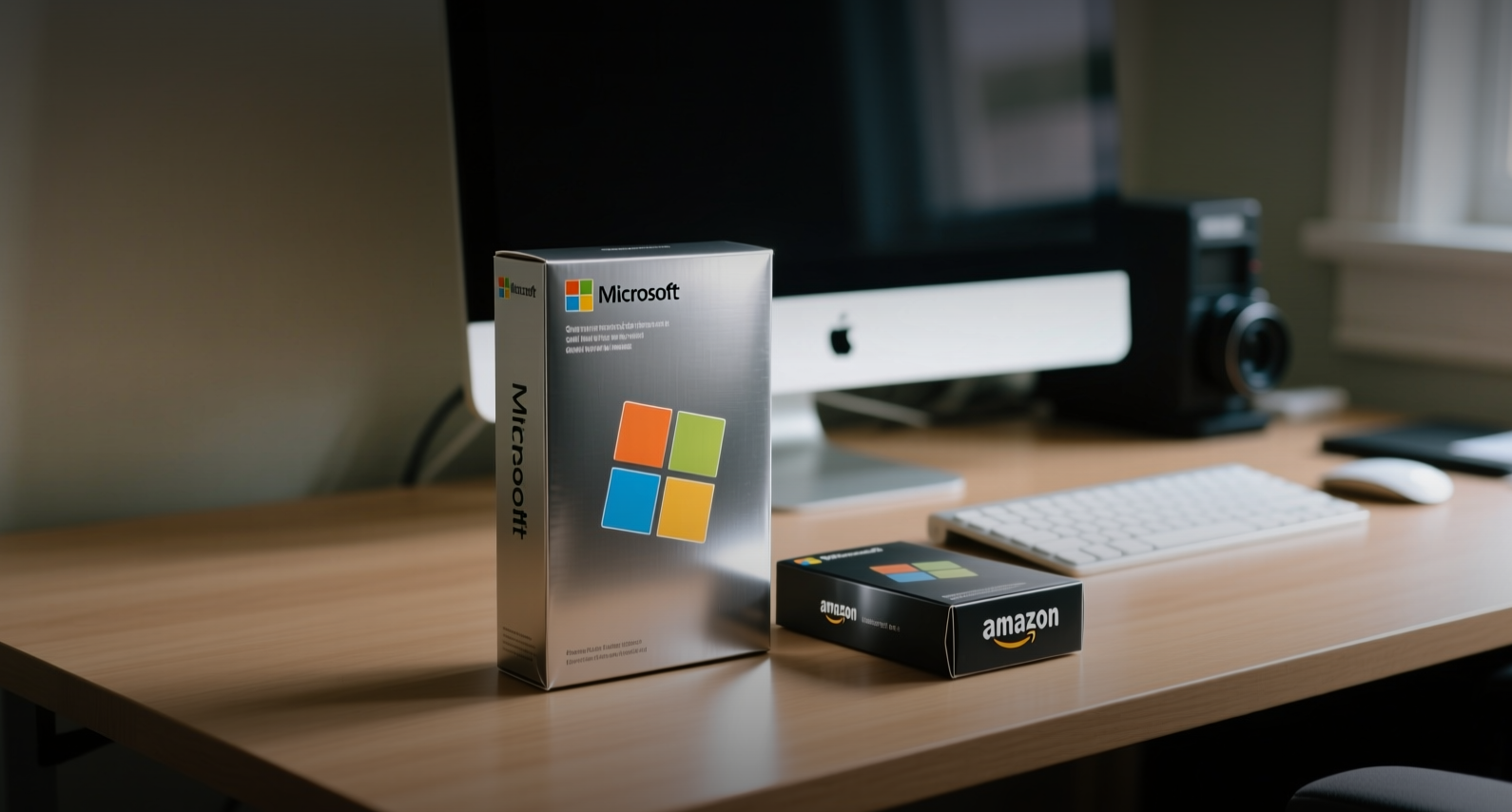
President Donald Trump's latest financial disclosure shows 1,156 securities transactions executed on his behalf in July, including sales of as much as $25 million each of Microsoft and Amazon shares, a pace of trading that has no precedent in modern presidential disclosure records. The July 20 sales of between $5 million and $25 million each in Microsoft and Amazon anchored the month's largest entries, according to the filing. Three days later, on July 23, Trump reported buying between $100,001 and $250,000 of Microsoft and between $1,001 and $15,000 of Amazon — a partial re-entry into both positions at a fraction of the size of the exits. The White House has repeatedly defended the trades, saying independent advisors manage the accounts without Trump's input. "The president's assets are held in accounts managed by independent financial institutions, and he has no involvement in individual investment decisions," the White House has said in prior statements on the disclosures. The White House and the Trump Organization did not immediately respond to requests for comment on the July filing. Aggregate activity for the month ran between roughly $79 million and $270 million, according to a CNBC analysis of the disclosure. Purchases totaled at least $43.6 million and sales at least $35.6 million, a spread that reflects the broad dollar ranges the disclosure form permits rather than exact transaction values. The same July 20 entries also show large sales of Oracle alongside a series of new purchases. The disclosure lands on a month when mega-cap technology names were already the market's dominant story. Tech stocks added $291 billion in market value on July 20 alone, the same session in which the Microsoft and Amazon sales were recorded. Because the filing is backward-looking and reports activity conducted on Trump's behalf, the direct price impact on Microsoft and Amazon is limited; the exposure is headline risk and renewed attention on how a sitting president's portfolio is disclosed. ## Trading frequency has scaled by an order of magnitude The July count follows 1,051 transactions disclosed for June, totaling between $78.1 million and $263.1 million across stocks, bonds and exchange-traded funds — a near-identical monthly run rate in both transaction count and dollar range. Trump's 2025 annual financial disclosure showed more than 21,000 securities trades across eight accounts holding at least $858 million. By comparison, his first year in office in 2017 produced 86 stock transactions. That gap — 86 transactions in 2017 against more than 21,000 across 2025 — is the quantitative core of the conflict-of-interest question. Recent presidents have generally divested individual stocks or moved holdings into blind trusts or diversified funds to avoid even the appearance of conflicts. The disclosure form's broad value bands, which report ranges rather than precise figures, obscure exact holdings and make it impossible to reconstruct position sizes or realized gains from the public record alone. The regulatory backdrop is permissive by design. The Ethics in Government Act of 1978, as amended, requires annual disclosure of securities holdings and periodic transaction reports within 30 to 45 days of a trade, but it does not prohibit a president from holding or trading individual stocks. That structure is why the July filing is legally routine and politically contested at the same time: the trades are disclosed, not restricted. ## What the ranges hide, and what comes next The practical constraint for anyone trying to read the filing is arithmetic. A single entry reported as "$5,000,001 to $25,000,000" spans a fivefold range, so a month of 1,156 transactions can be described as anywhere between $79 million and $270 million in aggregate — a $191 million band of uncertainty. For Microsoft and Amazon, the two largest July 20 line items, the disclosed range alone is wide enough that the sales could represent anything from a modest trim to a substantial reduction of the position. For markets, the transmission is indirect. Microsoft and Amazon are among the most heavily traded equities in the world, and a presidential account's activity is a rounding error against their daily volume; the July 20 session's $291 billion in added tech market value was driven by sector flows, not by the filing. The more durable effect is on the disclosure debate itself, which has already produced calls for tighter rules on presidential holdings and could resurface in congressional oversight activity. The next scheduled data point is the 2026 annual financial disclosure, which would provide the first full-year accounting of second-term trading and the first opportunity to compare the 2025 total of more than 21,000 trades against a full calendar year of the current pace. Until then, the monthly filings — each one a range, not a number — remain the only public window into the portfolio. This article is for informational purposes only and does not constitute investment advice.

Sep 22 2026, 17:31
Dollar Tree lifts 2026 EPS outlook as $210M refund reinvestment weighs
Dollar Tree Inc. raised its fiscal 2026 adjusted earnings guidance to $7.70-$8.05 a share, up from its prior range, after second-quarter adjusted profit of $1.39 a share beat the Zacks Consensus Estimate of $1.13 by 23%. The Chesapeake, Virginia-based retailer received $383 million in tariff refunds during the quarter and plans to put roughly $210 million of that back into pricing, marketing, store operations and store conditions. Management has not assumed a near-term return on that spending. "The refund is not a windfall we intend to bank," Chief Financial Officer Stewart Glendinning said on the earnings call, according to a transcript of the Sept. 22 release. "We are putting the majority of it to work in price and in the stores, because that is where the customer is telling us to invest." The guidance raise carries an estimated 60 cents a share of net benefit from tariff refunds. Dollar Tree assumes no further refunds this year. Third-quarter adjusted earnings guidance of 80-95 cents a share embeds an estimated 50-cent negative impact from the reinvestment, meaning the refund tailwind and the spending drag overlap in the same quarter. | Metric | Actual | Consensus | Beat/Miss | |--------|--------|-----------|-----------| | Revenue | $4.89B | not yet disclosed | +7.0% YoY | | Adjusted EPS | $1.39 | $1.13 | +$0.26 | | Comparable sales | 3.7% | — | +3.7% | | Gross margin | 42.9% | — | +850 bps | Net sales rose 7% to $4.89 billion, with comparable-store sales up 3.7%. Average ticket climbed 3.3% and traffic turned positive at 0.4%, a shift from growth driven only by higher prices. Consumables posted a 5.8% comp while discretionary sales rose 1.6%, held back by helium-related in-stock constraints that cut about $15 million of sales. Margin quality is the counterweight. Gross margin expanded 850 basis points to 42.9%, but about 680 basis points of that came from the net impact of tariff refunds. Excluding the $1.31 a share net refund benefit, adjusted earnings of $1.39 rose 80.5% from 77 cents a year earlier. Multi-price merchandise reached 17% of sales, up about 400 basis points year over year, and Dollar Tree ended the quarter with roughly 6,600 multi-price stores after converting or adding about 710 locations. Stores classified internally as needing improvement fell to about one-third of the fleet from roughly half at the October 2025 Investor Day. Selling, general and administrative expenses were 28.5% of revenue in the first half versus 28.4% a year earlier, as higher marketing, general liability costs and depreciation from store investments offset a 40 basis point improvement in the second-quarter rate to 29.2%. Inflation, elevated fuel costs and a mix tilted toward lower-margin consumables remain margin risks. The refund cycle is reshaping peer guidance across discount retail. Dollar General Corp. raised its fiscal 2026 outlook and said its earnings view includes an estimated 25-cent benefit from tariff refunds after related reinvestments. Five Below Inc. lifted full-year 2026 sales and earnings guidance after comparable sales rose 14.1%, with its outlook excluding future refunds. Dollar Tree generated $922 million of operating cash flow and $675 million of free cash flow from continuing operations in the quarter, and repurchased 5.6 million shares for $605 million. It had $2.5 billion remaining under its buyback authorization as of Aug. 1, 2026. Shares have fallen 17.9% over the past four weeks and 8.4% over three months, though they remain up 18.9% over the past year. The stock trades at 14.1 times forward 12-month earnings, below its five-year median of 17.7 times and the Zacks sector at 21.5 times. For holders, the signal is that underlying traffic and multi-price mix improved without the refund, but the 50-cent third-quarter reinvestment drag means reported margins will compress before they can prove the spending works. The next test is the third-quarter report, when the refund benefit moderates and management's pricing and store spending either shows up in traffic or does not. This article is for informational purposes only and does not constitute investment advice.