Edgen AI operates independently of, and is not controlled by Aspen Digital Financial Limited.
Musalem calls for further Fed hikes with core inflation at 3%
 Edgen Stock·Sep 21 2026, 18:26
Share to
Share to
Copy link

[1] St. Louis Fed President Musalem: Interest Rates May Need to Rise Further to Curb Demand- and Supply-Driven Inflation (https://wallstreetcn.com/livenews/3168453 ...)[2] Here’s (Almost) Everything Wall Street Expects in 2026 - Bloomberg.com (https://www.bloomberg.com/graphics/2026-inves ...)
Related News

Sep 21 2026, 19:28
Coinbase opens IPO access to retail with Oura as first deal
Coinbase Global began letting eligible US retail customers request shares in initial public offerings at the offer price, starting with smart-ring maker Oura this week, pushing the exchange into primary equity distribution. The service runs through Coinbase Capital Markets, the company's FINRA-registered broker-dealer, which joins offerings as a best-efforts selling-group member rather than an underwriter. Orders are aggregated and routed through clearing partner Apex Clearing Corporation, and Coinbase said it holds no inventory and takes no side of a trade. "You can now participate in IPOs on Coinbase," the company said in a blog post announcing the rollout. Customers reach active deals through a new IPOs page inside the Coinbase app, fund the account to cover the requested shares, then submit a conditional offer to buy once the issuer publishes an expected price range. Requests can be edited or cancelled while the book is open, though a price move beyond a set threshold requires resubmission. Allocations depend on underwriter supply and total customer demand, so orders may be filled in full, in part, or not at all, with shares booked at the IPO price and tradable once public trading opens. The allocation method favors holders. Selling allocated IPO shares within 30 days can bar a customer from IPO participation for the following 60 days, and repeated early selling draws smaller and less frequent allocations. Coinbase said it will add offerings as selling-group allocations become available, and the rollout lands ahead of an anticipated Anthropic listing that reports have pegged at a valuation of as much as $2 trillion. COIN rose more than 4% on Monday to about $204, according to TradingView data, extending a one-month gain of more than 13%. The advance came as Bitcoin climbed above $86,000 for the first time since January, lifting crypto-linked equities including Robinhood, BitMine Immersion Technologies, Strategy and Circle. Bitcoin traded at $86,051.78 as of 17:54 UTC, up 6.13% over 24 hours, per CoinMarketCap. The IPO feature extends a build-out that already includes stocks, ETFs and options, plus pre-IPO perpetual futures launched earlier this year for eligible non-US customers — contracts that give synthetic exposure without company ownership. Coinbase has also sought regulatory approval for equity perpetuals. The strategy, which the company calls the Everything Exchange, aims to keep users trading on one platform across asset classes rather than sending them to a traditional brokerage for equity exposure. For Coinbase, the economics hinge on engagement rather than underwriting fees, since the broker-dealer acts as an agent and earns no spread on the shares themselves. IPO allocations give retail users a reason to fund accounts and hold balances ahead of a listing, deepening the deposit base that supports trading revenue. The approach also puts Coinbase in direct competition with incumbent brokerages that have historically controlled retail access to hot offerings, and with Robinhood, which has built its own push into event-driven retail products. The broader market backdrop remains uneven. A Senate cloture vote on the CLARITY Act failed, leaving the proposed US digital-asset framework stalled, even as Bitcoin's move above $86,000 pulled crypto equities higher. Coinbase's next test is whether Oura's offering draws enough customer demand to justify a pipeline of follow-on deals; the company has not disclosed how many offerings it expects to add or the size of its selling-group allocations.
Sep 21 2026, 19:26
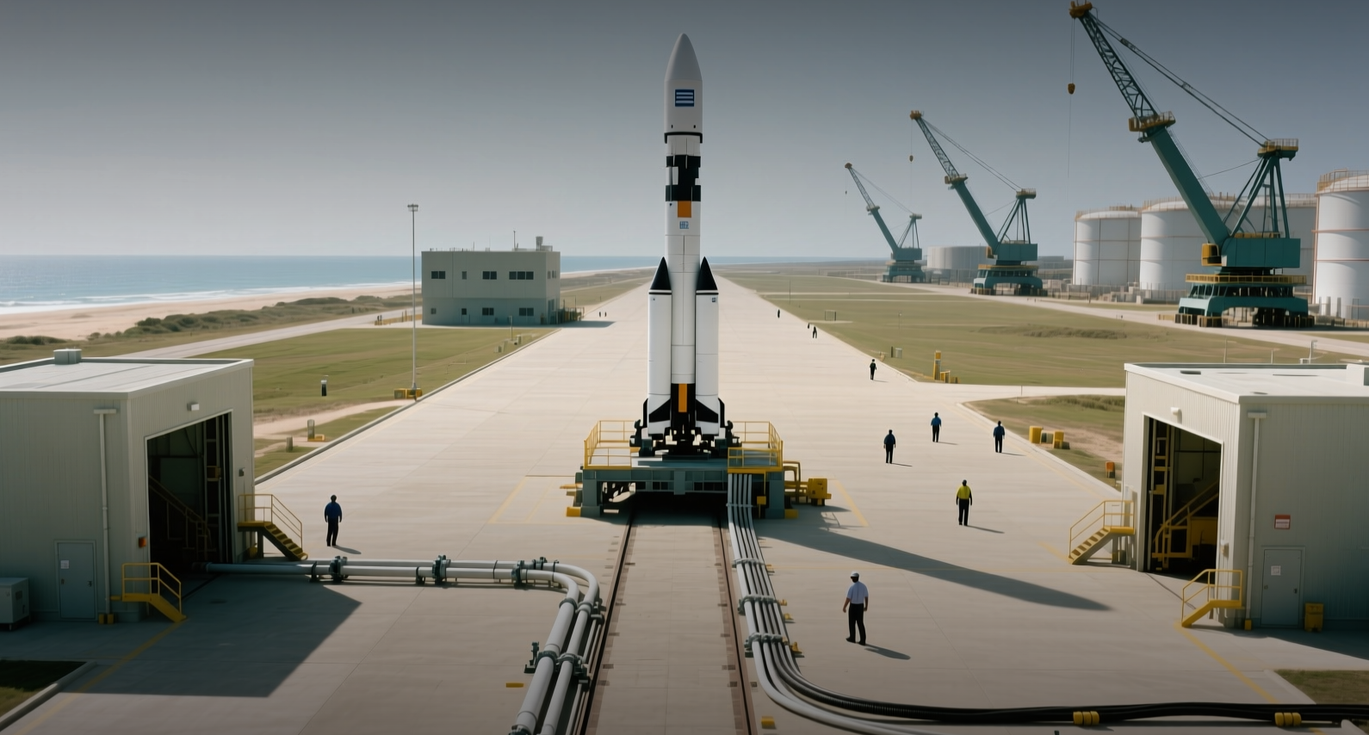
Rocket Lab gains 7% as Cantor holds $122 target on Neutron
Rocket Lab (NASDAQ: RKLB) climbed 7% to $69.03 in Monday morning trading after Cantor Fitzgerald kept its Overweight call and $122 target on the stock, a level that implies about 89% upside. "Neutron is uniquely positioned to become the only viable alternative and most direct commercial competitor to SpaceX's Falcon 9 once operational," analyst Andres Sheppard wrote, calling the current price an attractive entry point ahead of the rocket's debut. The note restates a view Cantor already held rather than changing it. No prior rating or target was revised, and the firm attached no date to either of the two events it names as the reason to buy. | Field | Value | |---|---| | Analyst | Andres Sheppard | | Firm | Cantor Fitzgerald | | Previous Rating | Overweight | | New Rating | Overweight | | Previous PT | $122.00 | | New PT | $122.00 | | Current Price | $69.03 | | Implied Upside | ~89% | The first of those events is Neutron, Rocket Lab's medium-lift vehicle. It is designed to carry roughly 13,000 kilograms of payload, against about 300 kilograms for the Electron small-launch rocket that has carried the company to date. Management targets an average selling price of $50 million to $55 million per Neutron launch and as many as 20 flights per engine, with first flight still targeted for later this year. The second is Rocket Lab's pending acquisition of satellite operator Iridium Communications (NASDAQ: IRDM). Rocket Lab has raised $1.944 billion through an at-the-market share offering, removing the main financing hurdle, and the deal is expected to close in mid-2027 subject to regulatory approval. Sheppard models the combined company roughly doubling annual revenue, producing an end-to-end platform spanning launch, satellites and services. Cantor's confidence rests partly on Rocket Lab's existing execution. The company completed its 96th Electron mission on Sept. 19, its 17th launch of 2026, and has 15 more dedicated missions planned for Synspective through the end of the decade. Q2 FY26 revenue reached a record $234.07 million, up 62.0% year over year, with non-GAAP gross margin at 41.5% and backlog up 137% to $2.36 billion, including more than 90 launches. Chief Executive Peter Beck has flagged more than $1 billion in new contracts signed in Q3, including a $397 million Flatellite award for the U.S. Space Force's SB-AMTI program. Guidance calls for Q3 revenue of $250 million to $265 million. The note also leans on Rocket Lab's dedicated launchpads in New Zealand and the United States and a customer base split between commercial and government buyers, which Cantor frames as durable barriers against rivals chasing the same contracts. SpaceX currently accounts for somewhere between 80% and 90% of total Earth mass to orbit annually, leaving Rocket Lab as the only listed pure-play building a scaled second source. The U.S. Space Force named Rocket Lab an NSSL prime contractor in its FY2027 budget. The tape did not treat the note as a Rocket Lab-specific repricing. Intuitive Machines (NASDAQ: LUNR) rose 10% to $15.28 in Monday morning trading without any research note or announcement of its own, outpacing Rocket Lab's gain, while AST SpaceMobile (NASDAQ: ASTS) added 6% to $61.81. The Procure Space ETF (NASDAQ: UFO) was up 2% at $44.19 against a 1.13% gain for the SPDR S&P 500 ETF Trust (NYSE ARCA: SPY) at $770.32. Friday's session had run the other way for the same cluster, so part of Monday's move was a reversal inside a group that has traded in both directions. For holders, the reiteration leaves the investment case resting on execution rather than the Electron business alone. Investors should watch whether Neutron launches on schedule and reaches commercial reliability, and whether regulators clear the Iridium transaction, which carries integration and dilution risk after Rocket Lab issued roughly 29.3 million shares. Delays in either would compress the $122 case; both landing would strengthen it. This article is for informational purposes only and does not constitute investment advice.

Sep 21 2026, 18:34
AMC jumps 7% as $3.97 billion refinancing pushes 2029 debt to 2031
AMC Entertainment shares climbed 7% to $2.88 on Monday after the exhibitor launched a $3.97 billion refinancing that moves its nearest large maturity from 2029 to 2031, a calendar shift that leaves the principal owed unchanged. "Refinancing is not repayment," said David Moadel, market analyst at 24/7 Wall St., in a note published with the announcement. "AMC will owe what it owed before this morning, on new paper that has to be serviced at whatever rate the market sets." The package has three parts. AMC began a private offering of $2 billion of first lien notes due 2031 and launched syndication of a new $850 million first lien term loan, alongside a commitment letter with Deutsche Bank AG for a $1.12 billion second lien term loan. Proceeds fund a cash tender for all of AMC's outstanding 7.500% senior secured notes due 2029 at $1,009.70 per $1,000 of principal, the redemption of Muvico's $903.4 million of senior secured notes due 2029, and repayment of AMC's existing term loan and the term loan of Odeon Finco PLC. The tender is conditioned on the financing raising at least $3.97 billion in gross proceeds, with settlement expected early next month. The move repriced default and liquidity risk in a stock that retail traders have kept heavily shorted. AMC carried $3.7 billion of corporate borrowings as of June 30, according to its quarterly report, and the company's own risk disclosures still name the possibility of an in-court or out-of-court restructuring if liquidity proves insufficient — language that survives the refinancing intact. The same filings separately flag further equitization of debt, which converts a bondholder's claim into stock and dilutes existing shareholders. The reaction ran well ahead of the tape. The SPDR S&P 500 ETF Trust rose 1.51% to $773.22, and AMC's gain outpaced that benchmark by more than five percentage points. Peer exhibitors moved far less: Cinemark Holdings added 0.9% to $35.29, drifting with the broader market, while IMAX gained 2% to $53.96. The spread between AMC's move and its peers' suggests the buying was specific to the capital structure rather than a sector-wide reappraisal of box-office demand. ## What the new paper costs decides the trade The economics hinge on pricing, not on the calendar. A tight financing lowers AMC's running interest bill and turns the maturity extension into a clean win. A wide financing means the company traded a 2029 problem for a 2031 problem at a higher carrying cost. Investors will not know which outcome they own until the new notes and term loans price and the transaction settles. Context for the timing: US and Canadian theaters sold a record $4.77 billion of tickets this past summer, according to market researcher Rentrak, and S&P Global Ratings upgraded AMC to B- in July, citing record second-quarter results. AMC shares have gained 73% this year. The March 2025 financing — a $425 million deal with Deutsche Bank — included provisions letting AMC retire that debt on better terms if it executed a broader refinancing, which is the door Monday's announcement walks through. The bull case is that the nearest large maturity moves out and the capital structure collapses from a patchwork of secured notes and subsidiary borrowings into a simpler two-tier first lien and second lien stack, buying time for the theatrical slate to do work the balance sheet cannot. The bear case is that AMC bought time rather than solvency, and that any further conversion of debt into stock lands on shareholders rather than lenders. What to watch is whether the stock holds its gains once the transaction settles and the market prices the new paper. A wide print on the 2031 notes would reframe the entire move as a cost increase dressed as an extension. This article is for informational purposes only and does not constitute investment advice.