Edgen AI operates independently of, and is not controlled by Aspen Digital Financial Limited.
Lumentum jumps 4.2% on heavy volume with no catalyst confirmed
 Edgen Stock·Sep 21 2026, 11:25
Share to
Share to
Copy link

[1] Lumentum (LITE) Moves 4.2% Higher: Will This Strength Last? (https://www.zacks.com/stock/news/2992566/lume ...)
Related News

Sep 21 2026, 11:35
Qatar ties 77 million tons of LNG to Hormuz reopening
Doha's return to the global gas market now hinges on a single waterway. Qatar said it is ready to bring its liquefaction trains back online within weeks of the Strait of Hormuz reopening, a conditional commitment dated Sept. 21, 2026 that carries no restart date of its own and leaves roughly 77 million tons a year of export capacity — about 20 percent of world supply — sitting idle behind the chokepoint. "Qatar can only move as fast as the strait allows, and the strait is not a commercial decision," said Omar Tariq, senior energy analyst at Edgen. "Every cargo schedule out of Ras Laffan is now a function of naval risk, not of wellhead capacity." The arithmetic behind that condition is stark. Qatar ranked among the world's three largest LNG exporters before the Iran war, shipping roughly 77 million tons in 2025, according to International Gas Union data. Output stopped earlier this year after attacks on its export hub and the near-closure of Hormuz, removing that volume from a market that had been pricing in steady Qatari growth. The Strait of Hormuz normally carries about 20 percent of global LNG trade and roughly 20 million barrels a day of oil and refined products, per U.S. Energy Information Administration estimates — the same chokepoint that gates Qatari molecules also gates Saudi, Emirati, Kuwaiti and Iraqi barrels. The market has already repriced the risk. Front-month TTF in Amsterdam and JKM in Asia have traded at a persistent premium to pre-war levels through 2026, with European buyers paying up to refill storage without Qatari baseload. The last time Qatari supply was interrupted at scale — the 2017 blockade by Saudi Arabia, the UAE, Bahrain and Egypt — Doha rerouted volumes through alternative shipping and Hormuz traffic continued, so prices absorbed the shock within weeks. This time the constraint sits on the waterway itself, which is why the premium has held rather than faded. Two variables decide what happens next, and neither is in Doha's hands. The first is whether Hormuz reopens to commercial LNG tanker traffic with insurance underwriters willing to write war-risk cover at tolerable rates; without that, a physical reopening does not produce cargoes. The second is the pace at which Qatar's export hub — the Ras Laffan trains and the associated liquefaction and loading infrastructure damaged in this year's attacks — can be returned to service. Qatar has not disclosed a damage assessment, a repair timeline, or a commissioning schedule, and the restart language is explicitly conditioned rather than dated. For gas-importing utilities and industrials in Europe and Northeast Asia, the difference is measured in euros and dollars per megawatt-hour. A Qatari return would add incremental supply to a tight market, pressuring TTF and JKM benchmarks and easing the energy component of inflation that has kept European industrial costs elevated. For rival exporters — the United States, Australia, Malaysia and Canada — the same volumes would compete directly for Asian term contracts, capping the pricing power that American Gulf Coast producers have enjoyed since Qatari supply went offline. Freight markets cut both ways: a reopened Hormuz shortens voyage economics for Gulf loadings but adds ton-miles back into a market that has been short of Gulf-origin cargoes. The asymmetry is what makes the position unusual. Qatar has signaled capability without committing to a date, which preserves optionality but gives buyers nothing to contract against. Until Hormuz traffic normalizes and Ras Laffan publishes a schedule, the global gas market is trading a conditional supply story — and the condition is a geopolitical one. This article is for informational purposes only and does not constitute investment advice.

Sep 21 2026, 11:31
Novo's CagriSema cuts 12.4% weight, beating Lilly's tirzepatide
Novo Nordisk's experimental obesity drug CagriSema produced 12.4% average weight loss in adults with type 2 diabetes, topping the 9.1% recorded by Eli Lilly's tirzepatide in a head-to-head Phase 3 trial, the Danish company said on 21 September. "With only 1.0 mg/1.0 mg, CagriSema shows superior weight loss versus tirzepatide 5 mg as well as strong results across obesity and type 2 diabetes," Martin Holst Lange, executive vice president for research and development and chief scientific officer at Novo Nordisk, said at the company's Capital Markets Day investor briefing. The REIMAGINE 5 trial enrolled adults whose blood sugar remained uncontrolled on metformin, an SGLT2 inhibitor, or both. At week 60, CagriSema 1.0 mg/1.0 mg lowered HbA1c by 1.71 percentage points versus 1.67 points for tirzepatide 5 mg, meeting the non-inferiority bar on the trial's second primary endpoint. Both arms used low doses of their respective drugs, leaving the higher-dose comparison untested. In the separate REDEFINE 9 trial, CagriSema 1.0 mg/1.0 mg delivered 21.0% weight reduction at week 68 in adults living with overweight or obesity, against 2.0% for placebo, clearing the primary superiority endpoint. Novo said the drug also improved systolic blood pressure, waist-to-height ratio and fasting lipid profile relative to placebo. CagriSema is a once-weekly subcutaneous fixed-dose combination of semaglutide, the GLP-1 receptor agonist behind Novo's Ozempic and Wegovy, and cagrilintide, a long-acting amylin receptor agonist. Novo filed a New Drug Application with the U.S. Food and Drug Administration in December 2025 for the weight-management indication, and a decision is expected in the fourth quarter of 2026. The drug is not approved in any market. Both trials reported that CagriSema was well tolerated, with a safety profile consistent with earlier studies and no new safety signals. Novo did not disclose specific adverse-event rates, saying detailed data will be released later. Gastrointestinal side effects have been the main tolerability constraint across the GLP-1 class, and the absence of event-level numbers leaves the tolerability comparison against tirzepatide unresolved. Novo also disclosed data for the first time on CagriSema in painful diabetic peripheral neuropathy, describing preliminary results as promising without giving figures. More detail is expected at a later presentation. The readout lands in a duopoly that has already reshaped the obesity market. Lilly's tirzepatide, sold as Mounjaro for diabetes and Zepbound for weight management, has taken share from Novo's semaglutide franchise since its launch, and Novo has been under pressure to show that its next-generation asset can reclaim the efficacy lead. A superior weight-loss result at a low dose gives Novo a differentiated claim to take into payer negotiations, where head-to-head data carries more weight than cross-trial comparisons. For holders, the trial results remove the main scientific risk ahead of the FDA decision and shift the debate to label breadth, pricing and manufacturing capacity. The next catalyst is the agency's action on the weight-management application in the fourth quarter of 2026; a favorable decision would put CagriSema directly into competition with Zepbound in the U.S., the largest market for obesity drugs. This article is for informational purposes only and does not constitute investment advice.
Sep 21 2026, 11:27
Ipsen falls 6.9% as early US generic ends Somatuline exclusivity
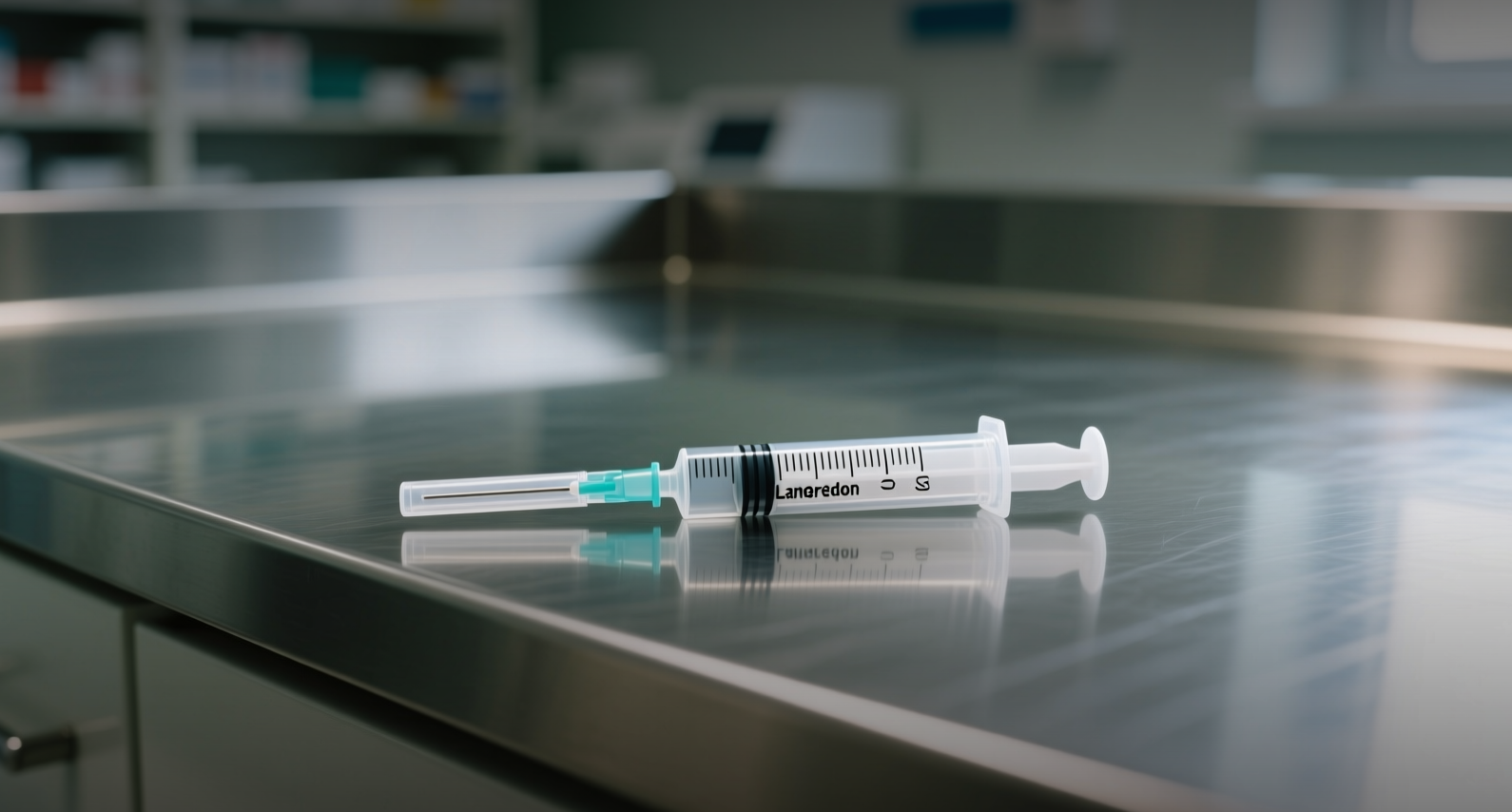
Ipsen lost 6.9% in Paris trading, closing at €145.20, after Amneal Pharmaceuticals secured FDA clearance for a copy of the French drugmaker's top-selling hormone therapy and began selling it the same day. The approval, disclosed by Amneal on Friday evening, covers a prefilled, single-dose sterile syringe carrying the FDA's competitive generic therapy designation. It is cleared for acromegaly, advanced gastroenteropancreatic neuroendocrine tumors and carcinoid syndrome — the same three indications Somatuline holds. "The challenges will not disappear with the generic's entry into the market," Jefferies analysts wrote, maintaining an Underperform rating and a €135 price target. The bank said the launch is already reflected in 2026 forecasts but poses a risk to 2027 expectations, particularly if weekly launch data come in strong. Somatuline generated $983 million in US sales in the 12 months ended July 2026, according to healthcare data provider IQVIA. The drug accounted for roughly 30% of Ipsen's total revenue in the first half of 2026, making it the single largest contributor to the company's top line. Ipsen's market capitalization stood at €14.66 billion after Monday's decline, with the stock down 8.8% over five sessions. Amneal said it holds dedicated, large-scale in-house manufacturing capacity for the lanreotide product, a detail that matters for a long-acting injectable where supply reliability determines how quickly pharmacies and clinics switch. RBC Capital analysts said the generic's approved dose represents about 60% of Somatuline volume, according to IQVIA data. The Canadian bank called the launch timing broadly in line with expectations and said Ipsen's guidance already factors it in, keeping an Outperform rating and a €148 target. The longer-term risk sits beyond the generic. Jefferies flagged that if Camurus's CAM-2029 study shows its product is superior to Somatuline, consensus profit estimates for 2028 and 2029 could fall by about 10%. Ipsen's oncology franchise accounted for 69.2% of net sales at the end of 2025, with neuroscience at 20.3% and rare diseases at 10.5%, leaving limited near-term offsets to a Somatuline decline. For holders, the sell-off reprices a franchise that has carried Ipsen's earnings rather than a one-quarter miss, and the €135-to-€148 analyst range now brackets the current price. The next test is Ipsen's third-quarter sales release on Oct. 15, when management will have to address whether US Somatuline volumes are holding and whether full-year guidance still stands. This article is for informational purposes only and does not constitute investment advice.