Edgen AI operates independently of, and is not controlled by Aspen Digital Financial Limited.
Novo's CagriSema cuts 12.4% weight, beating Lilly's tirzepatide
 Edgen Stock·Sep 21 2026, 11:31
Share to
Share to
Copy link



[1] Novo Nordisk Declares War on Eli Lilly Again! CagriSema Beats Tirzepatide in Head-to-Head, 12.4% Weight Loss (https://wallstreetcn.com/articles/3782221 ...)[2] Novo's CagriSema delivers superior weight loss versus tirzepatide in REIMAGINE 5 trial (https://finance.yahoo.com/healthcare/articles ...)
Related News
Sep 21 2026, 11:57
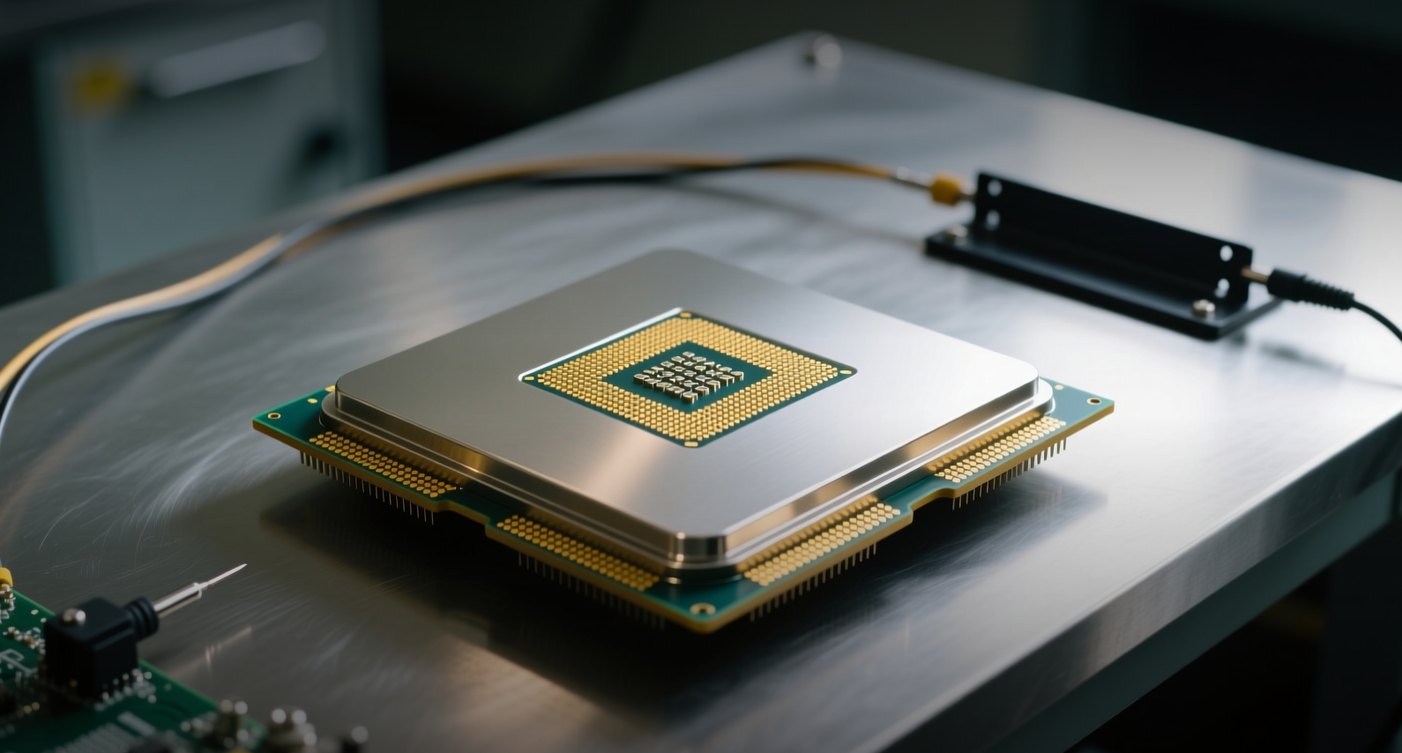
Intel and Arm rally as Meta's Muse lifts CPU demand 2x
Intel and Arm Holdings shares climbed after Meta Platforms' Muse AI agent was credited with pulling incremental central processing unit demand into the AI infrastructure trade, a claim that rests on agent workloads running more of their logic on CPUs than on graphics processors. "Agent-based workloads are placing a load on the CPU that goes beyond mere GPU coordination," Fujitsu said in its Hot Chips 2026 technical presentation, describing a shift in which orchestration, retrieval, database calls and conditional branching increasingly sit on the CPU while the GPU handles bulk matrix math. The rally is sentiment-led and rests on a transmission chain that has not yet produced a disclosed order. Meta has said it saw a 60% increase in the number of people interacting with its assistant each day after integrating Muse Spark, and Barron's called Muse potentially the biggest AI launch since ChatGPT. Oppenheimer Managing Director Jason Helfstein, however, estimated Meta would need roughly 115 million paying Muse subscribers at $20 a month to generate about $27.5 billion to $28 billion in annual AI agent revenue, and concluded that outcome is unlikely, citing paid-conversion doubts, competition from ChatGPT and Gemini, and low consumer trust in sharing passwords with Meta. The funding side of that chain is already under strain. Meta's second-quarter revenue reached $60.80 billion, up 27.96% year over year, but diluted earnings per share of $6.18 came in 14.42% below the $7.22 consensus, snapping a six-quarter beat streak. Operating margin compressed to 31% from 43%, free cash flow fell to $784 million, and full-year 2026 capital expenditure guidance sits at $130 billion to $145 billion. Every incremental CPU socket Meta buys competes for the same budget line as its GPU clusters. The structural case for CPUs in inference is better documented than the Muse-specific one. The Information Network estimates AI data center systems revenue will grow from $560 billion in 2026 to $1.68 trillion in 2030, a 31.6% compound annual rate. Within that, AI CPU revenue expands from $38 billion to $155 billion, a 42.1% CAGR, faster than the 29.0% projected for accelerators. That does not make CPUs more valuable than GPUs in absolute dollars — accelerators still grow from $350 billion to $970 billion — but it makes the CPU the faster-growing slice of the system. The reason is architectural. A GPU is a specialized unit for massive parallel calculation; a CPU runs the operating system, databases, network and storage control, containers, API layers, retrieval-augmented generation preprocessing and GPU job submission. In an in-house AI agent, a single request can chain through an API, a database, a retrieval layer, a search index, an enterprise resource planning system, a large language model and a database write. The GPU handles one step of that sequence. The CPU handles the rest. Fujitsu's FUJITSU-MONAKA, which began sales on Sept. 14, 2026, is the clearest hardware expression of the thesis. The Armv9-A chip carries 144 cores per socket, 288 in a two-socket configuration, built as four 36-core dies on TSMC's N2P 2nm process stacked face-to-face with 5nm SRAM and I/O dies using Broadcom's 3.5D XDSiP packaging. It supports DDR5 across 12 channels at up to 8800MT/s and 96 lanes of PCI Express 6.0. Fujitsu claims twice the AI inference throughput of competitor CPUs, though it did not disclose the comparison model, the benchmark conditions or the test methodology, so the figure should be read as a self-published value. The 2nm process covers less than 30% of total silicon area, a cost decision that keeps SRAM and analog circuits on the cheaper 5nm node. Nvidia is attacking the same market from the other direction. Its Vera server CPU contains 88 custom Olympus cores on the Arm architecture, designed for agent orchestration, data processing, analytics pipelines and sandboxed code execution. Amazon Web Services and Nvidia have announced plans to bring Vera-based infrastructure to AWS, and Anthropic, OpenAI, ByteDance, CoreWeave and Oracle Cloud Infrastructure have been named as planned adopters. AWS already builds its own Graviton processors, so its willingness to support Vera shows custom and merchant CPUs can coexist when they address different workloads. That competitive map matters for how much of the Muse narrative Intel and Arm can actually capture. Arm licenses the architecture rather than selling chips, so it collects a royalty on Vera, Graviton, Ampere and MONAKA alike without owning the end demand. Intel must win sockets directly against those same designs. Nvidia does not need Vera to beat every Xeon or EPYC part in a benchmark; it needs customers to conclude that the simplest way to deploy AI is to buy an Nvidia-designed system with the CPU already included. The near-term test is whether Muse adoption produces disclosed CPU volume rather than a re-rating. Meta's next quarterly report will show whether capital expenditure guidance moves again, and Fujitsu's MONAKA server shipments begin in April 2027, the first hard datapoint on whether agent inference converts into CPU units. Until then, the trade is a demand expectation rather than a demand reading. This article is for informational purposes only and does not constitute investment advice.

Sep 21 2026, 11:40
Insmed wins Priority Review as FDA sets Jan 28 2027 ARIKAYCE date
The FDA accepted Insmed's supplemental application for amikacin liposome inhalation suspension (ARIKAYCE) and granted Priority Review, setting a target action date of Jan. 28, 2027 for a decision on full approval in Mycobacterium avium complex lung disease. "The FDA's acceptance of this application marks a pivotal moment in our ambition to change the treatment paradigm for MAC lung disease," Martina Flammer, chief medical officer of Insmed, said. "MAC lung disease is progressive — the longer the infection persists, the greater the damage to lung tissue and the harder it becomes to treat." The filing rests on the Phase 3b ENCORE study, the confirmatory trial Insmed ran to satisfy the post-marketing requirement attached to ARIKAYCE's 2018 accelerated approval. ENCORE randomized 425 patients across 177 sites globally, 82.4% of them experiencing a first MAC infection and 17.6% a second or third. Patients received once-daily ARIKAYCE plus azithromycin 250 mg and ethambutol 15 mg/kg, or placebo plus the same background regimen, for 12 months, followed by three months off treatment to test durability. The trial met its primary endpoint — change from baseline in Respiratory Symptom Score at Month 13 — and its multiplicity-controlled secondary culture conversion endpoints. ARIKAYCE patients converted earlier, to a greater degree, and more durably than those on comparator therapy. No new safety signals emerged; the profile matched the known label, which carries a boxed warning for increased respiratory adverse reactions. ## What full approval would actually change ARIKAYCE's current U.S. indication is narrow by design. It is limited to adults with limited or no alternative treatment options who fail to clear sputum cultures after at least six consecutive months of a multidrug background regimen, and it was the first product approved under the Limited Population Pathway for Antibacterial and Antifungal Drugs created by the 21st Century Cures Act. The label explicitly does not recommend use in non-refractory MAC lung disease. Full approval would remove that restriction and the conditional language stating that clinical benefit has not yet been established. Insmed said the change could reach patients earlier in their disease course, including the newly diagnosed and those facing recurrent infection — the population ENCORE was built to study. The safety record is the counterweight. In the original Trial 1, dysphonia occurred in 47% of ARIKAYCE patients versus 1% on background regimen alone, cough in 39% versus 17%, bronchospasm in 29% versus 11%, and ototoxicity in 17% versus 10%. Hypersensitivity pneumonitis appeared in 3.1% of treated patients against 0% on background therapy. Any label expansion has to be read against those tolerability numbers, which shape how early in the treatment sequence physicians are willing to prescribe an inhaled aminoglycoside. Insmed also plans to review the ENCORE data with Japan's Pharmaceuticals and Medical Devices Agency in the fourth quarter of 2026 to support a potential label expansion there. ARIKAYCE is already marketed in the U.S., Europe and Japan, with international guidelines recommending it for appropriate patients. ## The clock is the story Priority Review compresses the FDA's standard 10-month review to six months for drugs that would offer a significant improvement in safety or effectiveness for a serious condition. That pulls the binary outcome forward and concentrates the re-rating risk into a single date. For holders, the Jan. 28, 2027 PDUFA date is now the dominant variable: clearance converts ARIKAYCE from a conditional accelerated-approval asset into a fully approved therapy with a broader addressable population, while a Complete Response Letter would leave the post-marketing obligation unresolved and the label unchanged. The next checkpoint before that is the fourth-quarter 2026 PMDA discussion in Japan. This article is for informational purposes only and does not constitute investment advice.

Sep 21 2026, 11:38
Bessent takes CNBC hot seat as gas prices test rate-cut bets
Treasury Secretary Scott Bessent sits for a live CNBC "Squawk Box" interview at 8 a.m. ET Monday, with the Trump administration under voter pressure over fuel costs and a bond market still pricing a slower path to lower interest rates. The appearance lands 90 minutes before the U.S. cash open, a slot that gives any comment on the federal funds path or the dollar an outsized chance of setting the tone for the session. Bessent has used prior television interviews to push back on the idea that the Treasury is leaning on the Federal Reserve, and traders will listen for whether he repeats that framing or shifts toward acknowledging household strain. "Affordability is now the binding political constraint on fiscal policy, and the Treasury's messaging has to reconcile that with a bond market that is not pricing aggressive cuts," said James Okafor, rates strategist at Edgen. "Every word on the front end of the curve gets traded." The numbers behind the pressure are concrete. The federal funds target range has been held since the Fed's last move, and futures markets have repeatedly repriced the timing of the next reduction as inflation data and energy costs have shifted. Gasoline prices have climbed through the summer, and the political cost is visible: President Donald Trump has publicly described higher pump prices as an "inexpensive price to pay" for the Iran conflict, a framing that has not quieted voter complaints in swing states. That tension is the story. A Treasury secretary who sounds dovish on rates can pull two-year yields lower and weaken the dollar within minutes; a secretary who emphasizes inflation discipline does the opposite. Either move transmits quickly into equities, where rate-sensitive sectors such as homebuilders, regional banks and utilities carry the largest beta to front-end repricing. The affordability thread runs deeper than gasoline. Households have absorbed several years of elevated borrowing costs on mortgages, auto loans and credit cards, and the administration's political opponents have made cost-of-living the centerpiece of their midterm messaging. Any Treasury signal that relief is coming — through fiscal measures, energy policy or pressure on the Fed — would be read as an attempt to lower that political temperature. Bessent also arrives with a second file on his desk. He disclosed Sunday that Washington is seeking a new "notification mechanism" with China covering artificial intelligence incidents that could affect national security, ahead of this week's White House meeting between Trump and Chinese President Xi Jinping. That proposal sits alongside Trump's announced plans for a federal "AI Force" and an "AI Czar," and it gives the interview a second axis: semiconductor and AI-linked shares, which have driven a large share of index gains, are sensitive to any hint of tighter technology controls. For bond traders, the practical question is whether Bessent endorses the market's current implied path or nudges it. A repeat of the administration's preference for lower rates would steepen the curve and support risk assets; an emphasis on deficit discipline and auction demand would do the reverse. The Treasury's next quarterly refunding announcement and the Fed's next policy meeting are the two scheduled events that will settle the argument if Monday's interview does not. This article is for informational purposes only and does not constitute investment advice.