Edgen AI operates independently of, and is not controlled by Aspen Digital Financial Limited.
L.A. pins 4,495 film jobs on Paramount merger concessions
 Edgen Stock·Sep 23 2026, 23:55
Share to
Share to
Copy link
[1] L.A. Comes to Grips With a Studio Merger Many Didn't Want (https://www.wsj.com/business/media/l-a-comes- ...)[2] Paramount-Warner Bros. Closes in 2 Weeks: What Does That Mean for Creatives? | Analysis (https://www.thewrap.com/industry-news/deals-m ...)[3] California deal on Paramount-Warner Bros. merger spurs frustration, questions about political pressure (https://www.msn.com/en-us/news/other/californ ...)[4] Paramount-Warner Bros. merger faces pushback over mass layoff concerns (https://www.foxla.com/news/paramount-warner-b ...)[5] Commentary: An 'independent' study takes Paramount's side in its merger battle. But Paramount paid for it - latimes.com (https://www.latimes.com/business/story/2026-0 ...)
Related News
Sep 24 2026, 00:09
Xi lands in Washington with $30 billion tariff framework on the table
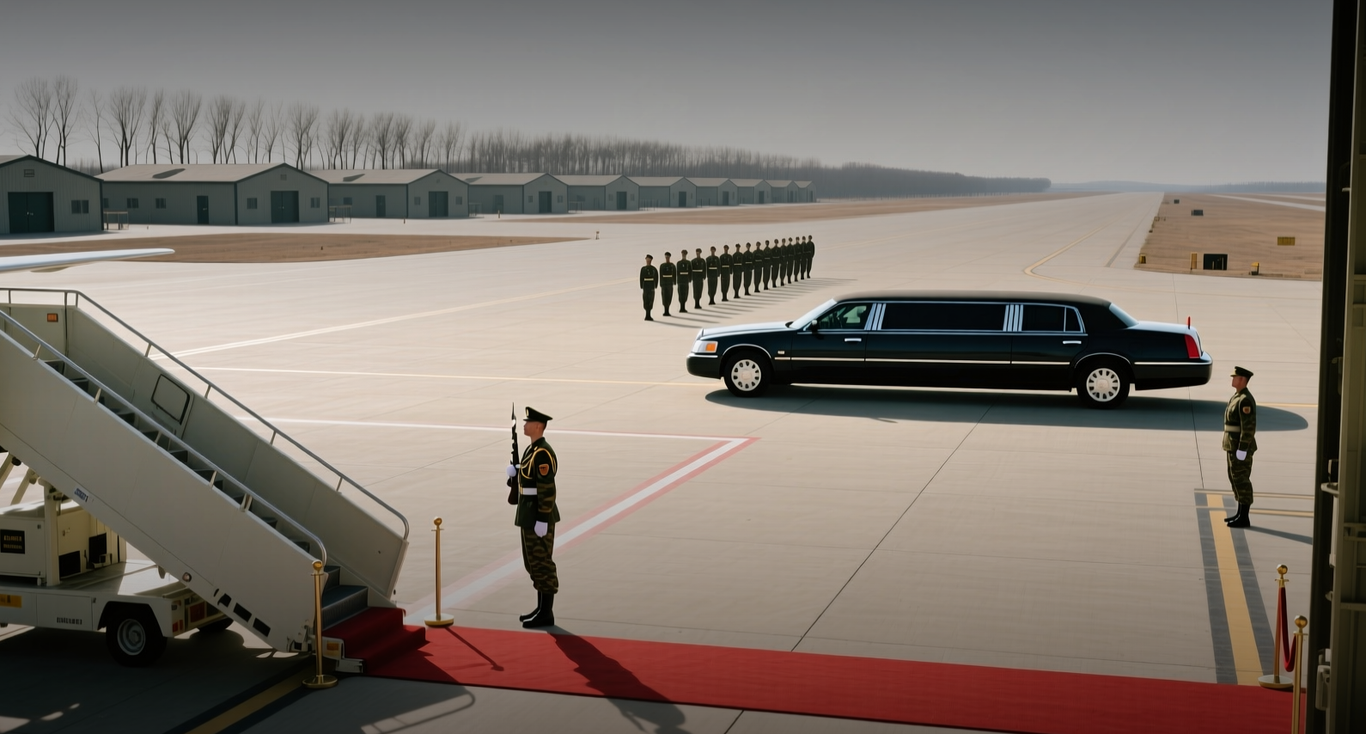
Chinese President Xi Jinping arrived at Joint Base Andrews on Wednesday for a three-day state visit, opening the first Washington summit with a US president since 2015 and putting a proposed $30 billion mutual tariff-reduction framework at the center of talks that carry a November deadline. "The idea that we would not interact with them at the highest levels is irresponsible. It's outrageous. We have to," Secretary of State Marco Rubio told reporters in New York on Wednesday, defending the engagement as necessary between "the two largest economies in the world." Trump and first lady Melania Trump traveled by Marine One to the Maryland air base to greet Xi and his wife, Peng Liyuan, a planeside reception that US presidents rarely extend to visiting leaders. The gesture reciprocates Trump's May trip to Beijing, where Vice President Han Zheng met Air Force One instead. A formal arrival ceremony, troop review and black-tie state dinner in the East Room follow on Thursday, with a guest list that includes Nvidia's Jensen Huang, Tesla's Elon Musk, Apple's Tim Cook, Amazon's Jeff Bezos, OpenAI's Sam Altman and Google's Sundar Pichai. The substance is narrower than the ceremony. Chinese Vice Premier He Lifeng has led a trade delegation through preliminary consultations in Washington, and negotiators are working toward a framework covering roughly $30 billion of goods in mutual tariff reductions. Both sides are pressing to extend the tariff truce struck in Busan, which lapses in November 2026 — the same month the US-China trade agreement reached last year expires. Beijing wants energy and rare earth supply guarantees; Washington wants to shield domestic manufacturers from Chinese surplus capacity without reigniting inflation ahead of the midterm elections. ## Rare earths, LNG and a $14 billion Taiwan chip Specific deliverables under discussion include increased Chinese purchases of US liquefied natural gas, agricultural products and aircraft, plus export licenses for rare earth minerals. Negotiators have also floated allowing Chinese electric vehicle factories to be built on US soil, subject to national security conditions. On the technology side, the agenda covers AI regulation and export controls on advanced semiconductors — the issue that drew the sharpest domestic pushback. Senate Democratic leader Chuck Schumer and three colleagues held a press conference warning against loosening controls on advanced chipmaking equipment, arguing it would erode the US lead in artificial intelligence. "We can and must both maintain our lead on AI by restricting China's access to our technology and put up guardrails to mitigate AI's risk," Schumer said. Republican senators Mitch McConnell and three others sent a letter urging the administration to proceed with aid and arms sales to Taiwan, noting the US paused a record $14 billion package after the May Beijing summit — a package Trump has described as a "very good negotiating chip." The domestic criticism has been loud enough to constrain the outcome. Senator Roger Wicker, the Republican chairman of the Senate Armed Services Committee, said on the Senate floor Tuesday that he would have advised against inviting Xi at all "based on all of the troubling issues we have with President Xi and the Chinese Communist Party," adding that "during every minute of dialogue, our commander in chief should keep in mind that his guest is a brutal, unelected, and oppressive dictator." Iran sits underneath the trade file. Washington has accused Beijing of propping up Tehran's economy and supplying components and intelligence, and wants China — the largest buyer of Iranian oil — to press its leverage. Iranian Foreign Minister Abbas Araqchi visited Beijing on September 16 to signal Tehran's willingness to return to diplomacy, days before Xi's departure. The precedent for reading this summit is the May meeting in Beijing, which produced a pause in Taiwan arms sales and no tariff relief. Markets have historically traded the ceremony rather than the communiqué: after the Busan truce was announced, the tariff-sensitive complex rallied on the headline and gave back part of the move once the terms were published. The same asymmetry applies now. If Thursday's closed-door session yields a signed framework on the $30 billion basket and a Busan extension, the de-escalation trade has room to run into November. If it produces only a commitment to keep talking, the November expiry becomes a live risk event with no cushion — and the $14 billion Taiwan package remains the most obvious lever either side can pull. This article is for informational purposes only and does not constitute investment advice.

Sep 23 2026, 23:30
AngloGold Ashanti slides 5.6% as gold miners lag broader market
AngloGold Ashanti Ltd. closed at $98.74 on Sept. 23, down 5.6% from the prior session, a decline that ran well past the drop in the wider U.S. equity market and left the gold miner among the session's weakest large-cap precious-metals names. The move came on volume that ran above the stock's recent average, according to exchange data, with the shares finishing near the lower end of the day's range. AngloGold's fall was roughly four times the decline recorded by the benchmark index that session, a gap that points to selling specific to the gold-mining complex rather than a uniform de-risking across equities. "Gold equities had been priced for a flat-to-higher metal price, so any unwind in that trade hits the miners harder than the index," said Priya Mehta, equity market strategist covering flows and positioning. "When a single name gives back 5.6% in one session while the tape is only modestly lower, the first question is whether it is a stock-specific repositioning or the start of a sector-wide de-rating." The scale of the move is best measured against the metal itself. Spot gold has traded in a narrow band through the period, meaning AngloGold's decline was not matched by a comparable drop in the underlying commodity — the classic signature of equity-level repositioning rather than a fundamental repricing of bullion. That divergence matters because gold miners carry operating leverage to the metal price: a 1% move in gold has historically translated into a multiple of that in miner earnings, which cuts both ways when positioning reverses. Peer read-across is the next test. Newmont Corp. and Barrick Mining Corp., the two largest North American-listed gold producers, and the VanEck Gold Miners ETF (GDX) are the instruments traders watch to determine whether the weakness is idiosyncratic to AngloGold or a broad rotation out of precious-metals equities. A single-session drop in one miner, even a large one, is usually absorbed within days; a second and third session of underperformance across the group would signal that portfolio managers are cutting sector exposure rather than trimming one position. The broader market backdrop did not help. The session's index-level decline reflected a market-wide pullback, and AngloGold's underperformance against that benchmark is the number that matters for relative-performance mandates — funds benchmarked to the index lose ground on every session the stock lags, regardless of the absolute direction of the tape. For holders, the near-term question is whether $98.74 holds as a floor. AngloGold's next scheduled disclosure and the next U.S. inflation print are the two dated events that will determine whether the unwind stops here or extends into the peer group. Traders will also watch the gold price itself: a stable metal price alongside continued miner weakness would confirm the move as positioning-driven, while a falling gold price would turn a one-day unwind into a sector re-rating. This article is for informational purposes only and does not constitute investment advice.

Sep 23 2026, 23:27
Ginkgo Bioworks slides 8.4% to $8.58 in company-specific selloff
A single-session loss of 8.43% took Ginkgo Bioworks Holdings Inc. (DNA) down to $8.58 on Sept. 23, a drop steep enough to separate the synthetic-biology company from a broader market that moved far less. No company filing, earnings release or disclosed regulatory action accompanied the decline. Traders pointed to three candidate drivers rather than one confirmed cause: a de-risking wave through pre-revenue biotech names, thin liquidity in a small-cap float that magnifies order-flow imbalances, and a rates backdrop that keeps pressuring long-duration cash-burning equities. None of the three has been confirmed by the company. "Single-session drops of this size in a small-cap synthetic-biology name are usually flow, not fundamentals," said Sarah Lin, an equity analyst covering U.S. biotech at Edgen Research. "When there is no 8-K and no guidance change, the tape is telling you about positioning, not about the science." The move was company-specific in the literal sense: DNA's decline outpaced the broader market's session change by a wide margin, and no peer in the synthetic-biology group fell by a comparable amount on the same day. That divergence is the core fact of the session — a stock falling on its own weight rather than being dragged by an index. For context on scale, Ginkgo operates a foundry model that sells cell-programming capacity to partners across pharma, agriculture and industrial chemicals, a business that depends on continued capital access while programs mature. A stock trading in the single digits with a small float is structurally more sensitive to a single large seller than a large-cap peer would be. The cross-asset backdrop offered little help. Treasury yields held near recent ranges, keeping the discount rate applied to future cash flows elevated for companies that are not yet profitable, and the dollar's firm tone added a second headwind for a business with international partners. Neither moved enough on the day to explain an 8.43% single-name decline on its own. What matters next is whether a disclosure follows. Ginkgo's next scheduled corporate update is the event that would either supply the missing catalyst or confirm that the drop was positioning-driven. Until then, holders are marking a loss on a move that has no documented fundamental trigger — which cuts both ways: absent a filing, there is nothing new to price in, and absent a filing, there is nothing to stop the selling from continuing. The stock's near-term path now hinges on volume. If the decline came on above-average turnover, it points to institutional exit; if it came on thin volume, it points to a liquidity air pocket that can reverse as quickly as it formed. Neither scenario is confirmed by the data available at the close. This article is for informational purposes only and does not constitute investment advice.