Edgen AI operates independently of, and is not controlled by Aspen Digital Financial Limited.
Iran strikes US drone base in Bahrain as oil tops $88
 Edgen Stock·Jul 17 2026, 21:21
Share to
Share to
Copy link

[1] Iran's Revolutionary Guard says it struck US unmanned boats in Bahrain (https://wallstreetcn.com/livenews/3135918 ...)[2] Iran attacks US bases as Trump threatens power plant hits - Euronews.com (https://www.euronews.com/2026/07/15/iran-laun ...)[3] Iran Update Special Report, July 13, 2026 - Institute for the Study of War (https://understandingwar.org/research/middle- ...)[4] Iran War Updates: U.S. launches 7th straight day of strikes as traffic freezes up in Strait of Hormuz (https://www.cbsnews.com/live-updates/iran-war ...)[5] Iran US Israel War Live Updates: US Launches Another Round of Strikes Against Iran, For the Seventh Consecutive Night (https://www.timesnownews.com/world/middle-eas ...)
Related News

Jul 17 2026, 22:09
Gold sentiment turns bearish as 79% of analysts predict further losses
Gold closed at $4,015.83 an ounce, down 1.8% for the week, after repeatedly testing the $4,000 support level. "Gold has failed to inspire and looks poised to challenge the year's low near $3,943," Marc Chandler, managing director at Bannockburn Global Forex, said. The metal opened the week at $4,108.18 an ounce before sliding to a weekly low of $3,959.37 on Friday. A brief rally to $4,122.63 on Monday faded after stronger-than-expected U.S. retail sales data — up 0.2% in June — reinforced expectations that the Federal Reserve will maintain restrictive policy. June CPI cooled to 3.5%, but the data failed to provide sustained support. A sustained break below $4,000 could trigger further selling toward $3,600, according to Bank of America technical analysts, while the seasonal pattern suggests gold typically bottoms in early August before resuming its uptrend. **Wall Street Turns Bearish** The latest Kitco News Weekly Gold Survey showed Wall Street overwhelmingly bearish on gold's near-term prospects. Of 14 analysts, 11 — or 79% — predicted further price declines, while one expected gains and two saw sideways trading. Main Street sentiment remained divided, with 40% of 169 retail investors looking for higher prices, 36% expecting declines, and 24% forecasting consolidation. "Unlikely to see a breakout to the upside until the sentiment clearly changes to a 'no-hikes' Federal Reserve," Adrian Day, president of Adrian Day Asset Management, said. Alex Kuptsikevich, senior market analyst at FxPro, said he expects gold to decline toward $3,300 by September, citing a continuing downward trend that began with January's peaks. CPM Group issued a sell recommendation at $3,980 an ounce with a target of $3,820 and a stop loss at $4,090. **Oversold Signals Point to Potential Rebound** Despite the bearish sentiment, several indicators suggest the selloff may be reaching exhaustion. Paul Wong, managing partner at Sprott Inc., said gold is trading at minus two to three standard deviations oversold across multiple internal measures. "It means that it's harder and harder to push down the price of gold," Wong said. "The bulk of the selling is probably done." Jesse Colombo, independent precious metals analyst, noted that a triangle pattern has formed on the daily gold chart, with multiple failed attempts to push gold below $3,960. "That's a sign that buyers are coming in at these levels," Colombo said. "My hope is that the selloff is reaching exhaustion." Bank of America technical analyst Paul Ciana said gold's current correction remains disproportionately short relative to the preceding 121-week advance. While prices could test $3,600, he recommended investors consider averaging down to build positions, with accumulation below $4,000 and more aggressive buying in the $3,700 to $3,600 area. The next major catalyst for gold will be the European Central Bank's monetary policy decision on Thursday, followed by July's S&P Global Flash PMI data on Friday. This article is for informational purposes only and does not constitute investment advice.
Jul 17 2026, 22:09
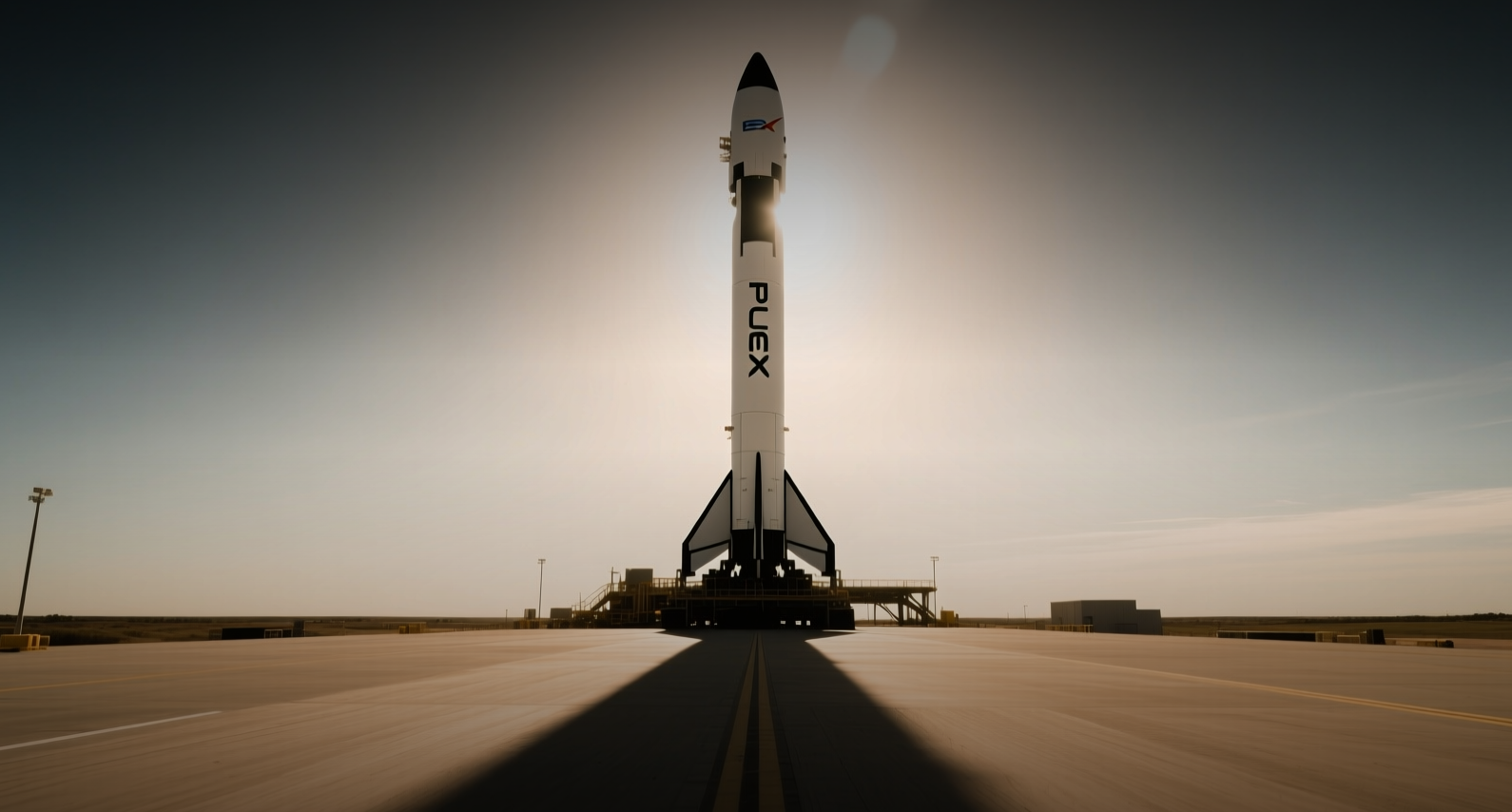
SpaceX eyes billions in Pentagon AI computing deal, disrupting cloud market
**SpaceX is pushing to supply the Pentagon with billions of dollars in AI computing capacity, a move that would pit Elon Musk's rocket company against Amazon, Microsoft and Google for defense cloud contracts.** SpaceX is in discussions with the US Department of Defense to provide dedicated data-center capacity for running AI models, according to the Wall Street Journal. The talks, which could still fall apart, would mark one of the largest commercial agreements between the Pentagon and Musk's company, deepening a relationship that already spans rocket launches, satellite communications and missile tracking. "SpaceX employees have discussed plans to compete more directly with neocloud firms such as CoreWeave by selling computing capacity to AI customers at lower prices," the Journal reported, citing people familiar with the matter. The pricing threat immediately dragged CoreWeave's shares into negative territory as the market priced in the risk of a margin-compressing price war. The negotiations come as the Defense Department races to secure cloud-computing power for intelligence agencies and active warfighters deploying AI in operations. The Pentagon is seeking $30 billion for a new program called the "Artificial Intelligence Arsenal," focused on procuring high-end AI chips, according to budget documents being reviewed by Congress. Amazon said late last year it would invest up to $50 billion to expand AI and supercomputing capacity for US government customers through its AWS cloud business, while Microsoft, Google and Oracle remain deeply entrenched as prime cloud suppliers. **SpaceX's Cloud Computing Pivot** SpaceX has been rapidly building out its computing infrastructure. The company recently completed its acquisition of xAI, bringing the Grok AI model and its data centers under the corporate umbrella. In June, SpaceX signed a multi-year cloud services agreement with Google, providing access to about 110,000 Nvidia chips and related computing infrastructure. Anthropic struck a deal in May to use the full computing power of SpaceX's Colossus 1 facility in Memphis, gaining 300 megawatts of new capacity. The company's strategy includes installing gas turbines on-site to generate its own power, a method Musk has said is faster and cheaper than waiting for grid connections. That approach has drawn a lawsuit alleging environmental violations. SpaceX has also pitched investors on the concept of deploying data centers in space. The economics of renting computing capacity are proving more lucrative in the near term than selling access to the Grok AI model. Agreements with Anthropic, Google and startup Reflection AI could generate hundreds of billions of dollars in annual revenue combined, according to people familiar with the deals. **Who Wins, Who Loses** SpaceX's entry into defense cloud computing threatens to disrupt a market dominated by the four largest hyperscalers. The Pentagon recently approved SpaceX alongside Amazon, Google, Microsoft and Oracle to provide AI models and related technology in classified environments, signaling the department's desire to reduce reliance on any single supplier. The competitive threat is most acute for CoreWeave and other pure-play neocloud providers that lack the scale of the hyperscalers. SpaceX's willingness to undercut on pricing could compress margins across the sector, particularly for defense contracts where security requirements limit the pool of eligible bidders. Political risks remain. Some national security officials have expressed concern about the Pentagon's growing dependence on Musk's companies, amplified by Musk's political donations during the 2024 presidential campaign. Trump administration officials have denied those criticisms. SpaceX shares fell 5.43% on Friday despite the positive headline, as broader selling pressure overwhelmed the brief intraday bump. The stock has been under pressure in recent weeks amid concerns about valuation and competition in the launch market. *This article is for informational purposes only and does not constitute investment advice.*

Jul 17 2026, 22:07
Refining margins hit $59 a barrel, sending energy stocks up 80%
**The WTI 3-2-1 crack spread has nearly tripled since January, rewarding refiners while keeping gasoline prices elevated for consumers.** US refining margins surged to a record $59 a barrel on the WTI 3-2-1 crack spread, nearly tripling since January as global fuel shortages and geopolitical disruptions boosted profits for the nation's largest refiners. "The magnitude of this margin expansion is unprecedented in modern refining history," said Omar Tariq, energy analyst at Edgen. "Refiners are capturing spreads that were unthinkable 18 months ago." Marathon Petroleum, Valero Energy, and HF Sinclair have each gained more than 80% in 2026, far outpacing the S&P 500's 11% advance. Phillips 66 has climbed over 54%. The rally reflects not rising crude prices but the widening gap between what refiners pay for oil and what they receive for gasoline and diesel. The record margins stem from a severe shortage of global refining capacity compounded by the Iran War, Ukrainian drone strikes on Russian refineries, and reduced fuel exports. While lower crude prices typically squeeze producer profits, they can actually boost refiner margins if gasoline and diesel remain expensive — a dynamic that has caught many investors off guard. ## The Anatomy of a Record Crack Spread The 3-2-1 crack spread estimates the gross margin a refinery earns by converting three barrels of crude into two barrels of gasoline and one barrel of distillate fuel. At $59 a barrel, the spread sits well above the historical range that refiners typically enjoy. Bloomberg data shows the metric has nearly tripled since the start of 2026. The expansion is unusual because crude oil prices have not been the driver. West Texas Intermediate crude has fluctuated this year, recently pulling back after a truce between the US and Iran was signed — an agreement President Donald Trump declared "over" on July 8. Yet gasoline and diesel prices have remained elevated, sustaining the profitability tailwind for refiners. ## Stock Market Winners and What Comes Next Marathon Petroleum continues generating substantial cash flow through its large refining network and MPLX midstream partnership. Valero remains one of North America's lowest-cost operators. Phillips 66 offers additional exposure through chemicals and midstream assets. All share one common tailwind: elevated refining margins. History suggests crack spreads rarely stay elevated forever. As fuel supplies increase, refinery utilization rises, or crude prices rebound faster than gasoline and diesel, margins tend to normalize. Reuters has noted that today's extraordinary profitability could prove temporary as crude markets rebalance following recent supply disruptions. For investors, the key takeaway is straightforward: watch the crack spread, not the headline oil price. As long as the WTI 3-2-1 remains well above historical norms, companies like Marathon Petroleum, Valero, HF Sinclair, and Phillips 66 should continue generating robust cash flow. The last time refining margins approached these levels was in mid-2022 following Russia's invasion of Ukraine, when the crack spread briefly touched $55 before normalizing over the following quarters. This article is for informational purposes only and does not constitute investment advice.