Edgen AI operates independently of, and is not controlled by Aspen Digital Financial Limited.
HF Sinclair sues EPA over delays on 42 biofuel exemption petitions
 Edgen Stock·Jul 24 2026, 22:43
Share to
Share to
Copy link


[1] HF Sinclair sues EPA for delays on biofuel exemption decision, Bloomberg News reports (https://www.reuters.com/legal/litigation/hf-s ...)[2] HF Sinclair sues EPA for delays on biofuel exemption decision, Bloomberg News reports - 1470 & 100.3 WMBD (https://wmbdradio.com/2026/07/24/hf-sinclair- ...)[3] HF Sinclair sues EPA for delays on biofuel exemption decision, Bloomberg News reports - TradingView (https://www.tradingview.com/news/reuters.com, ...)
Related News

Jul 25 2026, 00:42
Chevron seeks US help after Ukraine hits its Black Sea tanker
**A Ukrainian strike on a Chevron-chartered tanker in the Black Sea has dragged the US oil major deeper into the Russia-Ukraine conflict.** Chevron held emergency talks with US officials after a Ukrainian military attack struck a tanker it had chartered in the Black Sea, threatening the company's access to its giant Kazakh oil field that produces about 500,000 barrels a day. "Chevron is trying to insulate its Kazakh operations from the conflict, but the tanker strike shows how difficult that has become," the Wall Street Journal reported, citing people familiar with the matter. The attack occurred as oil markets already face heightened supply risks. Brent crude traded near $85 a barrel this week, supported by Middle East tensions that have pushed the Strait of Hormuz risk premium higher. Barclays said it sees upside risks to its 2026 Brent price forecast given the impasse, while the Strait of Hormuz handles about 21 percent of global oil trade. Chevron's 50 percent stake in the Tengiz field — one of the world's largest oil developments with estimated recoverable reserves exceeding 12 billion barrels — makes it the biggest Western investor in Kazakhstan's energy sector. Any disruption to production or export routes from the region could remove hundreds of thousands of barrels from daily global supply, tightening a market already on edge. The tanker strike is the latest in a series of Ukrainian attacks targeting Russian energy infrastructure in the Black Sea and Caspian regions. Ukraine earlier struck a key Russian oil platform in the Caspian Sea, according to local reports. While Kyiv has focused on disrupting Russian energy revenues, the widening operational scope has increasingly put Western-chartered vessels at risk. Chevron's exposure in Kazakhstan extends beyond the Tengiz field. The company also faces complications from a separate dispute between Kazakhstan and the Kashagan oil field operator, a consortium including Shell, TotalEnergies, ExxonMobil and China's CNPC. Kazakhstan this week froze assets of the North Caspian Operating Co. over a disputed $5 billion environmental fine, adding another layer of operational uncertainty for Western majors in the region. The last time a Western energy asset was directly struck in the Black Sea theater was in early 2024, when a Russian missile hit a commercial vessel near Odesa. That incident caused a temporary 3 percent spike in Brent and prompted several shippers to reroute cargoes, adding days to transit times and raising freight costs. For Chevron, the stakes are particularly high. The Tengiz expansion project — known as TCO Future Growth — has absorbed billions in capital expenditure and is expected to boost output to more than 1 million barrels a day once fully operational. Any sustained disruption to Black Sea export routes could delay those targets and force the company to seek alternative transport options through the Caspian Pipeline Consortium, which already operates near capacity. The incident also raises broader questions about the safety of Western energy assets operating near the conflict zone. Chevron's rivals — including ExxonMobil, Shell and TotalEnergies — all maintain significant production interests in Kazakhstan and the broader Caspian region. A prolonged escalation could trigger a reassessment of risk premiums for energy investments across Central Asia, potentially raising the cost of capital for future development projects. This article is for informational purposes only and does not constitute investment advice.
Jul 25 2026, 00:09
Nvidia and SK Group commit $500B-plus to AI data centers and memory
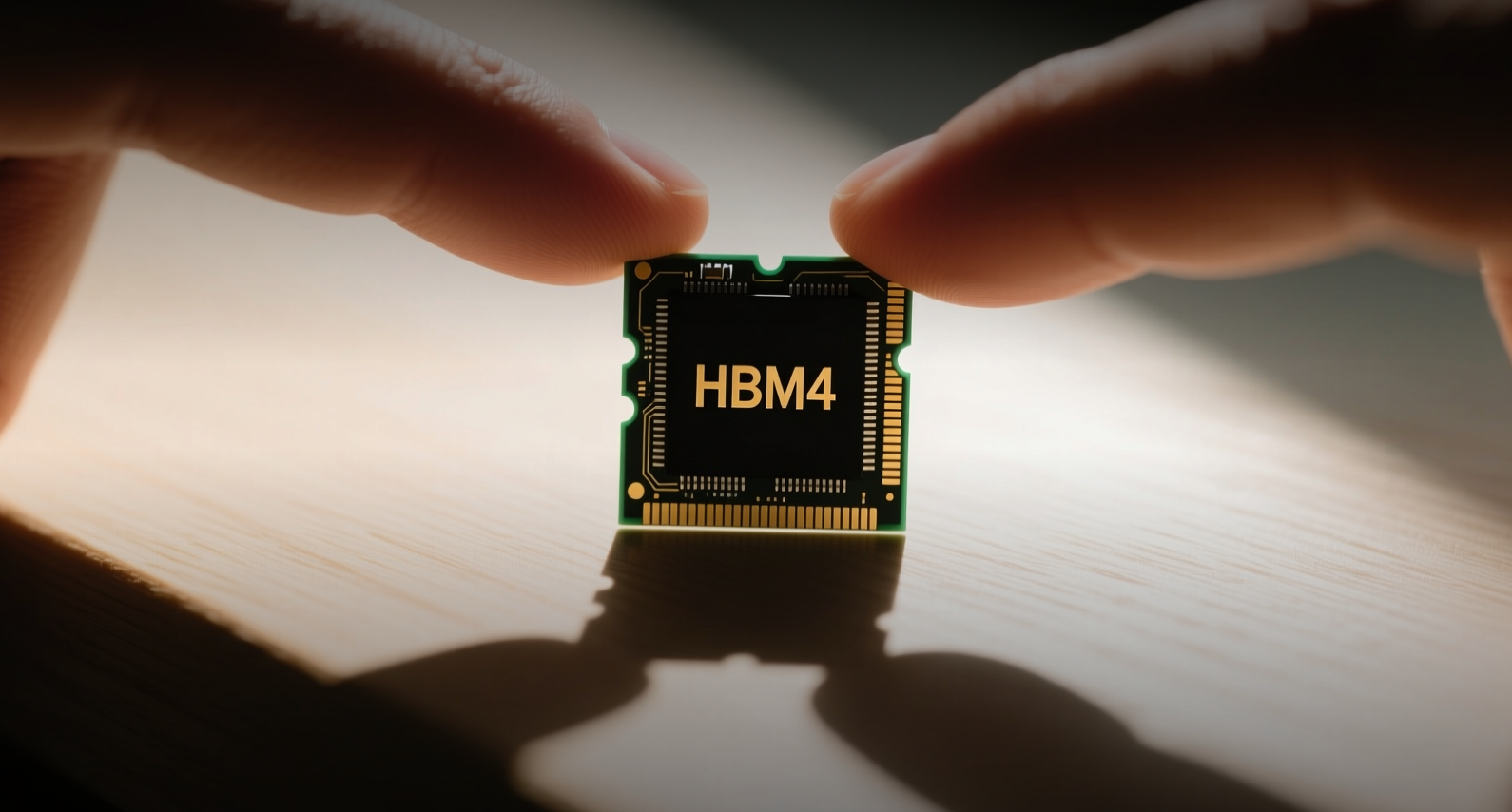
Nvidia and SK Group's more than $500 billion joint initiative spanning AI data centers and next-generation memory tightens a partnership that already controls the two most constrained inputs in AI computing: graphics processors and high-bandwidth memory. The scale of the commitment reflects a shared view that AI computing demand will outpace current infrastructure buildout, according to a joint statement from the companies. SK Hynix, SK Group's chip unit, has been Nvidia's primary supplier of high-bandwidth memory since the HBM3 generation. The initiative covers two tracks: large-scale AI data centers to be developed jointly, and a next-generation memory partnership centered on HBM4, the successor to the HBM3E standard used in Nvidia's current Hopper and Blackwell architectures. SK Hynix has already been selected as the lead development partner for HBM4, which is expected to enter production next year. The $500 billion-plus figure — spanning multiple years, geographies, and project types — would rank among the largest corporate investment pledges in technology history. Nvidia's data center revenue reached $75.2 billion in its most recent quarter, up 92% from a year earlier, while SK Hynix has posted record operating profits on HBM sales. The commitment shows that both companies expect the AI infrastructure cycle to run for years, not quarters. **Memory Becomes the New Battleground** The memory component of the partnership addresses what has become the most persistent bottleneck in AI server production. High-bandwidth memory — which sits directly alongside the GPU to feed data at speeds measured in terabytes per second — has been in short supply for three consecutive generations. SK Hynix controls roughly half the HBM market, with Samsung Electronics and Micron Technology splitting the remainder, according to industry estimates. HBM4, the next-generation standard, is expected to double memory bandwidth over HBM3E while reducing power consumption per bit. SK Hynix began sampling HBM4 earlier this year and plans volume production in 2026, aligning with Nvidia's Rubin architecture ramp. The partnership effectively locks in supply for Nvidia's next two chip generations, mirroring the multi-year memory deal the company signed with SK Hynix earlier this year. **Sovereign AI Adds a Third Demand Vector** The data center portion of the initiative comes as governments and industrial consortia emerge as a new category of AI infrastructure buyer. Japan's Noetra project, announced this week, plans to deploy 27,500 Nvidia Rubin GPUs and 13,750 Vera CPUs in a 140-megawatt AI factory backed by 44 Japanese enterprises including Sony Group, SoftBank, NEC, and Honda. Construction is expected to begin in April 2027, with operations starting in June 2028. Nvidia's customer base has already begun shifting. Hyperscalers accounted for about half of the company's $75.2 billion in data center revenue last quarter, with the remainder coming from AI clouds, industrial enterprises, and sovereign customers. Three direct customers represented 21%, 17%, and 16% of total sales, according to Nvidia's most recent quarterly filing. The SK Group initiative and similar sovereign projects could reduce that concentration over time. For investors, the $500 billion commitment reinforces a demand thesis that extends beyond the largest US cloud providers. Nvidia shares trade at roughly 35 times forward earnings, a premium that reflects expectations that AI infrastructure spending will compound for years. The SK Group deal, combined with the $1.5 billion prepayment to Amkor Technology for Arizona packaging capacity announced this week and the Japan sovereign project, suggests Nvidia is securing supply across every layer of its production chain — foundry, memory, packaging, and assembly. The risk is execution. The $500 billion figure covers multi-year, multi-project commitments whose timing, phasing, and final scope remain undefined. Investors will watch for concrete milestones — first data center groundbreaking, HBM4 qualification dates, and revenue contribution from sovereign deals — before pricing the full value into the stock. This article is for informational purposes only and does not constitute investment advice.

Jul 25 2026, 00:09
Pies warns against Fed hike as July odds hit 36%
Warren Pies of 3Fourteen Research said the Federal Reserve should not raise interest rates at its July 28-29 meeting, pushing back against a growing minority of traders who now price a 36% probability of a hike, up from 4% on July 16. "I don't think the Fed should be hiking here," Pies, founder at 3Fourteen Research, said Thursday on CNBC's "Closing Bell Overtime." "The data doesn't support it when you look at what's really driving inflation." The fed funds rate has sat at its current level since the central bank delivered a quarter-point cut in December 2025, when unemployment stood at 4.4%. Since then, the jobless rate has fallen to 4.2% in June, while core consumer prices have held at 2.6% year over year — unchanged from December and still above the Fed's 2% target. Core retail sales climbed 10.1% year over year in June, the ninth consecutive month of double-digit growth, according to the CNBC/NRF Retail Monitor. The debate carries high stakes for markets. A hike would mark the first tightening since the Fed began cutting rates, potentially upending equity valuations that have priced in a prolonged pause. A hold, by contrast, risks allowing inflation expectations to become unanchored if energy prices spike further as the conflict in the Strait of Hormuz continues, where December WTI futures now trade above $79 a barrel. ### Inflation Stays Sticky Above Target June's consumer price index showed headline inflation cooling to a 3.5% annualized rate, down 40 basis points from May, while core inflation held at 2.6% year over year — the same level as December 2025. The core personal consumption expenditures price index, the Fed's preferred gauge, is expected at 3.4% year over year when it's released July 30, after the Fed's decision. Kevin Warsh, who took over as Fed chair earlier this year, told Congress this month that the central bank has "no tolerance for persistently elevated inflation" and shares "a resolute commitment to restoring price stability." About half of the 19 Fed policymakers expected higher rates by year-end, according to the central bank's dot plot, while the other half favored holding steady or cutting. Bank of America Global Economist Claudio Irigoyen expects the Fed to deliver 75 basis points of hikes this year, arguing in a note that "the combination of persistently elevated core inflation and a stable, if not improving, labor market argues for tighter monetary policy." J.P. Morgan analysts, by contrast, see the Fed holding through the end of 2026, with the next move being a rate increase in the third quarter of 2027. ### The Case for Patience Pies' view aligns with those who argue that supply-side factors — not excess demand — are driving the inflation overshoot. Energy prices have whipsawed since the closure of the Strait of Hormuz, and a one-time flood of oil supply during a brief ceasefire temporarily depressed prices before tensions resumed. Fed governors Christopher Waller and John Williams both pointed to the favorable trajectory of oil prices in mid-July speeches, noting futures markets suggested energy costs would ease. Those observations now look dated. December WTI futures have climbed back above $79 a barrel, just $6 below their 2026 contract high, a sign that market participants expect current shipping disruptions to persist. Ten-year Treasury yields have risen 6 basis points since July 14 as investors shift focus to potential supply chain deterioration. The labor market, meanwhile, shows no signs of overheating that would force the Fed's hand. Weekly jobless claims hit their lowest level since 1969 in the latest reading, and JPMorgan Chase CFO Jeremy Barnum said during the bank's earnings call that "when it comes to consumer credit performance, it's just about the labor market. And so you're not going to hear anything new or differentiated about the labor market, like we all see the same numbers and it's been surprisingly resilient." For Pies, that resilience is exactly why the Fed can afford to wait. "The economy is strong enough to handle rates where they are," he said. "Hiking now would be a mistake." This article is for informational purposes only and does not constitute investment advice.