Edgen AI operates independently of, and is not controlled by Aspen Digital Financial Limited.
Chevron seeks US help after Ukraine hits its Black Sea tanker
 Edgen Stock·Jul 25 2026, 00:42
Share to
Share to
Copy link


[1] Chevron Is Trying to Keep Its Kazak Assets Out of the Russia-Ukraine War (https://www.wsj.com/business/energy-oil/chevr ...)[2] Ukraine strikes key Russian oil platform in Caspian Sea (https://www.msn.com/en-us/news/world/ukraine- ...)[3] Oil prices head for weekly rise on Middle East escalation (https://www.msn.com/en-us/news/world/oil-pric ...)[4] Kazakhstan freezes assets of Kashagan operator over disputed $5 bln environmental fine (https://www.reuters.com/business/energy/kazak ...)
Related News
Jul 25 2026, 01:08
Lee Jae Myung hosts AI summit with Nvidia, OpenAI in $500B push
South Korean President Lee Jae Myung hosted an AI summit in San Francisco on Friday with the heads of Nvidia, OpenAI, Anthropic and Broadcom, part of a push to secure as much as $500 billion in AI investment partnerships. "South Korea is committed to becoming an irreplaceable partner in the global AI supply chain," Lee said at the summit, according to a statement from his office. The meetings included Nvidia Chief Executive Officer Jensen Huang, OpenAI CEO Sam Altman, Anthropic CEO Dario Amodei and Broadcom CEO Hock Tan. Samsung Electronics Chairman Lee Jae-yong, SK Group Chairman Chey Tae-won, Hyundai Motor Group Executive Chair Chung Eui-sun and Naver Board Chairman Lee Hae-jin accompanied the president. The summit focused on three flagship initiatives: advanced semiconductors, physical AI and AI data center infrastructure. South Korea, home to the world's two largest memory chipmakers in Samsung and SK Hynix, is racing to translate its semiconductor manufacturing dominance into AI leadership. The country faces competition from the US, China and Taiwan in attracting AI investment and talent, with the global AI market projected to reach $1.8 trillion by 2030. **San Francisco AI Declaration Sets National Ambition** Lee plans to issue a "San Francisco AI Declaration" outlining South Korea's vision for advancing the AI industry and enhancing global cooperation, according to presidential officials. The declaration is expected to include commitments to AI infrastructure investment, research collaboration and talent development. Multiple memorandums of understanding between South Korean companies and US tech firms are expected to follow the summit. The meetings come as Nvidia, the dominant supplier of AI training chips, faces intensifying competition from custom chip designs by Broadcom and in-house efforts by cloud providers. Nvidia's data center revenue reached $47.5 billion in its most recent fiscal year, while Broadcom's AI-related revenue hit $12.2 billion, underscoring the scale of the infrastructure buildout South Korea is seeking to tap. **$500 Billion Opportunity in AI Infrastructure** South Korea's three mega-projects represent a potential $500 billion investment opportunity over the next decade, according to estimates cited by presidential officials. The country's existing strengths in memory chips, particularly high-bandwidth memory used in AI accelerators, position it as a critical node in the global AI supply chain. Samsung and SK Hynix together control more than 90 percent of the global HBM market, a product that has become essential for training large language models. Nvidia's H100 and B200 GPUs rely on HBM memory supplied by the two South Korean companies, giving Seoul leverage in AI partnership negotiations. For investors, the summit signals deepening alignment between South Korea's government and its largest conglomerates on AI spending. Samsung Electronics trades at 18 times forward earnings, a discount to Nvidia's 35 times, reflecting the market's view that memory chipmakers capture less of the AI value chain than chip designers. If the partnership agreements materialize into joint ventures or co-investment vehicles, that valuation gap could narrow. This article is for informational purposes only and does not constitute investment advice.

Jul 25 2026, 01:08
The Boring Company eyes $20 billion valuation in $4 billion funding round
The Boring Company, Elon Musk's tunneling startup, entered talks to raise about $4 billion from investors at a valuation of $20 billion, according to people familiar with the matter. The funding round would mark a significant step for the six-year-old company, which has focused on building underground transportation networks in cities including Las Vegas, where its Convention Center Loop system began operations in 2021. A $20 billion valuation would represent a substantial premium over its previous private market value, reflecting investor appetite for infrastructure technology that promises faster and cheaper construction methods. The company has completed several tunneling projects and secured contracts for expansion, though it has faced regulatory hurdles and questions about the scalability of its technology. The new capital would provide a war chest for larger-scale projects and international expansion, the people said. The Boring Company's valuation target comes as Musk's broader business empire draws intense investor scrutiny. SpaceX, his rocket company, has been reported to be in merger talks with other Musk-affiliated entities ahead of a potential initial public offering, while his social media platform X has sought to rebuild its advertising business. The Boring Company's funding discussions signal that investors remain willing to back Musk's ventures despite uneven financial performance across his portfolio. Details of the round's investor composition and expected closing timeline have not yet been disclosed. The company did not respond to requests for comment. This article is for informational purposes only and does not constitute investment advice.
Jul 25 2026, 00:09
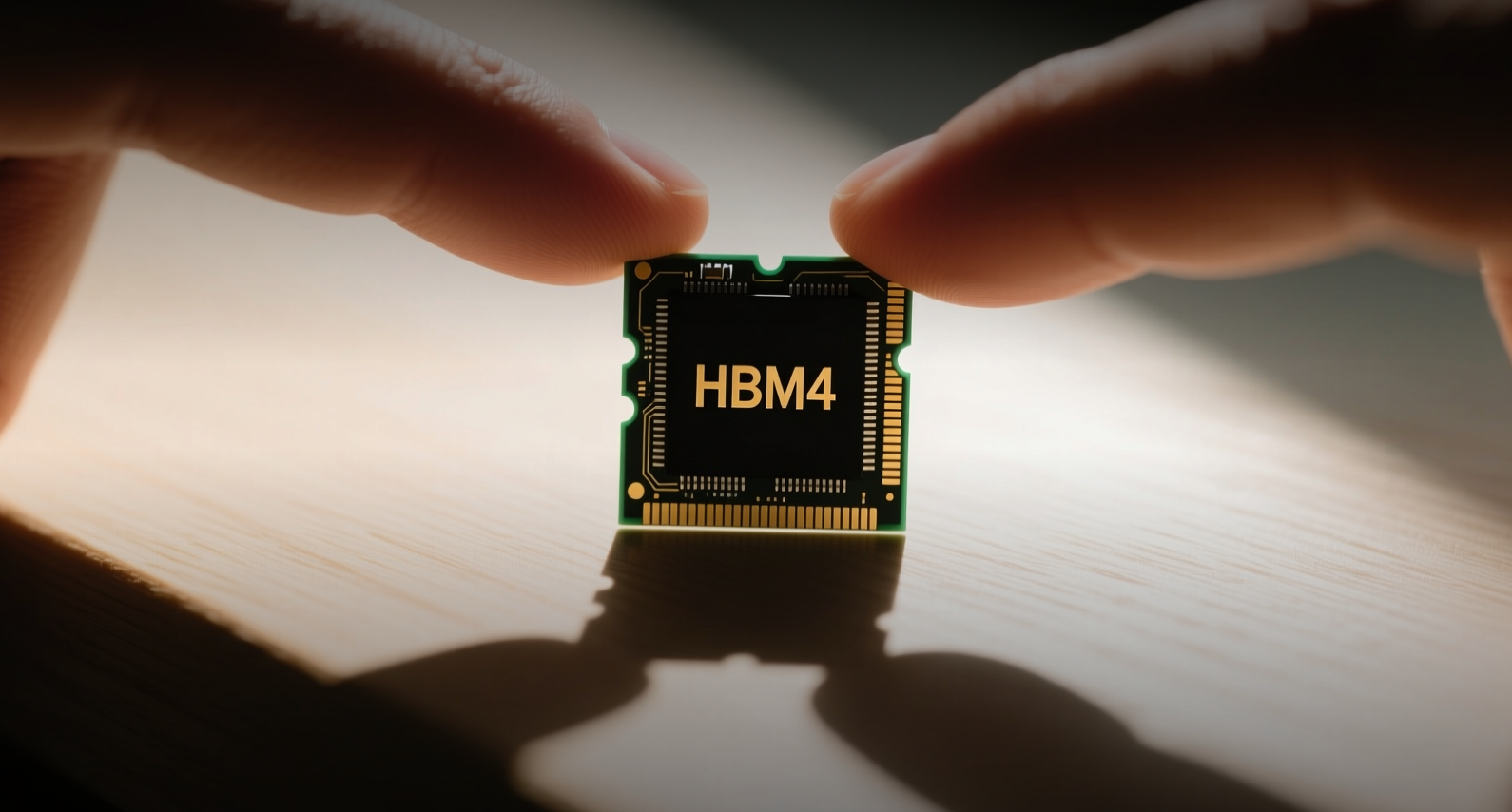
Nvidia and SK Group commit $500B-plus to AI data centers and memory
Nvidia and SK Group's more than $500 billion joint initiative spanning AI data centers and next-generation memory tightens a partnership that already controls the two most constrained inputs in AI computing: graphics processors and high-bandwidth memory. The scale of the commitment reflects a shared view that AI computing demand will outpace current infrastructure buildout, according to a joint statement from the companies. SK Hynix, SK Group's chip unit, has been Nvidia's primary supplier of high-bandwidth memory since the HBM3 generation. The initiative covers two tracks: large-scale AI data centers to be developed jointly, and a next-generation memory partnership centered on HBM4, the successor to the HBM3E standard used in Nvidia's current Hopper and Blackwell architectures. SK Hynix has already been selected as the lead development partner for HBM4, which is expected to enter production next year. The $500 billion-plus figure — spanning multiple years, geographies, and project types — would rank among the largest corporate investment pledges in technology history. Nvidia's data center revenue reached $75.2 billion in its most recent quarter, up 92% from a year earlier, while SK Hynix has posted record operating profits on HBM sales. The commitment shows that both companies expect the AI infrastructure cycle to run for years, not quarters. **Memory Becomes the New Battleground** The memory component of the partnership addresses what has become the most persistent bottleneck in AI server production. High-bandwidth memory — which sits directly alongside the GPU to feed data at speeds measured in terabytes per second — has been in short supply for three consecutive generations. SK Hynix controls roughly half the HBM market, with Samsung Electronics and Micron Technology splitting the remainder, according to industry estimates. HBM4, the next-generation standard, is expected to double memory bandwidth over HBM3E while reducing power consumption per bit. SK Hynix began sampling HBM4 earlier this year and plans volume production in 2026, aligning with Nvidia's Rubin architecture ramp. The partnership effectively locks in supply for Nvidia's next two chip generations, mirroring the multi-year memory deal the company signed with SK Hynix earlier this year. **Sovereign AI Adds a Third Demand Vector** The data center portion of the initiative comes as governments and industrial consortia emerge as a new category of AI infrastructure buyer. Japan's Noetra project, announced this week, plans to deploy 27,500 Nvidia Rubin GPUs and 13,750 Vera CPUs in a 140-megawatt AI factory backed by 44 Japanese enterprises including Sony Group, SoftBank, NEC, and Honda. Construction is expected to begin in April 2027, with operations starting in June 2028. Nvidia's customer base has already begun shifting. Hyperscalers accounted for about half of the company's $75.2 billion in data center revenue last quarter, with the remainder coming from AI clouds, industrial enterprises, and sovereign customers. Three direct customers represented 21%, 17%, and 16% of total sales, according to Nvidia's most recent quarterly filing. The SK Group initiative and similar sovereign projects could reduce that concentration over time. For investors, the $500 billion commitment reinforces a demand thesis that extends beyond the largest US cloud providers. Nvidia shares trade at roughly 35 times forward earnings, a premium that reflects expectations that AI infrastructure spending will compound for years. The SK Group deal, combined with the $1.5 billion prepayment to Amkor Technology for Arizona packaging capacity announced this week and the Japan sovereign project, suggests Nvidia is securing supply across every layer of its production chain — foundry, memory, packaging, and assembly. The risk is execution. The $500 billion figure covers multi-year, multi-project commitments whose timing, phasing, and final scope remain undefined. Investors will watch for concrete milestones — first data center groundbreaking, HBM4 qualification dates, and revenue contribution from sovereign deals — before pricing the full value into the stock. This article is for informational purposes only and does not constitute investment advice.