Edgen AI operates independently of, and is not controlled by Aspen Digital Financial Limited.
The Boring Company eyes $20 billion valuation in $4 billion funding round
 Edgen Stock·Jul 25 2026, 01:08
Share to
Share to
Copy link

[1] Elon Musk's Boring Company Eyes $20 Billion Valuation in New Funding Round (https://www.wsj.com/business/elon-musks-borin ...)[2] Elon Musk’s Boring Company Eyes $20 Billion Valuation in New Funding Round (https://www.msn.com/en-us/money/companies/elo ...)[3] Founded in 2024, Worth $4 Billion in 2026: The Wild Rise of AI Startup Corgi (https://www.inc.com/moses-jeanfrancois/founde ...)[4] SpaceX in merger talks with other Musk companies ahead of IPO (https://www.msn.com/en-in/news/other/spacex-i ...)[5] Elon Musk SpaceX IPO valuation: Can $1.75 trillion be justified despite losses, limited revenue and reliance on future vision? Details here (https://www.msn.com/en-in/money/top-stocks/el ...)
Related News

Jul 25 2026, 02:10
S&P 500 faces 1.85% swing risk as Mag7 earnings, Fed and oil converge
The S&P 500 faces a potential 1.85 percent swing this week as four Mag7 earnings reports, a Federal Reserve rate decision and a crude oil supply crisis converge in the most concentrated event lineup of the year. "Investors are really scared that these companies are spending all their cash flow on AI and data centers, with nothing left for shareholders," said Ken Mahoney, CEO of Mahoney Asset Management. "And you still don't hear about the return on investment." The S&P 500 has already broken below its 50-day moving average, with Goldman Sachs reporting a 12.6 percent net selling skew overall and a 21 percent net selling skew among long-only funds. The Cboe Volatility Index has climbed back toward levels last seen during the Iran conflict, while the 10-year Treasury yield rose about 10 basis points to 4.66 percent, the highest since the start of the Trump administration. The week will determine whether the AI capex narrative — which has punished Alphabet and Tesla while rewarding semiconductor makers — triggers a broader repricing of the megacap stocks that account for 32 percent of the S&P 500's market capitalization and 27 percent of its earnings. Microsoft and Meta Platforms report after the close Wednesday, followed by Apple and Amazon on Thursday. Options markets are pricing single-day implied moves of 7.4 percent for Meta, 6.6 percent for Amazon, 6.4 percent for Microsoft and 3.7 percent for Apple. The Federal Open Market Committee delivers its rate decision Wednesday, with fed funds futures pricing a 30 percent to 35 percent probability of a quarter-point hike. **Oil Shock Compounds the Pressure** WTI crude rose more than 7 percent last week for its third consecutive weekly gain, with Brent briefly breaching $100 a barrel. The Strait of Hormuz saw just six vessels transit Thursday, less than one-tenth of normal volume, after Houthi forces attacked two Saudi tankers and a Kazakh Black Sea export terminal was struck. Maritime intelligence firm Windward estimates that about 25 percent of global oil supply is threatened. The oil spike has upended the inflation narrative — last week's benign CPI and PPI readings gave way to a repricing of rate expectations, with the market now pricing two rate increases this year. **AI Capex Under Scrutiny** Alphabet set the tone for Mag7 earnings last week, reporting cloud revenue growth of 82 percent and search growth of 17 percent — but raising its 2026 capital expenditure guidance 8 percent to as much as $205 billion, pushing free cash flow negative for the first time in its public history. The stock fell about 8 percent for the week. Tesla followed with a non-GAAP earnings miss, sending shares down nearly 20 percent. The Roundhill Magnificent Seven ETF dropped more than 5 percent, while semiconductor ETFs gained — a divergence that shows the fragility of the chip rally's dependence on hyperscaler spending. Hyperscaler credit-default swaps have risen to all-time highs. AI-related debt financing has reached $489 billion year-to-date, up 50 percent from a year ago, with 60 percent issued by non-hyperscaler companies. S&P 500 companies reporting so far have posted earnings growth of 67.8 percent from a year earlier, with 87.4 percent beating estimates — a five-year high. But the concentration is extreme: Micron and Alphabet alone account for more than 60 percent of all reported earnings growth this quarter. Excluding those two, the rest of the index grew earnings 14.3 percent. Citigroup's Dirk Willer remains bullish on equities, saying "the market continues to climb a wall of worry." But Bank of America's Sebastian Raedler warns that profit expectations, five-year forward earnings growth and the global market-cap-to-GDP ratio are all at record highs while risk premiums sit at 20-year lows. "The market is pricing a perfect scenario," he said. This article is for informational purposes only and does not constitute investment advice.

Jul 25 2026, 01:28
TACO Index predicts Trump pivot by July 30 as oil drops 5%
**Signum Global Advisors' TACO Index shows market pressure on Trump to de-escalate the Iran conflict will hit a historical trigger threshold by July 30.** The TACO Index — a model tracking Trump's sensitivity to financial-market stress — signals the president is approaching a decision point on Iran, with Brent crude falling more than 5 percent on July 24 as diplomatic channels reopened. "The model suggests a TACO could happen as early as July 22 and should happen no later than July 30, with history pointing to July 26 as the most likely date," said Andrew Bishop, lead analyst at Signum Global Advisors. The model, which weights Brent crude, the 10-year U.S. Treasury yield, Strait of Hormuz vessel crossings and the S&P 500 into a composite stress score, found that Trump has historically acted when the index reaches 2.3 to 3.4 standard deviations — an average of 2.9. As of July 22, the index had not yet crossed that threshold but was approaching it. Brent crude traded near $95 a barrel on July 24 after briefly exceeding $100 earlier in the week, while the Dow Jones Industrial Average gained more than 300 points and the S&P 500 rose 0.6 percent on reports that Pakistan was exploring a role in restarting U.S.-Iran talks. A Trump pivot carries significant implications for energy markets and broader financial conditions. The Strait of Hormuz handles about 21 percent of global seaborne oil trade, and any sustained disruption could push crude prices higher and reignite inflation concerns. The Federal Reserve meets next week, with futures pricing about a one-in-three chance of an interest rate increase, up from 12 percent a week earlier, as energy costs complicate the inflation outlook. ## The Model Behind the TACO Signum's analysts back-tested the index against three key inflection points since the U.S. and Israel first struck Iran on March 7. Trump pivoted to ceasefire negotiations on March 22, accepted a ceasefire on April 7, and shifted focus to a memorandum of understanding on May 18. In each case, the composite stress score fell within the 2.3-to-3.4 standard deviation range. The current trajectory suggests the index will cross the 2.9 average threshold within days unless conditions improve materially — a scenario the analysts described as unlikely. ## Diplomatic Signals and Market Reaction On July 24, Trump acknowledged two exit strategies: continuing military action with potential escalation or pursuing a negotiated agreement. Hours later, Reuters reported that Pakistan — with backing from China — was exploring a mediation role between Washington and Tehran. Brent crude dropped more than 5 percent intraday to below $95.20, while West Texas Intermediate fell about 4.9 percent to below $87.70. The S&P 500 rose 0.6 percent, and the Dow added more than 300 points, as investors priced in a lower geopolitical risk premium. The last time a similar diplomatic channel emerged during a U.S.-Iran confrontation — in June 2019, when Japan attempted to mediate after tanker attacks in the Gulf of Oman — Brent crude fell 4 percent over three sessions before stabilizing. The current conflict has been more sustained, with oil prices remaining above $90 for most of the campaign. If the TACO Index triggers as predicted, the market impact could be substantial. A de-escalation would likely push Brent crude below $90 and fuel a broader equity rally as the inflation premium embedded in energy costs unwinds. Conversely, if the threshold is not reached and the conflict intensifies, oil could spike toward $110, pressuring risk assets and complicating the Fed's policy path. The July 26 weekend and the July 30 deadline now serve as the market's key calendar markers. This article is for informational purposes only and does not constitute investment advice.
Jul 25 2026, 01:10
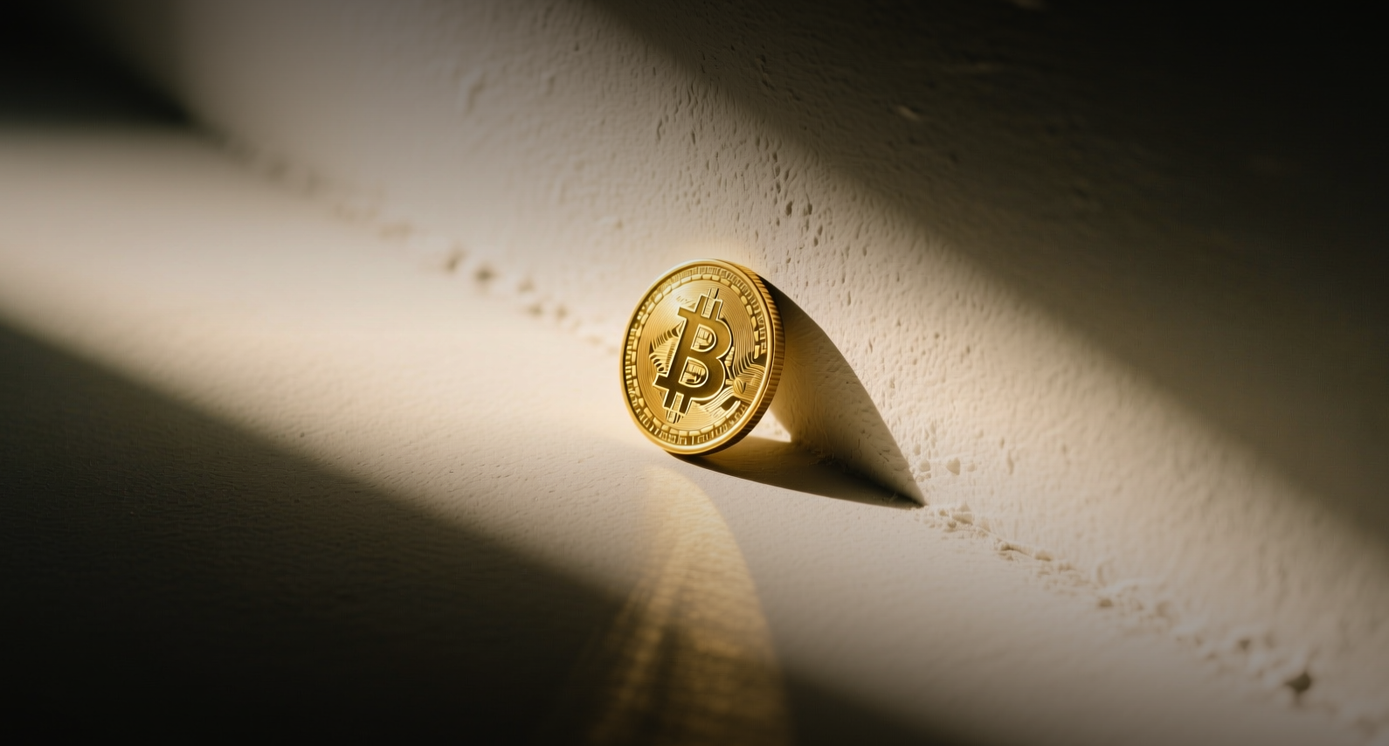
Strategy launches Bitcoin Banking Index as MSTR trades 79% below peak
Strategy published a Bitcoin Banking Adoption Index scoring 25 financial institutions on their Bitcoin integration, with Fidelity leading at 71% and the group averaging 32%. "The index shows well-known financial institutions are building capabilities with Bitcoin, but there is still a lot of work to do to get the score higher," Michael Saylor, executive chairman of Strategy, said. BNY followed Fidelity at 46%, while Goldman Sachs scored 45%. JPMorgan Chase, Morgan Stanley and Citigroup each landed at 43%. Royal Bank of Canada ranked last at 13%. The index evaluates banks across four categories: trading and custody, products, margin and leadership. The index launch positions Strategy as a benchmark-setter in the Bitcoin-banking nexus at a time when its own stock has fallen 79% from a November 2024 record of $473.83 to around $100. Bitcoin traded near $64,500, roughly 50% below its all-time high. Strategy separately overhauled its bitcoin metrics framework, replacing gross BTC-based figures with net equivalents that account for its growing preferred stock and convertible debt obligations. The company's net reserve stands at $36.6 billion — calculated by taking its $55.6 billion BTC reserve (843,775 BTC), adding $3.2 billion in USD reserves, then subtracting $6.8 billion in out-of-the-money convertible debt and $15.5 billion in notional preferred stock. The revised framework permanently sets the equity issuance threshold at 1.0x multiple to net asset value. A 3.22% BTC breakeven annual return rate would allow bitcoin gains to cover interest and preferred dividend obligations indefinitely, according to the company. Phong Le, Strategy's chief executive officer, said Wall Street's largest banks are locked in a tight race for second place on the index. Goldman Sachs, JPMorgan, Morgan Stanley and Citi each score within three points of one another, with several developing crypto initiatives slated for release this year that could reshuffle the rankings. Saylor has argued that corporate Bitcoin ownership is inevitable, framing companies as vehicles that provide efficiency, creditworthiness and scale that individuals cannot match. Strategy holds the largest corporate Bitcoin treasury globally, with 843,775 BTC worth about $55.6 billion at current prices. This article is for informational purposes only and does not constitute investment advice.