Edgen AI operates independently of, and is not controlled by Aspen Digital Financial Limited.
Gecko Robotics wins $71M Navy contract as US-China AI arms race intensifies
 Edgen Stock·Jul 21 2026, 17:10
Share to
Share to
Copy link

[1] ‘REINDUSTRIALIZING THE US': AI arms race with China HEATS UP (https://www.youtube.com/watch?v=5f_pE6wpP10 ...)[2] Gecko Robotics CEO: We're building tech that integrates into existing and future supply chains (https://www.foxbusiness.com/video/64017330961 ...)[3] New testing facilities, robotics manufacturing and clean energy headed to Western PA (https://technical.ly/entrepreneurship/pittsbu ...)[4] An OpenAI exec's comments on China's Kimi K3 kicked off a big US tech debate (https://www.msn.com/en-us/money/other/an-open ...)[5] America needs to stop getting shocked by Chinese AI (https://www.theverge.com/ai-artificial-intell ...)
Related News

Jul 21 2026, 20:08
Greer says new U.S. tariffs coming as 10% global levy expires
U.S. Trade Representative Jamieson Greer indicated the administration will soon unveil replacement tariffs before the 10% global levy expires Friday, with Section 301 investigations targeting forced labor and overcapacity across 76 economies. "The policy has been wildly successful and more is coming," Greer said in an interview, without specifying a timeline for the new measures, which still require notification to Congress and other stakeholders. The USTR has completed public hearings on forced-labor tariffs of 10% to 12.5% covering 60 economies, including South Korea, while a separate probe into structural overcapacity across 16 nations has yet to propose rates. Brazil already faces a 25% Section 301 tariff following a broader investigation into unfair trade practices. The transition threatens to upend existing trade agreements. South Korea secured a 15% tariff cap under its bilateral deal with the U.S., contingent on $350 billion in investment commitments including $150 billion for shipbuilding. If the stacked Section 301 duties push the total above that ceiling, it would mark the first breach of the agreement. The forced-labor tariffs, designed from the outset to replace the global levy, are expected to be finalized as early as this week with few modifications, according to people familiar with the process. The compressed timeline — 150 days since the Supreme Court ruled reciprocal tariffs unlawful in February — left affected countries limited room to mount counterarguments during public hearings. South Korea's position differs from Brazil's. The Asian ally negotiated its 15% cap last July after the U.S. initially imposed 25% reciprocal tariffs, with the reduction tied to specific investment pledges. A ceremony to open the Korea-U.S. Shipbuilding Cooperation Center is scheduled for Thursday in Washington, a tangible outcome of those commitments. **How the 15% cap could hold — or break** The mechanism for maintaining the ceiling remains unclear. One option would impose the overcapacity tariff separately and then reduce it to keep the total at 15%. Another would attach conditions to arrive at that figure. Either way, if South Korea bears a burden exceeding 15% in any form, criticism that the trade agreement has been violated would be unavoidable, analysts said. The last major U.S. tariff escalation — the 25% Section 232 duties on steel and aluminum in 2018 — triggered retaliatory measures from the European Union, Canada, and China, reducing bilateral trade flows by an estimated $30 billion within 12 months, according to Census Bureau data. A repeat scenario this time could prove more disruptive given the broader scope of the Section 301 investigations. For global markets, the uncertainty surrounding the new tariff structure creates headwinds for equities tied to international supply chains, particularly in the automotive, electronics, and industrial sectors. Currency markets are already pricing in volatility, with the Korean won and Brazilian real among the most exposed emerging-market currencies. The USTR has not yet set a date for announcing the overcapacity tariffs, leaving a policy vacuum that could weigh on business investment decisions through the third quarter. This article is for informational purposes only and does not constitute investment advice.
Jul 21 2026, 19:47
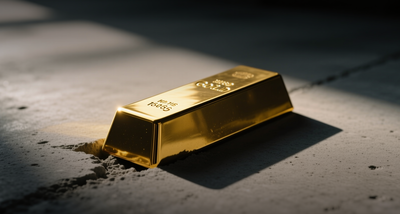
Gold rallies 2% as Gulf strikes fuel safe-haven demand while dollar strengthens
Gold prices surged on July 21 as the United States and Iran exchanged fresh military strikes across the Gulf region, pushing the precious metal higher even as the dollar index held above 100.9. "The safe-haven bid is overwhelming the usual dollar-gold inverse correlation because this is a direct military escalation with no clear off-ramp," said Elena Fischer, geopolitical risk analyst at Edgen. "Markets are pricing in a prolonged conflict that threatens energy infrastructure across the Strait of Hormuz." Brent crude futures traded at $88.87 a barrel on July 21, down from the $90.79 peak reached the previous session after the US reimposed a naval blockade on Iranian ports. Iran retaliated with missile strikes on US-allied Gulf nations, and Yemen's Houthis threatened a naval blockade on Saudi Arabia. The Indian rupee weakened to 96.42 against the dollar, its lowest in two months, as state-run banks intervened to cushion the decline. Gold's advance marked the second consecutive session of gains, following a rally on July 20 when renewed US-Iran diplomatic hopes had briefly tempered the selloff in risk assets. The escalation threatens to compound inflationary pressures across Asia's largest economies. India's wholesale inflation hit a record 9.9 percent in June, while retail inflation accelerated to 4.38 percent, crossing the central bank's 4 percent target for the first time in 17 months. For import-dependent nations, a sustained oil rally above $90 would widen current account deficits and force central banks to choose between supporting growth and defending currencies. ## Strait of Hormuz risk premium expands The confrontation centers on the Strait of Hormuz, a chokepoint handling about 21 percent of global oil trade. Iran's paramilitary Revolutionary Guard has threatened to halt all energy exports from the region, declaring that "the export of oil and gas from the region will be either for everyone or for no one." Goldman Sachs has warned Brent crude could spike to $120 a barrel if disruptions through the strait persist, though its base case assumes easing tensions and prices averaging $80 in the fourth quarter. The last time a comparable Gulf conflict disrupted energy markets was in 2019, when attacks on Saudi Aramco's Abqaiq facility temporarily knocked out 5.7 million barrels per day of production and sent Brent soaring 15 percent in a single session. The current conflict has already lasted five months, with oil prices remaining below worst-case forecasts partly because of China's reduced crude imports — which hit a near 10-year low in June — and increased US production. ## Cross-asset fallout deepens The geopolitical shock is transmitting across asset classes. Indian government bonds fell as the benchmark 10-year yield rose to its highest in nearly a month. European shares dipped as the oil surge revived inflation fears ahead of the European Central Bank's policy meeting, while German bond yields hit a two-year high on expectations of tighter monetary policy. The dollar index held at 100.97, supported by safe-haven flows, while Asian currencies broadly weakened. For India, which imports more than 80 percent of its crude oil requirements, the sustained rally threatens to widen the current account deficit and increase pressure on the rupee. Industry executives have warned that while alternative crude and LNG supplies can be sourced at higher prices, liquefied petroleum gas imports — which depend heavily on Gulf shipments — face particular strain. Indian refiners have responded by diversifying crude sourcing, with imports from Russia reaching record levels in June. This article is for informational purposes only and does not constitute investment advice.

Jul 21 2026, 19:45
Cipher Digital surges 11% as CLARITY Act optimism lifts crypto stocks
**Cipher Digital Inc. climbed alongside a broad recovery in AI infrastructure names Tuesday, with an added tailwind from Treasury Secretary Scott Bessent's declaration that the CLARITY Act — a long-awaited crypto market structure bill — sits at the "one-yard line" in the Senate.** Cipher Digital Inc. (NASDAQ: CIFR) shares rose 11.2% to $22.84, extending a rebound from Friday's three-month low of $16.13. The stock had fallen for five consecutive sessions before Monday's 17% surge, which investors used as a bargain-hunting entry ahead of the company's second-quarter earnings, expected in the second week of August. "The CLARITY Act has been the single most important piece of legislation for institutional crypto adoption, and Bessent's language suggests passage is imminent," said a Washington-based policy analyst tracking the bill. The legislation promises to establish a coherent market structure framework that the digital asset industry has argued is necessary for institutional capital to enter the space at scale. Bitcoin climbed toward $67,000 in afternoon trading, while Coinbase Global Inc. shares surged more than 11%. Broader social media chatter suggested the White House had reached an agreement on an ethics package attached to the bill, with updated text potentially released in short order. **Cipher's Dual Identity: AI Infrastructure and Bitcoin Exposure** Cipher Digital has pivoted away from its Bitcoin mining origins to redirect power assets and data center capabilities toward artificial intelligence compute demand. The stock is catching a bid alongside other former miners that have made similar transitions — a group that had faced a prolonged stretch of selling pressure before this week's reversal. The company still mines Bitcoin and held $76,150 worth of the digital currency on its balance sheet as of March 31, down from $125,400 at year-end 2025. With Bitcoin pushing toward multi-month highs, that residual exposure provides a modest additional boost on top of the broader AI infrastructure recovery. **Hedge Fund Interest Grows, Conviction Wanes** Insider Monkey data shows 49 hedge funds held positions in Cipher Digital as of the first quarter, up from 43 in the prior quarter. However, combined positions totaled $745 million, a decline of 12.7% from $853 million in the fourth quarter of 2025 — suggesting new entrants took smaller stakes. The stock carries a strong buy recommendation from 15 analysts. Bernstein reaffirmed a $32 price target, implying 55.8% upside from Tuesday's close, while Rosenblatt set a $30 target, representing a 46% potential gain. CEO Tyler Page sold $4.9 million worth of shares in separate transactions on July 8 and 9, according to an SEC filing. The sales were conducted under a Rule 10b5-1 trading plan adopted Dec. 19, 2025. The Nasdaq Composite rose nearly 2% Tuesday as investors looked past geopolitical concerns and rotated back into beaten-down technology names. High-beta momentum stocks had suffered a 33% drawdown in recent sessions — one of the worst since the late 1990s — before staging this week's recovery. This article is for informational purposes only and does not constitute investment advice.