Edgen AI operates independently of, and is not controlled by Aspen Digital Financial Limited.
Greer says new U.S. tariffs coming as 10% global levy expires
 Edgen Stock·Jul 21 2026, 20:08
Share to
Share to
Copy link

[1] 美国贸易代表暗示将很快出台新关税政策 (https://wallstreetcn.com/articles/3777602 ...)[2] Tariff policy wildly successful, more coming: USTR Greer (https://www.msn.com/en-in/money/general/tarif ...)[3] Trump's Section 301 tariffs loom as 10% global levy expires Friday (https://biz.heraldcorp.com/article/10814377 ...)[4] US readies new tariffs as Trump's 10% global levy to expire (https://www.msn.com/en-us/news/world/us-readi ...)[5] Trump prepares fresh tariffs on dozens of countries, FT reports (https://www.msn.com/en-us/news/world/trump-pr ...)
Related News

Jul 21 2026, 21:19
EQT misses Q2 profit by 1 cent as natural gas prices slide 17.5%
**EQT fell short of Wall Street estimates for second-quarter profit as weak U.S. natural gas prices squeezed margins at the nation's largest gas producer.** EQT Corp posted an adjusted profit of 39 cents a share for the quarter ended June 30, missing the 40-cent consensus compiled by LSEG, as U.S. natural gas futures averaged $3.020 per million British thermal units, down 17.5% from a year earlier. "The miss reflects the structural divergence between U.S. and global gas markets," the Pittsburgh-based company said, citing record domestic output and limited LNG export capacity as factors that kept Henry Hub prices below international benchmarks. While the Middle East conflict sent international gas prices sharply higher, U.S. prices stayed below historical averages because record domestic output, comfortable storage levels and limited LNG export capacity insulated the American market from global supply shocks. The 17.5% year-over-year decline in Henry Hub futures during the April-June period highlighted the persistent pricing gap between domestic and international benchmarks. The earnings miss at EQT points to margin compression across the U.S. natural gas sector as producers struggle to translate geopolitical premiums abroad into higher realized prices at home. With LNG export capacity limited, domestic producers face continued pressure on pricing relative to global benchmarks through at least the next year. The results highlight a growing divide in global energy markets. International natural gas benchmarks have surged as the Middle East conflict disrupts shipping routes, but the U.S. remains largely insulated by its status as a net exporter with limited liquefaction capacity. The company said comfortable storage levels and record domestic output further suppressed any upside in domestic prices, creating a two-tier market where U.S. producers cannot capture the geopolitical premium available to their international counterparts. EQT's adjusted profit of 39 cents compares with analysts' average estimate of 40 cents, according to data compiled by LSEG. Revenue figures and production guidance were not disclosed in the preliminary earnings statement. The one-cent miss, while narrow, reflects the margin sensitivity of a producer whose revenue is tied directly to Henry Hub pricing. Peer producers including Chesapeake Energy and Coterra Energy face similar headwinds, as the U.S. natural gas market remains disconnected from the geopolitical premium driving international prices. The divergence between Henry Hub and global benchmarks creates a challenging environment for pure-play U.S. gas producers, with EQT most exposed given its position as the largest domestic producer by market value. The pricing environment will test EQT's ability to maintain margins until new LNG export capacity comes online, a process that typically takes several years from final investment decision to first production. Until then, the structural factors that suppressed second-quarter results — record output, comfortable storage and limited export capacity — are likely to persist, keeping Henry Hub prices anchored below levels that would support stronger earnings for domestic producers. This article is for informational purposes only and does not constitute investment advice.

Jul 21 2026, 21:18
Celldex drops 7% after barzolvolimab fails Phase 2 prurigo nodularis trial
Celldex Therapeutics shares fell more than 7% in extended trading Tuesday after its experimental drug barzolvolimab failed a Phase 2 study in prurigo nodularis. "It is disappointing that this study did not confirm the promising signal we observed in the intravenous Phase 1b trial," Anthony Marucci, co-founder, president and chief executive officer of Celldex, said in a statement. The study enrolled 140 patients with moderate to severe prurigo nodularis, a chronic skin disease that causes hard, intensely itchy lumps and nodules. Neither the primary endpoint — the proportion of patients achieving at least a four-point improvement in itch severity at Week 12 — nor key secondary goals were met across the two dosing arms compared with placebo. Barzolvolimab was administered subcutaneously at 150 milligrams every four weeks or 300 milligrams every four weeks, each after a 450-milligram loading dose. The failure marks a setback for Celldex, as barzolvolimab is the company's lead drug candidate and its most advanced pipeline asset. The drug sharply reduced mast cells — immune cells involved in allergic reactions — as measured by serum tryptase levels, but patients reported no meaningful improvement in itch or skin lesions. Celldex said the result suggests mast cells may not be a primary driver of prurigo nodularis, a disease where treatment options have expanded in recent years with Sanofi's blockbuster Dupixent and Galderma's Nemluvio. The company said it will discontinue the prurigo nodularis program but remains focused on developing barzolvolimab for other inflammatory and allergic conditions. Barzolvolimab has shown positive Phase 2 proof-of-concept data in chronic spontaneous urticaria, symptomatic dermographism and cold urticaria, all of which have advanced to Phase 3. Celldex expects to report late-stage data in chronic spontaneous urticaria in September or October 2026, with mid-stage data in atopic dermatitis due later this year. The after-hours decline puts Celldex shares at their lowest level since the company reported positive CSU data earlier this year. Investors will watch for the upcoming Phase 3 CSU readout, the next major data event for barzolvolimab's broader development program. This article is for informational purposes only and does not constitute investment advice.
Jul 21 2026, 21:16
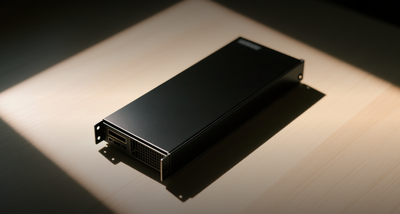
Super Micro surges 15% on $60B in new orders, higher margins
Super Micro Computer received over $60 billion in new orders in the fiscal fourth quarter, sending shares up 15% after hours. "The results reflect surging demand for AI infrastructure," Chief Executive Officer Charles Liang said in a preliminary business update Tuesday. The company said gross margins will land between 15% and 17%, sharply higher than the 8.2% to 8.4% range it forecast in May. Revenue is expected near the low end of its $11.0 billion to $12.5 billion guidance range, compared with the $11.67 billion consensus estimate compiled by LSEG. The margin expansion shows Super Micro benefiting from a more favorable product mix as it ships higher-value AI servers powered by Nvidia graphics processing units. The company's backlog hit a record at the end of fiscal 2026, with the $60 billion in new orders expected to be delivered over future quarters. During the quarter, Liang posted on X that Super Micro was "proud to co-build another new Gigawatt AI datacenter for @SpaceX and @XAI within a year," highlighting the company's deepening ties with Elon Musk's companies. Rival server makers also gained on the news, with Dell Technologies rising 5% and Hewlett Packard Enterprise adding 4% in extended trading. The preliminary results point to continued strong demand for AI computing infrastructure, with hyperscalers and enterprises racing to deploy Nvidia's latest chips. Super Micro's ability to convert its record backlog into revenue will be a key focus for investors. The company plans to report full fourth-quarter and fiscal 2026 results on Aug. 11. This article is for informational purposes only and does not constitute investment advice.