Edgen AI operates independently of, and is not controlled by Aspen Digital Financial Limited.
Fed's Warsh leaves traders guessing with 30% chance of July hike
 Edgen Stock·Jul 23 2026, 02:08
Share to
Share to
Copy link

[1] The Fed in the Walsh era is too difficult to guess! Approaching FOMC, the market still cannot determine next week's policy direction (https://wallstreetcn.com/articles/3777732 ...)[2] Warsh Confuses Traders, Makes Them Guess Next Week's Rate Move (https://www.bloomberg.com/news/articles/2026- ...)[3] July Fed Meeting: Updates and Commentary (https://www.msn.com/en-us/money/markets/july- ...)[4] US Market Report July 19, 2026 (https://note.com/hirokimiyano/n/nb9d065d43ee3 ...)[5] Traders face rare pre-Fed cliffhanger in Warsh’s ’no-guidance’ era - Investing.com (https://m.investing.com/news/economy-news/tra ...)
Related News

Jul 23 2026, 03:57
FCC votes to ban Chinese hardware devices, closing 4-year loophole
The US Federal Communications Commission voted Wednesday to bar sales of devices containing key hardware components from Huawei Technologies and ZTE Corp., closing a loophole that had allowed Chinese-made parts into American networks since 2022. "Compromised components, particularly semiconductors or communications devices, can be used to corrupt entire devices," Chris McGuire, a former White House National Security Council official under President Joe Biden, told Reuters. The FCC maintains a list of Chinese firms whose equipment is barred from US sale over national security concerns. Since 2022, devices made by listed companies were banned from receiving new authorizations, but products containing their component parts could still gain approval. The new rules prohibit any device containing a Huawei-made logic-bearing hardware component from entering the US market. The vote escalates Washington's decoupling from Chinese telecom infrastructure, a process that has already barred Huawei and ZTE equipment from US networks under a 2019 law. The FCC is also considering prohibiting US carriers from interconnecting with Chinese telecom firms deemed national security risks, a move that would effectively require Chinese companies to shut down US data centers and internet exchange points. **Broader Crackdown Accelerates** The ban extends beyond Huawei and ZTE. The FCC has also restricted imports of new foreign drone and router models in recent months and proposed to ban most military-grade drone imports. Last month, the agency banned equipment from a broader group of Chinese manufacturers effective July 16. The 2019 law prohibiting the use of Huawei and ZTE equipment in US networks triggered a US$1.9 billion federal reimbursement program for rural carriers to rip and replace banned gear. Many smaller operators have cited cost overruns and supply delays, with the replacement program still incomplete as of early 2026. **Supply Chain and Competitive Fallout** US telecom carriers that rely on Chinese hardware components face potential supply disruptions and higher procurement costs as they seek alternative suppliers. The ban could benefit US-based telecom equipment competitors such as Cisco Systems and Juniper Networks, as well as non-Chinese Asian manufacturers including Samsung Electronics and Nokia. The action comes as the Trump administration has mounted a sweeping crackdown on Chinese technology gear, mirroring similar moves by allies including the UK, which ordered the removal of Huawei equipment from its 5G networks by 2027, and Australia, which banned Huawei from its 5G rollout in 2018. **What Comes Next** The FCC is weighing additional restrictions that would bar US telecommunications carriers from interconnecting with Chinese telecom firms that own US data centers or maintain Points of Presence at internet exchange points. Such a rule would force Chinese companies to either divest those assets or cease US operations entirely. Huawei did not immediately respond to a request for comment. FCC Chair Brendan Carr said the agency would "fully close the component part loophole," with further restrictions targeting Chinese technology in US networks still under consideration. This article is for informational purposes only and does not constitute investment advice.
Jul 23 2026, 03:48
Samsung Electro-Mechanics signs $204 million MLCC deal for AI servers
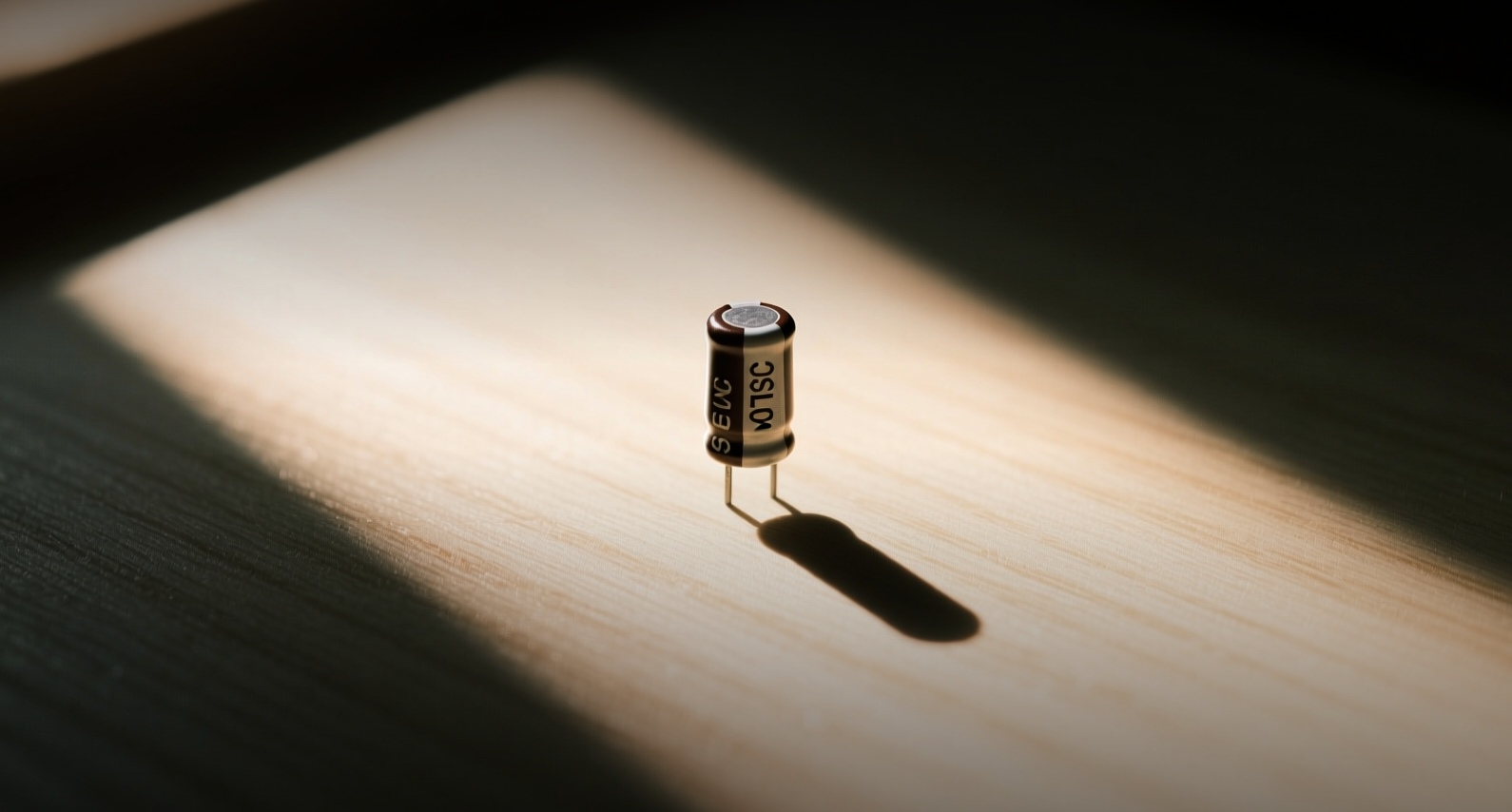
**Samsung Electro-Mechanics has locked in at least $1.5 billion in AI server component contracts this year, pushing the humble MLCC — a ceramic capacitor found in every electronic device — into the era of long-term supply agreements.** Samsung Electro-Mechanics disclosed Wednesday it signed a 295.12 billion won ($204 million) contract to supply multilayer ceramic capacitors to an undisclosed global technology company for the full 2027 calendar year. The deal marks the third large-scale AI server component agreement the company has announced in as many months, following a roughly 450 billion won MLCC order in June and a 1.5 trillion won silicon capacitor long-term contract in May. "This large-scale contract is the result of Samsung Electro-Mechanics' MLCC technology being fully recognized as a core component of AI infrastructure," Chief Executive Chang Duck-hyun said in a statement. "Based on our customers' deep trust, we will accelerate the development of next-generation cutting-edge products and build a stable supply chain to lead the AI component market." Shares of Samsung Electro-Mechanics surged as much as 8.2% to 1.475 million won on the Korea Exchange, outperforming heavyweight stocks including Samsung Electronics and SK Hynix. The contract represents about 2.6% of the company's 11.31 trillion won in consolidated revenue last year. **Why MLCCs became an AI bottleneck** MLCCs — multilayer ceramic capacitors — serve as microscopic power reservoirs that stabilize voltage in electronic circuits. In AI servers, their role has become strategically critical. Each AI server rack can require up to 600,000 MLCCs, more than 10 times the number needed in a standard server, according to industry estimates. The technical requirements for AI-grade MLCCs are far more demanding than consumer-grade components. They must be ultra-miniaturized while delivering high capacitance, and must withstand high temperatures, high voltage, and board flexing during operation. The combination of extreme volume and stringent specs has created a supply dynamic where only a handful of manufacturers can reliably deliver. Samsung Electro-Mechanics holds more than 40% of the global AI server MLCC market, a position that has made it the primary beneficiary of hyperscaler buildout spending. The company's silicon capacitors — installed inside AI chip packages alongside GPUs and high-bandwidth memory — offer roughly one-hundredth the electrical resistance of traditional MLCCs, a performance advantage that becomes material at the scale of modern AI clusters. **The shift to long-term contracting** The three contracts signed since May represent a structural shift in how MLCCs are procured. Historically, these components were ordered on short cycles tied to consumer electronics production schedules. The move toward multi-year, fixed-volume agreements — common in the memory chip and foundry businesses but rare in passive components — signals that AI hyperscalers are treating MLCC supply as a strategic constraint on their infrastructure expansion. Samsung Electro-Mechanics said it is in further discussions with multiple global customers on medium- to long-term MLCC supply plans. The company is accelerating its portfolio shift toward high-value products for industrial, automotive electronics, and AI server applications. For investors, the question is whether the long-term agreement model can sustain the revenue visibility that drove the stock's 8% surge. Samsung Electro-Mechanics trades at a premium to passive component peers, reflecting its AI exposure. The company's ability to convert its market share lead into recurring, contracted revenue — rather than spot-market orders — will determine whether that premium is justified. Competitors including Murata Manufacturing and TDK Corp. are also investing in AI-grade MLCC capacity, though neither has disclosed comparable long-term agreements at this scale. This article is for informational purposes only and does not constitute investment advice.
Jul 23 2026, 03:38
SpaceX loses $1 trillion in value as lockup cliff looms over SPCX
**SpaceX has shed roughly $1 trillion in market value since its post-IPO peak five weeks ago, and the worst may be yet to come.** SPCX closed at $115.26 on July 22, down 25 percent in a single month and 49 percent from its June 16 peak of $225.64, erasing nearly $1 trillion in paper wealth since the company's record-breaking IPO. "The combination of incoming supply, bearish options skew, and eroding sentiment does not set up well for a near-term bounce," said Gerelyn Terzo, an analyst covering SpaceX for 24/7 Wall Street. The stock fell for seven straight sessions through July 20, sliding 21 percent in that stretch. Hedgeye estimates the company has been losing roughly $47 billion in market capitalization per day from its peak — almost 22 times the rate of Rivian Automotive's post-IPO decline. Short sellers now control 206 million shares, or 32 percent of the tradable float, according to S3 Partners, representing roughly $25 billion in bearish bets. The real test comes Aug. 4, when SpaceX reports its first earnings as a public company. Two trading days later, 911.5 million insider shares become eligible for sale — a supply event that exceeds the entire IPO float. Options traders are already positioned for further declines, with the March 2027 put/call ratio sitting at 16.13. **The Lockup Math Is Brutal** SpaceX deliberately staggered its insider lockup expirations across multiple dates, but the first wave is still massive. The 911.5 million shares set free on Aug. 6 dwarf the roughly 635 million shares that traded in the IPO. A second tranche of 455.8 million shares carries a condition: SPCX must close above $175.50 on five of the 10 trading days before the earnings report — a level nearly 40 percent above the current price. Every insider on the roster, from Chief Executive Officer Elon Musk to President Gwynne Shotwell to Chief Financial Officer Bret Johnsen, last transacted on June 11, the IPO date. Musk's own 42 percent stake remains locked until June 2027. **The Bull Case Has Cracks** SpaceX still launches more than 80 percent of the world's payload mass to orbit each year and operates roughly 9,600 Starlink satellites across 164 countries. Revenue grew 33 percent in 2025. But growth is slowing — the first quarter of 2026 saw that rate fall to 15 percent — and the company posted a $4.9 billion net loss last year on $18.7 billion in revenue. The competitive moat is also taking water. Japan successfully landed a reusable rocket prototype, cracking the narrative that SpaceX's lead was years ahead of any rival. Reddit sentiment on the stock collapsed to a Very Bearish score of 12 after the news. Even after the selloff, SPCX trades at 49 times expected revenue, down from roughly 140 times in its first trading days but still well above Morningstar's pre-IPO fair value estimate of $780 billion for the entire company. Analyst price targets span from $62 to $800 — a $738 gap that reflects deep disagreement on what the company is worth. **What Comes Next** Investors will watch the Aug. 4 earnings print, but the numbers may matter less than the wave of newly tradable shares hitting a market that just absorbed a 9.22 percent weekly drop on a constrained float. Short sellers are sitting on an estimated $8.7 billion in paper profits as of mid-July, according to S3 Partners, giving them little incentive to cover before the unlock. Polymarket assigned a 96.5 percent probability to SPCX finishing down on July 22, which it did, and only a 20 percent chance of closing above $130 by month-end. The options market is pricing further pain through at least March 2027. A reversal would require either insiders to publicly extend their lockups or a decisive commercial breakthrough from Starship before the earnings report. Without one of those catalysts, the supply wave arriving Aug. 6 looks set to push the stock lower. This article is for informational purposes only and does not constitute investment advice.