Edgen AI operates independently of, and is not controlled by Aspen Digital Financial Limited.
Costco June sales rise 10.6% as gas prices boost comparable growth
 Edgen Stock·Jul 08 2026, 21:32
Share to
Share to
Copy link

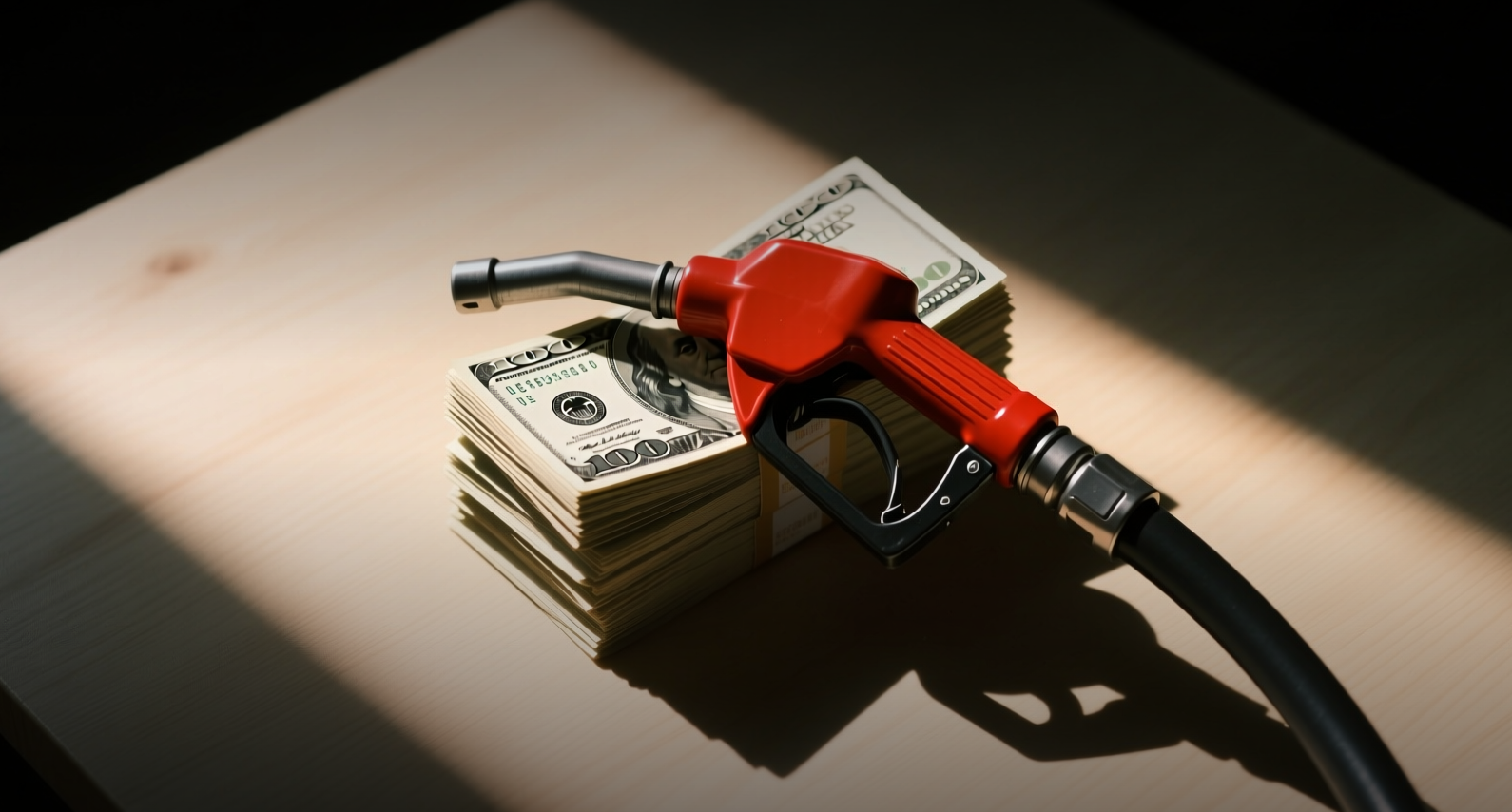
[1] Costco Reports June Sales Data — Shares Slip Despite Strong Growth (https://www.benzinga.com/trading-ideas/movers ...)[2] Costco Wholesale Corporation Reports June Sales Results and Announces Quarterly Cash Dividend (https://markets.businessinsider.com/news/stoc ...)[3] Costco reports 10.6% increase in June sales (https://www.msn.com/en-us/money/general/costc ...)[4] Costco’s June Sales Rise but Same Store Sales Growth Disappoints (https://www.barrons.com/articles/costcos-june ...)[5] Costco Reports Rising June Sales (https://www.morningstar.com/news/dow-jones/20 ...)
Related News

Jul 30 2026, 02:57
BOE expected to hold at 3.75% as oil risks fuel rate hike bets
The Bank of England is expected to keep its key rate at 3.75% on Thursday, yet rate futures have fully priced a November increase as the Strait of Hormuz closure pushes oil above $100 a barrel and reignites inflation fears. "We think the Bank of England is right, on balance, to hold rates — though that judgment is conditional," said David Aikman, director of the National Institute of Economic and Social Research. "If energy prices rise further and stay high, the calculus changes, and we would expect the Bank to act." The Monetary Policy Committee is expected to vote 7-2 to hold, with Chief Economist Huw Pill and external member Megan Greene dissenting in favor of a hike. June CPI came in at 2.6%, a 15-month low, while private-sector wage growth slowed to 2.9%, the weakest since 2020. NIESR forecasts inflation will peak at 3.8% in February after a regulated cap on household energy prices rose 13% in July, with the rate only returning to the 2% target in 2029. The divergence between soft data and hard market pricing creates a communication challenge for Governor Andrew Bailey. If he endorses the market's hawkish view, he risks tightening financial conditions further. If he pushes back, he may lose credibility if oil stays elevated. The next meeting in September will offer the first real test, with Goldman Sachs Asset Management calling it "finely balanced." **Data Dovish, Market Hawkish** The disconnect between economic fundamentals and market pricing is unusually wide. A Reuters poll shows most economists expect the MPC to hold through year-end, with UBS economist Anna Titareva explicitly betting on cuts — forecasting the next move will be a reduction in February or April 2027. New Prime Minister Andy Burnham's government has added to the dovish case by removing value-added tax on household electricity, a move Titareva estimates will shave about 0.1 percentage point off inflation. Yet rate futures tell a different story. Markets have fully priced a 25-basis-point hike by November and another by March 2027, driven almost entirely by energy supply risks. The Strait of Hormuz has been closed for five months during the Iran conflict, and while current oil futures sit at the low end of the BOE's scenario range, last week's spike above $100 a barrel triggered fresh inflation hedging. **The Fed's Shadow** The BOE's decision comes a day after the Federal Reserve held its rate at 3.5% to 3.75% with three dissenting votes for a hike — from Cleveland's Beth Hammack, Minneapolis's Neel Kashkari and Dallas's Lorie Logan. Chair Kevin Warsh used his press conference to reiterate a "laser" focus on the 2% inflation target, declining to offer forward guidance on future moves. The hawkish dissent at the Fed amplifies the pressure on Threadneedle Street. External MPC member Catherine Mann warned this month that falling market borrowing costs could make inflation control more difficult, suggesting she may join the hawkish camp. The last time the BOE faced a similar oil-driven inflation scare was in 2022, when it delivered 14 consecutive hikes to take rates from 0.1% to 5.25%. **What to Watch** Bailey's language on energy pass-through and wage expectations will be the key signal. The BOE has already slowed its quantitative tightening pace to 70 billion pounds a year from 100 billion in 2025, and markets expect a further reduction to 50 billion in September. Any hint that the MPC shares the market's concern about oil-driven inflation would validate the November hike pricing; any pushback could trigger a gilt rally. *This article is for informational purposes only and does not constitute investment advice.*

Jul 30 2026, 02:48
Nikkei rises 0.4% to 61683 as electronics stocks offset financial losses
The Nikkei 225 rose 0.4% to 61683.96, led by electronics stocks, while financial shares dragged the broader Topix lower. "Investors are closely watching earnings, developments in the Middle East and crude oil prices," according to the Nikkei market summary from Dow Jones Newswires. Hitachi Ltd. gained 3.3% and Kokusai Electric jumped 4.7%, powering the benchmark's advance. On the downside, Nomura Holdings tumbled 6.7% and Mizuho Financial Group fell 2.8%, pulling the Topix index down 0.6% to 3949.23. The divergence between the two Japanese benchmarks reflected a rotation out of financials into electronics names, with the Nikkei's 1,743 constituents showing a clear sector split. The dollar weakened to 163.26 yen from 163.55 at Wednesday's Tokyo close, providing some support for export-oriented electronics companies that benefit from a weaker yen. The currency move comes as the Bank of Japan's policy trajectory remains a key focus for traders, with the yen having strengthened from multi-decade lows earlier this year. A softer yen typically boosts the earnings outlook for Japanese exporters by increasing the value of overseas revenue when converted back to yen. The Nikkei's modest gain contrasts with broader weakness across Asian equity markets. The Hang Seng Index has surged about 14% from its year-to-date low as investors rotate into Chinese technology names including Xiaomi, which has risen 45% in the past month, and Meituan, up 37% over the same period. Meanwhile, South Korea's Kospi has fallen about 40% from its year-high, dragged by a 44% decline in Samsung Electronics and a 53% drop in SK Hynix as the artificial intelligence trade unwinds. Japan's Nikkei remains about 15% below its peak for the year, with semiconductor-related stocks including Tokyo Electron and Advantest also coming under pressure in recent weeks. The Nikkei's advance, while modest, suggests selective buying in electronics names as investors position for the upcoming earnings season. With the benchmark holding above the 61,000 level, traders are watching for further catalysts including corporate results from major exporters and any escalation in Middle East tensions that could drive crude oil prices higher, potentially squeezing margins in import-dependent sectors. The next key test for Japanese equities will come as companies report quarterly results, with analysts focused on guidance for the second half of the fiscal year. This article is for informational purposes only and does not constitute investment advice.
Jul 30 2026, 02:46
Fed's hawkish hold with 3 dissents signals rate hike risk ahead
**The Federal Reserve held rates steady but three officials dissented in favor of a hike, sending stocks sharply lower as the Iran war escalated.** The Fed held its benchmark rate at 3.5 percent to 3.75 percent for a fifth straight meeting Wednesday, but three dissenting votes for a hike and an escalating Iran war sent the Dow down more than 1,150 points. "The three dissenting votes show the Fed remains divided on whether inflation is under control," Seema Shah, chief global strategist at Principal Asset Management, said. Beth Hammack of the Cleveland Fed, Neel Kashkari of the Minneapolis Fed and Lorie Logan of the Dallas Fed each voted for a quarter-point increase, marking the first three-dissent split since 2023. Fed Chair Kevin Warsh described the debate as "a good family fight" during the press conference, while reiterating the central bank's commitment to returning inflation to the 2 percent target. The yield on the 10-year Treasury rose to 4.64 percent from about 4.50 percent in mid-June as bond markets priced in a higher probability of future tightening. The combination of a divided Fed and a worsening Middle East conflict threatens to tighten financial conditions further. Oil briefly breached $100 a barrel last week after Iran shut the Strait of Hormuz, through which a fifth of the world's oil and natural gas pass, following the Feb. 28 attacks. Traders now see a 55 percent chance of a rate hike at the Fed's September meeting, according to CME data, up from 33 percent just before the decision. The Nasdaq Composite has fallen almost 10 percent from its June closing record, placing it on the cusp of correction territory. The tech-heavy index lost 433.97 points, or 1.74 percent, to settle at 24,442.94. The S&P 500 dropped 112.63 points, or 1.52 percent, to 7,316.15. The Dow Jones Industrial Average slid 1,153.18 points, or 2.19 percent, to 51,594.14. Inflation has exceeded the Fed's 2 percent target since early 2021, peaking at just over 9 percent in mid-2022. While core inflation cooled in June partly because apartment rent increases moderated, progress has largely stalled. President Donald Trump's tariffs on foreign goods and the Iran-driven surge in energy costs have added fresh upward pressure on prices. **A Divided Committee Faces a Complex Outlook** Warsh, appointed by Trump, has sought to reduce the Fed's forward guidance, giving markets fewer signals about the central bank's thinking. "The market is learning to play the ball and not the referee," he said. The last time the Fed faced a three-way dissent was in 2023, when the committee was still in the midst of its tightening cycle. That precedent suggests the current split could foreshadow further rate increases if inflation data does not improve. Trump voiced support for Warsh after the decision, calling him "fantastic" and "a brilliant guy," while acknowledging the chair faces pressure from a divided board. "I know he'd love to see lower interest rates, but he's got a board and it's a political board and they want to keep rates up," Trump told reporters. **Iran Conflict Adds Uncertainty to Rate Path** The rising violence in the Middle East has created a quandary for policymakers. Energy prices have added $10 to $15 per barrel to the cost of oil compared with a year ago, feeding through to broader inflation measures. Jordan intercepted missiles launched from Iran early Wednesday, hours after the U.S. military said it knocked down another Iranian barrage, indicating the conflict shows no signs of de-escalation. The Commerce Department is scheduled to release its first estimate of April-June economic growth on Thursday, along with the Fed's preferred inflation measure — the personal consumption expenditures price index — for June. Those data points will shape the debate ahead of the September meeting. This article is for informational purposes only and does not constitute investment advice.