Edgen AI operates independently of, and is not controlled by Aspen Digital Financial Limited.
BOE expected to hold at 3.75% as oil risks fuel rate hike bets
 Edgen Stock·Jul 30 2026, 02:57
Share to
Share to
Copy link

[1] Data Dovish, Market Hawkish: Bank of England Faces Policy Signal Test on Thursday (https://wallstreetcn.com/articles/3778288 ...)[2] Fed holds rates steady: What it means for credit cards, savings accounts, mortgages and auto loans (https://www.msn.com/en-us/money/markets/fed-h ...)[3] BOE Seen on Hold Through 2027 Despite Inflation Spike (https://www.morningstar.com/news/dow-jones/20 ...)[4] Pound steady ahead of Fed, BoE policy decisions (https://www.msn.com/en-gb/money/other/pound-s ...)[5] Fed Keeps Interest Rates Steady And Leaves Future Plans A Mystery (https://www.investopedia.com/fed-meeting-july ...)
Related News

Jul 30 2026, 03:52
Goldman Sachs lifts New Oriental target 10% as education margins expand
Goldman Sachs raised New Oriental Education's price target 10% to HKD55 after Q4 earnings beat estimates by $64M. "The fourth-quarter results and fiscal 2027 guidance show the core education business will become the key driver of margin expansion," Goldman Sachs said in a research report, maintaining its Buy rating. The US-listed ADR target rose to $70 from $65, implying about 19% upside from the last close. New Oriental reported Q4 revenue of $1.53B, up 23% year over year and $64M above consensus. Non-GAAP EPS of $0.55 beat estimates by $0.09. Operating income swung to $85.8M from a loss of $8.7M a year earlier. The stock jumped 18% to HKD47.18 on the Hong Kong exchange, with HKD319M in turnover. Management guided fiscal 2027 revenue of $6.45B to $6.68B, representing 14% to 18% growth, and approved a $500M shareholder return plan including a $300M dividend and $200M buyback. The upgrade follows a quarter where New Oriental's non-academic tutoring expanded to 60 cities with more than 1 million student enrollments, while its overseas test preparation revenue rose 6% and adult-university programs grew 29%. The company also deployed an AI-powered personalized learning platform that generated sales within 25 days of launch. Goldman Sachs separately raised East Buy's price target to HKD13.6 from HKD12.4, though it maintained a Sell rating on the e-commerce unit, citing higher selling and marketing expenses. The price target increase signals that Goldman expects New Oriental's core education margins to expand as revenue growth outpaces capacity additions. The company plans to add 10% to 15% new capacity in fiscal 2027, following a 13% increase last year. Investors will watch the fiscal first-quarter results for evidence of margin acceleration from the restructuring and AI integration. This article is for informational purposes only and does not constitute investment advice.

Jul 30 2026, 03:21
US bans humanoid robot imports as China threatens retaliation on trade
The US banned imports of foreign-made humanoid robots and four-legged machines on national security grounds, prompting China's commerce ministry to call for the decision's withdrawal and threaten retaliation against what it called a "severe damage" to bilateral relations. "The ban removes an important future market for Chinese manufacturers and protects US developers from price competition, but it will not materially slow China's overall humanoid development," said Kangyuxiao Li, an analyst at Morningstar. China accounts for roughly 85% of global humanoid robot deployments, with companies including Unitree and AGIBOT each shipping more than 5,000 units in 2025, according to Omdia. US counterparts Tesla and Figure AI shipped a few hundred or less. The Federal Communications Commission also added power inverters to its Covered List, citing risks that foreign-made units could be exploited to disrupt electricity systems, steal data, or enable cyberattacks on critical infrastructure. The escalation comes ahead of a planned Trump-Xi summit in September and extends Washington's strategy of restricting Chinese technology access, following similar bans on drones and semiconductor export controls. Morgan Stanley analysts forecast China's humanoid robot market could reach $15 billion by 2030, while Barclays data shows the country accounted for roughly 85% of humanoid deployments globally last year. **The cybersecurity rationale behind the ban** The FCC said advanced robots are internet-connected systems equipped with cameras, microphones, LiDAR sensors, GPS modules, and wireless technologies including Wi-Fi, Bluetooth, and 5G — features that create surveillance and cyberattack risks if manufactured by companies subject to foreign government influence. Officials identified two specific vulnerabilities: one allowing access to a robot's live camera feeds and microphone audio, and another enabling hackers to remotely control machines and create a network of compromised devices, or a "humanoid botnet." FCC Chairman Brendan Carr said the agency was acting "to secure America's critical supply chains." The restrictions apply only to new devices requiring FCC authorization and do not affect products already approved before the order. **A widening technology decoupling** The robot ban is the latest in a series of US measures targeting Chinese technology dominance. Washington has already restricted advanced semiconductor exports to China, increased tariffs on Chinese electric vehicles, and banned Chinese-made drones over comparable national security concerns. The Pentagon recently placed Unitree on its list of companies it said have ties to the Chinese military, a claim Beijing "firmly opposes." Of the roughly 15,000 humanoid robots shipped globally in 2025, six of the world's 10 largest manufacturers are based in China, according to Omdia. Chinese firms including Unitree, UBTech, AgiBot, Leju Robotics, Engine AI, and Fourier Intelligence have scaled production faster than international competitors by leveraging lower costs and state-backed policy support. The ban could also disrupt US-China technology collaborations. Nvidia in June revealed a humanoid robot reference design using the chassis of Chinese manufacturer Unitree, highlighting the interdependence between American chip designers and Chinese hardware producers. China's embassy in Washington said Beijing "firmly opposes" the politicization of trade and will "take all necessary measures" to safeguard its interests. The commerce ministry on Thursday called the ban a severe damage to bilateral relations and demanded its withdrawal. "It's a steady drumbeat of potential flashpoints heading into the Trump-Xi summit planned for September," said Samm Sacks, a senior fellow at New America focusing on Chinese technology policies. This article is for informational purposes only and does not constitute investment advice.
Jul 30 2026, 03:19
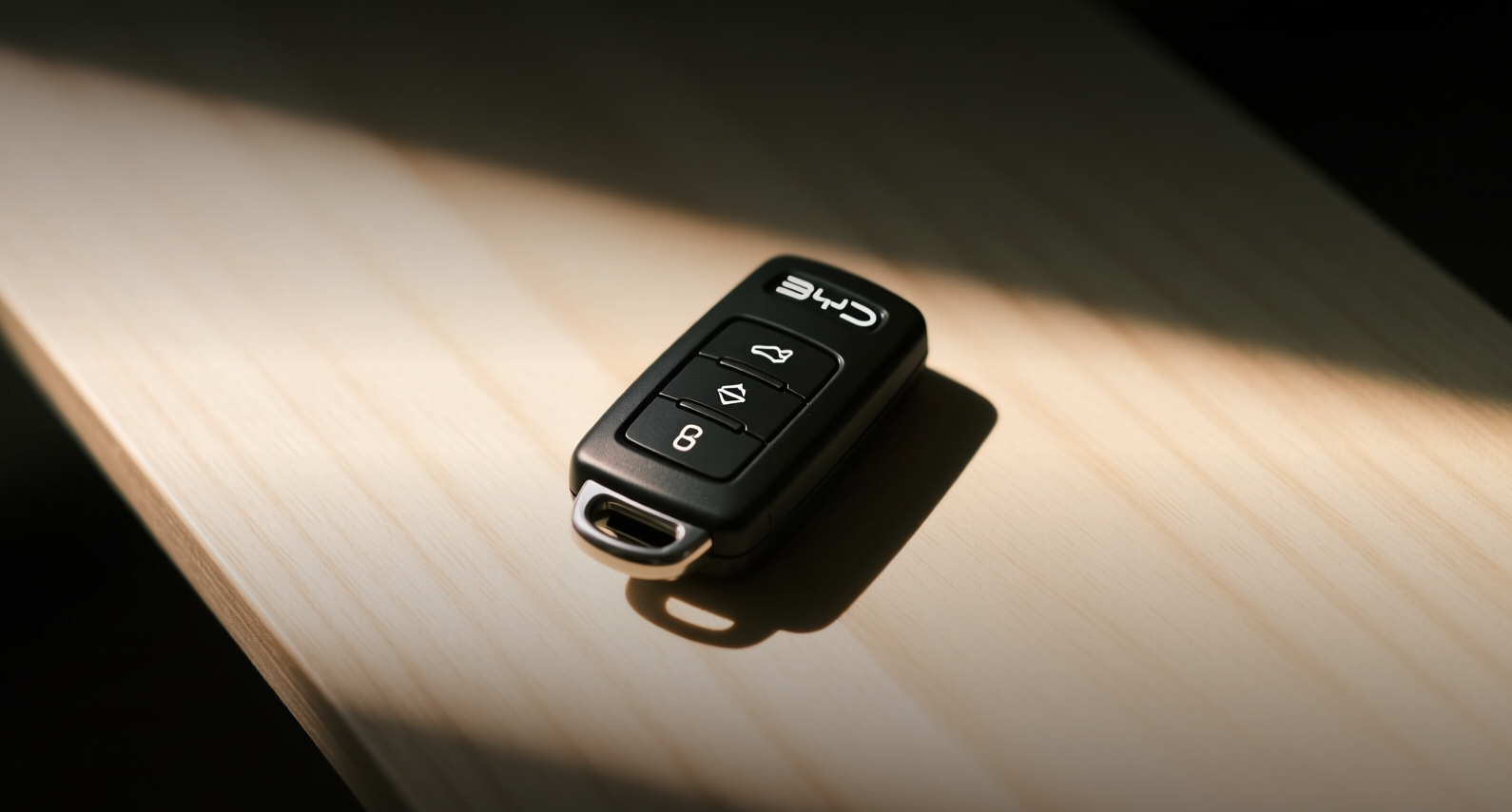
BYD sees orders surge 2% as flash charging drives capacity expansion
BYD Co. said orders have remained plentiful since launching its flash charging technology and multiple new vehicle models, pushing the Shenzhen-based automaker to accelerate capacity expansion as consumer demand outstrips supply. "Orders have remained plentiful since the launch of flash charging technology and multiple vehicle models, and the company is expediting capacity expansion to meet growing consumer demand," BYD said on an interactive platform, without disclosing specific order volumes or delivery timelines. BYD's Super e-Platform, demonstrated last year, supports up to 1,000 kilowatts of charging power and can add nearly 250 miles of claimed range in five minutes, according to company specifications. The technology uses the company's proprietary Blade Battery — a lithium iron phosphate (LFP) cell-to-pack design that eliminates intermediate module housings for roughly 50% greater space utilization than conventional LFP blocks. The system has been deployed across the Han L sedan and the Denza Z9 GT, with the company now working to scale production across its broader lineup. The flash charging push comes as Chinese automakers race to eliminate range anxiety as the last barrier to mass EV adoption. Hongqi, the FAW Group's luxury brand, recently demonstrated an experimental battery that charged from 10% to 70% in 3 minutes and 41 seconds at a peak rate of 12C, while CATL's third-generation Shenxing LFP battery claims a 10%-to-80% charge in 3 minutes and 44 seconds. Geely's Zeekr brand has shown a peak charging power exceeding 1.3 megawatts on an updated 001 model. BYD shares traded at HKD 95.5 on July 30, up 2.03%, with volume of 9.71 million shares and turnover of HKD 923 million. Short selling accounted for 28.1% of trading volume, according to exchange data. The stock has gained roughly 15% since the flash charging technology was first demonstrated, though it remains below its 52-week high as investors weigh the costs of rapid capacity expansion against potential market share gains. The company's capacity expansion plans will determine whether it can maintain its lead in China's intensifying EV price war. BYD sold more than 4.2 million new energy vehicles in 2025, according to CPCA data, giving it roughly a 33% share of China's passenger EV market. Rivals including Geely, SAIC and Xiaomi have all launched competing fast-charging models in recent months, pressuring margins across the sector. BYD's Blade Battery, which uses LFP chemistry — lithium iron phosphate, cheaper and thermally more stable than nickel-manganese-cobalt alternatives — is estimated to cost roughly $56 per kilowatt-hour at the pack level, according to BloombergNEF. That cost advantage, combined with the flash charging capability, gives BYD a dual edge in both price and performance that competitors are racing to match. This article is for informational purposes only and does not constitute investment advice.