Edgen AI operates independently of, and is not controlled by Aspen Digital Financial Limited.
CICC sees 49 stocks joining Southbound Stock Connect in August review
 Edgen Stock·Jul 31 2026, 08:31
Share to
Share to
Copy link

[1] <Research>CICC Expects 49 Stocks to Be Added to Southbound Stock Connect, 14 May Be Removed (https://www.aastocks.com/en/stocks/news/aafn- ...)[2] South Korea’s Kospi index jumps nearly 18% on a surge in chipmaking stocks (https://apnews.com/article/stock-markets-rate ...)[3] Stock Market Live Updates: Sensex, Nifty Seen To Open Higher Amid Global Rally; Brent Crude At $86 (https://www.msn.com/en-in/money/markets/stock ...)[4] The government imposter scam draining retirement accounts: Why older adults lost $2.4 billion (https://www.msn.com/en-gb/money/other/the-gov ...)[5] Eternal Ltd Directors Report (https://www.indiainfoline.com/company/eternal ...)
Related News

Jul 31 2026, 09:47
Ford, GM diversification adds $23 billion but draws investor caution
Ford shares surged 45 percent, adding $23 billion in market value, after launching Ford Energy in May, while GM climbed 16 percent on its earnings call. Both companies are pushing into defense contracting and grid-scale energy storage as they seek higher-margin, less-cyclical revenue streams. "The industry is in decline," said Tom Narayan, equity analyst at RBC, noting that auto suppliers are also diversifying. Ford's grid-scale energy-storage business involves repurposing its EV battery factory in Kentucky at a cost of $2 billion between 2026 and 2027, about 10 percent of total expected capital expenditures. GM Defense is projected to bring in $700 million in revenue this year against GM's $186 billion total. Both automakers raised full-year guidance for the second time this year. Ford shares have since moderated but remain up more than 20 percent since the Ford Energy launch. Defense budgets are rising globally and U.S. energy-storage demand is expected to grow at a compound annual rate of 38 percent through 2030, according to Morgan Stanley. But even under optimistic scenarios, these ventures would contribute less than 1.5 percent of GM's operating profit by 2030 and about 5 percent of Ford's by 2029. ## The $40 Billion Lesson From the 1980s The current push echoes the mid-1980s, when U.S. automakers used profits from a booming economy and import restrictions on Japanese cars to fund acquisitions outside their core business. Ford bought financial-services companies including First Nationwide and Associates. GM acquired defense manufacturer Hughes Electronics and plowed more than $40 billion into an automation push. Those attempts largely failed. Ford fell behind Japan's engine technology in part because it spent too much on diversifying instead of focusing on its core business, an industry analyst argued in a 1990 Los Angeles Times article. GM's plant productivity actually declined over its heavy investment period in the 1980s, according to research from Marvin Lieberman and Rajeev Dhawan of UCLA. More recently, both automakers took massive write-downs after big investments in electric vehicles. ## Growth Rates vs. Profit Contribution The bullish argument this time is that Ford and GM aren't spending buckets of money or stepping far outside their comfort zone. GM's infantry-squad vehicles for the military are based on an off-road truck and use commercial off-the-shelf parts. Ford Energy repurposes existing battery manufacturing capacity. The potential upside is real. Defense stocks in the S&P 500 trade at 30 times forward earnings, while energy-storage-related stocks such as Fluence Energy and Tesla trade at even higher multiples. Ford and GM trade at 7.8 times and 6.2 times forward earnings, respectively. But the math is sobering. GM Defense thinks the segment can grow at a compound annual rate exceeding 30 percent with double-digit margins. Even at an average growth rate of 35 percent, its operating-profit contribution would be less than 1.5 percent by 2030. Morgan Stanley's Andrew Percoco estimates Ford Energy could generate $588 million of operating profit by 2029, about 5 percent of the total operating profit Wall Street expects for that year. The defense opportunity is also expanding. Lockheed Martin won a $58.6 billion contract from the U.S. Army to produce Patriot interceptor missiles, converting a $4.7 billion one-year deal into a seven-year procurement plan through fiscal 2032. The Pentagon is pressing contractors to accelerate production as conflicts in Iran and Ukraine strain U.S. weapons stockpiles. The Center for Strategic and International Studies estimates the U.S. military has fewer than 1,000 Patriot interceptors and fewer than 250 THAAD interceptors on hand. The concern isn't Ford and GM's intent to diversify, which seems prudent. It is that they keep finding themselves chasing markets too late or looking for solutions outside their core business. Their push into EVs was driven by an impulse to pursue a hot trend favored by investors, and their 1980s forays were influenced by the corporate-diversification culture in vogue at the time, noted Edgar Faler, an analyst at the Center for Automotive Research. Foresight has never been U.S. automakers' strength. That is one reason investors should view their shiny new pursuits with some caution. This article is for informational purposes only and does not constitute investment advice.

Jul 31 2026, 09:45
Economists push taxing capital over labor as AI threatens 10 million jobs
**More than 1,000 economists, including 17 Nobel laureates, have signed a petition warning of large-scale job displacement from AI — and a growing number are pointing to one policy fix: tax capital, not labor.** The U.S. tax code taxes workers at 27 percent versus just 4 percent on new equipment, a gap economists say is increasingly indefensible as artificial intelligence threatens to permanently displace 10 million jobs. "There's a reasonable case that with the rise in AI, it's more important to protect labor demand than to encourage more capital investment, and therefore capital taxes could be higher," said Doug Elmendorf, a Harvard University economist and former CBO director. The effective marginal tax rate on labor stands at 27 percent, compared with 14 percent for new business assets and 4 percent for equipment, according to the Congressional Budget Office. The 2017 tax bill cut the corporate rate from 35 percent to 21 percent, and a 100 percent expensing provision for capital expenditures was made permanent last year — worth $31.8 billion to Microsoft, Amazon, Meta, Alphabet and Oracle combined in 2025, per Zion Research Group. The capital share of national output is already at an all-time high, and AI promises to push it higher. Rebalancing taxes on capital and labor would not only slow AI-driven job replacement but also help close the largest peacetime deficits on record. The petition, circulated this month by Stanford University's Erik Brynjolfsson, marks a notable shift among economists who have long viewed labor-saving technology as a net positive. A major survey published in March found that in a scenario where AI systems surpass humans in most cognitive and physical tasks, roughly 3 percent of the working-age population would exit the labor force by 2050, with 10 million jobs permanently lost. Brynjolfsson argues it is in business leaders' "enlightened self interest" to complement rather than replace workers with AI. "We are right now steering them in the wrong direction," he said. **Retraining has limits** Retraining displaced workers is the most popular policy response, but it faces a fundamental problem: nobody knows what to train them for. "Five years ago, everyone was told, 'learn to code,'" said Pascual Restrepo, an economist at Yale University and a member of Anthropic's economic-advisory council. "That career advice has gone out the window. AI happens to be super good at computing. Maybe the next thing is economics. Then law. Then journalism." Other proposals, such as wage insurance or universal basic income, compensate job losers but do not preserve employment. A "robot tax" or compute levy on AI tokens could be a nightmare to design and administer, and would discourage beneficial uses of AI such as drug discovery. **The tax system's role** The case for low capital taxes has driven U.S. policy for decades, from accelerated depreciation in 1954 to the investment tax credit in 1962. The most sweeping reductions came in the 2017 Tax Cuts and Jobs Act, which slashed the corporate rate from 35 percent to 21 percent and temporarily allowed immediate 100 percent expensing of many capital expenditures. That provision was restored and made permanent last year. Since 2017, the marginal tax rate on new equipment has dropped from 14 percent to 4 percent, while the marginal rate on labor has edged down from 29 percent to 27 percent, per the CBO. The hyperscalers spending billions on data centers have been the biggest beneficiaries — Zion Research Group estimates the 100 percent expensing provision was worth $31.8 billion to Microsoft, Amazon, Meta, Alphabet and Oracle last year, and $50.2 billion compared with pre-2017 law. In theory, taxing capital would slow AI deployment, though it would also deter non-AI investment. One study found the 2017 tax cuts did boost investment while raising long-run economic output by less than 1 percent. The stakes extend beyond job preservation. The capital share of national output is at an all-time high, and AI promises to push it higher. As long as capital tax rates remain low, that limits how much new revenue flows into the Treasury — a consideration as the U.S. runs its largest peacetime deficits on record. This article is for informational purposes only and does not constitute investment advice.
Jul 31 2026, 09:42
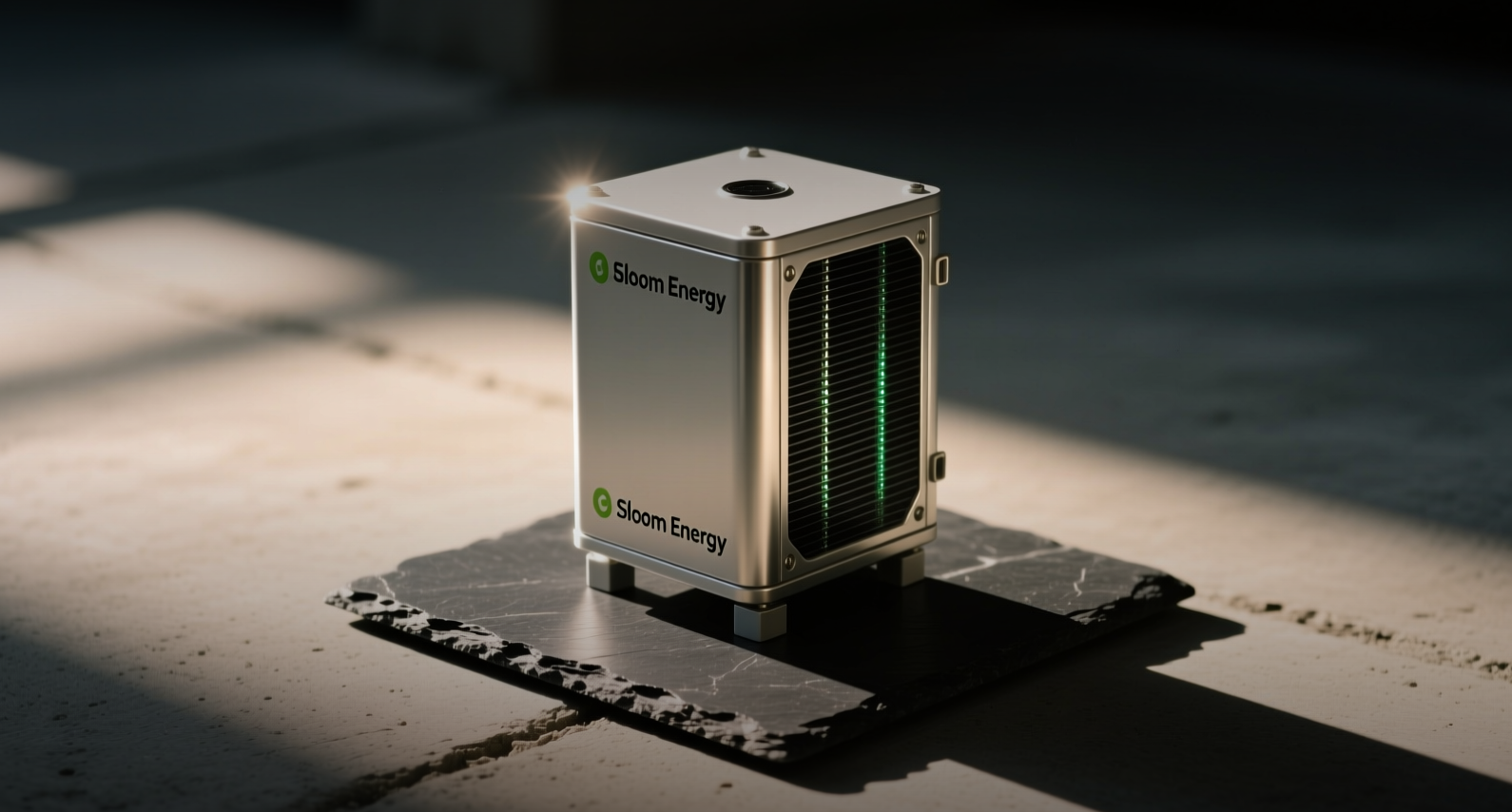
Bloom Energy jumps 10% pre-market after record Q2, Mizuho upgrade
Bloom Energy shares rose more than 10 percent pre-market Friday after record Q2 revenue of $1.07 billion and a Mizuho upgrade. "Bloom is now a standard for AI onsite power," CEO K.R. Sridhar said in the earnings release. The company reported Q2 FY2026 revenue of $1.07 billion, up 165.5 percent year over year, with non-GAAP EPS of $0.78 versus the $0.4066 consensus. Product revenue jumped 215.4 percent, driven by hyperscalers, neoclouds, and AI data center operators. Management raised full-year 2026 revenue guidance to $3.9 billion to $4.2 billion and non-GAAP EPS to $2.55 to $2.85. | Metric | Actual | Consensus | Beat/Miss | |--------|--------|-----------|-----------| | Revenue | $1.07B | — | +165.5% YoY | | EPS (non-GAAP) | $0.78 | $0.4066 | +$0.37 | Mizuho lifted its rating to Outperform from Neutral with a price target of $242, down from $285, citing stronger-than-expected execution, accelerating margin expansion, and operating leverage materializing earlier than modeled. The firm also flagged Bloom's "time-to-power advantage," more than $27 billion of financing capacity, confirmation from all major U.S. hyperscalers, and a backlog growing faster than revenue. The stock closed at $205.88 on Thursday, up 26 percent, and remains up 136 percent year to date despite a sharp drawdown over the past month. The surge follows a volatile stretch in which the stock fell 40.5 percent in a month after a short-seller report accused the company of hiding Chinese supplier reliance, triggering a Rosen Law class-action inquiry. Morningstar raised Bloom's fair value 15 percent in April after the company locked in a 2.8-gigawatt Oracle deal for AI data center power. FuelCell Energy shares rose 28 percent to $23.06 on Thursday in a sympathy rally, while Plug Power gained 9 percent to $2.07. The Global X Hydrogen ETF climbed 10 percent to $39.96, with Bloom Energy representing 15.5 percent of net assets. The fuel-cell complex has been among the most volatile corners of the AI infrastructure trade, with peers Vertiv and GE Vernova delivering steadier price action. Bloom Energy trades at a trailing twelve-month P/E of 226.32, a valuation that leaves no cushion if hyperscaler orders slip. Wall Street analysts still peg fair value at $286.20, implying 74.8 percent upside from Thursday's close. The stock carries a beta of 3.7, and insiders have logged 27 recent transactions with net direction selling. Retail sentiment on Reddit has also turned sharply bearish, with the proprietary sentiment score falling from 78 in early July to 18 by July 22. The next event to watch is whether the Brookfield joint venture converts backlog into new hyperscaler contracts and whether the class-action filing gains traction. With management guiding 2026 revenue to nearly double, the fuel-cell maker's ability to execute on its AI data center pipeline will determine whether the current rally holds or fades. This article is for informational purposes only and does not constitute investment advice.