Edgen AI operates independently of, and is not controlled by Aspen Digital Financial Limited.
ChangXin LPDDR6 nears mass production as DRAM share hits 10%
 Edgen Stock·Aug 01 2026, 02:18
Share to
Share to
Copy link
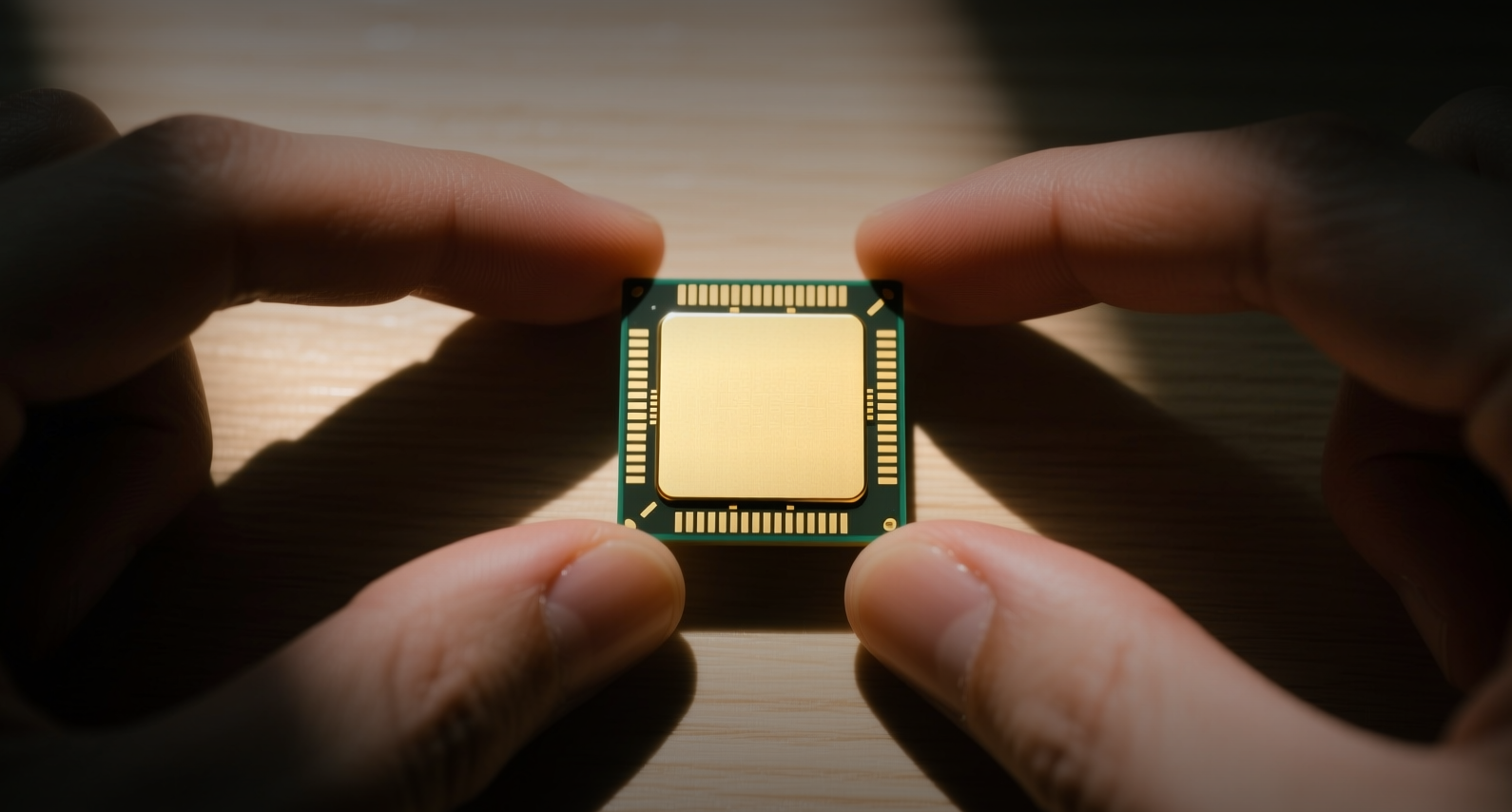
[1] ChangXin LPDDR6 Achieves Key Breakthrough (https://wallstreetcn.com/articles/3778477 ...)[2] CXMT LPDDR6 Hits Key Breakthrough: Research Validation Nearing Completion as ChangXin Memory Technologies Closes In on Mass Production of 12,800 Mbps Mobile DRAM - Pandaily (https://pandaily.com/cxmt-lpddr6-key-breakthr ...)
Related News
Aug 01 2026, 04:17
Kioxia launches ¥800B buyback as NAND profits surge 28-fold
Kioxia Holdings reported record first-quarter non-GAAP operating profit of ¥1.33 trillion, up 28-fold year-on-year, and unveiled an ¥800 billion share buyback, the first large-scale repurchase in the global NAND storage industry. UBS analysts said the buyback, tied to a roughly 50 percent total shareholder return target, could reduce outstanding shares by about 19 percent if half of projected FY2028 net profit of ¥9.42 trillion is deployed. The firm raised its price-to-book multiple for Kioxia to 5.23x from 4.63x and lifted average ROE forecasts to 48 percent from 42 percent. JPMorgan maintained an Overweight rating with a ¥155,000 price target, implying significant upside from the ¥46,500 close on July 31. Revenue for the April-June quarter climbed 415 percent year-on-year to ¥1.77 trillion, with SSD and storage products contributing ¥1.17 trillion, or 66 percent of total sales. Blended average selling prices for NAND products rose about 70 percent quarter-on-quarter, while bit shipments grew only in the low single digits, with some volumes deferred to the current quarter. Gross margin reached 78 percent, and the company's equity ratio jumped to 50.8 percent from 37.9 percent at the end of the prior fiscal year. The buyback marks a structural shift in how memory chipmakers return capital, and the trend is spreading. Nomura Securities projects Korean listed-company buybacks will reach a record ¥116 trillion in 2026, with about 90 percent coming from Samsung Electronics and SK Hynix, expanding to ¥274 trillion in 2027 and ¥328 trillion in 2028. The firm maintains its KOSPI target of 10,000 to 11,000 points, citing the AI earnings cycle and corporate buybacks as the next market driver. Kioxia shares surged as much as 17.7 percent following the earnings release. The company also announced a three-for-one stock split effective October 1 and expects to secure long-term contracts locking in 50 percent of production capacity through 2028. Management forecast industry-wide NAND bit demand growth in the high-teens percentage range for calendar 2026, with demand expected to outstrip supply in 2027 as agentic AI workloads expand. For the current quarter, Kioxia guided revenue of ¥2.39 trillion, up 35 percent sequentially, and non-GAAP operating profit of ¥1.90 trillion, implying an operating margin of about 79.5 percent. The guidance came in below some buy-side expectations of ¥2.0 to ¥2.5 trillion in revenue, though management cited continued data center demand strength. Apple demand is expected to increase in the current quarter, according to UBS. The record profitability and buyback program give Kioxia a valuation framework that could extend across the storage sector. Investors will watch the October 31 earnings call for further shareholder return policy details, while the November release of Korea's low-PBR company list will test whether the buyback-driven re-rating takes hold in Seoul. This article is for informational purposes only and does not constitute investment advice.
Aug 01 2026, 03:58
Amazon completes $50B OpenAI investment as AI cloud race intensifies
Amazon completed its $50 billion investment in OpenAI, taking roughly a 5 percent stake and securing access to the AI lab's cloud and chip workloads as the infrastructure arms race intensifies. "AWS is booming, growing 36.7 percent year-over-year in Q2 — our fastest growth in 18 quarters — and our AI and Chips businesses each eclipsed run rates of more than $25 billion," Andy Jassy, President and CEO of Amazon, said. The investment was structured in two tranches. Amazon paid $15 billion in February as part of a broader commercial agreement, then delivered the remaining $35 billion this week after OpenAI and Microsoft renegotiated their cloud contract in April, clearing the way for AWS to serve OpenAI's compute needs. The final payment arrived even though neither of the original milestone triggers — a public listing or a major AI breakthrough — was met. Amazon also committed up to $33 billion to Anthropic, OpenAI's chief rival, with $18 billion already deployed. The dual investments strengthen Amazon's position across the AI value chain: Trainium chips now have multi-year, multi-gigawatt commitments from both Anthropic and OpenAI, and AWS can offer both labs' models through Bedrock. The move pressures Microsoft's Azure, which previously held near-exclusive cloud rights to OpenAI, and challenges Nvidia's GPU dominance in AI training workloads. **AWS AI run rate tops $25B as Trainium adoption spreads** AWS reported Q2 revenue of $42.2 billion, up 37 percent year-over-year, with operating income of $16.6 billion — a 64 percent jump from $10.2 billion a year earlier. Amazon's overall Q2 revenue reached $200.6 billion, up 20 percent, while operating income rose 43 percent to $27.5 billion. Net income surged to $62.6 billion, or $5.75 per diluted share, boosted by $53.4 billion in non-operating income from mark-to-market gains on Anthropic investments. Advertising revenue added $19.8 billion, up 26 percent. Amazon raised its 2026 capital expenditure guidance to $220 billion to support AI infrastructure demand. The company's Trainium chip line has gained traction beyond the two leading AI labs, with startups including NEURA Robotics, Odyssey, TwelveLabs, Decart, and Poolside adopting the silicon, alongside larger enterprises like Uber and Pinterest. Amazon also released Graviton5 into general availability, delivering up to 25 percent better compute performance than Graviton4. **Microsoft's cloud exclusivity erodes** The April renegotiation of the Microsoft-OpenAI cloud contract marked a structural shift. Microsoft had previously held near-exclusive rights to host OpenAI's workloads and had internally discussed legal action over Amazon's partnership with the AI lab, according to the Financial Times. The new agreement opened the door for AWS to provide cloud compute to OpenAI, weakening Azure's AI revenue narrative and strengthening AWS's position in the cloud infrastructure market. Amazon Bedrock now hosts OpenAI's GPT-5.6, Anthropic's Claude Opus 5, Google DeepMind's Gemma 4, and SpaceXAI's Grok 4.3, giving AWS customers access to leading frontier models from a single platform. Hundreds of thousands of customers now use Bedrock, with more added in the last six months than in the first two years after launch. Amazon shares jumped 14.53 percent to $269.73 following Q2 earnings, reflecting investor enthusiasm for AI-driven growth across AWS, advertising, and retail. The OpenAI investment positions Amazon to capture a share of the AI training and inference market, while Microsoft faces the more immediate risk: losing exclusive access to OpenAI's workloads could slow Azure's AI revenue growth. Nvidia, meanwhile, faces a longer-term threat from Trainium adoption at scale, though its CUDA ecosystem and data center GPU dominance remain formidable barriers. This article is for informational purposes only and does not constitute investment advice.
Aug 01 2026, 02:50
Sony raises full-year profit forecast 8% after Q1 beat
Sony reported Q1 operating income of ¥476.5 billion, up 40% from a year earlier, beating estimates and setting a record for the quarter. "The G&NS, Music, and I&SS segments posted record profits for the first quarter," Chief Financial Officer Lin Tao said. Sales rose 8.2% to ¥2.84 trillion, while net income climbed 32% to ¥342.2 billion. Diluted EPS came in at ¥57.82, up from ¥42.84 a year earlier. In dollar terms, EPS of $0.3645 beat the $0.2834 consensus by 28.6%, while revenue of $17.81 billion topped the $17.17 billion estimate by 3.7%. The company raised its full-year operating income forecast 8% to ¥1.72 trillion and lifted sales guidance 2% to ¥12.5 trillion. Shares rose 3.16% in premarket trading to $23.49. The guidance increase reflects roughly ¥80 billion in expected US tariff refunds, with about 70% already received in the first quarter. | Metric | Actual | Consensus | Beat/Miss | |--------|--------|-----------|-----------| | Revenue | $17.81B | $17.17B | +3.7% | | EPS | $0.3645 | $0.2834 | +28.6% | | Operating income | ¥476.5B | — | +40% YoY | Game & Network Services posted operating income of ¥202 billion, up 37%, helped by US tariff refunds and cost improvements. PlayStation monthly active users reached 125 million in June, a record for that month, though total play time fell 4% year over year. The segment's full-year operating income forecast was raised 10% to ¥660 billion. Imaging & Sensing Solutions delivered the largest profit jump, with operating income surging about 2.3 times to ¥122.2 billion on higher average selling prices for mobile image sensors. The company raised its full-year segment operating income forecast 5% to ¥420 billion. Music operating income rose 14% to ¥105.9 billion on streaming growth and live-event revenue. The July 28 Kumamoto earthquake suspended production at Sony's semiconductor facility in Kikuyo Town, with output expected to return to pre-earthquake levels by mid-August. The financial impact was not included in the full-year forecast. Management said the damage was less severe than the 2016 quake and does not expect a major effect on annual semiconductor results. Sony also announced it will end PS5 disc production in January 2028, citing the shift to digital content. The company proposed making lens maker Tamron a wholly owned subsidiary and is in talks with TSMC on a joint venture for next-generation image sensors, with ¥10 billion in preparation costs booked for the current fiscal year. The guidance raise points to management confidence that tariff refunds and currency tailwinds will support earnings through fiscal 2026. Investors will watch second-quarter results for the earthquake's financial impact and the timing of the TSMC joint venture agreement. This article is for informational purposes only and does not constitute investment advice.