Edgen AI operates independently of, and is not controlled by Aspen Digital Financial Limited.
Celldex's barzolvolimab hits Phase 3 goals but stock drops 20%
 Edgen Stock·Sep 22 2026, 13:40
Share to
Share to
Copy link


[1] Celldex's skin disease drug meets goals in two late-stage trials (https://www.reuters.com/business/healthcare-p ...)[2] Celldex falls after late-stage trial data for hives therapy (https://seekingalpha.com/news/4645356-celldex ...)[3] Celldex Announces Positive Results from Phase 3 EMBARQ-CSU1 and EMBARQ-CSU2 Studies of Barzolvolimab Which Met Primary and All Key Secondary Endpoints (https://finance.yahoo.com/healthcare/articles ...)[4] Celldex Therapeutics' Barzolvolimab Meets Phase 3 Endpoints in Two Urticaria Trials (https://finance.yahoo.com/healthcare/articles ...)
Related News
Sep 22 2026, 14:23
XPeng signs robot parts deals as 3 suppliers start line scheduling
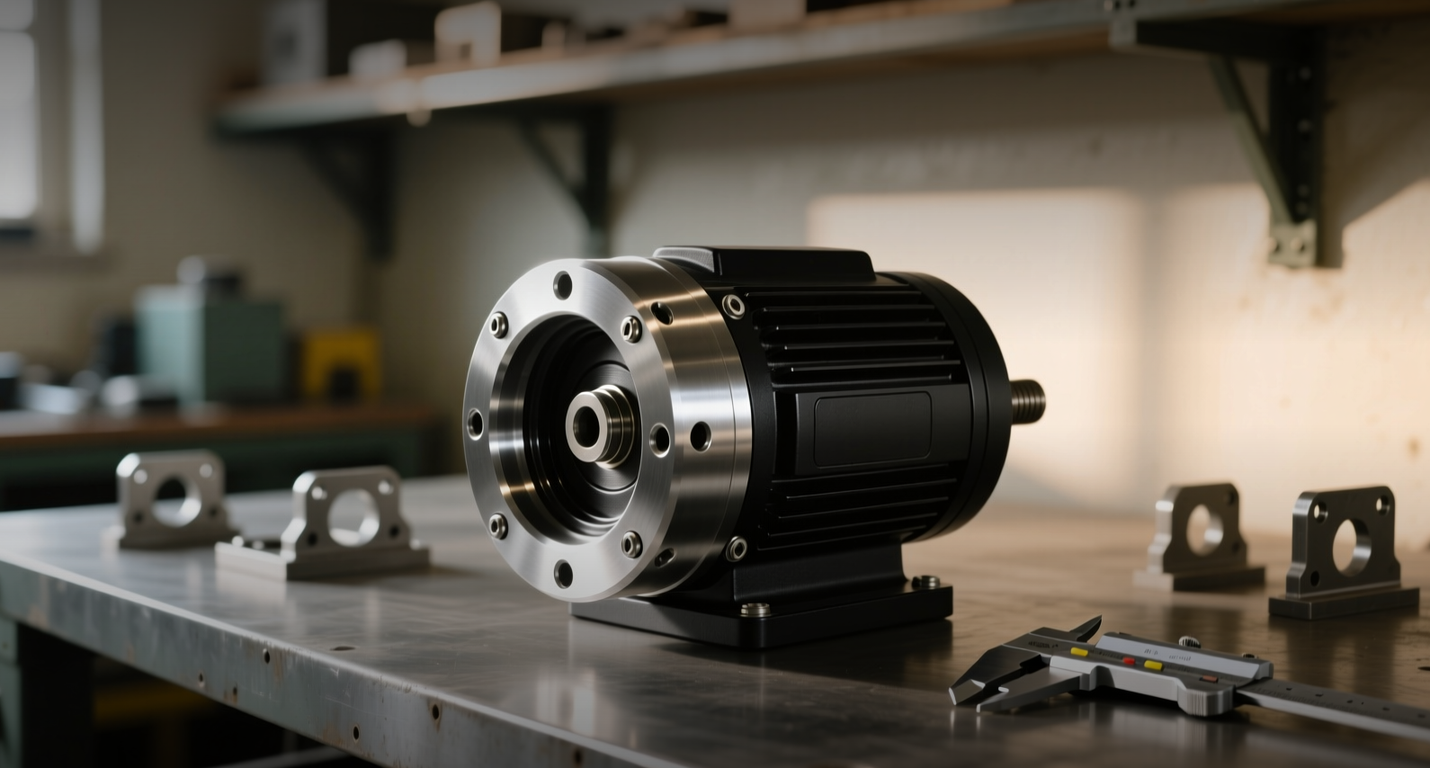
XPeng has completed nomination agreements with suppliers of robot joint modules, actuators and precision structural parts and is now scheduling production lines, the clearest signal yet that the Guangzhou automaker intends to build humanoid robots at manufacturing scale rather than in a lab. The company disclosed the status at its first robot supply-chain partner conference, where component makers from those three categories gathered in one room for the first time. "Nomination is the point where a program stops being a prototype and starts consuming capital," said a person familiar with the program, who asked not to be identified because the agreements are private. "Scheduling lines means tooling orders are being placed." XPeng did not disclose production volumes, unit pricing, delivery dates or the identity of the nominated suppliers. Those figures are not yet disclosed, and the absence of them caps the near-term earnings impact: a nomination agreement commits a supplier to capacity, but revenue only appears when parts ship against a purchase order. The program's public reference point is XPeng's Iron robot, which the company has said runs the same autonomous-driving perception stack and in-cabin AI as its vehicles, giving it 720-degree visual coverage and voice interaction. That reuse is the core of the investment case. XPeng already pays for LiDAR, cameras, inertial measurement units, neural processing units and high-torque electric motors at automotive volumes, and a humanoid platform amortizes that engineering spend across a second product line. The scale of the prize is what makes the timeline worth tracking. China's humanoid robotics market reached nearly 2.8 billion yuan ($380 million) in 2024 and is projected to grow into a 100 billion yuan market by 2030, according to the China Academy of Information and Communications Technology. Total financing in the country's embodied-intelligence sector exceeded 10 billion yuan ($1.4 billion) in the first half of 2025 alone, CCTV reported. XPeng is not alone in making the jump. BYD self-produces about 80 percent of core robot components including harmonic reducers and torque sensors, a vertical integration that has cut costs 30 to 40 percent, and plans to deploy 2,000 robots on its own production lines this year. GAC's GoMate robot uses a force-control system adapted from its EV drive platform, which the company says improved single-leg balance response time by 50 percent and pulled force-control development nine months ahead of the industry average. NIO and Geely have opened factories to Unitree and other robotics developers as testbeds. The difference for XPeng is that it is buying rather than building the joint modules and actuators, which puts the near-term revenue in the hands of its suppliers and leaves XPeng's own margin story dependent on software and systems integration. That is a faster path to a production line and a thinner one to gross profit per unit. For investors, the trade splits in two directions. XPEV carries the optionality: the stock is valued primarily on vehicle deliveries and gross margin, and a robot program that reaches volume would add a second multiple to the story without a second factory. The parts makers carry the nearer-term earnings leverage, because a nomination converts into tooling and pre-production orders before it converts into robot revenue. Both legs of that trade depend on the same undisclosed variable — how many units XPeng intends to build, and when. The next checkpoint is the production schedule itself. XPeng has not given a date for first line output, and until it does, the supplier conference remains a signal about intent rather than a number about volume. This article is for informational purposes only and does not constitute investment advice.
Sep 22 2026, 14:19
UK borrowing hits £18.3bn as pound slides to six-week low
Britain's August budget shortfall came in £2.8 billion above the highest forecast in a Reuters poll, pushing the fiscal-year deficit £8.1 billion past the Office for Budget Responsibility's projection and sending sterling to its weakest level in about six weeks. "Medium-term borrowing prospects look far more challenging than in March," said Matt Swannell, chief economic adviser to the ITEM Club, a consultancy. "The rise in gilt yields since the OBR's Spring forecast has halved Healey's fiscal wiggle room, leaving just over £10 billion of headroom against the government's primary fiscal rules." Public sector net borrowing excluding public sector banks reached £18.3 billion in August, the Office for National Statistics said Tuesday, against a £15.5 billion consensus and £15.4 billion a year earlier — a 19 percent increase. It was the second-highest August on record, behind 2020. The ONS revised borrowing higher for each of the previous four months of the 2026/27 fiscal year, lifting the April-August cumulative deficit to £77.3 billion. That is £2.2 billion below the same point in 2025/26 but £8.1 billion above the OBR's forecast. Borrowing for the full 2025/26 year was revised up by £4.5 billion to £134.3 billion. The current budget deficit — the gap between day-to-day spending and tax revenue that the government must close by 2029/30 — stood at £51.9 billion for the year to date, against an OBR forecast of £47.1 billion. Central government debt interest reached £8.8 billion in August, the highest for that month since records began, inflated by RPI-linked gilts as inflation lifts the coupon on index-linked bonds. Total spending rose £6.7 billion year-on-year to £117.2 billion, with central government outlays up £4.9 billion to £103.1 billion on goods, services and inflation-linked welfare. Receipts rose £3.7 billion to £99.0 billion, led by income-related taxes. Public sector net debt was 93.8 percent of GDP at end-August, down 1.3 percentage points from a year earlier. Gilt futures fell 20 ticks on the release before recovering, with cash-market yields edging higher at the open. Sterling traded near 1.3370 against the dollar, close to a six-week low, as broad dollar strength compounded the move. The pound's slide matters beyond FX desks: a weaker currency raises imported inflation, which feeds directly into the Bank of England's rate calculus at a moment when debt servicing costs are already consuming budget room. The last time gilt yields repriced this sharply against a fiscal forecast, in the autumn of 2022, the 30-year yield spiked above 5 percent and the pound touched a record low of 1.0350, forcing an emergency Bank of England bond-buying intervention. Chancellor John Healey presents his first budget on October 28, and investors are watching how he squares his fiscal-rule pledges with a spending base that inflation keeps pushing higher. Chief Secretary to the Treasury Emma Reynolds reiterated that the government is committed to meeting its fiscal rules "with a buffer against uncertainty" — a buffer that stood above £24 billion in March and has since been cut by rising yields. The OBR's own March projections assumed headroom that the April-August outturn has already eroded by roughly a third. The arithmetic leaves Healey three levers, none of them comfortable. He can raise taxes beyond the main rates, cut real spending growth, or accept a smaller buffer and the higher gilt yields that come with it. Each path carries a market price. A credible consolidation plan on October 28 would likely compress the risk premium now embedded in gilts and steady the pound; a budget that leans on accounting adjustments rather than durable measures would push the 10-year yield higher and extend sterling's decline. The Bank of England's next rate decision, and the inflation prints before it, will determine whether the currency's weakness is read as a growth signal or a fiscal one. This article is for informational purposes only and does not constitute investment advice.
Sep 22 2026, 14:11
Gorilla Technology wins Taiwan AI contract worth tens of millions
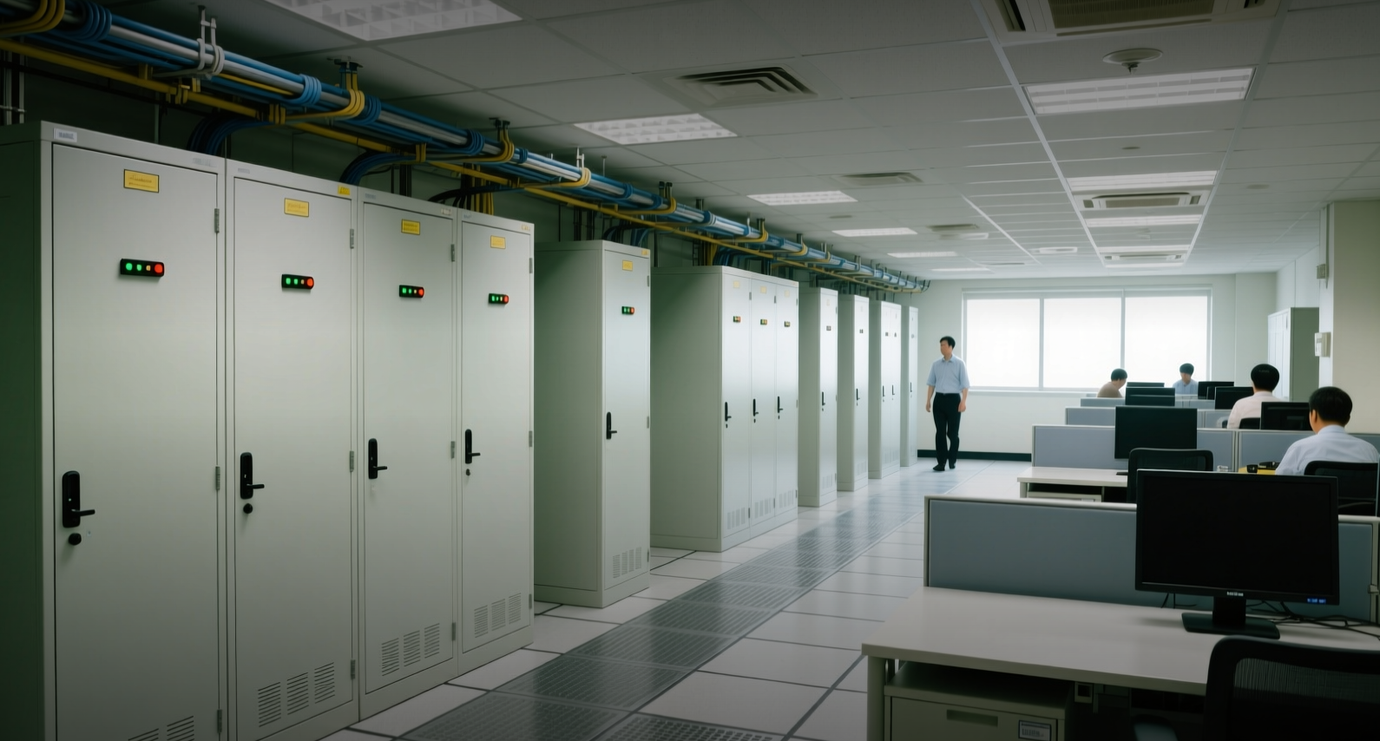
Gorilla Technology Group Inc. (NASDAQ: GRRR) has won a multi-year contract in Taiwan valued in the tens of millions of dollars to extend AI-powered intelligence and accelerated computing infrastructure for the largest criminal investigation bureau of its kind in the Asia-Pacific region, the company said on Sept. 22. "This is exactly the kind of win that matters to us," Jay Chandan, chairman and chief executive officer of Gorilla Technology, said. "Winning a major national programme is difficult. Being asked to come back, expand what you have built and take on an even larger part of the customer's technology architecture says something very different." The programme adds next-generation GPU capacity, including NVIDIA B300 accelerated computing systems, plus new intelligence integration and analytics capabilities inside the customer's existing secure IT environment. Gorilla will supply three years of maintenance, support and feature enhancements. Deployment runs from the fourth quarter of 2026 through the fourth quarter of 2027, according to Jackie Wang, the company's country head for Taiwan. The award is an expansion, not a replacement. Gorilla said the architecture is designed to extend the customer's deployed estate rather than swap it out, which matters for the revenue math: the incremental spend lands on top of an existing installed base, and the three-year support tail stretches the cash flow beyond the 2027 deployment window. ## What the disclosure does not say Gorilla did not disclose the contract's exact value, the split between hardware and software, or the gross margin attached to the work. "Tens of millions" is a range, not a figure, and the company has not filed a corresponding 6-K with specific terms. For a business that reported a market capitalisation in the low hundreds of millions of dollars, the difference between $20 million and $90 million across a multi-year schedule is material to how investors should model the backlog. The hardware content also cuts both ways. NVIDIA B300 systems carry high unit costs, and reselling accelerated compute is a lower-margin activity than licensing analytics software. Gorilla has spent the past year arguing that its value sits in the intelligence layer above the racks — Chandan's framing is that "compute is the foundation" while "intelligence is where the value is created" — but the press release does not break out how much of this award is silicon versus software. The repeat-customer detail is the more durable signal. Government security buyers rarely re-tender an incumbent for a broader scope unless the first deployment worked, and switching costs in classified investigative environments are high. Gorilla now has a reference account at national level in Taiwan that it can point to when pitching similar modernisation programmes elsewhere in Asia, where it says it is pursuing sovereign AI and public-safety opportunities. ## Who else is chasing the same budget Gorilla is not alone in that pursuit. Palantir Technologies (NASDAQ: PLTR) has built its government segment on the same thesis — that analytics and integration layers, not raw compute, command the premium — and reported government revenue growth in the double digits in its most recent quarter. Nvidia (NASDAQ: NVDA) supplies the B300 systems underneath both approaches and captures the hardware margin regardless of which integrator wins. In Taiwan specifically, domestic system integrators and Chunghwa Telecom's data-centre arm compete for the same public-sector modernisation budgets. The addressable pool is real but not unlimited. Taiwan's government has been raising security and digital-infrastructure spending as cross-strait tensions persist, yet the total procurement envelope for a single bureau is measured in tens of millions, not billions. That caps the read-through for the wider sector: this is a validation of Gorilla's execution, not evidence of a step-change in Asia-Pacific sovereign AI demand. For Gorilla, the practical question is conversion. The company has announced a string of large AI infrastructure and data-centre programmes globally, and the market has rewarded the pipeline narrative. Turning that pipeline into recognised revenue depends on deployment execution through 2027 and on whether the company can disclose contract values that let investors underwrite the backlog with confidence. Until it does, the stock trades on announcements rather than on booked numbers. This article is for informational purposes only and does not constitute investment advice.